DD
MM
YYYY

PAGES

DD
MM
YYYY

spot_img

PAGES

Home Blog Page 6138

September 28 Nationwide Strike Puts Nigerian Government in a Dilemma of Economic Troubles

0

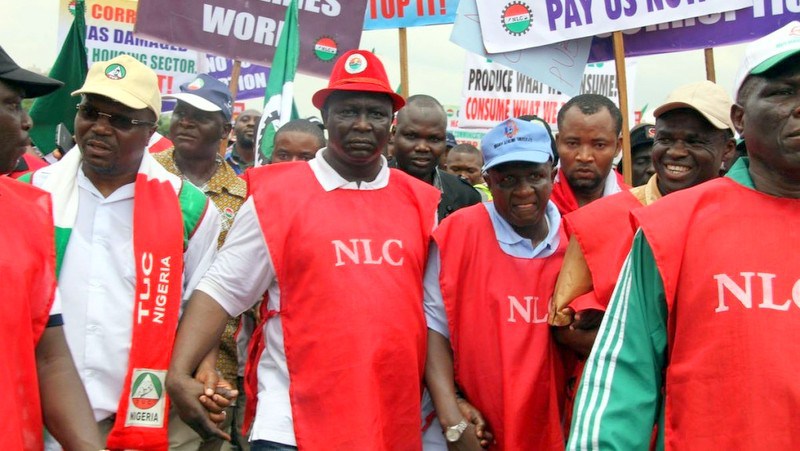
Nigerian labor and trade organizations have been mobilizing its members and the entire labor and trade ecosystem in Nigeria, for a nationwide strike action aimed at forcing the federal government to reverse the recently increased petroleum pump price and electricity tariff.

The Nigeria Labour Congress (NLC), on Tuesday announced the decision of its Central Working Committee (CWC), to commence a nationwide indefinite strike and mass protest from September 28, after it was approved by its National Executive Council (NEC).

The CWC had last week Wednesday issued a two-weeks ultimatum to the federal government, its NEC has now ordered the 36 NLC state’s councils and the Federal Capital Territory (FCT) to prepare for the showdown.

NLC’s president, Ayuba Wabba on Monday, after the organization’s NEC meeting held in Abuja, called on the federal government to heed the warning and save the country from the industrial action, as there would be no going back unless the increased fuel and electricity prices are rescinded. He also gave reasons why the NLC is not going to renege on the planned nationwide strike.

“The National Executive Council of the Nigeria Labour Congress comprising members of the National Administrative Council, president and General Secretary of members of the affiliate unions and our state council chairpersons and secretaries of the 36 states and FCT met today (Monday) and resolved as follows:

“NEC resolved to reject in its entirety the issue of hike in electricity tariffs by almost 100 percent as well as the fuel price increase in the name of full deregulation. This decision is premised on the fact that these twin decisions of government including the increase of VAT by 7.5 percent, numerous charges being charged by commercial banks on depositors without any explanations will further impoverish Nigerian workers and citizens, including their families.

“Therefore, this increase coming in the midst of the COVID-19 pandemic is not only ill-timed, but it is also counterproductive. NEC also observed that the privatization of the electricity sub-sector seven years down the line has not yielded any positive result.

“Whereas the entire privatization process, the entire sector was sold at about N400 billion, we are also surprised that government within the last four years injected N1.5 trillion over and above the amount that accrued from this important.

“Therefore, NEC came to the conclusion that the entire privatization process has failed and the electricity hike is actually a process of continuous exploitation of Nigerians.

“On the issue of the refineries and also the increase in the pump price of PMS… whether it’s in the name of full deregulation or subsidy removal, what is obvious is that it is fuel price hike and this has further eroded the gains of the N30,000 minimum wage because it has spiral effects which include the high costs of food and services and the reduction in the purchasing power of ordinary Nigerians.

“In light of all these, NEC thought that the issue of deregulation would be a continuous exploitation if it is import-driven.

“While demanding that our three refineries should be made to work optimally and then, it would benefit Nigerians, NEC also concluded that government has business in doing business because the primary purpose of governance is about the security and welfare of the people and if in other countries, they are working optimally for the benefit of the people, Nigeria cannot be an exception.

“In the light of these, NEC decided to endorse the two week ultimatum given to the federal government to reverse those obnoxious decisions and also pronounce that the action proposed by the Central Working Committee is hereby endorsed by the NEC that 28th of September should be the date that those decisions should be challenged by the Nigerian workers, our civil society allies and other labor countries,” Wabba concluded.

In solidarity, the TUC said it has moved its mobilization strategies to be in par with September 28. The president of the congress, Quadri Olaleye said the ultimatum it gave to the federal government, which expires in September 22, has been moved forward to September 28. He appealed to Nigerians, “especially those in the informal sector to bear with us while the industrial action lasts.”

Some of the reasons raised by TUC are the poor minimum wage, which about eight states are yet to implement, and the government’s inability to fulfill its promise to build refineries. Moreover, the present administration had said in 2014, before it was elected, that there is nothing like fuel subsidy, accusing the past administration of using the words to embezzle public funds. Therefore, the TUC said it’s unacceptable for Buhari’s administration to increase pump price based on fuel subsidy removal.

However, while there is overwhelming support from the general public for the scheduled strike action, the impact on the already fragile economy could not be ignored. The Nigerian government was forced to prematurely lift the coronavirus induced lockdown as it was close to crippling the economy.

Consequently, the economic figures have been rising and falling against Nigeria’s economy. With public debt increasing, unemployment rate has risen to 27.1% for the second quarter of 2020, inflation is at 12.56% and GDP growth rate, year-on-year is at -6.1%. With these numbers and more indicating that Nigeria is up for a rough ride, shutting the economy down once again through nationwide strike will be the enabler it needs to fall into recession.

However, reversing the price hike decisions comes with a huge price that the government evidently cannot afford to pay now. With the public debt at N31 trillion, borrowing to fund fuel and electricity subsidies will have an impact as devastating as the strike. Against this backdrop, the federal government has a tough decision to make before September 28.

Tony Elumelu Makes 2020 TIME100

0

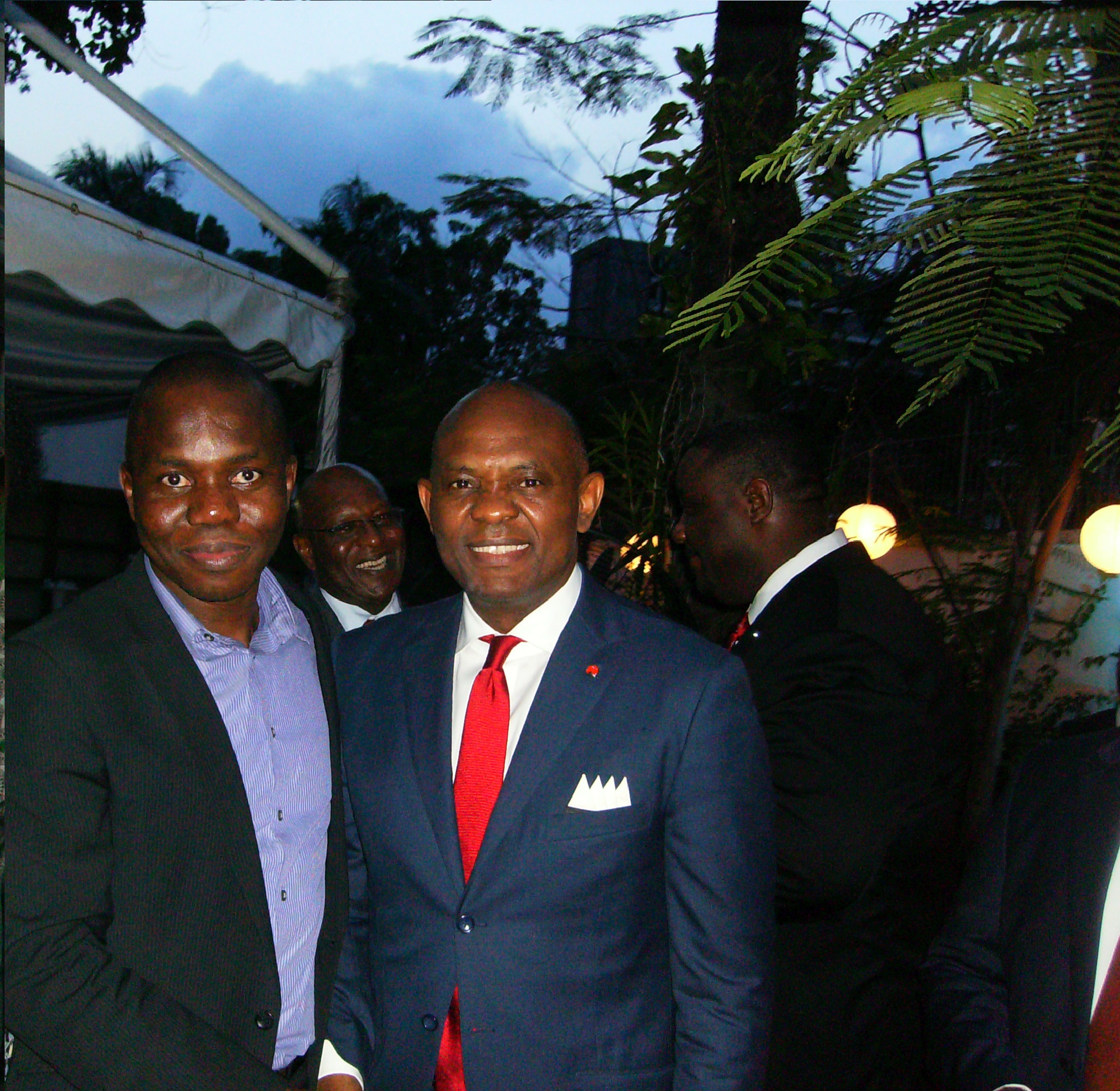
Good People, join me to congratulate the big boss, Mr. Tony Elumelu, for his inclusion in 2020 TIME100, the annual list of the 100 most influential people in the world. Working into the decision room to come out with the names of the  winners of Tony Elumelu Entrepreneurship Programme remains a moment for me.

After deepening the financial market in Africa, he has found an equally important niche: giving a voice of hope to millions of youths across Africa. Tony has harnessed Africa’s youth bulge to catalyze development and protect the future, committing to investing $5,000 each in 1,000 young entrepreneurs per year across 54 countries in Africa. Having come so far, Tony still forges on, striking a fine balance between personal satisfaction and societal impact.

Just being a selection board member has brought satisfaction as innovators, makers, etc, across Africa, meet and tell me their stories. Then, imagine the man who is writing the big cheques. Congratulations TOE & the whole family.


Virtual Agrofood & Plastprintpack Africa 2020 Event

0

This is a virtual event which will take place between November 22 and November 26 this year.

The event is provided and managed by fairtrade Messe.

The event seeks to provide a virtual environment covering Agrofood, Plastics, Industrial print/labelling and Packaging.

The ‘geo’ coverage is Pan Africa.

Useful Links:

The fairtrade Messe site: https://www.fairtrade-messe.de/

fairtrade Messe LinkedIn page: https://www.linkedin.com/company/fairtrade-messe/

Event LinkedIn page: https://www.linkedin.com/events/6711255172275814400/

Paul Maerz MD LinkedIn page: https://www.linkedin.com/in/paul-maerz/

I have signed up to the Event.

Thanks John

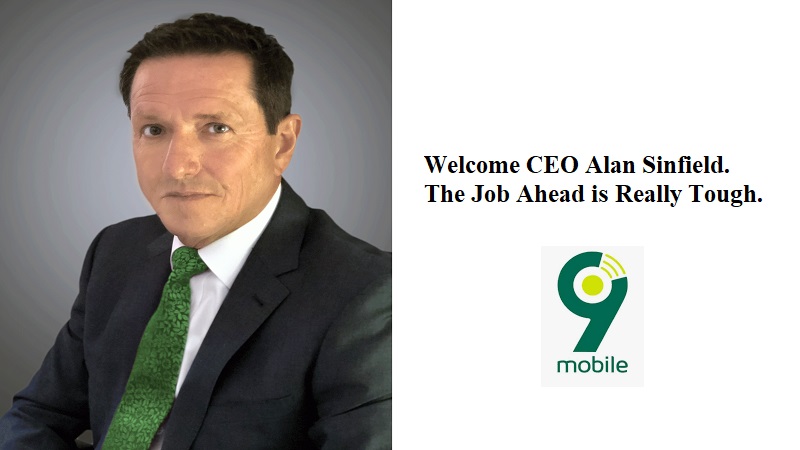
The Man with the Toughest CEO Job in Nigeria

1

“Yesterday, 9Mobile’s new CEO Alan Sinfield visited Abuja, Nigeria’s capital city, to introduce himself to Isa Pantami, the Minister for Communications and Digital Economy. Sinfield was hired in June to lead the telco back to the heights it was at before debt troubles started in 2017 “, notes TC Daily

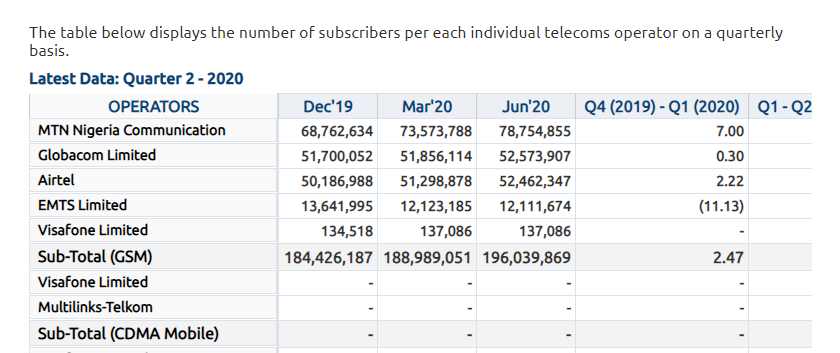
I am waiting for the playbook, and how it would play in this highly contested Nigerian telecoms market. Yes, any new 9Mobile playbook in the Nigerian telecoms sector should be extremely uncommon to thrive.  9Mobile’s new CEO Alan Sinfield has one of the hardest CEO jobs in Nigeria. As of June 2020, MTN had 79 million subscribers. Glo and Airtel followed at roughly 52 million each. 9Mobile had only 12 million, down more than at least 8 million from its peak.

Urgently, 9Mobile has to win customers and find ways to grow the bottomline. But in a nation dominated by MTN, how would that happen? More so, I have never seen any credible 4th national carrier in any major telecoms market in the world.

So, what do you think CEO Alan Sinfield should do?

https://www.cnbcafrica.com/videos/2020/06/03/9mobiles-new-ceo-shares-plans-for-growth/

The Ills of Begging on the Social Media

0

I noticed something during the lockdown that was both hilarious and appalling: many of our young men and women have turned into digital beggars. I don’t know if this was happening before but I just noticed it anyway.

The social media platform that I discovered this development in was Twitter. Then, I noticed that Nigerian youths tell influential and wealthy people to do “giveaway” for them. It got so bad that some of them dropped their bank account details as comments to these people’s posts. Some went as far as telling people to stop disturbing the public with the analysis of the country’s economy and do “giveaway”. This may sound funny, but it is also embarrassing and annoying.

Still on Twitter, I also noticed that some individuals, especially politicians, put up derogatory posts about their opponents and then tell youths to re-tweet their posts and stand the chance of winning monetary prizes. Some may ask these youths to guess who was described in the post in order to win the prize. Nigerian youths do not disappoint here because they come in their thousands to scramble for this money (usually five thousand naira and below).

Some people may not see anything wrong with this begging of a thing but when they remember that the youths in question focused more on asking for money than in picking up the message behind the posts, they will understand why the act should be discouraged. Apart from losing focus, this attitude makes our youths look hungry and lazy. They make themselves look cheap. In fact, it says a lot of wrong things about them.

Another style of begging I’ve noticed is that people record and post videos, where they describe pathetic situations in their lives in order to arouse pity and monetary donations from the public. I usually feel for people that release these videos but from what I can see, not all of them really needed help; some just wanted to raise money from the public. There was the case of a woman that was helped by a social media influencer to raise money for her child’s surgery. According to this influencer, she raised about three million naira for this supposed surgery and handed the money to the child’s mother. But then, the child got better without the surgery and so the money wasn’t used again. A few weeks later, a couple that needed financial assistance to foot their child’s medical bills approached this influencer. The influencer reached out to the first woman and asked that she donate two hundred thousand naira for this child from the three million naira raised for her. Can you believe that this woman told the influencer off, claiming that the money was meant for her family and nobody else? After several disturbances and threats to get the law involved, the woman revealed that she used the money to buy land and a car. This thing actually happened sometime in August this year. And yes, it happened in Nigeria.

Well, I am not totally against digital begging because, sometimes, those that truly need help find it through social media. In those days people go to television houses and worship centres to ask for help. But today, social media has proved to be the best place for that. Even people in developed countries also raise funds for the needy through social media. But then, the thing is actually getting out of hand. People are abusing it.

The case of the woman, who claimed her child needed surgery, shows the extent people can go to in order to “cheat”. One of my friends used to argue that people that brought themselves out to beg have tangible reasons to do so, but it is obvious that such is not always the case. Some people are shamelessly coming out to deceive people into helping them.

The problem that is created by all these false digital beggars is that they close doors for those that really needed help. For instance, this woman that used her sick child to obtain money from the public has blocked the way for the other person that truly needed help. It was probably difficult for this influencer to raise money from the public again and so she resorted to asking one of her beneficiaries to help. Now imagine in a situation where a person that truly needed help was called bluff because of experiences people had from charlatans? This is why there is need to discourage these phoney beggars.

It is hard to tell how to discourage these impostors; but these social media influencers they usually approach should validate the information given to them before reaching out to the public. They should always remember that people make donations most times because they trusted them. They should do their bests to maintain that trust.

As for the Nigerian youths that beg for “giveaways”, they need to understand that they are dragging our names on the mud.