DD
MM
YYYY

PAGES

DD
MM
YYYY

spot_img

PAGES

Home Blog Page 614

Salesforce CEO Marc Benioff Confirms 4,000 Job Cuts as AI Agents Replace Customer Support Roles

0

Billionaire CEO Marc Benioff has revealed that Salesforce has cut about 4,000 customer service roles as artificial intelligence agents step in to take over much of the workload, per Fortune.

The $248 billion cloud software giant is the latest tech heavyweight to openly embrace automation at the expense of human workers, a shift that underscores how quickly AI is reshaping the corporate labor landscape.

Just like Klarna and Microsoft, Salesforce is now leaning heavily on generative AI agents that can handle over a million consumer conversations, cutting support costs by 17% since the start of 2025. Benioff, once skeptical about AI-driven layoffs, now says bluntly that he “needs less heads.”

“I was able to rebalance my headcount on my support,” Benioff said on The Logan Bartlett Show podcast. “I’ve reduced it from 9,000 heads to about 5,000, because I need less heads. If we were having this conversation a year ago and you were calling Salesforce, there would be 9,000 people you’d be interacting with globally on our service cloud. Today, those same interactions are happening, but 50% are with agents, 50% are with humans.”

The shift highlights a dramatic change of tune. Fortune notes in the report that when ChatGPT launched only three years ago, leaders, including Benioff and Nvidia CEO Jensen Huang, repeatedly argued that AI would augment workers rather than replace them. In fact, as recently as last year, Benioff told Fortune that mass layoffs “weren’t on the table,” insisting that AI lacked the precision to displace humans.

Now, the reality looks very different.

Salesforce’s Hybrid Workforce Model

Benioff insists that Salesforce’s hybrid workforce—half human, half AI—shouldn’t be seen as dystopian. “I don’t think it’s dystopian at all,” he said. “This is reality, at least for me.”

Salesforce confirmed that its in-house platform, help.agentforce.com, has been a key driver of the changes.

“Because of the benefits and efficiencies of Agentforce, we’ve seen the number of support cases we handle decline, and we no longer need to actively backfill support engineer roles,” a Salesforce spokesperson told Fortune.

The company added that it has redeployed hundreds of employees into professional services, sales, and customer success.

Still, customer support remains the sharpest casualty. Benioff himself has repeatedly identified support and sales as the two functions with the highest potential for automation. Already, agents complete 30–50% of Salesforce’s customer interactions. By pushing further into automation, the company has slashed costs while maintaining service coverage.

Benioff also hinted at broader ambitions. “I’m looking at every single function to see how it can become an agentic business,” he said.

Industry-Wide AI-Driven Layoffs

Salesforce is not alone. Across Silicon Valley, firms that once dismissed AI job displacement are now actively reshaping their workforce.

Microsoft has announced 15,000 job cuts this year—including 9,000 in July—despite posting an 18% year-over-year increase in net income last quarter. Many of those roles are customer-facing, echoing Salesforce’s pivot. Meta eliminated 3,600 roles in February, with CEO Mark Zuckerberg forecasting that AI could serve as a “mid-level engineer” before the year ends. Google has also axed hundreds of roles across its Android, Pixel, and Chrome teams, citing the need to redirect resources into AI.

Klarna, often seen as one of the earliest adopters of large-scale AI customer service, has shown how radically the technology can scale. Its digital agents now handle the equivalent work of 700 staffers. But in a notable reversal, Klarna recently announced that it is redeploying workers back into customer-support roles after its CEO admitted that earlier AI-driven cost-cutting went too far. The move highlights both the promise and the pitfalls of automation—while AI can slash costs, an overreliance risks eroding the quality of customer experience.

The Salesforce layoffs mark a sobering inflection point in the AI adoption curve. When generative AI systems like ChatGPT, Claude, and Bard burst onto the scene in late 2022, the narrative from industry leaders was that AI would primarily augment human tasks. CEOs pointed to collaboration models where humans supervised AI outputs, maintaining a sense of security for white-collar jobs.

But as the technology rapidly matured, the business case for cost-cutting proved irresistible. Customer service and sales—two of the most labor-intensive corporate functions—have emerged as the first frontiers. For Salesforce, the result has been a 17% reduction in support costs, achieved in less than a year.

Benioff frames the moment as one of excitement, not despair. “There’s also an omni-channel supervisor now that’s helping those agents and those humans work together,” he said. “And this is the most exciting thing that’s happened in the last nine months for Salesforce.”

A Familiar Silicon Valley Shift

Salesforce’s pivot mirrors historical moments when new technologies displaced entire categories of work. Call centers were once the backbone of customer engagement, but cloud-based automation and chatbots have already eroded their dominance. Now, generative AI is accelerating that erosion, enabling scalable, personalized conversations that were once the domain of human agents.

As AI moves deeper into sales and support, two of the most people-heavy business units, the corporate promise of AI as an “augmenter” is giving way to a harsher truth: companies are embracing bots because they’re faster, cheaper, and tireless.

And the cuts may only be beginning.

Understanding 2017 Federal Government-Academic Staff Union of Universities Agreement

0

In 2017, the Federal Government of Nigeria and the Academic Staff Union of Universities (ASUU) signed a Memorandum of Action that was meant to end a prolonged strike and restore stability to the country’s public university system. Examination of the MOA establishes familiar calls from the Union, demanding better funding, fair compensation, and institutional autonomy. The response was a partial concessions and promises of reform. Analysis further reveals series of lesson about how complex problems are resolved in Nigeria through a patchwork of negotiations, compromises, and shared responsibilities.

At the heart of the crisis was a breakdown of trust. ASUU had long argued that the government had failed to honour previous agreements, particularly around revitalizing university infrastructure and paying earned academic allowances. The union resorted to strike action, not just as a bargaining tool, but as a way to force public attention on what it saw as systemic neglect. The government, facing mounting pressure, responded with a mix of financial releases, committee formations, and policy adjustments.

One of the most main features of the agreement was how many different actors were involved. Beyond ASUU and the federal government, the resolution process drew in the Ministry of Education, the Ministry of Finance, the Office of the Accountant General, the Central Bank, the National Salaries Commission, and even the Nigeria Labour Congress. Each played a role, whether it was releasing funds, issuing circulars, coordinating audits, or offering moral support. This wide cast of players reflects the reality that no single institution can fix a broken system alone. It takes collaboration, even if that collaboration is messy and slow.

The government’s actions were largely reactive. It released N20 billion for university revitalization, disbursed N23 billion for earned allowances, and promised to include future payments in the national budget. It also agreed to fast-track the registration of NUPEMCO, a pension fund tailored for university staff, and to address salary shortfalls that had plagued many institutions. These were important steps, but they were also stop-gap measures. They addressed immediate concerns without necessarily solving the deeper structural issues that caused the crisis in the first place.

ASUU, for its part, showed strategic discipline. It submitted nominees for committees, provided documentation for audits, and engaged in multiple rounds of negotiation. But it also held firm on its core demands, refusing to call off the strike until concrete actions were taken. This balance of pressure and participation helped move the needle, even if only slightly.

What the agreement ultimately reveals is a system that responds best under pressure. The strike created urgency, and that urgency forced institutions to act. But it also exposed how fragile the resolution process can be. Many of the promises made in the agreement were conditional or delayed. For example, the forensic audit of earned allowances was to be completed before further disbursements could be made. A committee was formed to explore sustainable funding, but its recommendations were not immediately binding. A memo was promised to the National Economic Council to address the proliferation of state universities, but it remained a future task.

This kind of incrementalism is not necessarily a failure. In a country as complex as Nigeria, where resources are limited and institutions often operate in silos, progress often comes in stages. What matters is whether those stages build towards lasting change. The 2017 agreement laid a foundation, but it did not finish the house. It showed that dialogue is possible, that compromise can be reached, and that multiple actors can work together when the stakes are high.

Our analyst notes that resolving crises in the education sector requires more than emergency funding or political promises. It demands a coordinated approach that brings together all relevant institutions, listens to the concerns of stakeholders, and follows through on commitments. For unions, the takeaway is that persistence pays off, but it must be matched with constructive engagement.

Our analyst stresses that the FGN-ASUU agreement is not just a document. It is a mirror reflecting the strengths and weaknesses of Nigeria’s approach to public policy. It shows that while the road to reform is long and uneven, it is not impassable. With the right mix of pressure, participation, and accountability, even the most entrenched problems can begin to shift.

Why Bitcoin And Ethereum Investors Are Accumulating Avalon X

0

Bitcoin and Ethereum have been around long enough to prove their staying power. People who believed in them early and held through all the ups and downs have seen that patience can pay off. Now many of those same investors are wondering how to put a slice of their gains into something new, something that feels a little more immediate, mainly Avalon X.

Avalon X (AVLX) is a project built around its token, AVLX, but it does not just talk about future potential. It has created two promotions that give token holders clear and simple opportunities. One is a million dollar AVLX prize pool and the other is a luxury townhouse in the Eco Avalon development. Both of these are rewards people can imagine right away, which makes them very different from the usual promises seen in crypto.

Bitcoin Price Prediction: BTC Market Performance

Bitcoin has been the leader of the market for more than a decade, and it continues to set the tone. Right now it is trading around one hundred and seven thousand dollars after a late summer pullback.

Some traders worried when it dipped, but analysts say this kind of pause is normal and could set up a rebound toward one hundred and fourteen or even one hundred and sixteen thousand. Large holders, often called whales, have been adding more to their wallets, which usually means confidence is still high.

Institutional demand is also stronger than ever. Analysts point out that buying pressure from both retail and big institutions is running well ahead of new supply. Since Bitcoin has a limited number of coins, this kind of imbalance often supports long term price growth.

A recent example came from Japan where Metaplanet, a listed company, approved plans to raise $880 million to buy even more Bitcoin. That shows how deep corporate interest has become.

Some people even think this current market cycle will go on for years and strength will last till 2027. Whether that’s true or not, the bigger picture is that Bitcoin is being taken as a serious asset by individuals and companies.

For holders that’s a solid base to build from and it opens up the door to explore new projects like Avalon X without giving up their foundation.

Ethereum Price Prediciton: ETH’s Recent Performance

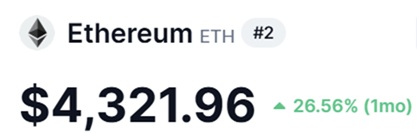
Ethereum has had a strong run. In August Ethereum price went up over 20% and network liquidity hit over 140 billion.

Even after a small pullback that followed, confidence in ETH is still solid. Investors are encouraged by the steady growth of staking, more coins are being locked into contracts that support the network and inflows into exchange traded funds.

It shows that Ethereum has become an asset used by serious players who are building the Web3 ecosystem. For long term holders that’s a big plus that ETH will continue to play a central role in the market.

The Avalon X Token Giveaway

With Bitcoin and Ethereum providing a solid backdrop, Avalon X is offering something different. The first promotion is a one million dollar AVLX giveaway. Ten winners will each receive one hundred thousand dollars in tokens.

The process is simple. Add your wallet address to the Avalon X dashboard, buy at least one hundred dollars of AVLX, and you are in. If you want better odds, you can refer friends. Every referral gives you ten extra entries.

This format works well for BTC and ETH investors because it feels familiar. It is built on wallets, token ownership, and a clear structure. There are no complicated hoops to jump through.

The Townhouse Giveaway

The second promotion goes beyond digital rewards. Avalon X is offering one person the keys to a townhouse in the Eco Avalon development. To qualify, you need to buy at least two hundred and fifty dollars of AVLX. The steps are the same as the token giveaway, and referrals once again give you extra entries.

This prize is about more than numbers on a screen. It is about the dream Avalon X highlights on its site. The images show modern spaces, stylish interiors, and the idea of city living within reach. It helps people connect the idea of holding a token with something they can picture themselves enjoying in the real world.

Why Investors Are Paying Attention

What makes Avalon X appealing is how straightforward it is. The rules are clear, the process is quick, and the outcomes are easy to imagine. A million dollars in tokens or a new home are rewards that do not require complex explanations. Investors in Bitcoin and Ethereum are comfortable with wallets and token transfers, and Avalon X fits right into that routine.

Conclusion

Bitcoin and Ethereum continue to anchor the market, supported by strong fundamentals, institutional demand, and ongoing upgrades. For many investors they remain the base of a portfolio. But with Avalon X, there is a way to take some of those gains and put them into opportunities that feel more immediate.

Through its AVLX token, the company has created two promotions that connect the digital with the tangible. A one-million-dollar prize pool of tokens and a luxury townhouse are rewards that people can understand and aspire to.


Join the Community

Website: https://avalonx.io/

$1M Giveaway: https://avalonx.io/giveaway

Telegram: https://t.me/avlxofficial

X: https://x.com/AvalonXOfficial

Nigeria’s New Secondary School Curriculum: Innovations and Challenges Ahead

0

Nigeria’s ambitious overhaul of its secondary school curriculum marks a decisive effort to equip young learners with the skills needed for a rapidly changing world. Designed to marry academic foundations with digital fluency, vocational skills, and entrepreneurial thinking, this reform holds promise to better prepare the country’s youth for the complexities of the 21st century. Yet, as public reaction reveals, the success of any curriculum reform depends not just on content but on the realities of implementation, resources, and cultural context.

At its core, the curriculum expands traditional subjects like Mathematics, Science, and English to include digital literacy, coding, and vocational trades such as solar photovoltaic installation. The inclusion of Digital Literacy and Coding in junior secondary education introduces learners to foundational technologies, including Python programming, robotics, and safe internet use. Trade subjects offer practical skills in areas ranging from fashion design to computer hardware repairs. This expanded spectrum is a welcome development that aligns schooling with economic empowerment and addresses Nigeria’s persistent youth unemployment challenge.

One observer applauded these changes enthusiastically, stating, “This is a welcome development. At last, Nigeria is moving towards equipping students with real 21st-century skills — digital literacy, AI, and entrepreneurship.” Another noted “This is awesome. Renewed Hope.” Such optimism reflects recognition that curriculum reform is often the first step toward national renewal when it matches global trends and local aspirations.

However, many Nigerians expressed deep skepticism about the operational realities. A common concern relates to the availability of technological tools essential for the success of digital literacy. “Did the government provide computers for the digital library?” encapsulates the anxiety around limited access to devices and high costs. Another commenter highlighted the challenge of compelling students to master digital skills absent affordable technology at home: “Compulsory digital literacy for students who can’t afford laptops at home? Lol.” These concerns underscore the risk of widening inequality if digital literacy becomes a theoretical requirement without corresponding infrastructure and resource support.

Additionally, essential educational resources for new vocational subjects remain uncertain. Schools strained by inadequate funding face difficulty providing materials needed for trades like solar photovoltaic installation or computer hardware repair. “Nice curriculum but it should also be followed with equipment… without equipment to back it up, all these added subjects are useless,” wrote a concerned observer. Another urged, “Way to Go, now give them the necessary tools to carry out the assignment.” These voices remind policymakers that curriculum innovation must be coupled with sustained investment in learning environments and teacher capacity.

Teacher readiness surfaced in discussions about salaries and training. “With these new subjects introduced, the salaries of the teachers who will be handling them should be increased. The government needs to do the right thing,” a comment read. The implementation will hinge on skilled educators who can confidently deliver complex content. Without incentives and professional development, teacher motivation risks significant decline, undermining educational quality.

The curriculum’s civic and cultural provisions also sparked debate, particularly around History. While Nigerian History is included, some reactions indicated dissatisfaction with its positioning. “Jesus! So HISTORY is a joke to them,” one comment lamented. Another voiced, “As long as it includes African history,” emphasizing the importance of indigenous knowledge. A strong call for compulsory History reflected concerns that eroding historical knowledge threatens national identity and societal values. As one respondent stated, “FG should also make History compulsory. Cos we need some serious reeducation of our core values so we don’t end up with criminals who think that’s how the society is.” The balance between modern skills and traditional civic education remains an unresolved tension.

Some critique addressed curriculum coherence or scope. For example, a user questioned, “How is Basic Entrepreneurship different from Commerce?” and another suggested, “The choice of solar installation could have been expanded to renewable energy…. Focusing on only solar isn’t good enough; there’s wind/turbine that’s unpopular as yet.” These insights call for refinement to ensure relevance and comprehensive coverage of emerging fields.

An overarching theme in public commentary concerns execution versus design. “This is wonderful but please let the execution be great too. A lot of policies get lost at execution,” reads one sobering reminder about Nigeria’s history with education reforms. The success of this sweeping curriculum will indeed be determined long after its launch, contingent upon infrastructure provision, teacher training, community involvement, and continuous monitoring.

Bolt Market Records 300% Growth in Kenya as Online Grocery Demand Surges

0

Bolt Market, the food and grocery delivery arm of e-mobility giant Bolt, has reported a 300% surge in orders, eight months after launching in Kenya.

The company attributes this milestone to the rising adoption of doorstep delivery services across East Africa.

The platform, designed to complete deliveries in under 20 minutes, has quickly become a key player in Kenya’s growing online food and grocery market. Bolt Food Kenya General Manager Edgar Kitur noted that the reception has exceeded expectations.

“Kenyans want affordability without sacrificing convenience, and Bolt Market delivers exactly that. The rapid growth since launch confirms we are solving a real need,” he said.

Doorstep delivery in Kenya is experiencing significant growth, driven by increased e-commerce, shifting consumer behaviors, and the adoption of technology like mobile apps and AI.

According to a 2024 survey by Kenya’s competition authority (CAK), it noted that as of 2023, 9.3% of Kenyans are shopping for food and groceries online, a figure that has witnessed an uptick in 2024 and 2025. In the same light, the agency projected that the figure is expected to rise to 16.7% by 2027.

Services like Bolt Market, Uber Eats, and platforms connecting agents to customers, are expanding their reach, offering food, groceries, and other goods directly to consumers. Despite challenges like inadequate addressing systems, traffic congestion, and operational costs, the sector’s potential is high, with ongoing innovation aimed at improving efficiency, inclusivity, and customer satisfaction.

The significant milestone recorded by Bolt Market, comes after the company officially launched in Nairobi, Kenya in December 2024. The food delivery company entered the East African country with a promise to help customers get their essential groceries delivered fast and conveniently through the Bolt Food app.

That decision has now translated into a milestone attained by its quest to meet the sharp rise in Kenya’s demand for food deliveries. Notably, Bolt Market’s circumspect launch last year, reflects the harsh realities of the logistics business in Kenya, where similar businesses have failed.

Companies like Jumia Food exited Kenya’s food delivery market in 2023 due to unprofitability, driven partly by high delivery costs that made their services less competitive against local alternatives. Similarly, other players have struggled to balance affordability with operational costs in a market where convenience often comes second to price.

Bolt’s Strategic Approach in The Kenyan Market

Bolt Market entered the Kenyan market with a cautious approach into the country’s grocery delivery sector. The company’s limited launch in Kilimani, with its focus on affluent customers, promotional incentives, and logistical optimization, reflects an attempt to avoid the fate of failed ventures like Jumia Food.

Bolt Market offers convenience and simplicity, as customers can make grocery orders and get them delivered to their doorstep in just 30 minutes. The company currently offers over 3,500 products sourced from both large retail chains and local merchants, allowing customers to access mainstream brands alongside locally produced goods. Initially launched in Nairobi’s Kilimani suburb and Mombasa, the company plans to expand its footprint across other Kenyan cities and neighbourhoods before the end of 2025.

Also, it intends to strengthen partnerships with supermarket chains and residential-area stores, positioning itself as a strong competitor to rivals such as Glovo and HappyFresh. Bolt Market is also exploring new pricing strategies, such as discounts based on order size and distance, and hinted at future subscription plans to offer regular customers predictable pricing and cost savings. 

With Kenya serving as its launchpad, Bolt Market is setting the stage to deepen its presence in Africa’s growing online retail and delivery market.