DD
MM
YYYY

PAGES

DD
MM
YYYY

spot_img

PAGES

Home Blog Page 6140

The Acceleration of Profit Margins

0

Pricing, cost, and margin are three powerful words in business. In the next edition of Tekedia Mini-MBA, coming up in Feb [early registration has started], we will dedicate a session on how to price to improve margins. Yet, besides the rudimentary cost-based and value-based pricing, the gold standard of modern business is attaining better equilibrium on marginal-cost pricing, via compounding acceleration of simultaneous reduction of transaction and distribution costs.

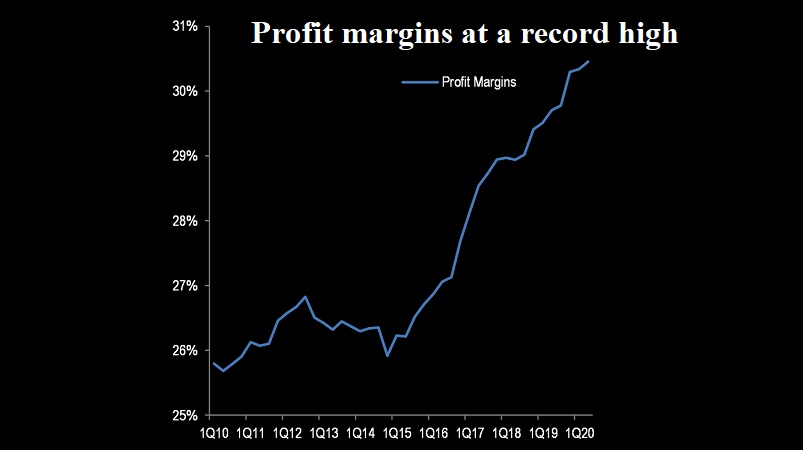
As you look at this plot, you can notice one thing: as the world digitizes, margins improve. It does not mean that all businesses are experiencing better margins. What is happening is that those capturing values are improving margins faster than the value-dissipation experienced by the disrupted. So, on average, margin moves northwards.

To make it easier to understand. If you average the profit margin of a digital advertising portal (like Facebook) and a print newspaper, you will notice that the margin is improving because Facebook’s margin is growing faster than any reduction in the print margin. Simply, the improving global margin is as a result of digitization and automation in most industrial sectors.

Nigerian States’ State of Financial Deficits

1

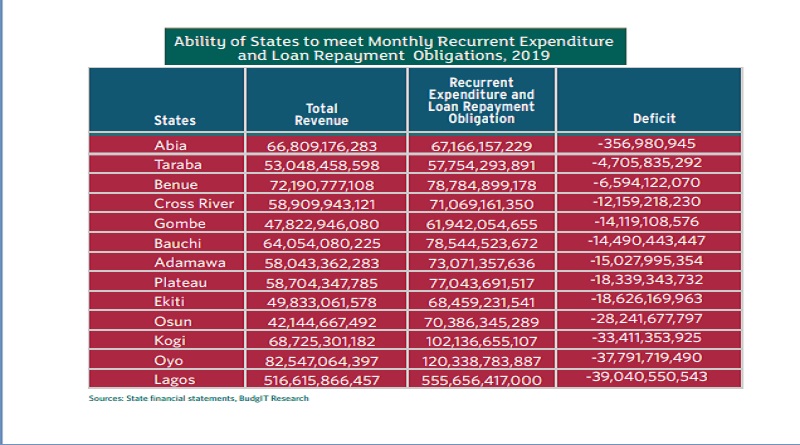
Debts may not necessarily be bad. But in Nigerian states, there are many reasons to worry. According to BudgIT, most of our states are technically yoyo. Yes, Oyo, Kogi, Osun, Ekiti, Plateau, Adamawa, Bauchi, Gombe, Cross River, Benue, Taraba,  Lagos, and Abia states were unable to fund their recurrent expenditure and loan repayments due in 2019.

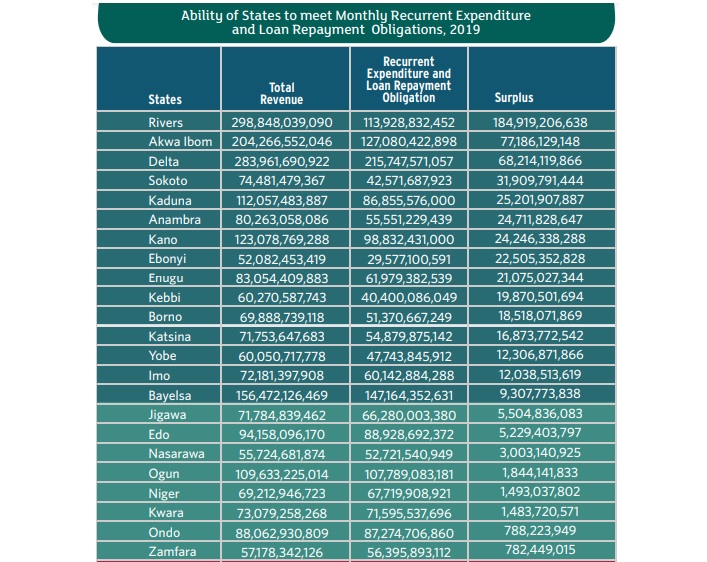
Across Nigeria, we spend all the time examining the federal government without knowing that nothing is happening in the states. Lagos state seems to be out of order! I mean, the 6th largest economy in Africa needs recalibration. Rivers state seems to be in charge of its future, surprisingly.

For the full report, please click here.

Update: This report has some errors which the authors have acknowledged.

“Indeed, @followlasg (Lagos State Government) cannot be included in the category of States with a recurrent deficit; thus, not borrowing to pay salaries,” BudgIT said.

“Our metrics focused on NET FAAC and IGR as published by the National Bureau of Statistics due to the disparate nature of revenue framework among Nigerian states.

“We also apologise for including a special debt financing program as part of the recurrent expenditure which might be a total representation of its finances.”

The Nike’s Just Do It Strategy of Controlling and Influencing Demand

4

Nike experienced a massive increase, and that is a huge lesson for everyone. The athletics wear leader grew its online sales by 83%, adding $900 million to the company’s top line last quarter. Simply, e-commerce is now 30% of Nike’s sales. It got there three years faster. Two things drove this redesign:

  • Nike developed athletic training apps. This is a consolidation – bring the training inhouse, and make sure your users do not need to go out looking for training apps.
  • Puts its destiny in its own hand by opening Nike stores, shifting away from wholesalers like Macy’s.

While most brands have simply made their apps and e-commerce sites shopping tools, Nike has long understood that digital tools must do more than just support sales and have to insinuate themselves into customers’ lifestyles to really pay off. Otherwise, e-commerce growth often just means business going from one avenue to another, rather than growing the overall pie.

A few years ago, the sneaker maker launched its online NikePlus program, a membership program with tens of millions of members that has helped the company better understand each customer’s interests and shopping patterns, and ultimately sell them more of its products.

Nike is also benefiting wildly from tools like its Nike Training Club App and a running app that offers self-guided runs. Donahoe said more than half of the training club app members had done a workout using the app last quarter. That fosters loyalty with customers and keeps Nike top of mind—as well as filtering users to its commerce site.

If you check what is happening here, Nike is doing more by itself. Sometimes, in this age where supply is not the core issue (controlling demand matters more), finding a way to build your own consumer tribe could be rewarding. Invest not just on your supply part, but also on your demand part, because if you can influence DEMAND, you can sell more. Yes, as those using Nike’s apps for training congregate daily, the Nike’s logo is seen by them, even though the next shoe purchase may be coming in the next 12 months.

For decades, Nike focused on supply, using department stores to sell its products. Today, while that supply element remains, Nike 2.0 is also about controlling the demand experience. And that is why this firm is elevating the game. Across sectors and industries, a strategy to find a way to stay closer to demand is now critical for survival.


Isa Pantami, other Development Advocates to Speak at NASFAT Maiden Youth SDG Summit

0

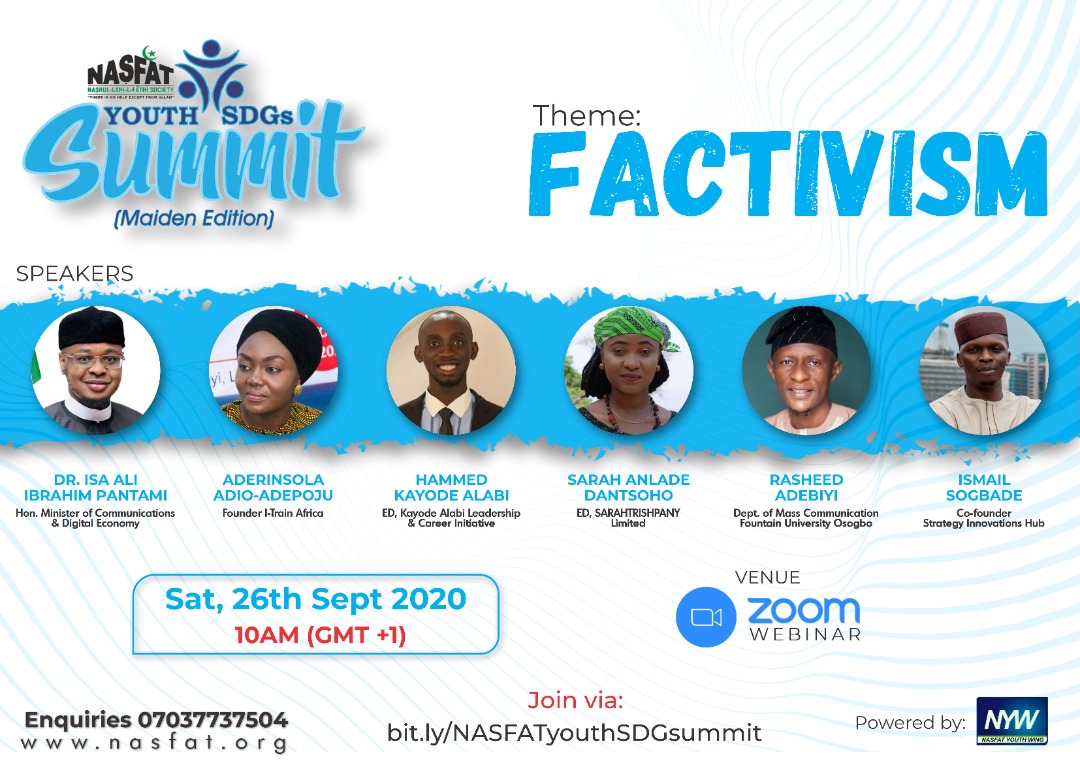
The Nigerian Minister for Communication and Digital Economy, Dr. Isa Ali Pantami is set to keynote the maiden edition of the Sustainable Development Goal Summit of the youth wing of the Nasrul-Lahi-L-Fatih Society, NASFAT, an Islamic organization with membership spread worldwide. Dr. Pantami would be speaking on Young People’s Role in Driving Digital Trends towards Achieving the SDGs. This was made known in a press release signed by the Youth Secretary, Kabir Raji in Abuja on Wednesday.

According to the release, the Summit, which draws its theme from the United Nations’ chosen theme of Factivism, is put together to mark the 5 years of the introduction of the Global Goals, highlight the roles of youths across different  faiths in the successful implementation of the global goals and provide an opportunity to get youths informed about the SDGs and their roles in the achievement of the goals. Raji said “In playing our role in the successful journey of the SDGs to 2030, the youth of Nasrul-Lahi-L-Fatih society came together to organize the maiden summit. Going with the pledge to “Leave No One Behind” we have decided to take a leading role in the awareness and involvement of young people in achieving the SDGs and the summit which is tagged “FACTIVISM” gives us an opportunity to be well informed about the Sustainable development goals and our roles in achieving these goals.”

The release stated that the UN theme was keyed into as it helps the people to know how not to just be champions of the SDGs but champions that are armed with true facts and that would keep people well informed and prepared for the journey ahead. The release highlighted how NASFAT has been on the forefront of playing her role in achieving the SDGs  focusing on 6 of the 17 goals through the H.E.L.D (Health, Education, Livelihood and Dawah)  programme. Thus, the summit is another way of promoting youth involvement in creating awareness, driving implementation and accelerating the achievement of the goals through the youth power.

The summit, which is meant to serve as a clarion call to everyone who wishes to play a role in accelerating the achievement of the goals’ concrete targets, has a line up of speakers and insightful topics on volunteering opportunities and social entrepreneurship. Other speakers include Hammed Kayode Alabi, Sarah Anlade Dantosho, Aderinsola Adio-Adepoju and Ismail Sogbade. The programme will hold on Saturday 26 September, 2020.

Core Challenges Associated with Work-From-Home (WHF)

0
Virtual event or meeting has gone mainstream, benefiting Zoom

People are advocating for work from home (WFH) policies in their offices. Some think it’s the best working condition option. If you ask them why they think so, they will tell you that if they work from home, they will have flexible working time. That means they can wake up anytime they want to and do the job when they feel like. After all, all that is needed is for the job to get done. Another thing you might hear from the advocates of WFH is that they will work from the comfort of their homes and be near their families. You might also hear that WFH saves money that would have been used on commuting to work and paying for lunch. Well, before you opt for WFH, you may need to reflect over its disadvantages, especially for Nigerians.

The first mentioned supposed advantage of WFH is flexibility. Here people believe that they are no longer restricted to a particular period of time to do their jobs. They see WFH as a situation, whereby you “go to work” whenever you want to and then “leave” when you feel like. Well, flexible working hours may be an advantage of WFH, but then, instead of having a 9-5 working period, you will get 12-12 working hours. Here, nobody checks time for you. You are given a job and a deadline. Whether you stayed awake all through the night to do it is nobody’s business. In the office, you can shut down your computer and come back the following day to finish up the job. But in this case, you must meet the deadline or you face the music. In this working condition, there is no weekend, no off-duty, no overtime, and no clock-in and clock-out; you work 24/7.

Next “lie” that WFH uses to lure people into its cage is that it tells them that they will work from the comfort of their homes and be near their families. Of course, you will be near your family, but they are the ones that will take away that “comfort”. Just close your eyes and imagine what it is like when you are cracking your brain to sort out an issue and your children are doing acrobatic displays in the background. Or your neighbours decided that loud music is the best way to enjoy songs. Or two women across the street decided to settle their fights with shouting at each other. Just imagine the distractions you will get when the environment isn’t as conducive as that of your office, that’s what WFH will give you.

So people told you it is cheaper to work from your home. Did they tell you that you have to buy extra fuel everyday to get those jobs done? Did they tell you that you have to buy working materials (printers, scanners, papers, and so on)? Did they tell you the numerous phone calls you have to make in order to do a good job? How about the data you will spend on downloads and uploads, ever thought of them? That little money you saved from lunch and transport fare will be swallowed up by miscellaneous expenses that come with remote working. You may even spend more if care isn’t taken.

I am not trying to discourage anybody from the WFH option but you need to consider a lot of things before you opt for it. You may no longer have to jump out of the bed when the alarm sounds by 4am but you may have to stay awake till 2am. Honestly, your boss/client actually owns your time when you work from home. So if you must take this option, make sure it is the best one available.