DD
MM
YYYY

PAGES

DD
MM
YYYY

spot_img

PAGES

Home Blog Page 6164

Chekkit Partners with Fantom to Provide Anti-counterfeit Technology for Afghan’s Pharmaceutical Industry

0

Chekkit, a Nigerian health startup designed to assist in the fight against counterfeit products, especially pharmaceutical drugs, has secured a partnership deal with Fantom Foundation in Afghanistan.

Founded in 2018 by Dare Odumade and Jide Asare, Chekkit uses anti-counterfeiting technology for supply chain tracking and consumer real-time feedback analytics. The company uses Unique ID labels – secured on the Ethereum blockchain network – and USSD or QR scanning to verify product authenticity and automate data entry.

Chekkit operates a B2B business model, helping companies in the food and drug business to track their supply chain integrity and protect their products from counterfeiting. So far, the company is operational in Ghana, Nigeria and Zimbabwe, where it offers other governments its services.

As its services help more companies to monitor their goods and products, and governments to fight counterfeit through the unique tamper-proof ID, Chekkit is exploring other markets beyond Africa, especially in countries with similar history of fraud and counterfeit products.

Chekkit’s Afghan partner Fantom, is a DAG-based smart contract platform with fast confirmation times. Their solution is built on Opera mainnet that provides fast and secure consensus capable of scaling to the high transactional throughput required to power a country’s entire healthcare system.

Africa and Asia are the continents with the highest rate of counterfeit products, and their respective governments have struggled to curtail it. Afghanistan, as one of the countries inflicted by the menace, is counting on the strategic public-private collaborations to curb counterfeit products, and the Chekkit-Fantom partnership has offered it.

“Over the years, we have seen several partnerships between progressive governments and innovative technology companies to tackle counterfeiting head-on, no holding back. A testament to the fact that a lot can be achieved with strategic public-private collaborations,” the partners said in a press statement.

With its record of hundreds of fake pharmaceutical businesses, Afghanistan is a country of interest for Chekkit services.

As of 2015, Afghanistan, with a population of 31 million, had a total of 450 foreign pharmaceutical suppliers registered with the health ministry. Compared to its neighbors, India which has a higher population of over 1.3 billion and only 100 foreign pharmaceuticals registered with the ministry of health, Afghanistan has an apparent problem of illicit pharmaceutical operators.

Consequently, the country’s Ministry of Public Health has signed a MoU with Fantom and Chekkit to help tackle the menace of counterfeit drugs using analytics and blockchain technology. The project, which begins in a 3-month pilot phase, will utilize Chekkit’s product authentication technology to track and verify all drugs sold in Afghanistan.

The Chekkit-Fantom partnership was initiated in November 2019, during the AfricArena Summit held in South Africa, where Chekkit was among the top three participants.

“Fantom was already in conversation with the Afghan Ministry of Health and brought Chekkit into discussion because our solution was advanced enough to tackle the Afghan counterfeit problem and the fact that Chekkit’s solution was built to work perfectly in developing countries was a huge plus as well. The partnership sees Chekkit’s solution deployed on Fantom’s DAG blockchain network,” the partners said.

The project will be executed through various means of checks and authentication in collaboration with the Ministry of Health, drug manufacturers and consumers.

Chekkit said each product will be labeled with a unique QR code generated through it software which contains information on each product like its authenticity, manufacturing date, expiry date, FDA number, manufacturer, distributor etc.

Afghan public can verify the authenticity of drugs by scratching Chekkit’s label to reveal the company’s QR code, which they can scan using the Chekkit’s app to confirm the authenticity of the product. The company said it has deployed a loyalty/reward system to encourage verification.

As part of its collaboration with the Afghan health ministry, Chekkit has provided special hand-held devices that they can use to verify the authenticity of products at the point of entries into the country.

Odumade says he is hoping that the double focus strategy of the project will make it “extremely difficult for counterfeiter to thrive” and at the end of the pilot phase, there will be deployment of Chekkit’s technology across board.

“Through this partnership, we will provide the pharma companies involved with valuable consumer insights and a reward program to encourage purchase and verification by buyers, as well as give the government/ministry a transparent view of the pharmaceutical market.

“On completion of a successful pilot, we envisage our technology being deployed across the board for all meds coming into Afghanistan.

“Finally, we will also deploy a supply chain tracking solution that offers 360-degree protection against counterfeiting. We plan that the supply chain tracking will be implemented in collaboration with manufacturers, distributors, and retailers,” he said.

Innoson Motors Takes Uber, Bolt via IVM Connect in Nigeria

6

It is a very big call: Innoson Vehicle Motors (IVM) will launch a vehicle-hailing service in Eastern Nigeria in Q4 2020. According to Techpoint, they will begin with 200 vehicles and then ramp up to 500, covering most parts of Eastern Nigeria. Drivers will be trained by the Federal Road Safety Corps (FRSC).

Prospective drivers to operate the fleet must be tech-savvy, and with  capacity to pay back the vehicle within two years via a hire purchase agreement. For the integrity of the hire purchase system, all transactions would be electronic. Yes, IVM is going all electronic on payment here. This is the way to go: IVM can use this playbook  to even sell more cars. If that works, it could open it up with a leasing service in Nigeria.

This is a double play strategy. He can lose money on this but in that process, he will create a brand where IVM vehicles become common on the streets. Just like that, everyone goes for IVM. Brilliant call by the legend as he can capture value via sales through brand awareness triggered by IVM Connect.

The risks are on the aggressive two year hire purchase plan which I think may not be possible. Also, the vehicle-hailing business has not shown capacity to be profitable at scale anywhere. But the little losses may bring popularity through awareness this will bring. 

When great entrepreneurs emerge, nations rise. Well done Innoson Motors.


Innoson Vehicle Motors – Brand Photos with Prices

The Financial Expert Who Was Swindled By a Rogue

0

Ah, you warned me and I didn’t listen. I thought I would cash out before they abscond!

That was the lamentation of Confidence, my good friend after losing a huge sum of money recently in a ponzi scheme called FoxBet. You may find it hard to believe that a financial expert with years of experience could be easily defrauded by a group of rogues having less of his experience but smarter. As it’s said in Africa, a dog that’s destined to stray will not heed the hunter’s whistle. However, I must admit that no matter how smart and careful we are, we sometimes fall victims.

It all started four days back when I received an urgent call from Confidence asking me to lend him some money. The amount was considerable that I had to query the purpose and when I should get back my money. He narrated how one of his colleagues invested the sum of N100k and cashed out N140k within two days. Incredulous! I exclaimed. What’s the name of the organization and what are they into? I asked.

They’re into football betting. This is a sure bet! They know people who know some players. They agree with them to commit fouls and get yellow carded during matches. The odds are certain, he explained excitedly. I counseled him that this sounds too good to be true. I cannot gamble my money away. He was desperate that he even offered me 50% of the gain if it comes out fine, if not, he will only return my capital. It was then I reminded him of Murphy’s Law which says, “Anything that can go wrong will go wrong.” I also went further to quote the 4th and 5th Laws of Gold according to the Richest Man in Babylon.

The Fourth Law of Gold
Guard thy treasure from loss: Every owner of gold is tempted by opportunities where it would seem that he could make large sums by his investment in most plausible projects. Often friends and relations are eagerly entering such investment and urge him to follow.

The Fifth Law of Gold
Gold flees the man who will trust it to impossible earnings or who follow the alluring advice of tricksters and schemers, or trust it to his own inexperience and romantic desires in investment.

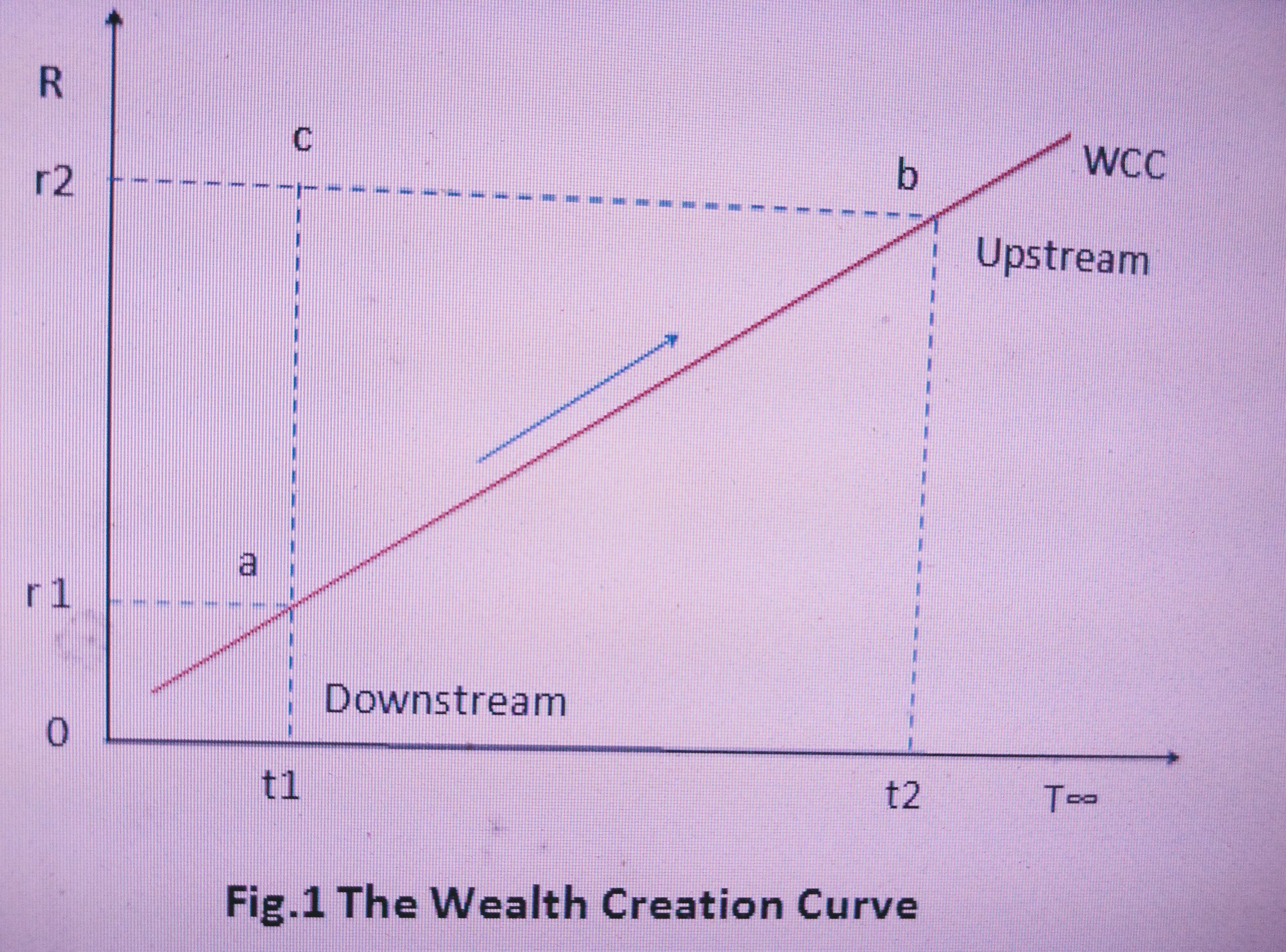
Using these financial principles, I deduced the Wealth Creation Curve, WCC. With the aid of the following graphs we will see how the odds were against my friend.


Definition of Terms
R = Returns, profit, commission, interest, etc.
T = Time
a = Risk factor
& (flattened) = Infinity

WCC = Wealth Creation Curve
BB = Backward Bending
Downstream = Low networth
Upstream = High networth

Normal Case
Consider Figure 1, as an investor you must start from the downstream at point a to earn r1 after doing time t1. To earn r2 upstream at point b, you must do time t2.

Abnormal Case
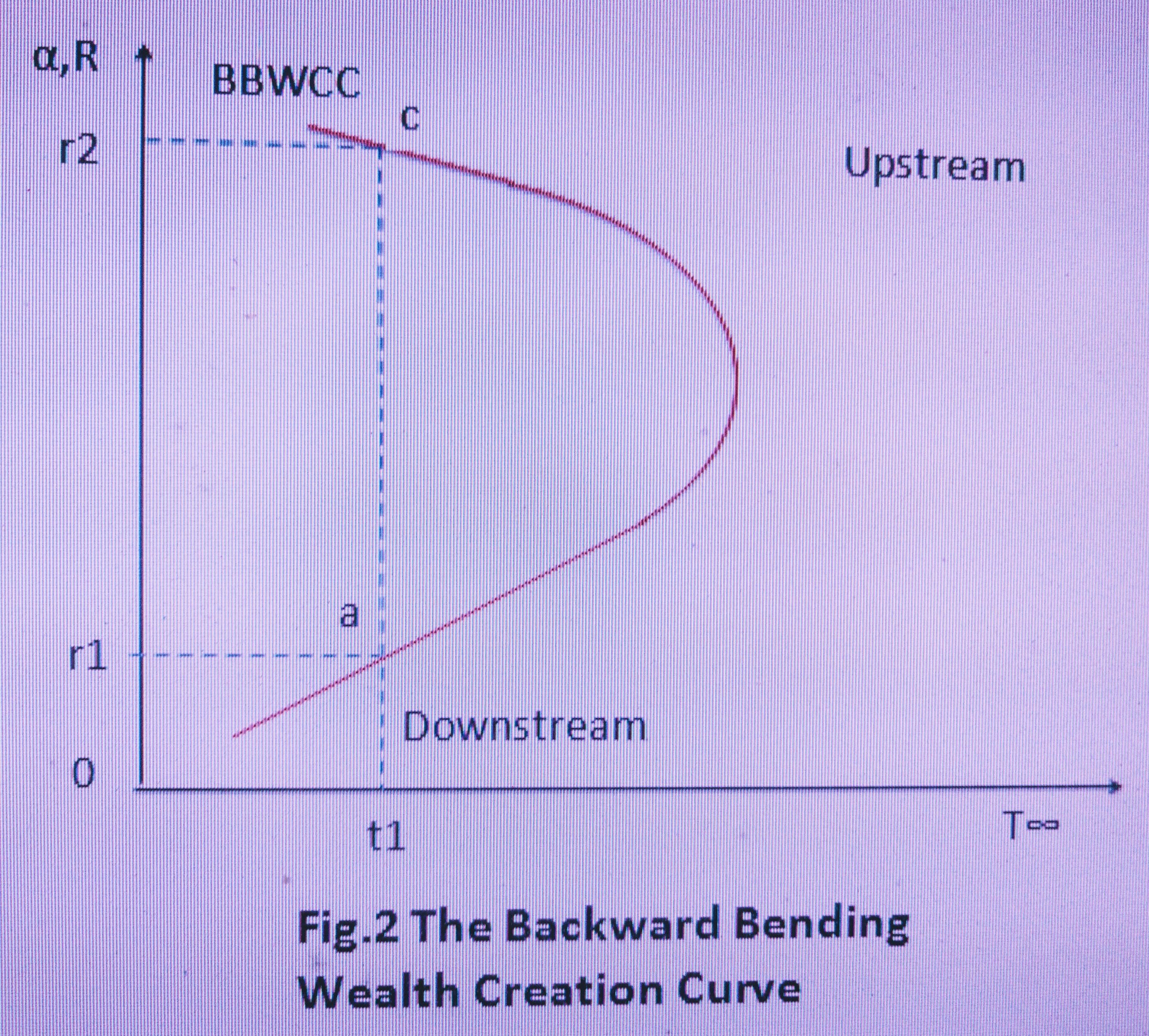
From Figure2, you create a Backward Bending Wealth Creation Curve when you try to earn r2 at t1, that is, point c. As you force the WCC backwards, you increase your risk to the point where a = R. This is the point you risk losing all your investment.

“The game is so arranged that it will always favor the keeper. It’s his business at which he plans take a liberal profit for himself from the coins bet by the players. Few players realize how certain are the game keepers profit and how uncertain are their own chances.

Conclusion
Despite the obvious red flag of FoxBet not using the formal financial channel of transaction preferring to deal in cash, Confidence was only true to the meaning of his name, albeit for the wrong reason. I will drop my pen with the last quote from the book.

“Wealth that comes quickly goeth the same way. Wealth that stayeth to give enjoyment and satisfaction to its owner comes gradually, because it’s a child born of knowledge and persistent purpose.”

Be vigilant!

New Certificate Design

4
Sample certificate to be issued to co-learners

I started Tekedia Mini-MBA in the Abuja airport lounge as we flew back from Nigeria after Christmas with family. By the time we landed in the U.S, there were many surprises. Thanks. As we move into the next phase, we are hiring in Owerri (Nigeria) and the US to improve our products. Also, we are building an app (web and mobile) which will be like a Facebook page and Whatsapp to deepen collaboration and innovation processes in our ecosystem.

One of the areas we will invest is to find how to use local cases to help our members.  The investment brief/concept note we created for Lab 1 (of edition 2) has helped many to unlock opportunities. Members have rated the report Excellent. Our job is to use such documents to co-learn and co-educate. 

But the first move is to update our certificate; we are retiring the old one for this. Please we will replace your old certificate if you ask, and new members, this is what you would get. Paul Adeneka designed this.

We are onboarding a university for the students to participate in two series we have created for schools – The Innovation of Firms, and The Wealth in Nations. For more on Tekedia Programs, go here.

As always, I want to thank our members for this call to serve in this capacity.


Tekedia Academic Programs

SPECIAL REPORT: Appointing Vice Chancellors for Nigerian Oldest Universities: Questions of Federal Character and Gender Imbalance

2
University of Ibadan, a federal university

For a number of years, the University of Ibadan, the University of Nigeria, the University of Lagos, the University of Benin, the University of Calabar, the Ahmadu Bello University, Obafemi Awolowo and University of Maiduguri have been in existence. From various sources, these universities have placed and still placing Nigeria on the global academic community in terms of producing quality graduates and researches.

Like other universities in the world, these universities have experienced and still passing through a lot of difficulties in their quest of realising mission and vision of 21 century universities, expected to have dynamic resources and ensure equal opportunity for everyone irrespective of socioeconomic and gender status. In spite of this, information indicates that appointment of vice chancellors for these universities and the newly established universities has been in favour of male academics more than female academics. Apart from the gender imbalance, available information also shows that vice chancellors have been appointed mostly from the state and region where the Universities are located.

On different fora, leaders of some of the Universities established after the 9 oldest Universities have debunked allegation of total disregard for the Federal Character Commission Principles in the appointment and promotion of staff. To some Public Affairs Analysts, Nigerian universities will remain local as long as regionalization and gender imbalance continue to characterised appointment of vice chancellors and employment.

“In the past things were different. For instance, the first vice-chancellor of UNILAG was Prof. Eni Njoku (1962-65). He was non-Yoruba. There was also Prof. B. Kwaku Adadevoh (1978-80), non-Yoruba. There was Prof. Dike, an Igbo, who was UI’s VC. Then, the first indigenous ABU administrator, Prof. Audu, was a northern Christian. Prof. Akinkugbe, from Ondo State, was ABU’s VC (1978-1979).”

Our Data and Measures

To put the discourse into a new perspective, our analyst examined demographics of the past and current [excluding those in acting capacity] vice chancellors of the oldest University in Nigeria. Emphasis was on their gender and state of origins. Out of the 9 Universities, comprehensive data were only found for 6 Universities. Efforts to get the details of the past Vice Chancellors ta the University of Maiduguri, the University of Benin and the University of Calabar were not successful throughout our two months of mining the needed data.

These Universities do not have the list of the past VCs like other Universities. Attempt to get data for the state of origins of Professors Oleka K. Udeala, Chimere Ikoku and Herbert C. Kodlilinye, past VCs of the University of Nigeria, on the Internet was equally not successful because their profiles do not include the data. Out 6 past Vice Chancellors found for the University of Maiduguri, Professor Ibrahim Abubakar Njodi, Professor J. D Amin and Professor Mohammad Nur Alkali hail from Gombe, Adamawa and Yobe respectively. We did not find data that establish state of origin of Professors Aliyu Shugaba, Mala Daura and Abubakar Mustapha. Professor Zana Akpagu hails from Cross River State and found as one of the past Vice Chancellors of the University of Calabar. We did not discover data that indicate state of origin of Professor James Epoke, another past Vice Chancellor of the University.

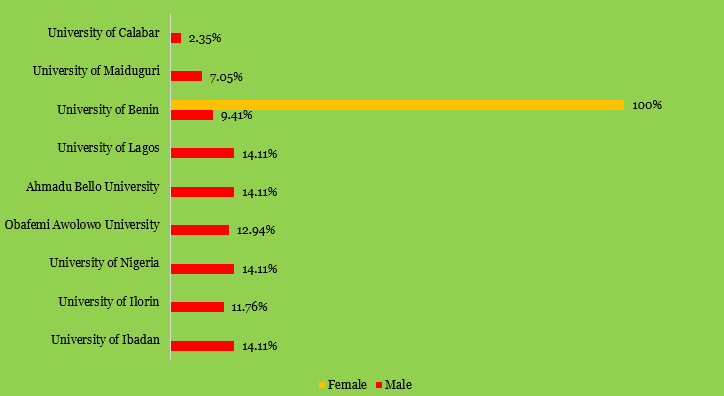
For the 9 Universities, our analyst found that 85 professors have led the University [some are still leading the Universities]. Looking at the number from a gender perspective, all the professors were/are male [see Exhibit 1]. Professors Grace Alele-Williams and Lilian Salami as past and current Vice Chancellor of the University of Benin are only substantiative female VCs.

Emerging Insights

Available data reveal that the University of Ibadan, the University of Lagos and the Ahmadu Bello University have had 12 substantive Vice Chancellors. With 11, 10, 9 and 8 Vice Chancellors, the Obafemi Awolowo University, the University of Ilorin, the University of Nigeria and the University of Benin respectively, followed the University of Ibadan, the University of Lagos and the Ahmadu Bello University. Available data also establish that the University of Maiduguri and the University of Calabar have had 6 and 2 Vice Chancellors respectively.

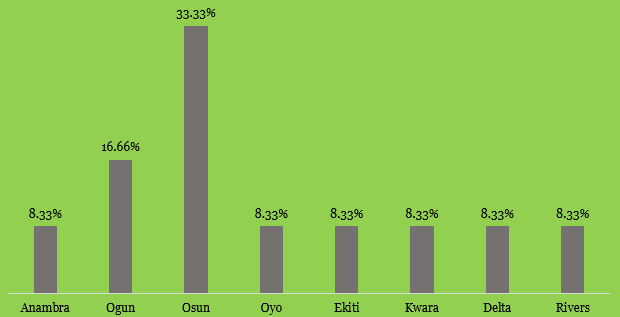
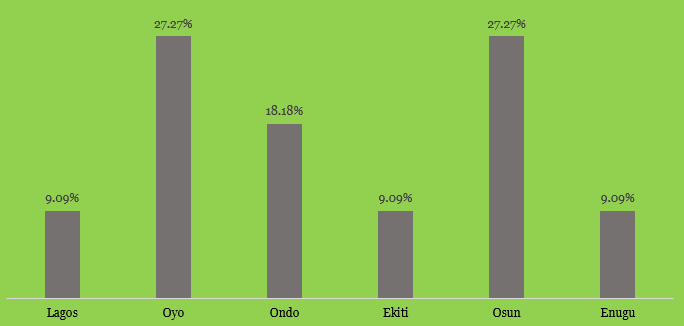
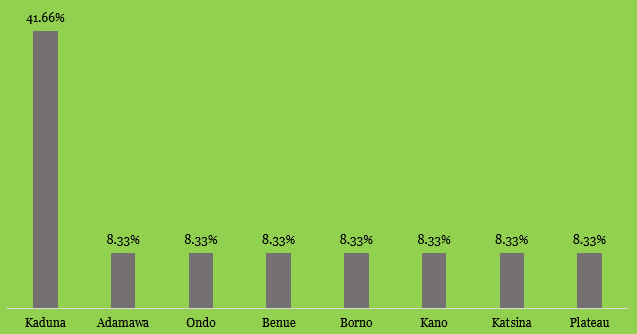
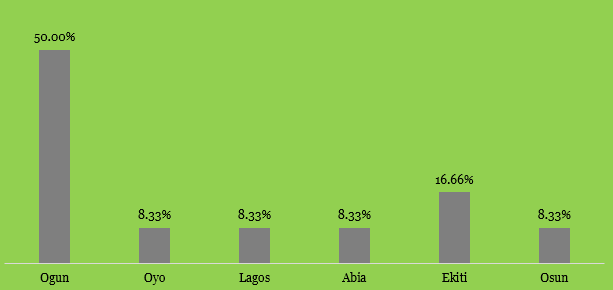
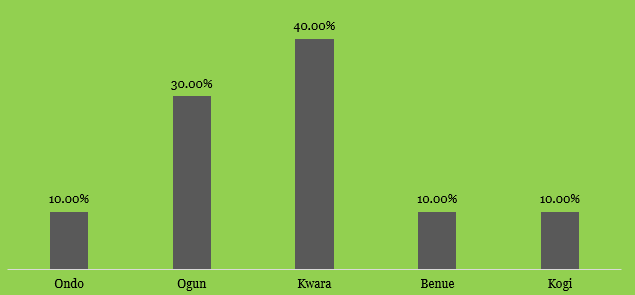
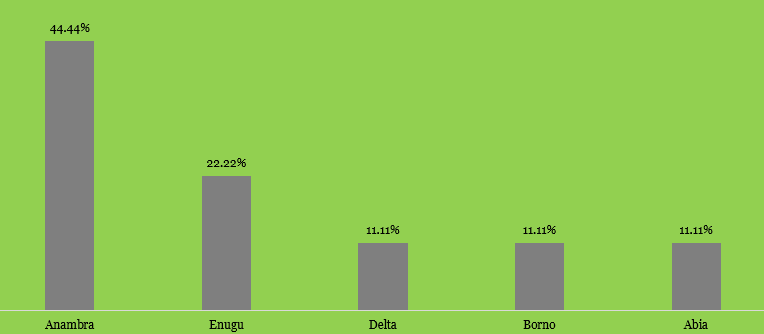
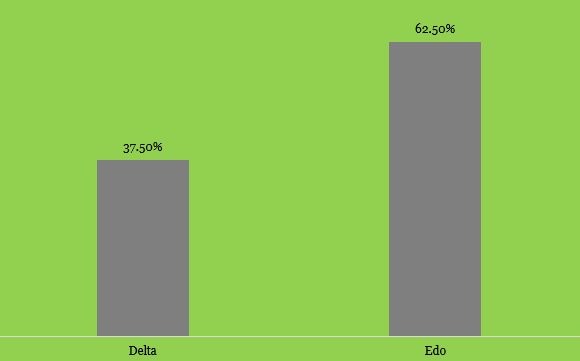
Over the years of appointing Vice Chancellors of the University of Ibadan, Professors from Osun state have been appointed more than others in the South-West region, where the University is located. Professors from Ogun state are trailing those from the state. This insight is not quite different in Obafemi Awolowo University. Professors from Oyo and Osun states tied in terms of occupying the position in the last few years. At Ahmadu Bello University, Professors from Kaduna state have held the position more than others in the North-West region. Professors from the South-West region, especially Ogun and Ekiti states, have been appointed more as Vice Chancellors of the University of Lagos than those from other states in the region. In a twist of regionalization of the appointment of the Vice Chancellors, Professors for the position at the University of Ilorin have largely been from Kwara state, a state in the North-Central region and Ogun state, a state from the South-West region. Anambra and Enugu states born Professors have been Vice Chancellors of the University of Nigeria than other Professors from South-East region, where the institution is situated.  The University of Benin has been led by Professors from Edo and Delta states more than other states in the South-South region.

Exhibit 1: Percent of Vice-Chancellors by Gender

Source: Universities’ Websites, 2020; Others, 2020; Infoprations Analysis, 2020

Exhibit 2: Past Vice Chancellors of University of Ibadan by State

Source: University of Ibadan’s Website, 2020; Infoprations Analysis, 2020

Exhibit 3: Past Vice Chancellors of Obafemi Awolowo University by State

Source: Obafemi Awolowo University’s Website, 2020; Others, 2020; Infoprations Analysis, 2020

Exhibit 4: Past Vice Chancellors of Ahmadu Bello University by State

Source: Ahmadu Bello University’s Website, 2020; Others, 2020; Infoprations Analysis, 2020

Exhibit 5: Past Vice Chancellors of University of Lagos by State

Source: University of Lagos’ Website, 2020; Others, 2020; Infoprations Analysis, 2020

Exhibit 6: Past Vice Chancellors of University of Ilorin by State

Source: University of Ilorin’s Website, 2020; Others, 2020; Infoprations Analysis, 2020

Exhibit 7: Past Vice Chancellors of University of Nigeria by State

Source: University of Nigeria’s Website, 2020; Others, 2020; Infoprations Analysis, 2020

Exhibit 8: Past Vice Chancellors of University of Benin by State

Source: University of Benin’s Website, 2020; Others, 2020; Infoprations Analysis, 2020

Implications and What Needs to Be Addressed

Based on the emerging insights, our analyst notes that the need to question the efficacy of the Federal Character Commission Principles and gender policy is now. It is obvious that the principles and policy remain rhetorical statements and document after many years of formulation and initiation. The difficulty in having female Vice Chancellors in the Nigerian universities has been attributed to inadequate numbers of qualified women, patriarchy, domestic and family demands, socio-cultural beliefs that leadership is the prerogative of men, lack of encouragement and support, lack of leadership skills and poor mentorship, among other factors.

In our earlier analysis, it has been noted that the wording of vacancy advertisement for the Vice Chancellor position is giving male professors edge over female professors. This needs to be addressed in subsequent advertisements. Masculine-words should be downplayed while calling for submission of applications. Appointment of the new Vice Chancellors mostly from the ranks of formers deputy vice chancellors and deans is also putting female professors at disadvantage because only a minority of female professors occupy the positions [DVCs and Deans]. From the present insights, it is difficult to accept that Nigeria is fostering national unity, cohesion and promote a sense of belonging among all Nigerians working in the Universities.