Considering the rots in Nigerian systems, it would be an understatement to say that the country and her citizens are not facing significant socioeconomic and political problems after independence. One of her dreaded socioeconomic problems has been unemployment over the years. “Corruption in both public and private and at the individual levels, industrial decay, and neglect of the agricultural sector are among many others have been identified as factors responsible for unemployment.” The resultant effects, according to many sources, have been widespread poverty, youth restiveness, high rate of social vices and criminal activities.
According a recent study, “If not controlled, apathy, cynicism and revolution might become the consequent.” In line with this background and other issues analysed by our analyst, this piece considers motives of the RevolutionNow Group led by Omoyele Sowore and media [Nigerian and foreign newspapers], and the Nigerian Police behind staging #Revolutionnow protest, framing the protest and managing it between August 5, 2020 to August 31, 2020.
Revolutionary Pressures and Social Movements
Before the independence in 1960, Nigeria had and still having several political and human rights activists after the independence. From Betty Abah to Monday Owens Wiwa, achievements and failures of these activists have been documented. In Nigerian social movement and revolutionary history, Aba Women Riot of 1929 remains the most celebrated social movement against poor governance.
The riot was recently recognised by the United Nations as a remarkable led-women movement in the world and one of the movements that ensured the place of women in societies, where their fundamental human rights are being denied. Aba Women Riot of 1929 happened because the British colonial administration represented by Captain J. Cook, an assistant District Officer, wanted to tax women. This was perceived by the women as social and economic injustice.
According to several accounts, the riot led to the death of 51 women. Several years later, Ken Saro-Wiwa co-founded the Movement for the Survival of the Ogoni People, calling for the recognition of environmental and social rights of the Ogoni people in the southern part of Nigeria. Saro-Wiwa and his members fought the war with every resource they laid their hands on. Unfortunately, they did not win the war because they were executed by the regime of General Sanni Abacha in 1995.
Between 1990 and 1995, while Saro-Wiwa and his co-activists from the Ogoniland were fighting the military government of General Sanni Abacha, Omoyele Sowore was in the University of Lagos as a student. Information has it that as a student leader, Omoyele Sowore was part of the students who joined national social movement against the then military government.
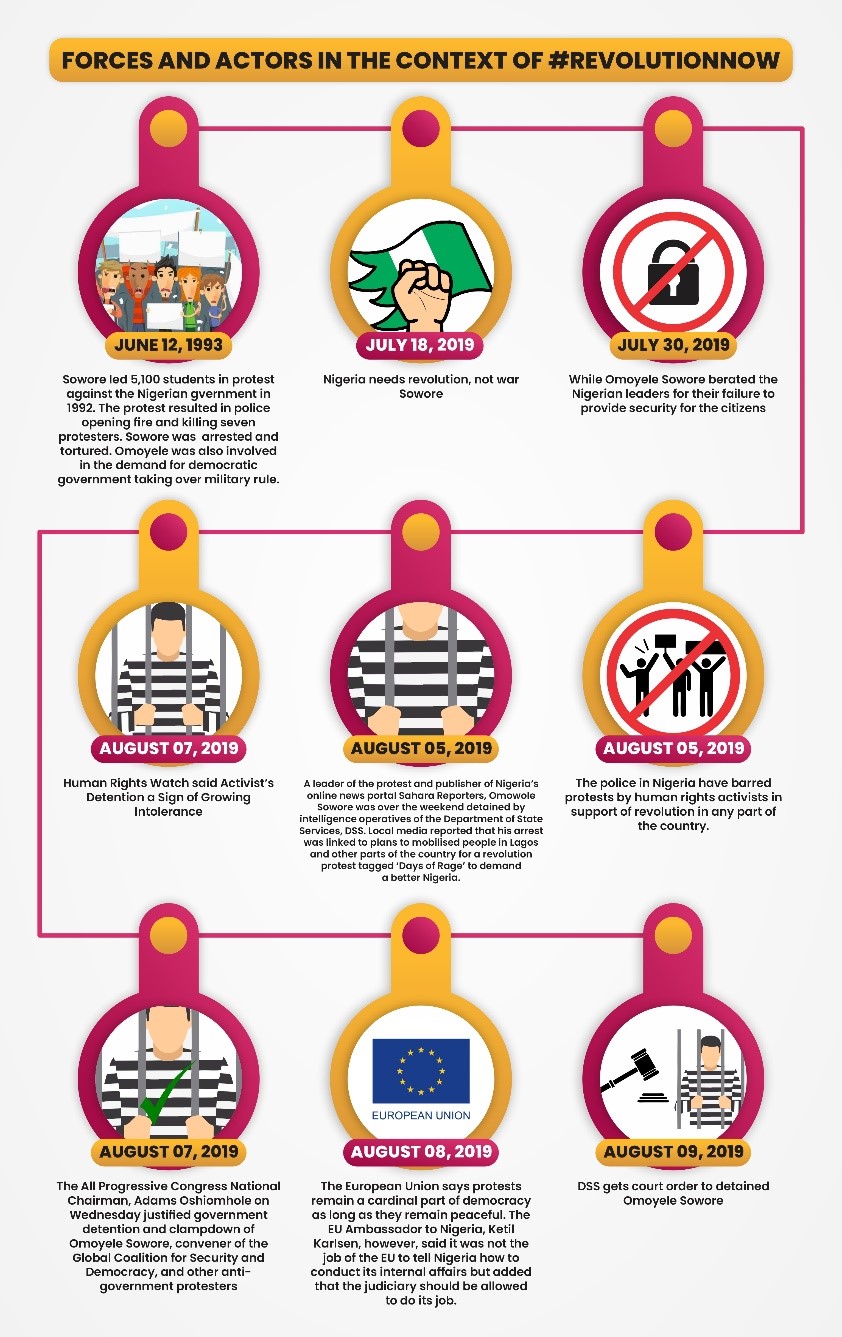
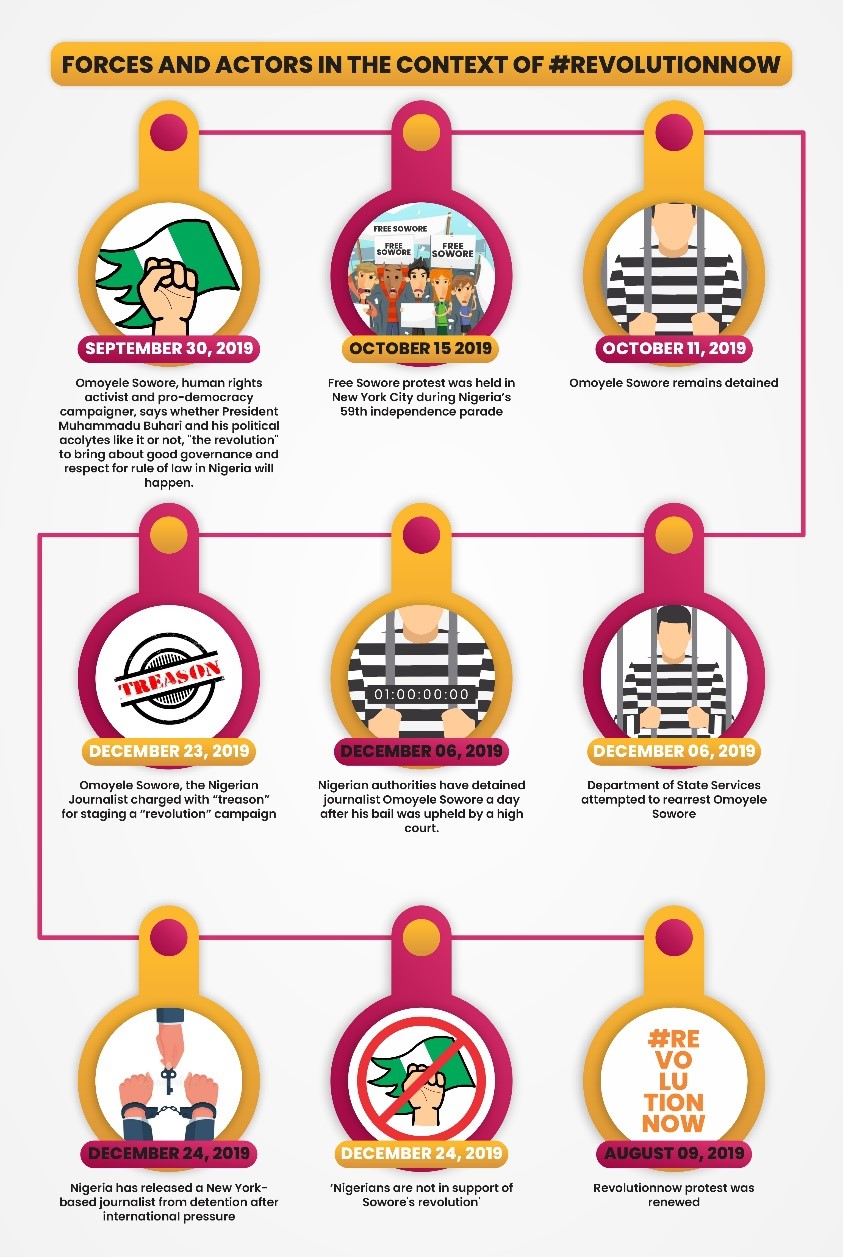
Omoyele Sowore, appears to be another political and social activist, who believes in strong social movement and revolution as means of making socioeconomic and political structures effective in Nigeria [see his trajectory of calling for good governance and consequences in Forces and Actors in the Context of #Revolutionnow section].
From 1992 to 2020, activities of Sowore have been on why political elites and followers should ensure better systems and leadership structure for the country’s growth and development in all ramifications. His recent #RevolutionNow protest focuses on three core areas that political leaders must address to ensure political, social and economic justice.
In the first phase, which has 8 demands, #RevolutionNow Movement Group wants the current political leaders to return fuel prices and electricity tariffs to their levels in 1999, ensure the immediate payment of all outstanding salaries of workers and pensions of retirees and abolished tuition fees in all public universities and secondary schools among others. The second phase, which is dubbed end special privileges for the ruling class, has 4 demands. In the phase, the Group wants an end to training of public officials’ children in private schools in Nigeria or in schools in foreign countries. They also want an immediate end to the use of police or military personnel as private security guards for these officials.
From the 7 demands allotted to the third phase, which is dubbed as return political power and national wealth to the working people, Sowore and his members want complete and uncompensated repossession by the working people of all national resources stolen by the ruling class and abolition of the death penalty except for the embezzling or privatisation of the public wealth. The Group presented a total of 19 demands. Out of this, our analysis reveals that 26.31% would benefit the few Nigerians, while 73.68% would benefit many Nigerians [see Exhibit 1].
Exhibit 1: Demands and Categories of Beneficiaries
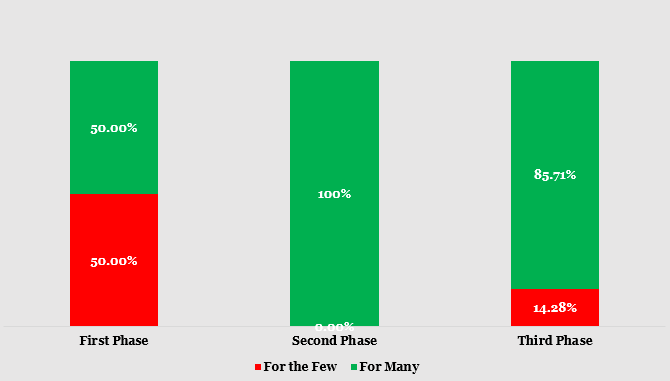
Key: First Phase=End anti-people economic policies, Second Phase=End special privileges for the ruling class, Third Phase=Return political power and national wealth to the working people
Source: Nigerian Newspapers, 2020; Infoprations Analysis, 2020
Our Data and Measures
Nigerian and foreign newspapers were the first source of our data. As the fourth estate of the realm, media are expected to play their social and development participant roles in the revolution protest. This is one of the reasons for considering them in our analysis. Another reason is that not every Nigerian will be at the locations [States where the Revolution protest took place are; Lagos, Osun, Ondo and Cross River] where the Revolution protest took place. A number of people would prefer reading and watching the protest through print and broadcast media across the country.
For years, news media have been criticised for framing social and political protest in negative ways, most especially through photojournalism. From social and public affairs analysts, the media portrayal can “shape the public’s understanding of the protest when they [protest] were framed as dramatic or violent in images. We measured this in our analysis. The three phases [end anti-people economic policies, end special privileges for the ruling class and return political power and national wealth to the working people] also formed our data source. Images published by the Nigerian newspapers and foreign ones such as the BBC, African News among others were specifically extracted and analysed.
The Measures and Categories
- VP: Violent protest
- PP: Peaceful protest
- PPC: Police prepared for conflict
- PMLO: Police maintaining law and order
- PAHP: Police attacking and harassing protesters
- PCPSP: Protesters carrying placards that showed socioeconomic problems
- PCPP: Protesters carrying placards that showed political problems
- PMC: Presence of the main conveners. This was specifically measured with the consideration of presence of Omoyele Sowore and other members of the Group, especially those with costume meant for the protest
- Enthusiasm: Protesters are being happy and ready for the protest. This was specifically measured through the examination of their jubilation and other elements that established eagerness to participate in the protest
- Fear: Protesters are fearing of security agencies, especially police, presence.
- Sadness: Protesters are not happy about how the police are handling the protest and also about the socioeconomic and political situations in the country. This was specifically measured using sorrow element exhibited by the protesters [showing on their faces].
- Anger: Protesters are furious about how the police and other security agencies are handling protesters. This was specifically measured using annoyance element exhibited by the protesters [showing on their faces].
From category a to h [see The Measures and Categories], our focus is to understand the dominant frames used by the journalists and their media establishments to construct the protest for public understanding. Using the frames are essential because of their potential of increasing online participation. By online participation, we expect people who are not in the protest’ locations to seek for information about the protest and use the information for online protest in form of posting and sharing messages associated with the protest. Enthusiasm, fear, anger and sadness are also used to explicate public understanding of the protest through virtual sphere.
For proper understanding of the virtual sphere, public searches about the protest became our last data source. We extracted Nigerians’ interest in the protest from Google Trends [and used as proxy data] from August 5, 2020 to August 31, 2020. The interest ranged from 0-100. After several weeks of tracking and mining images from the newspapers, we found 81 images. We used these images only because other images were republished several times by the media to depict the protest. From the first category to the last category [see The Measures and Categories], we used presence and absence as keys to represent what we aimed at knowing from each image. However, we coded violent and peaceful protest distinctively. The uniqueness in coding the two categories lie with the fact that we need to see whether the Group became violent while protesting as against what they told the public [peaceful Revolutionnow protest].
Emerging Frames
Analysis shows that the media framed the protest as peaceful while the protesters were found to display placards that depict political problems more than socioeconomic problems. With the presentation of political issues more than socioeconomic challenges, our analyst notes that the media want the public to see the protest as against political elites or actors more than what socioeconomic actors [especially the business owners who are also expected to make significant changes to issues affecting people at the bottom of the pyramid]. Only 2.50% of the 81 images showed that the protesters were violent. Analysis also establishes that the media did not want the public to see Omoyele Sowore as the main actor of the Group during the protest. This position was arrived at by our analyst because 69.10% of the images did not have Sowore as part of the protesters. With this, the media has made the public realised that Sowore should not be considered as the only person who can lead revolution protest in Nigeria.
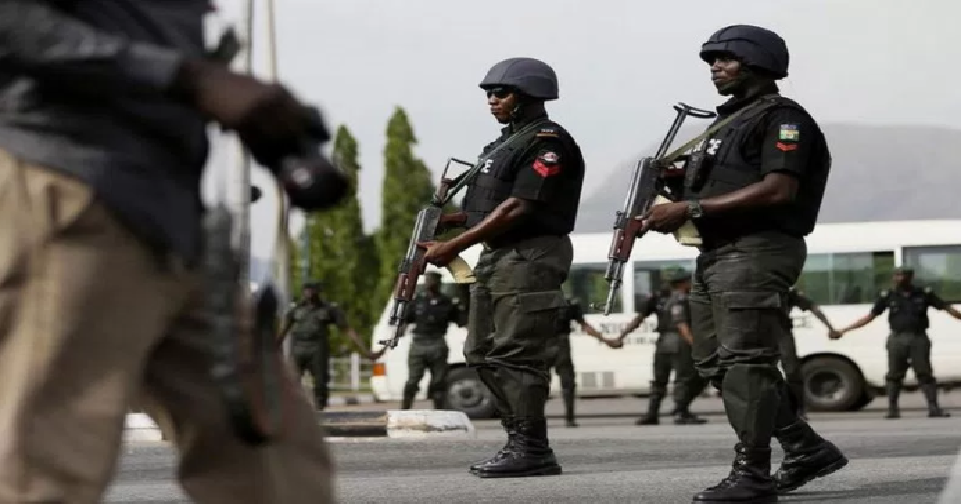
It is disheartening to know that the media presented police less within the PPC and PMLO frames [see The Measures and Categories]. Instead, they were presented as attacking and harassing the protesters. This representation re-emphasises the year-long police brutality during popular protest in Nigeria. Our analysis also points out that the media represented the protesters as being eager and ready to carry out the protest and sad about the socioeconomic and political situations in the country. We also found that they were annoyed about how the police attacked and harassed them during the protest [see Exhibit 3].
Exhibit 2: Emerging Frames
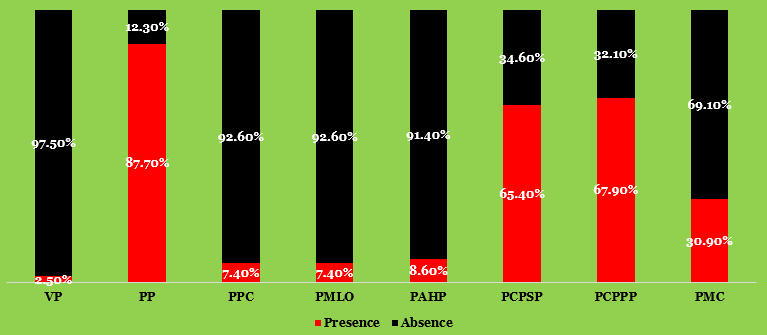
Key: VP = Violent protest PP=Peaceful protest PPC=Police prepared for conflict PMLO=Police maintaining law and order PAHP=Police attacking and harassing protesters PCPSP=Protesters carrying placards that showed socioeconomic problems PCPP=Protesters carrying placards that showed political problems PMC= Presence of the main conveners
Exhibit 3: Constructed Mood
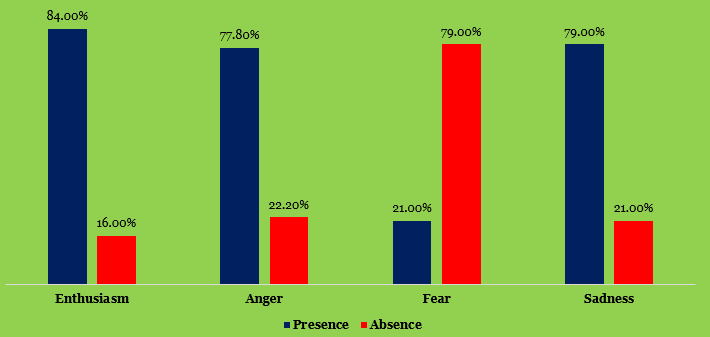
To further understand the emerging frames, our analyst explored the place of constructed moods in the frames. From 71 images that established the protest as peaceful, 91.1% show that protesters were eager to carry out the protest and happy. Over 78% and 80% of these images indicate that protesters were sad and annoyed. The sadness and annoyance manifested in 100% and 85.7% of 7 images that established police as attacking and harassing the protesters.
One of the surprising insights from our analysis is that in 6 images that established police as preparing for conflict, protesters in the images were ready to carry out the protest and happy as well whereas the readiness and happiness was 77.8% when we examined 9 images, portraying police as maintaining law and order.
Examination of the main issues of the protest shows that from 53 images that showed protesters as carrying placards which established political problems in the country, the protesters’ readiness and happiness was framed in 94.5%. This is not quite different for socioeconomic problems [53 images]. Over 92% of the images showed readiness and happiness of the protesters. With 81.8% out of 55 images, protesters were portrayed as being sad when they carried placards that presented political problems more than socioeconomic problems [81.1% of 53 images had sadness mood].
What happened when the protesters were sad and annoyed about issues in their three phases? How did police react to the protesters’ moods? Our analyst explores these questions and found surprising insights. When protesters were angry, police were 0.27 times attacking them. When they were sad about the socioeconomic and political problems, there was no attack from the police. When police prepared for conflict, protesters were 0.57 times fearing them. When protesters carrying placards that showed socioeconomic and political problems, they were more than 7 times happy about the protest. When the main conveners were present, protesters were 3 times happier about the protest.
Pictures and Protest: Understanding Emerging Frames Through Public Information Seeking about Revolution
As the protest was carrying out in the physical sphere, as we noted earlier, we expect public interest through the Internet to surge about the protest, socioeconomic and political issues the Group wants the political leaders to address. In our analysis, we found that the public had significant interest in President Muhammadu Buhari, revolution and protest than in Omoyele Sowore [see our earlier selected period].
While the interest in Sowore and revolution indicated strong connection, we did not find such for President Buhari and revolution. This signifies that the public preferred understanding revolution through Sowore than the President. This is understandable considering the fact that Sowore is the main actor and expected to be in public minds as the protest was being staged across the country. This insight is not quite different from what we found when we analysed public interest in the actors [President Buhari and Omoyele Sowore] along with the interest in protest. Analysis shows that one percent interest in President Buhari reduced interest in protest by 23.3%. It was 17.4% increase in protest when the public sought information about Sowore.
In our analysis, we also discovered that the media framing of the protest as peaceful facilitated public interest in Sowore and President Buhari by 65.3%. When protesters were framed as carrying placards that showed political problems, the interest was 74.7% in the two actors. The interest was 74.1% when socioeconomic problems frame was used by the media. When pictures showed that protesters were sad about socioeconomic and political problems, public interest in protest was 1.5%. When pictures showed that protesters were angry about socioeconomic and political problems, public interest in protest was 8.1%. When pictures showed that protesters were angry about socioeconomic and political problems, public interest in the revolution was 0.0%. When pictures showed that protesters were sad about socioeconomic and political problems, public interest the in revolution was 0.0%. When pictures showed that protesters were ready to carry out the protest and happy about it, public interest in protest was 0.1%. When pictures showed that protesters were ready to carry out the protest and happy about it, public interest in revolution was 3.2%.
Strategic Option: A New Playbook for Revolution Protests
When we situated the entire analyses and insights in the context of the view of many public affairs analysts and veteran journalists, we concluded that the profound truth is that a number of Nigerians are not ready for revolution protests, especially carrying them out through virtual sphere.
In the words of Fisayo Soyomo, an award-winning Nigerian journalist, “Nigeria’s problems are extreme; therefore, solving them requires extreme measures, including revolutionary protest. While street protests are important, I personally believe the biggest revolution needed in Nigeria is the revolution of self — the revolution of values, intellect and the mind. Our problem is more than Muhammadu Buhari; it is that warped sense of values that drives many of us to place self over the country.”
Therefore, stakeholders in social and revolutionary movement need to renew their playbook. As a matter of fact, media community needs to do more in terms of representing the views of genuine social and political activists. The police need to reevaluate their responses to social and political protests. In this regard, members of the security agency must be trained on better approaches for handling angry protesters. Citizens, who are not involved in physical protests but are online, also need to show level of commitment to genuine protests that have the tendency of changing socioeconomic and political status of the country.