DD
MM
YYYY

PAGES

DD
MM
YYYY

spot_img

PAGES

Home Blog Page 6180

Tekedia Edition 3 Members – Webinar At 7pm Lagos Time

0

Please be informed of Tekedia Live today. We’d like to put you to speed on how best to utilize the social platform and how best to navigate your learning platforms. We will also discuss the Tekedia Live video (optional) session which begins next week. We apologize for the short notice.

Subject : A welcome session for Edition 3 participants

Link : https://zoom.us/j/99880014518

Saturday 15th of August, 2020
Time: 7pm WAT

Invest in Knowledge and Build Mines of Knowledge

4

Last year, I flew a UN helicopter to meet his cabinet. Yesterday, my phone rang. It was His Excellency. He said, “when can you return?” Covid-19 has destroyed one of the most exciting things in life: bringing big changes where impacts are highest. Young people here, let me tell you one thing: never miss an opportunity to do your best. I meet influential people around the world – very rich people, political leaders, etc – and in nearly all of them, I expanded an opportunity through a small opening.

When given an opportunity, PREPARE, DELIVER and RISE. Be so valuable that a president can “spend” his precious two hours listening to you. Invest in knowledge and accelerate ahead – be a fountain of knowledge and build MINES of Knowledge in and around you!

Knowledge. Knowledge. Knowledge. Nothing opens palaces, presidential villas, corporate boards, etc than it. It is the best product you can buy!

Nigeria’s Unemployment Rate Hits 27.1%, and it May Get Worse

0
Oil workers

After 20 months, the Nigerian Bureau of Statistics (NBS) has published a report on Nigeria’s unemployment rate. According to the statistics, unemployment rose to 27.1 percent in the second quarter of the year, a four percent increase compared to the third quarter of 2018, when the data was last published.

NBS data on unemployment and underemployment showed that a significant number of Nigerians were out of work during the reference period.

“During the reference period, the computed national unemployment rate rose from 23.1% in Q3, 2018 to 27.1%, while the underemployment rate increased from 20.1% to hit 28.6%. A combination of both the unemployment and underemployment rate for the reference period gave a figure of 55.7%.

“This means that 27.1% of the labor force in Nigeria or 21,764,617 persons either did nothing or worked for less than 20 hours a week, making them unemployed by our definition in Nigeria. This is an additional 836,969 persons from the number in that category in Q3, 2018,” the report stated.

In the state category, Imo State recorded the highest unemployment rate while Anambra scored the lowest.

“In the case of unemployment by state, Imo State recorded the highest rate of unemployment with 48.7%. This was followed by Akwa Ibom with 45.2% and Rivers State with 43.7%. The states with the lowest rates were Anambra, Kwara and Sokoto with 13.1%, 13.9% respectively. In the case of underemployment, Bauchi State recorded the highest rate with 43%, followed by Yobe and Adamawa, both with 38.4%,” the report said.

Breaking it down

However, combining unemployment and underemployment, the state that recorded the higher rate was Imo with 75.1% followed by Kaduna with 72.8%. kwara and Oyo recorded the lowest of the combined rate, 34.2% and 34.5% respectively, the report added.

The youths have the largest share of the labor force and are the most affected by unemployment and underemployment. The number of people willing to work under the age bracket of 15-64 was estimated to be 80,291,893, which is 11.3% lower than it was in Q3 2018. Within this age range, those between 24 and 34 were highest with 23, 328,460 or 29.1%, indicating that only 68.7% of Nigeria’s economically active population is in the labor force as of Q2 2020.

Under educational status, the most impacted people are those whose status is below primary school level. They have an unemployment rate of 46.2%, followed by those with first degree and HND at 40.9%.

The report said those with vocational and commercial qualification have the lowest rate of unemployment at 17.9%.

Under age groupings, those between 15-24 years have the highest unemployment rate at 40.8% followed by those aged between 25-34, with 30.7%. Youth underemployment stood at 35.4% for the second quarter of 2020. Those aged between 55-64 recorded the highest rate of underemployment at 31.6%.

The gender groupings indicated that females are the most impacted with 31.6% rate while males recorded 22.95 during the reference period. Among rural dwellers, 31.5% rate of underemployment rate was recorded while urban dwellers recorded 23.2%.

While most Nigerians believe that the unemployment and underemployment rate is underreported, the increase has been attributed to COVID-19 pandemic that forced many companies to lay off workers, particularly in the second quarter of 2020.

But analysts said that Nigeria was already climbing high on the stairs of unemployment before the outbreak of the pandemic. Nigeria was emerging from a deep recession at the outbreak of coronavirus, which plummeted oil revenue and consequently, deflected the country’s GDP.

The oil market was plunged into crisis as industries were shut down following lockdown measures initiated by governments. The central bank of Nigeria was forced to devalue naira, coupled with existing multiple exchange rates in the country, many companies were forced to leave and many workers were laid off.

Against this backdrop, there is overwhelming concern that Nigeria’s economy will plunge into recession soon, which means, more job losses will be recorded in the last two quarters of the year.

The Amazon Pharmacy, The Sermon from Facebook

1

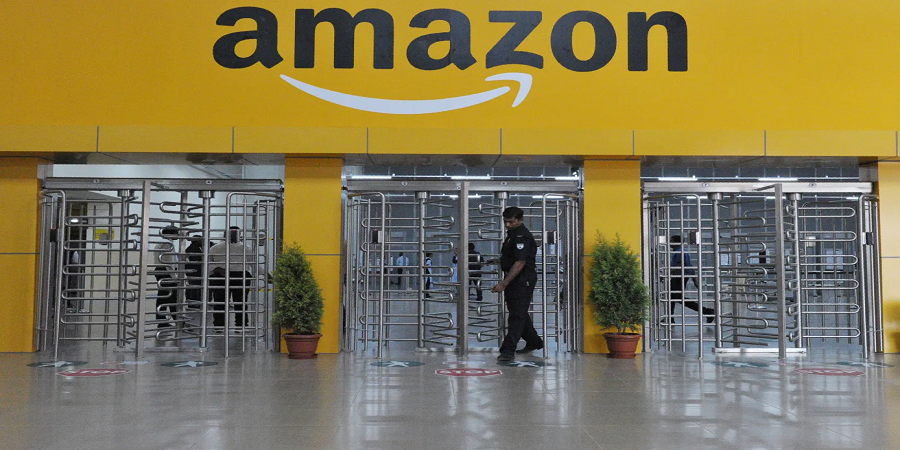
Amazon has started pharmacy services in India, deploying a new playbook in the everything online ecommerce pioneer. The excitement American technology companies have in India is exceedingly uncommon, and India is enjoying the dividends of creating the future it is enjoying today. From Google to Intel, Facebook to Amazon, and more, everyone is looking for how to grab a pile of the expanding India middle class. This goes to that old  saying: no other person will sweep your yard; if you keep it clean, you will see visitors come. For these tech firms to do what they are doing in India in Africa, we have to get the continent ready; they will certainly not come to do the hard work for us!

Amazon  has launched an online pharmacy in Bangalore, the capital of India’s southern Karnataka state, as the e-commerce group looks to spread its tentacles in more categories in one of its key overseas markets.

The company said on Friday its new service, called Amazon Pharmacy, has started accepting orders for both over-the-counter and prescription-based medicines in Bangalore. (In India, antibiotics and several other drugs can often be purchased from pharmacies without prescriptions.)

Amazon Pharmacy is also selling traditional herbal medicines and some health devices such as glucose meters, nebulisers and handheld massagers.

“This is particularly relevant in present times as it will help customers meet their essential needs while staying safe at home,” an Amazon spokesperson said in a statement.

I still think Amazon needs to book a ticket to Africa; it has the resources to help us unlock many latent opportunities as I noted in this video.


As that happens, see how Facebook is repositioning itself against Apple. Just a few months ago, Apple was parading itself as the god of privacy while Facebook was a den of data harvesters. But things happen: as tech companies march to the $2 trillion market cap, monopolistic concerns are rising, and marketplaces like Apple which do not run advertisements but tax providers are being watched. Facebook does not need to tax anyone with a commission because it runs adverts. Of course, to run ads, you need to harvest users’ data. Apple had criticized that practice in the past. But today, it seems to be the worse of the two evils as companies, including Facebook and Epic Games, are making Apple look really bad for pocketing that 30% commission on its iOS store.

Facebook joined the growing ranks of companies publicly complaining about the 30% fee that Apple collects on payments made through its App Store.

In Facebook’s case, the complaints came midway through an announcement that the social network is launching a new feature supporting paid online events — a way for businesses struggling during the pandemic to make additional revenue. Facebook said those businesses will receive 100% of payments on web and Android, but on iOS, “We asked Apple to reduce its 30% App Store tax or allow us to offer Facebook Pay … Unfortunately, they dismissed both our requests and SMBs will only be paid 70% of their hard-earned revenue.” (Techcrunch newsletter)

Epic Games has sued both Apple and Google after the two tech giants removed the company’s popular Fortnite video game from their respective app stores due to alleged violations, CNET reported. Prior to being kicked off of the app stores, Epic told its users that it would offer them a way to buy digital goods related to Fortnite that would bypass “the up to 30% charge Apple and Google levy on each transaction” via their stores, the report said. From the report: Apple’s and Google’s decisions to ban Fortnite from their respective app stores marks a dramatic escalation in the debate between the tech giants, the developers that make programs for their devices, and regulators interested in examining it all. (Fortune newsletter)

How to Create a Pitch Deck from a Business Model

0

Imagine you have an appointment with Bill Gates. The goal of the appointment is to pitch your business to him. Well, these questions should run through your mind; how will I go about it? What do I have to do in order to perform excellently? These are very great questions that need answers if you don’t want to fail at this uncommon meeting.

Onward, that reminds me how a few months ago Prof Nduibuisi Ekekwe met Bill Gates for a presentation. As you know, Bill Gates is a legendary entrepreneur and he understands the secrets of building billion dollar businesses.

According to Nduibisi he was impressed by his presentation. After the presentation, Bill Gates walked up to him and remarked “that was great”.

The secret to this kind of outcome was preparation. As the age-long saying goes, preparation prevents poor performance.

I know you will ask, but what kind of preparation? It is taking time to work on your business model, business plan and pitch deck thoroughly. More specifically, is the pitch deck, that is what an entrepreneur uses for funding presentations.

We shall consider in this analysis, how to produce your pitch deck from your business model. This is very important, as it will guide you to know the right thing to say when an investment or financing opportunity presents itself.

Producing a Pitch Deck from a Business Model

An article on 3S Rules highlighted the two major parties in a pitch deck meeting. They are the investor and the entrepreneur. The work of an entrepreneur is to convince the investor about the feasibility of his business, while that of the investor is to judge the business. This pitch deck presentation template will guide you  more.

Here are the strategic questions to provide answers to from your business model and business plan, in order to have a great pitch deck. 

  • What is the Friction (Problem) and the Solution?

It is no longer new to you that every business is built around certain problems. These problems are solved with certain innovative products.

These products form the fabric of every great business. We see Amazon, a marketplace to buy any imaginable product. Microsoft, a company that provides software for micro computers.

 In the same way, write the problem (friction) your business exists to solve and explain how the product works to solve it. This is already present in your business model. So, extract it from there. 

  • What are the Unit Economics?

Now, you have explained all that needs to be explained about your business problem, solution and product. In the meeting, you can go ahead and demonstrate your solution practically, as Elon Musk does in his pitching.

Another important question to answer is; what is the unit economics of the business?

That is, how much does it cost to provide the solution? How much is the revenue (selling price) the solution will generate? What are the mark-up and margin of the product? These can easily be obtained from the revenue component of your business model. I can provide a guide too. 

  • Who is the Team to Drive the Business?

This part is very crucial. You know, the success of a business largely depends on the people factor (the team) driving the business. You will need to demonstrate to the potential investors that your team members possess certain expertise that are needed to run the business successfully.

You know, investors seek to reduce their risk when they invest. One of the ways to reduce that risk is to be sure that the team behind the business can manage the business effectively. 

  • How Much Funds Do You Need?

You should state how much you need to raise. Also, go further to explain with great clarity how you intend to use the fund to grow the business. There should be a logical rationale for raising funds.

You can raise funds and use it for what you like but not from investors. There should be a very convincing reason for raising funds and a convincing reason for its usage. However, your fund should be used either to start the business or to grow the business.

An article on Inc about the 10 slides of a pitch deck explains the funding part better.

These are just some of the basic things to note as you prepare for an opportunity. Well, you should always have the pitch deck of your business handy, as it will help you to cease every investing opportunity that comes your way.

When you prepare this way, you will be able to meet Bill Gates and perform excellently.