DD
MM
YYYY

PAGES

DD
MM
YYYY

spot_img

PAGES

Home Blog Page 6187

17,000 Nigerian PhD Graduates without Jobs: Questions of Programmes Standardisation, Career Roadmap

0

It is no longer news that Nigeria has been recording high rate of unemployed citizens since last three years. It is also not new that governments at various levels have been seen as either making efforts to reduce the rate or not, according to social commentators and public affairs analysts. The real news, based on the current labour statistics, is surprising insights that showed that the country is seating on a keg of gunpowder if drastic actions are not taken to stem the tide of the rate every quarter.

According to the National Bureau of Statistics, Nigerians [qualifies as labour] who work more than 40 hours are fully employed, while those who spend between 20 and 39 hours, 1 and 19 hours are underemployed and unemployed respectively. The country’s statistical agency also notes that there are citizens who are not engaged in any work activity. In all, the agency notes that Nigeria has 80,291,894 labour force as at Q2, 2020.

Examining the data further, our analysis indicates that on average 3,235,024 of 35,585,273 citizens categorised under ‘working for more than 40 hours’ are fully employed. On average, we also found that 2,085,636 [out of 22,942,004] citizens and 1,126,851 [out of 12,395,364] are underemployed and unemployed respectively. Averagely, it was also discovered over 851,750 citizens [out of 9,369,255] are not doing any work-related activities.

Differences and Linkages

Our analysis of the difference among the categories reveals surprising results. We found that the difference between the citizens categorised into fully employed and underemployed is 1,149,388, while it was 275,100 for those in unemployed and did nothing classifications. Looking at the data further, analysis reveals 96.1% connection between fully employed and underemployed citizens.

Analysis also indicates that those in unemployed and did nothing categories linked by 77.7%. It was 73.7% for those in underemployed and did nothing categories. These differences and connections have many implications for the Nigerian government and its economy. It has shown that those in fully employed category are most likely to fall into underemployed and subsequently into unemployed. This is not quite different for those in unemployed category. They would enter did nothing category if concrete policies and initiatives are not developed.

Beyond the general statistics, 17,831 PhD holders [out of 76,526] categorised under those who work for 1 to 19 hours caught our analyst’s attention. According to the statistical agency, Nigeria has 521,108 citizens with masters degree certificates, ranging from Msc, MA to MBA. Out of this number, 284,149 and 23,742 are fully employed and unemployed respectively, while 95,769 are not engaged in any work-related activities.

Exhibit 1: Labour Statistics by Gender and Employment Categories
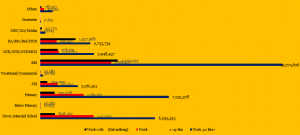
Source: NBS, 2020; Infoprations Analysis, 2020

Programmes Standardisation

Looking at the statistics of the PhD holders, it is startling that over 17,000 cannot be engaged fully despite the years of doing PhD programmes in Nigeria. And, the expectation that candidates must conduct research on a specific topic that provide substantial contributions to societal problems. While researching for possible factors, our analyst found that Nigerian universities with PhD programmes are experiencing a number of problems. These problems range from poor funding to lack of total commitment to supervision by supervisors. In a recent report about the PhD programmes in the sub-Saharan Africa, it was pointed out that there is inconsistency in the capacity of the institutions to produce PhD graduates. “In all the countries, the PhD is typically structured on the doctorate-by-research model, (rather than the ‘taught doctorate’ model used in North America). A salient feature in each country context was the challenge of adequate supervision, whether in terms of finding a suitable supervisor with relevant expertise, or frequency and quality of supervisory meetings.”

From these insights, it could be gleaned that Nigeria will continue to have a number of PhD holders without full work engagement if urgent actions are not taken. It is time that the government and concerned stakeholders work out the new playbook for PhD programmes across the country. Nigerian universities need to produce PhD graduates that will not only work in the academic institutions. They candidates should be walked through how to be more inclined with the industry’s needs and solutions.

Career Roadmap

At least, a PhD candidate is expected to be on the programme for 3 to 6 years. Therefore, there is a need to ask every candidate fundamental question of what is his or her career plan. It is the belief of the society that pursuing a PhD programme means the person will work in the University. It is high time will correct this impression. To the best of our analyst’s knowledge, industries need PhD holders too, especially in the areas of building models that solve practical problems using theoretical and empirical means.

Any PhD candidate who does not have a career plan should know that he or she is walking in the darkness. A career plan will go in a long way of setting path for being early career researchers either in the University or industry.  Apart from this, having a career plan that incorporates the possibility of turning the PhD research thesis into concrete solutions can make PhD candidates innovators for the Nigerian society. Therefore, it would not be out of the programme context if the institutions ask the candidates to submit their career plan as part of the requirements for admission.
Tecno Spark Go 2020 On The Way for Nigeria & Africa, Spotted in Google Play Console Listing; Infinix, itel in Play

1

Tecno continues to plot its playbook for Nigeria and Africa. Transsion, the parent of Tecno, Itel and Infinix, continues to unlock values for the African continent. The new Tecno Spark Go 2020 promises to be amazing.

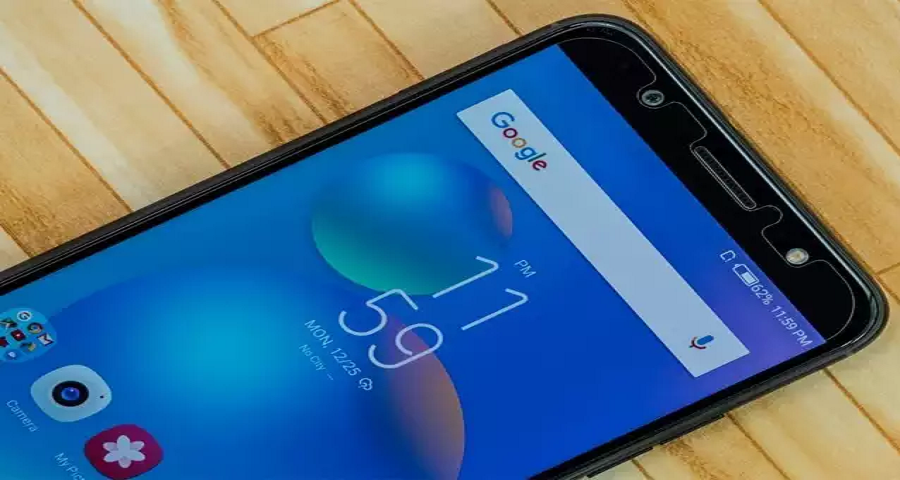
Tecno Spark Go 2020 has been spotted in a Google Play Console listing hinting at some of the specifications of the phone. The listing, spotted by a known tipster, comes with the model number ‘TECNO-KE5′ and the name ‘Spark Go 2020′. It gives an idea of what we can expect from the phone in terms of the specifications. The listing also shows an image of the front of the unannounced phone and it appears to have a notch design for the selfie camera.

Tecno Spark Go 2020 specifications (expected)

The Tecno Spark Go 2020, as per the Google Play Console listing, will run on Android 10 out of the box. It is said to have a 720×1,600 pixels display with 320ppi pixel density. The Tecno Spark Go 2020 is listed to be powered by the quad-core MediaTek Helio A20 (MT6761D) SoC. The phone may come with 2GB of RAM. It also uses the PowerVR GE8300 GPU.

Coming to the image in the listing, it shows the Tecno Spark Go 2020 will have slim bezels on the side, a thick chin, and a small notch for the selfie camera. The volume rocker and the power button seem to be on the right side of the phone.

Last month, Tecno released its Tecno Spark 6 Air smartphone and Minipod M1 single-ear wireless earbud in India. The Tecno Spark 6 Air comes with a 7-inch HD+ Dot-Notch display and a quad-core MediaTek Helio A22 SoC, with 2GB of RAM. For storage, the phone comes with 32GB onboard with the ability to expand via microSD card. The Tecno Spark 6 Air has a triple rear camera setup and a massive 6,000mAh battery.

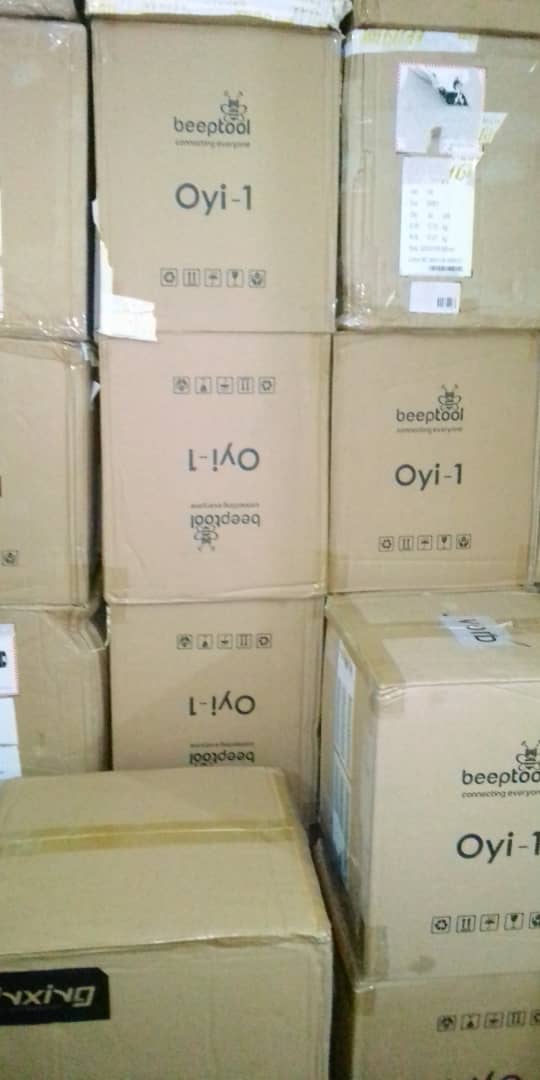
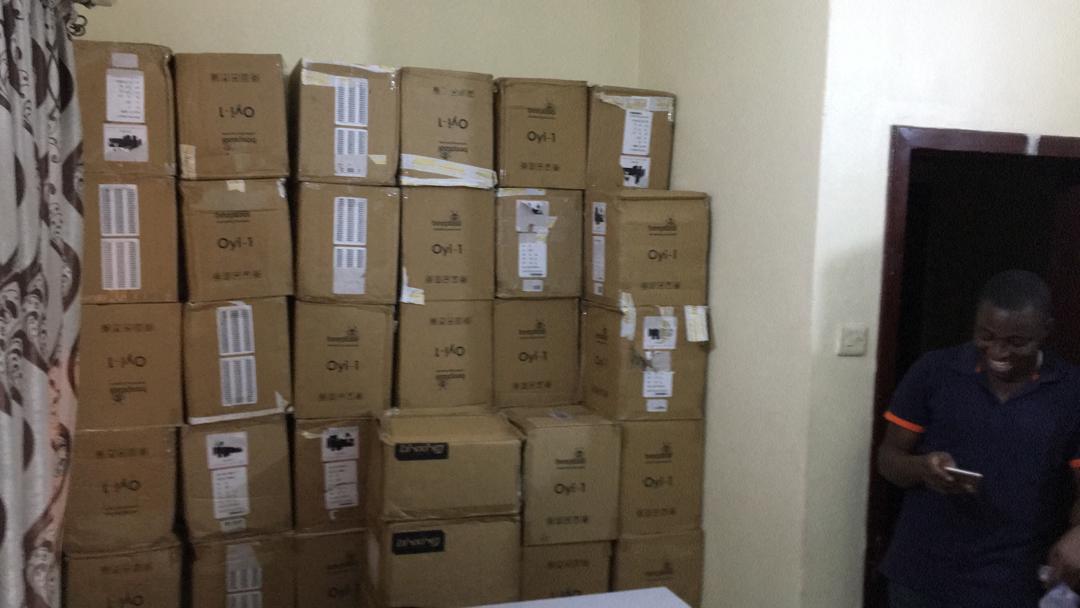
Beeptool Oyi-1 Smartphone Now Available for Purchase

3

Beeptool Oyi-1 smartphone is affordable for everyone — even low-income earners. Giving them access to information and essential apps to make their lives better. Oyi-1 comes with the following services:

  • M-Naira App: A mobile payment app that connects all billing systems to deliver instant payment services to Nigeria from anywhere in the world.
  • Beeptool App: A mobile app allowing you to send and receive messages, calls, photos and videos. We have over a million users since launched.
  • Ogleji App: A platform connecting farmers to the market. Delivering fresh produce in a timely manner to any city in Nigeria.
  • Lafiya Telehealth: A TeleHealth App Connecting patients in Rural Nigeria to doctors for remote diagnosis and prescriptions.

The  Oyi-1  maintains security, reliability and affordability elements with the added benefits of a bigger 5.0” screen, added storage space and operating on Android™ 7.0 Nougat. In addition, for those tech-savvy users, the Oyi-1 also comes with a bigger and extra battery to make sure you’re spending more time using your phone rather than charging it. Game away.

OYI-1 4G LTE Android Smartphone
  • Android™ 7.0 Nougat Operating system
  • Reinforced Frame & Screen, Unbeatable Value,
  • Screen: 5inch FWVGA 854*480
  • 4G LTE Dual SIM (Dual-SIM): Micro SIM + Nano SIM
  • Memory/Storage: 1GB RAM /Built-in: 8GB , Micro-SD (Support up to 128GB)  it been updated to 16GB
  • Processor: MT6580 1.3GHz Quad-Core
  • Frequency Band: GSM 850/900/1800/1900 |WCDMA 900/2100 |FDD-LTE B1//3/7/20
  • Connectivity: WiFi 802.11 b/g/n Dual-SIM Bluetooth 4.1 3.5mm Headset Jack
  • Dimensions: 144.1 x 71.9 x 9.8 (mm)
  • Camera: Rear: 5MPx ; Front: 2MPx
  • A long battery life: (2000mAh plus one extra) USB
  • GPS: Support and Durable 4G Smartphone

Oyi-1 is available for sales in Nigeria; email, call or visit. Buy here for N26,500.


Contacts:

  • Address:40 Fola Osibo Rd Lekki Phase I, Lagos, Nigeria
  • Tel:+234-1-453-5771
  • Website: www.beeptool.com

A Model for Alumni Investing In Nigerian Universities

0

I joined the Johns Hopkins Alumni investment community to invest in technology companies. I earned a PhD from Johns Hopkins University. This model is something we need for Nigerian universities: banding alumni to fund catalytic innovations which will fix big market frictions. It would be great if FUTO Owerri, my undergraduate alma mater in Nigeria, offers something along this trajectory.

Thank you for joining the Alumni Ventures Group community and your interest in the Deep Tech Fund. Welcome to our network of 550k innovators, investors, entrepreneurs, visionaries, and learners.

The Deep Tech Fund is an exciting new fund investing in hard tech innovation that will build the future through emergent technologies like AI and machine learning, advanced materials, AR/VR/MR genomics, longevity, drones and robotics, and others.

Individual investors are flocking to add venture capital to their personal portfolios as companies stay private longer and more value creation happens pre-IPO. In addition to the compelling historical performance of this asset class, in the face of market volatility, VC can add smart diversification…. “Venture capital… has become a critical component of a long-term investment strategy.”

International Misconceptions about the Safety and Security Situations in Nigeria

1
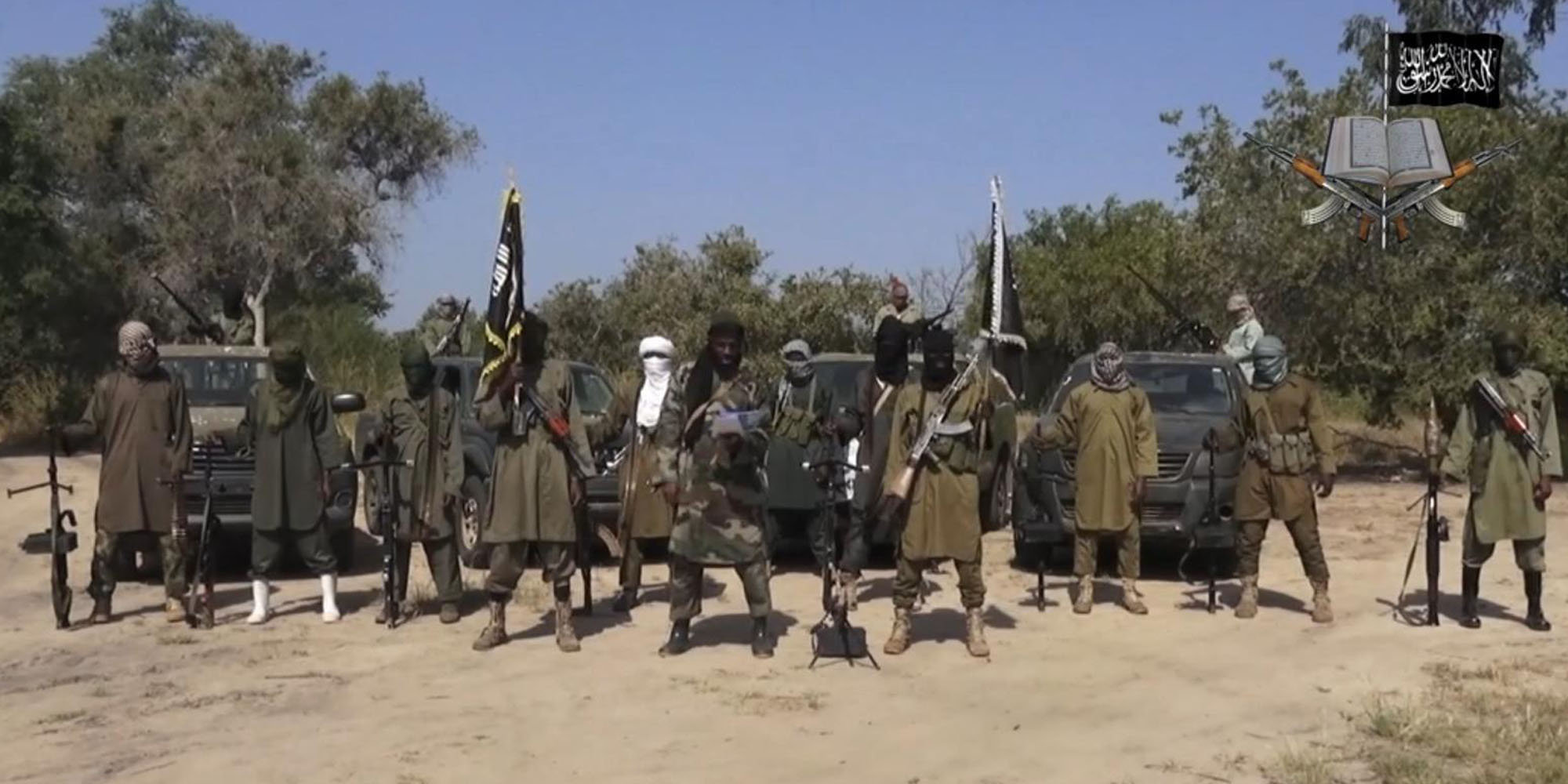
FILE - In his file image taken from video released late Friday evening, Oct. 31, 2014, by Boko Haram, Abubakar Shekau, centre, the leader of Nigeria's Islamic extremist group. Boko Haram fighters have shot or burned to death about 90 civilians and wounded 500 in ongoing fighting in a Cameroonian border town near Nigeria, officials in Cameroon said Thursday, Feb. 5, 2015. (AP Photo/Boko Haram,File)

I came across a post on Twitter, where the writer listed ten most dangerous countries in the world. According to him, Nigeria is the fifth country in the group. It ranked after Colombia (1st), Yemen (2nd), El Salvador (3rd) and Pakistan (4th). This poster said that the presence of deadly terrorist groups, such as Boko Haram and Islamic State of West Africa Province (ISWAP), made Nigeria unsafe. He noted that because these terrorists target places of large gatherings, Nigerians and foreigners no longer feel safe in the country. Well, even though it is true that the presence of insurgents made Nigeria unsafe, it should be remembered that they are not only present in Nigeria. Hence, using them as an excuse to rank Nigeria as the 5th most dangerous country in the world to live is subjective.

But this Twitter post is not the only one that has accused Nigeria as being a very dangerous place to live or to visit. An article published in Forbes on September 5, 2019, did the same thing. In fact, Forbes claimed that Nigeria is the 3rd most dangerous place in the world anybody can live in. The countries that ranked higher than Nigeria are Brazil (1st) and South Africa (2nd). This ranking came after the InterNation’s Expat Insider Survey was conducted. This survey polled 20,259 expatriates from 182 nationalities, who live in 187 foreign countries. The Safety and Security subsection of this survey was used to collect data on peacefulness, personal safety and political stability of countries under study. Nigerians will then wonder how their country could rank the 3rd most dangerous place in the world when they live in peace, are not afraid of their safety and the country does not experience political instability.

Well, I still believe that Forbes report, or rather that of the InterNation’s Expat Insider Survey, is misleading. Of course they used respondents, who they believed must have provided objective evaluation of the country’s security and safety system. But it is possible that the respondents they approached only lived and experienced lives in a particular part of the country. Or, it could be that these respondents were disappointed because the citizens did not meet their expectations. And so, they judged the whole country based on one encounter. I will explain this below.

Forbes presented statements from two respondents used for this survey. One is an African, from Rwanda, while the other is a Hungarian; they are both expats. According to the Rwandan expat, in Nigeria, there is “the feeling of uncertainty.” He said that in this country, “almost anything can and might happen to me, anytime, anywhere.” The moment I read this, I asked myself, “Are we really this anxious? Are we this petrified in Nigeria?” I mean, we move about freely. And, just like every other country of the world, we stay away from suspicious places and people. Or is it only in Nigeria that crimes exist? Someone, who hasn’t been to Nigeria, will definitely think that Nigeria is a war-torn zone, where deaths happen on the streets, after reading the observation of this Rwandan expat. But we all know that this is not so.

The second expat, the Hungarian, insinuated that Nigerians are hostile. According to him, Nigerians do not relate well with foreigners. He said, “We are not really free, cannot walk on the streets, cannot mingle with the Nigerians. There is always the possibility of danger.” Well, this person first failed it by saying that they are not free in Nigeria. I don’t know which part of the country the person is because that would have explained what he meant by not being free and not being able to mingle with Nigerians. As far as I can say, Nigerians are very friendly people. They welcome and interact with strangers. They will rather keep the stranger comfortable and remain in discomfort than the other way round. Well, like I mentioned earlier, these evaluations are subjective because only the respondents know what they expected from the citizens that they didn’t get. And, I don’t understand what he meant by “There is always a possibility of danger”. Maybe he is not talking about the same Nigeria I live in.

However, there is good news. Not all surveys felt Nigeria is dangerous. For instance I searched to find out if Nigeria is among the countries that are unsafe for women and children, and was happy to discover that we do not belong to any of the lists. Furthermore, on 13 January, 2020, Telegraph published the 17 most dangerous countries in the world, according to Foreign and Commonwealth Office, and Nigeria did not show there. This means that Nigeria, though not a perfect country, is not as bad as some other countries and organisations paint it.

Note that I am not saying that Nigeria is a paradise. I am not suggesting that we don’t have security challenges in the country. My point here is that situations in the country have been exaggerated. Of course crime exists in Nigeria, but so does it in other countries. We battle with terrorism quite alright, but that does not warrant the negative way we are painted. The only thing I can say about the safety and security situations in the country is that we avoid situations that can make us vulnerable and, therefore, expose us to the criminals. It is high time other nationalities stopped destroying our image.