Amazon has introduced Amazon Halo, a new service dedicated to helping customers improve their individual health and wellness. Amazon Halo combines a suite of AI-powered health features that provide actionable insights into overall wellness via the new Amazon Halo app with the Amazon Halo Band, which uses multiple advanced sensors to provide the highly accurate information necessary to power Halo insights.
“Despite the rise in digital health services and devices over the last decade, we have not seen a corresponding improvement in population health in the U.S. We are using Amazon’s deep expertise in artificial intelligence and machine learning to offer customers a new way to discover, adopt, and maintain personalized wellness habits,” said Dr. Maulik Majmudar, Principal Medical Officer, Amazon Halo. “Health is much more than just the number of steps you take in a day or how many hours you sleep. Amazon Halo combines the latest medical science, highly accurate data via the Halo Band sensors, and cutting-edge artificial intelligence to offer a more comprehensive approach to improving your health and wellness.”
Halo goes for $65, and the device also includes six months of a free A.I.-driven health advisory service that tracks body composition, tone of voice analysis, sleep and activity tracking. It’s $4 a month after the first six free.
Dangote Group is building a refinery. But I do think it is off by at least ten years to extract the maximum value on that investment. Though Nigeria continues to import petroleum products, distorting our balance of payments, and crushing the Naira, my model is that the refinery business will do well, marginally. Yes, the refinery will fix market friction but it would be distorted in years. As I drive across America, a popular scene now is closed gas stations, picking up where malls stopped.
Looking at all trajectories Aliko Dangote is getting poorer despite doing more! It is a paradox because technically Dangote has improved his asset quality over the last seven years, as Dangote Group evolves to become an industrialized conglomerate.
He was worth $25 billion in 2014, becoming the world’s 23rd richest person. In 2019, he became the world’s 100th at $10.8 billion. Today, Dangote is worth $7.7 billion as the 162nd richest person on earth. Understand that what is happening to Dangote is “technical value erosion”: he is still accumulating more Naira but currency deterioration and devaluation have decimated his global standing.
I expect naira to hit N502 per dollar, from N381 today, by May 2023, and if Dangote does not follow through, he could be off the billionaire club. Of course, he has a plan when he said on Bloomberg: “In Africa, you know we have issues of devaluation, so we want to really ‘preserve’ some of the family’s wealth.” Dangote plans to ship some wealth to New York to diversify out of Africa!
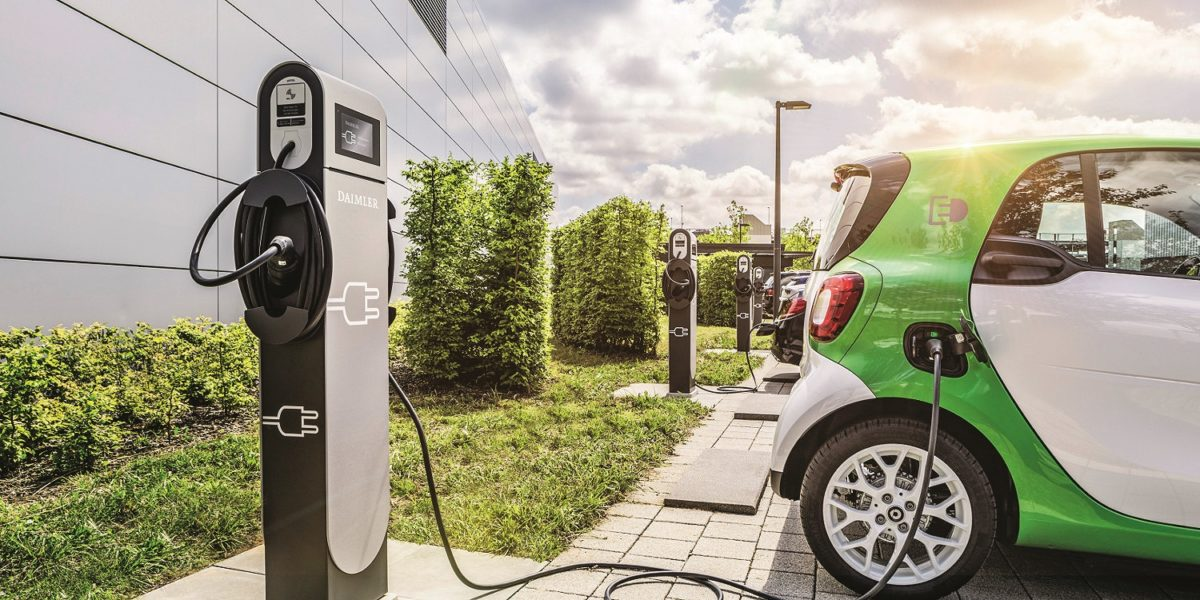
Simply, once Ford, GM, Toyota etc stop making fossil-powered cars, Nigerians cannot get special treatments. Because we do not make cars, we have to adjust! The refineries of the future are charging stations and not crude oil refining. In the U.S., most refineries are going bankrupt because in the next few years, the cost of buying an electric car would be at parity with fossil-fueled cars.
Do not put so much power in refinery business as a business for decades. The useful life of that sector is in years, not decades. We expect Tesla to produce EV cars that would be as affordable as Toyota, Honda, etc in the coming years. But Ford, GM and Toyota may get there before it.
So, my thesis is this: the best refinery business of the future in Nigeria, starting 2030 is charging stations because the world will not walk back on the march to EV because Nigeria likes their hydrocarbonated cars.
“I am a CEO of a leading brand in Lagos. I enjoyed the well written 50+-page class notes on Grand Playbook of Business, and the other one on Business Models. Your explanation on why business models matter is brilliant. Your case on Microsoft’s Steve Ballmer and Satya and how one man picked the same products, and applied a new business model, creating 4x value in 5-6 years, is insightful. I want Tekedia Mini-MBA Corporates, and 13 of my managers will join. We want just 4 weeks and we want the Institute to work with us to examine our business model. Fellow Futoite, I am proud to share the FUTO heritage with you. “
Today, we serve 17 companies, offering them world-class management insights. Ask for a brochure and let us work together to unlock innovation insights, nurture the innovators and accelerate GROWTH in your firm.
Tekedia Mini-MBA for Corporate is a customized version of the general Tekedia Mini-MBA. It is designed for private and public institutions where cases and labs are developed around the institution and its sector. It focuses on the same theme of innovation, growth and digital execution. But unlike the 4-month general Mini-MBA, the Corporate vision goes for 6, 8,10 or 12 weeks. It has a weekly live session, via Zoom or Teams, and is priced affordably. We have a brochure to share with your organization.
The engagement begins with a Zoom call where we spend time to understand what HR, Strategy and Executive Management want to accomplish. Then, we will design a program, looking at the market, the company and other factors. This is a management program prepared for your company!
Good People, join the last edition of this year, take action immediately here – www.tekedia.com/programs
CODE
PROGRAM
MINI
Tekedia Mini-MBA costs US$140 (N50,000 naira) per person.
MINR
Add extra (optional) $30 or N10,000 if you want us to review and provide feedback on your labs.
Add extra (optional) $60 or N20,000 for each certificate specialty course. You must have attended, begun or about attending Tekedia Mini-MBA to qualify. The following Certificate tracks are available:
CLSM
Certificate in Logistics and Supply Chain Management
CSBM
Certificate in Startup and Small Business Management
CETS
Certificate in Exponential Technologies and Singularity
CPCD
Certificate in Personal Career Development
CPFM
Certificate in Personal Finance & Wealth Management
CBIS
Certificate in Business Innovation, Growth & Sustainability
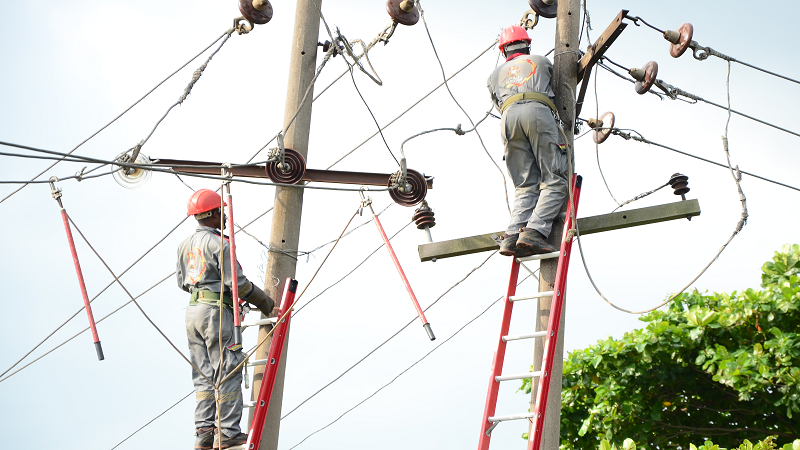
Finally….the market system is coming. President Buhari has approved New Electricity Tariff in Nigeria. Yes, the current cost of electricity in Nigeria is hopeless for anyone to expect light. That cost has produced darkness for years. Now that the cost has improved, I am very confident that investors will come with the good greed in capitalism.
Like the new generation banks taught us, Nigerians are open to pay for better services. Yes, banks those days introduced COT (commission on turnover) and still attracted customers because it was better to lose N3k per N1,000 than waste 4 hours in a bank to collect your money. Mr. President, you need to now deal with the generator mafia and ensure we do not have more excuses in our NESI – Nigerian Electricity Supply Industry. Any sabotage should be all the way to Kirikiri! Orange is the new black…
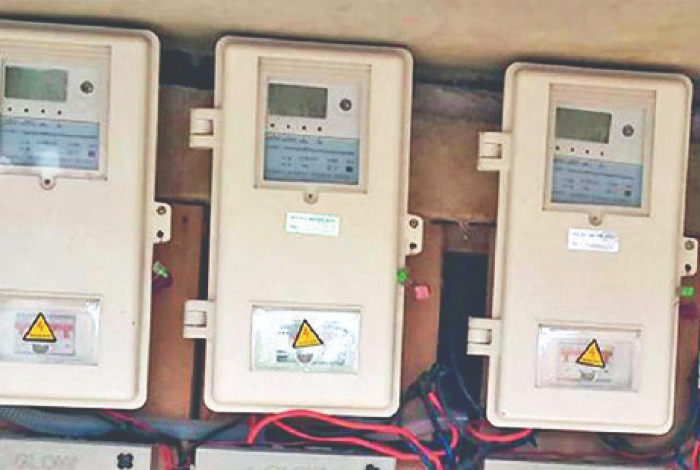
Indeed, the new playbook is very promising: “President Buhari on Tuesday approved the increment of electricity tariff for selected consumers. The decision is in line with the proposed cost-reflective electricity tariff for the Nigerian Electricity Supply Industry (NESI).” And by adding mass metering in the equation, there could be a way out of our electricity inadequacy paralysis. But give this to the World Bank which had requested for one thing: your electricity pricing is out of phase and if you do not change it, no investor will come. The government had requested $1.5 billion for the sector, but the World Bank made it clear – either you increase tariff or you pray for that money to come, as no investor will likely come. But with this Buhari’s playbook, expect more actions in NESI.
President Muhammadu Buhari on Tuesday approved the increment of electricity tariff for selected consumers. The decision is in line with the proposed cost-reflective electricity tariff for the Nigerian Electricity Supply Industry (NESI).
Under the NESI tariff, residential areas classified as poor will not be affected by the new tariff, as it is aimed at industrial areas.
Tariff increment has been a bone of contention between electricity suppliers and consumers, with Distribution Companies (DisCos) attempting repeatedly to implement proposed upward review of billing. But the government’s intervention has restrained the planned tariff review for months now.
Electricity meters
This is a good move by the government as I noted in the past on the need to price products well in Nigeria.
Do not think too far – the tariff for potable water in a state in South South geopolitical region in Nigeria was last reviewed in 1987. Yet, the state is looking for investors to provide potable water in the state! I saw the document and wrote to the project manager, and asked him if he could get the state to update the water rates. The response was typical – “The government cannot increase rate because it will be politically sensitive”. Of course, nothing happened, and no investor thought there was anything there.
Our leaders must find a way to engage Nigerians honestly on open conversations to move the nation forward. From electricity to potable water to healthcare services, unless there is decent revenue factor in the equation, it will be hard to move from the miry clay on the provision of basic services.
And the legal institutions need help and only the National Assembly can help them by updating the laws to avoid confusions in markets. Yes, the updates will help to engineer reflective costs that will make services become available as investors are attracted by the opportunities therein to participate. This does not mean that Nigerians should be priced out. Yet, Nigeria cannot also afford to price investors out. A win-win is needed on these services on cost.
As we examine this new tariff, consider another big one in which the central bank took over revenuecollection from DISCOs and handed it over to banks. It makes real sense: if Nigeria has to take loans to help “private companies like Discos” fix themselves, Nigeria needs to play a role to see what is coming in as revenue. The Discos put themselves in this position. Yes, if they had executed well, the government would not have come with its big sticks.