DD
MM
YYYY

PAGES

DD
MM
YYYY

spot_img

PAGES

Home Blog Page 619

3 Reasons Ethereum (ETH) Diamond Hands Are Buying Pepe Dollar, PEPD To revive Meme-Culture on ETH Says Top Analyst

0

Ethereum (ETH) “diamond hands”—the long-term holders who rarely sell—are increasingly positioning into Pepe Dollar (PEPD). Why? Because presale economics are compelling. Stage 2 pricing at $0.006495 offers nearly a 6× upside before launch, with the price set to debut at $0.03695. Already, $1.86 million has been raised and over 365 million tokens sold, leaving fewer than 200 million tokens in Stage 2. For ETH holders accustomed to spotting early opportunities, the upside is too significant to ignore.

Reason 2: Meme-Culture Meets Infrastructure

Ethereum (ETH) has always been home to innovation, from DeFi protocols to NFTs. But its meme coin layer, led by projects like Shiba Inu (SHIB), has lost cultural momentum. Analysts say that Pepe Dollar (PEPD) is positioned to revive Ethereum’s meme-culture with fresh energy. The project is a parody of the Federal Reserve, blending humor with functionality—offering NFT staking, gaming integration, and the Pepedollar.fun platform for minting new meme tokens. This gives Ethereum’s meme economy a structured, scalable base for growth.

Reason 3: Strategic Hedge Against ETH Volatility

While Ethereum (ETH) remains a strong long-term play—with analysts eyeing a $10,000 target—the market is volatile. ETH recently retraced to $4,352 after giving back its Powell-inspired rally. For diamond-hand holders, diversifying into Pepe Dollar (PEPD) offers a hedge: if ETH consolidates, PEPD’s presale momentum could still deliver exponential returns. This dual-track strategy means ETH remains the anchor, while Pepe Dollar (PEPD) becomes the high-growth engine. 

Ethereum (ETH) Fundamentals Support the Thesis 

Ethereum accumulation wallets now hold 24.3M ETH, showing unwavering institutional and whale conviction. ETF inflows remain strong, and ETH dominates DeFi with 65% of total value locked. Against this backdrop, meme-utility tokens like Pepe Dollar (PEPD) have a clear advantage. They allow ETH profits to rotate into high-upside plays without leaving the Ethereum ecosystem, keeping capital within its network. This synergy is exactly why ETH diamond hands are leading the charge into Pepe Dollar.

Analyst View: PEPD Could Outshine Older Memes 

Top analysts are already drawing comparisons between Pepe Dollar (PEPD) and earlier Ethereum memes like Shiba Inu (SHIB). But the difference is clear: PEPD isn’t only about hype. Its Pay-Fi layer for decentralized payments and its minting platform for new meme tokens provide staying power that SHIB never had. This hybrid model positions Pepe Dollar (PEPD) as both a meme coin and a meme-economy builder—an entirely new category on Ethereum (ETH).

Conclusion: Diamond Hands Bet on the Future 

Ethereum (ETH) diamond hands are known for patience and foresight. Their move into Pepe Dollar (PEPD) underscores a belief that meme culture on Ethereum is far from finished—it’s evolving. By backing PEPD, these investors are not just chasing quick gains but supporting a project that could redefine Ethereum’s cultural and economic layer. For those who missed SHIB’s run in 2021, Pepe Dollar (PEPD) may represent the second chance—this time with utility baked in.

Join Pepe Dollar Presale:
Pepe Dollar Website: https://pepedollar.io/

Pepe Dollar Telegram: https://t.me/pepedollarcommunity

PEPD Coinmarketcap: https://coinmarketcap.com/currencies/pepe-dollar

Pepe Dollar to Make More Ethereum Millionaires Than Shiba Inu Says Top Analyst, PEPD Shines As New Favorite on Ethereum

0

Ethereum (ETH) has entered a new phase of market conviction, with accumulation wallets now holding a record 24.3 million ETH. These wallets — largely whales and institutional buyers — are not selling but steadily building positions. This signals that Ethereum (ETH) is preparing for the next leg of its rally, with analysts setting long-term targets as high as $80,000 by 2026. Yet while ETH continues to grow as a cornerstone asset, the real millionaire-making opportunities are often found in its ecosystem tokens. One of those, Pepe Dollar (PEPD), is quickly becoming the breakout favorite.

Why Pepe Dollar (PEPD) Could Outperform Shiba Inu (SHIB)

Shiba Inu (SHIB) once captured the meme coin spotlight, but in 2025 its dominance is eroding. Analysts note that Shiba Inu (SHIB) is losing market share as new, utility-driven tokens rise. Pepe Dollar (PEPD), built directly on Ethereum (ETH), combines meme culture with utility: governance rights, NFT staking, Pay-Fi payments, and even a meme-minting platform at Pepedollar.fun. While Shiba Inu (SHIB) thrives mainly on community hype, Pepe Dollar (PEPD) is weaving utility into its DNA, making it a stronger long-term bet in the meme economy.

The Presale Advantage: Built-In Multiples For Early Buyers

The Pepe Dollar (PEPD) presale is currently in Stage 2 at $0.006495, with a launch price set at $0.03695. That’s a 5.6× multiple locked in for early participants before listings even begin. Over 365 million tokens have been sold, raising $1.86M of the $3.64M target. Whales who once poured into Shiba Inu (SHIB) are reallocating into PEPD, recognizing that early entry into meme-utility hybrids often delivers the biggest windfalls. 

Ethereum (ETH) + PEPD = The Dual Millionaire Strategy

Top analysts now argue that Ethereum (ETH) will deliver institutional stability, but Pepe Dollar (PEPD) provides the asymmetrical upside. By holding ETH for the long term and allocating into PEPD during presale, investors are stacking two powerful trends: ETH’s institutional-driven growth and Pepe Dollar (PEPD)’s viral meme-economy breakout. This dual-track approach is precisely how Ethereum (ETH) early adopters once used Shiba Inu (SHIB) to amplify gains. Only this time, PEPD has the potential to create even more millionaires.

Conclusion: The Next Ethereum Millionaire Maker

Ethereum (ETH) whales are already betting big on Pepe Dollar (PEPD), while Shiba Inu (SHIB) struggles to maintain its former dominance. With strong presale momentum, utility-backed design, and cultural relevance, PEPD is poised to become Ethereum’s next great meme coin success story. For investors, the opportunity is clear: combine ETH’s foundation with PEPD’s explosive potential, and the next wave of crypto millionaires could be minted sooner than anyone expects.

Join Pepe Dollar Presale:
Pepe Dollar Website: https://pepedollar.io/

Pepe Dollar Telegram: https://t.me/pepedollarcommunity

PEPD Coinmarketcap: https://coinmarketcap.com/currencies/pepe-dollar

Nigeria’s Private Sector Records Strongest Growth in 19 Months as PMI Climbs to 54.2

0

Nigeria’s private sector is showing signs of renewed strength, recording its fastest expansion in more than a year and a half, according to the Stanbic IBTC Bank Purchasing Managers’ Index (PMI).

The index rose to 54.2 in August, up from 54.0 in July, marking a 19-month high in new order growth and a four-month high in output.

The PMI, which has stayed above the 50.0 growth threshold for nine straight months, highlights continued improvement in business conditions despite lingering economic headwinds.

Demand Rebound and Sector Trends

The August uptick reflects sharper increases in both output and new orders, fueled by stronger customer demand and a growing willingness among clients to commit to fresh projects.

According to the survey, activity expanded in three out of four monitored sectors—services, construction, and agriculture—while manufacturing lagged. Firms responded to the higher demand by increasing staff levels for the third consecutive month. However, the pace of job creation slowed compared to July.

Purchasing activity also moderated, but remained resilient as businesses stocked up in anticipation of future growth. Significantly, companies cleared backlogs for the first time in five months, pointing to rising operational efficiency.

Despite these gains, business confidence softened for the second consecutive month. Companies cited expansion plans such as opening new branches and boosting marketing as reasons to remain cautiously optimistic about future growth.

Inflation Pressures Lose Steam

One of the key highlights of the August report was the continued easing of inflationary pressures. Input costs climbed at their slowest pace since March 2023, while output price inflation fell for the fourth month in a row—its lowest level since April 2020.

Staff cost inflation also slowed to a three-month low. Where wages did increase, they were largely linked to incentives for quicker project delivery and cost-of-living adjustments.

Muyiwa Oni, Head of Equity Research for West Africa at Stanbic IBTC Bank, explained: “The continued moderation of input and output prices suggests that inflation is likely to remain soft in the near term. This may incentivize the Monetary Policy Committee (MPC) of the Central Bank of Nigeria to adopt a more accommodative stance by September.”

Stanbic IBTC projects that headline inflation will ease further in August, to between 21.45% and 21.63% year-on-year. A sharper drop is expected by November, with inflation potentially falling to between 17.19% and 17.92%. The bank anticipates up to 150 basis points in cumulative rate cuts in 2025—a potential boost for borrowing, investment, and overall private sector momentum.

Why This Matters: Backdrop of Nigeria’s Fragile Economy

The positive PMI figures arrive at a time when Nigeria’s economy has struggled under a prolonged period of high inflation, currency volatility, and rising costs of doing business. Since 2023, businesses have faced an unprecedented squeeze from fuel subsidy removal, sharp increases in electricity tariffs, and a weakened naira that made imports more expensive.

The private sector’s resilience, as captured in the PMI, is particularly noteworthy because it signals that firms are adapting to these shocks. Still, the uneven sectoral performance—with manufacturing failing to keep pace—shows that recovery is fragile and uneven.

Nigeria’s history with inflation also complicates the outlook. Periods of easing price pressures have often been followed by sudden reversals, triggered by fuel price adjustments, foreign exchange shortages, or spikes in food prices. Analysts warn that while Stanbic’s projections are optimistic, much will depend on policy consistency and whether the Central Bank aligns monetary easing with fiscal discipline from the government.

Nigeria’s PMI and Economic Turning Points

The Stanbic IBTC Bank Nigeria PMI, compiled by S&P Global, has become one of the most reliable barometers of the country’s economic health since its launch in January 2014. Covering agriculture, mining, manufacturing, construction, wholesale, retail, and services, the index is based on surveys of around 400 private sector companies.

Historically, Nigeria’s PMI has swung in response to major economic shocks. During the COVID-19 lockdowns, the index plunged below the 50 threshold, signaling contraction across industries. Similarly, in 2016, when Nigeria slipped into recession due to falling oil prices, PMI readings underscored the depth of the downturn.

The current nine-month streak of expansion, therefore, marks an important psychological shift. It suggests that, even amid foreign exchange volatility, insecurity challenges, and uneven government reforms, the private sector is showing adaptability and resilience.

Tips for Sending Money to Mexico Without Bank Hassles

0

Moving to another country comes with its own challenges, but supporting loved ones in Mexico shouldn’t be a complicated process. With technology and new financial solutions, it’s easier than ever to connect your hard work to your family’s needs. However, many people feel overwhelmed by hidden fees, slow transfers, and confusing paperwork.

That’s why it’s important to look for options that put simplicity and savings first.

If your goal is to send money to Mexico (enviar dinero a Mexico) efficiently, a little guidance can make all the difference. With the right knowledge, you can avoid frustrating experiences at traditional banks and make every dollar count. Let’s read about them in detail.

Choose the Right Transfer Service

When you need to transfer money to Mexico, choosing the right service is the first step to ensure a smooth transaction. There are many options available, but some offer faster delivery times, lower fees, and better exchange rates than others. Always compare the different services before deciding which one to use. Be sure to look for platforms with high security standards, so your money reaches its destination without any issues.

Avoid Bank Transfers for Convenience

Bank transfers may seem like the obvious choice, but they can come with hidden fees, poor exchange rates, and slow processing times. If you’re trying to transfer money to Mexico quickly, bank transfers might not be the best option. Instead, explore alternatives like digital wallets or peer-to-peer transfer services. Many money transfer platforms offer online services where you can send funds directly to a recipient’s account, debit card, or mobile wallet.

Use Cash Pickup Locations for Quick Delivery

Sending money to Mexico doesn’t always need to involve bank accounts. If you want to ensure a quick delivery, you can opt for cash pickup locations. These are widely available across the country and provide a fast and easy way to transfer funds. Once the recipient picks up the cash, they can use it however they like, making this a great option for emergency situations. With cash pickup services, there are often minimal fees involved.

Consider Currency Exchange Rates

When sending money to Mexico, exchange rates play a significant role in how much the recipient will receive. Even a small difference in rates can make a big impact, especially when sending large sums. Make sure you understand the current exchange rate before transferring money, and check if the service you’re using offers competitive rates. Some money transfer platforms may offer fixed exchange rates, while others use floating rates, which can fluctuate.

Seek Out Special Offers and Savings

Before sending money, be sure to check for any ongoing promotions or discounts offered by transfer services. Many platforms offer special deals for new customers, such as fee-free transfers for the first transaction. These promotions can significantly reduce the cost of sending money to the country. It’s also worth looking for seasonal discounts or referrals. If you know someone who has used the service before, ask for a referral code.

When you want to send money to Mexico (enviar dinero a Mexico), the goal is often to keep the process hassle-free and budget-friendly. By selecting the right transfer service, considering alternative methods like cash pickup, and double-checking your details, you can avoid common pitfalls. Always keep an eye on exchange rates and take advantage of promotions when available.

Chinese President Xi Calls for SCO AI Cooperation, Rejects ‘Cold War Mentality’ at Largest Summit Yet

0

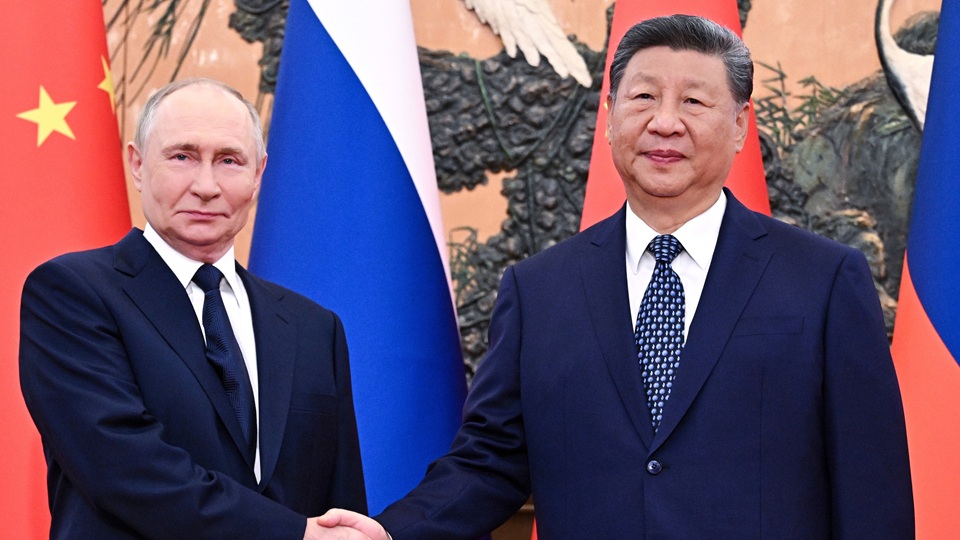
Chinese President Xi Jinping on Monday urged members of the Shanghai Cooperation Organization (SCO) to deepen cooperation on artificial intelligence, while warning against what he described as a “Cold War mentality.”

Xi made the remarks in Tianjin at the largest-ever summit of the SCO, attended by more than 20 foreign leaders, including Russian President Vladimir Putin and Indian Prime Minister Narendra Modi. The gathering comes as Beijing positions itself as a global peacemaker amid ongoing trade frictions with the United States, Russia’s protracted war in Ukraine, and instability in the Middle East following the Israel-Hamas conflict.

According to CNBC, Xi highlighted that China has already invested $84 billion across SCO countries and pledged support for 10,000 students through Beijing’s “Luban” vocational education program. He framed the summit as an opportunity to open a “new phase of high-quality development and cooperation” for the bloc.

Over the weekend, Xi held at least 10 bilateral meetings on the sidelines of the summit, including with Turkish President Recep Tayyip Erdogan and Cambodian Prime Minister Hun Manet. His Saturday meeting with Modi ended with both sides affirming that China and India should prioritize partnership over rivalry.

“A stable relationship and cooperation between India and China and their 2.8 billion peoples on the basis of mutual respect, mutual interest and mutual sensitivity are necessary for the growth and development of the two countries,” India’s Ministry of Foreign Affairs said in a statement.

Xi’s remarks come at a time of heightened tensions with Washington, which has openly declared its intention to lead the AI evolution. The U.S. under President Donald Trump has imposed strict export controls on advanced semiconductor chips and other critical technologies to China, moves seen as an effort to curb Beijing’s ability to develop next-generation AI systems.

These restrictions have severely limited the ability of Chinese firms to access cutting-edge processors needed to power large-scale AI models, forcing Beijing to accelerate domestic chip production.

Xi’s call is also widely viewed as part of Beijing’s pushback against what it considers U.S. “containment measures” in technology. The chip export curbs, introduced under the guise of national security, have already sparked friction between the world’s two largest economies, with ripple effects across global supply chains and AI research collaborations.

Historical Roots of the SCO

The SCO, founded in 2001, traces its origins to the “Shanghai Five” mechanism of the mid-1990s, originally created to resolve border issues among China, Russia, and Central Asian states after the Soviet collapse. Over time, it evolved into a broader political and security grouping aimed at stabilizing Eurasia and countering the influence of Western military alliances.

With NATO expanding eastward and the U.S. building security partnerships across Asia, the SCO emerged as a Eurasian counterweight—emphasizing non-alignment, sovereignty, and multipolarity. Today, the organization encompasses not only China, Russia, and Central Asian republics, but also India, Pakistan, and Iran, representing nearly half the world’s population and a growing share of global economic activity.

For Beijing, the SCO is both a geopolitical shield and an economic platform. Unlike NATO, it does not operate as a formal military alliance, but it coordinates on counterterrorism, economic integration, energy, and increasingly, technology. Xi’s emphasis on artificial intelligence cooperation reflects a desire to anchor the SCO’s next chapter in emerging industries while reinforcing its founding mission to balance against Western dominance in global governance.

While it is unclear if this SCO summit will produce concrete breakthroughs, analysts suggest that Beijing’s détente with India could bolster its influence within the bloc.

“The improvement of relations with India is a big deal. It allows India to access highly critical intellectual property that it needs if it is to industrialize and boost manufacturing,” said Marko Papic, chief strategist at GeoMacro Strategy BCA Access, in an email to CNBC.

“But, over the long term, the U.S. is losing the propaganda battle to paint China as the trouble-maker-in-chief. And that only further ossifies multipolarity,” Papic added.

Henry Huiyao Wang, founder and president of the Center for China and Globalization, noted that China’s initiatives extend beyond economics. “China could take advantage of its good relations with Russia to help broker the deal for the Russian war in Ukraine,” Wang said, adding that SCO members like China and India could act as guarantors of security.

Wang suggested the SCO could evolve into a diplomatic force comparable to Western blocs.

“President Trump is trying to make a lot of peace, but I think with the help of China, we could do the same too,” he said Monday on CNBC’s The China Connection.

Tianjin Declaration and New Initiatives

At the summit, SCO leaders signed the “Tianjin Declaration” and approved a long-term development plan through 2035. While the full text was not immediately released, Chinese state media reported the adoption of 24 documents covering cooperation on security, economic growth, and cultural exchange.

Xi announced the creation of new platforms for collaboration in the green industry, new energy, digital economy, technology innovation, and vocational training. He also unveiled plans for an SCO Development Bank, framed as another multilateral financial institution alongside the Beijing-based Asian Infrastructure Investment Bank.

“Global governance must be achieved by coordination and cooperation, not by unilateral bullying,” China’s top diplomat Wang Yi said, fielding a question about Xi’s proposed Global Governance Initiative.

Xi’s new “Global Governance Initiative” follows earlier banners like the Global Development Initiative and the Global Security Initiative. In his speech, he argued that hegemonism and protectionism persist “despite 80 years of peace” since the end of World War II, warning that “global governance has come to a new crossroads.”

Calling for equal application of international law, Xi cautioned against “the house rules of a few countries” being imposed on others.

It is believed that his appeal for cooperation highlights China’s strategy of presenting itself as a proponent of shared technological growth, in contrast to Washington’s more restrictive stance.