DD
MM
YYYY

PAGES

DD
MM
YYYY

spot_img

PAGES

Home Blog Page 6223

He Has TWO Job Offers

0
He has two job offers

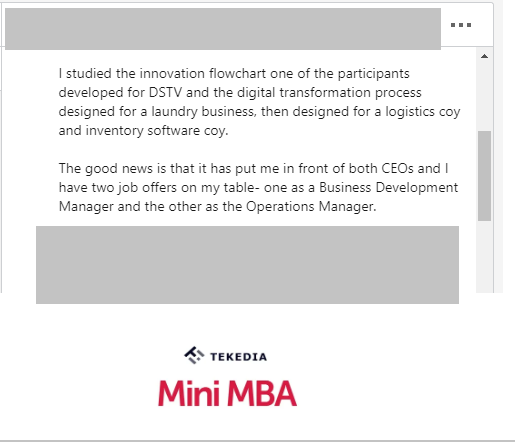
“I studied the innovation flowchart one of the participants developed for DSTV and the digital transformation process designed for a laundry business, then designed for a logistics coy and inventory software coy.

The good news is that it has put me in front of both CEOs and I have two job offers on my table- one as a Business Development Manager and the other as the Operations Manager.” Tekedia Mini-MBA Member

Leaders are looking for innovation makers for their companies. Tekedia Mini-MBA is educating young people on the mechanics of innovation and business growth. One young man just shared via Linkedin that he has two job offers, and he is going for one. Our strategy remains: companies do not necessarily care about your degrees these days, they want to see what you can do. If you go through our process, you would be transformed, and be ready to win. That is our promise.

Walk into that interview room, and drop a playbook for that company. Explain to them how a future of digital and broad innovation can unlock growth. Put into practice our courses and see that Offer letter with your name.

Join the largest management training school in Africa right now. Most others are locked down or on strike, our members are creating the future.

The Grand Unification of Digital Payment – Facebook Financial

3

Facebook has unveiled a new playbook that could become the most disruptive in the digital global economy: Facebook Financial. Sure, there is nothing new about Facebook trying to become your payment company. But what is new here is that Facebook has created a new division to take care of all things digital payments. This new division “will run all payments projects, including Facebook Pay,” concatenating across its ecosystems of Facebook, Messenger, WhatsApp and Instagram.

Now, you can send money to friends and family via Facebook Pay and also pay for goods and services via Facebook Pay. Simply, when you are in the Facebook Inc ecosystem, you do not need to leave, for PayPal, Stripe, etc, to pay for things. This paytech completes a key piece Facebook needs for its ecommerce business; the logistics component remains.

Keeping Facebook users inside those apps for payments, rather than having them slip out to use Apple Pay, Google Pay, Venmo, PayPal, Zelle, or other digital currency platforms, will help the company’s advertising bottom line. “As payments grow across Messenger and WhatsApp, and as we’re able to roll that out in more places, I think that that will only grow as a trend,” Facebook CEO Mark Zuckerberg said on the company’s latest earnings call, according to MarketWatch.

The Novi unit and Facebook’s embattled Libra cryptocurrency will fall under the Facebook Financial umbrella. Facebook has had to shift plans for Libra after months of regulatory pressure and financial partners bailing on the effort.

Technically, Facebook Inc can do anything it wants to do because it is now a big planet of more than 4 billion people across its ecosystems. It has the demand in a world of unbounded supply, giving it the edge to create and launch these new products easily. The person who controls demand (the users) is in a greater position than one who creates supply, in the web economy.

As a global leading ICT utility, I expect Facebook Pay to support the integration and interface of largely consumer payment, and as it does that, more digital commerce will move to Facebook. This company has a Multi Play strategy, well ahead of the double play. Yes, if advertisers want to revolt, its “tax” on payment transactions will keep adding the digits for Facebook shareholders.

Joe Biden Picks Kamala Harris As a Running Mate

0

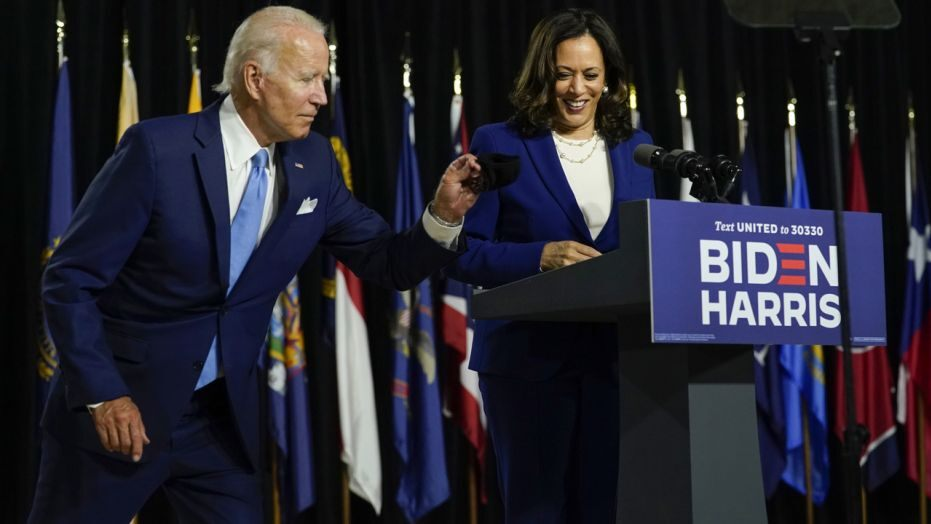
Democratic presidential candidate Joe Biden has picked Kamala Harris as his running mate. A move meant to bridge the divide heating up the American political space and beyond for some time now.

“I’ve decided that Kamala Harris is the best person to help me take this fight to Donald Trump and Mike Pence and then to lead this nation starting in January 2021,” Biden wrote.

Harris is a California Senator who contested the primaries against Biden, the nomination will make her the first Black South Asian American woman to run on a major political party’s presidential ticket.

Biden had promised to run with a woman and chose Harris, 55 to appeal to many voters who are concerned about his age. The choice of Harris serves other purposes that include closing the gender disparity in the American presidential system and tuning down the racial tension that has risen disproportionately in the last few years.

The California Senator is the third woman to serve as a vice presidential candidate for a major political party in the United States, after Geraldine Ferraro who was chosen in 1984 as the Democratic vice president and in 2008, Sarah Palin, who was picked by Republican presidential candidate Mitt Romney.

Former president Barack Obama said Biden ‘nailed this decision’ choosing Harris who is ‘more than prepared’ for the job.

“Joe Biden nailed this decision. By choosing senator Kamala Harris as America’s next vice president, he’s underscored his own judgment and character,” Obama wrote in a statement. “Reality shows us that these attributes are not optional in a president. They’re requirements of the job. And now Joe has an ideal partner to help him tackle the very real challenges America faces right now and in the years ahead.”

Sources told CNN that Harris was confidentially chosen from a bevy of women that included California Rep. Karen Bass, the chairwoman of the Congressional Black Caucus, Georgia Democrat Stacey Abrams, Illinois Sen. Tammy Warren, New Mexico Gov. Michelle Lujan Grisham as well as Florida Re. Val Demings.

Harris is the first South Asian-American woman and second Black woman in history to serve in the US Senate. Having an Indian mother and a Jamaican father, she grew up in Oakland California and attended the historical Black college Howard University and the University of California, Hastings College of the Law.

She started her law career at the Alameda County District Attorney’s Office and in 1998, moved to the San Francisco District Attorney’s Office. Her law career got to a prominent point in 2010, when she became the first woman and the first African-American elected to serve as attorney general for the state of California.

However, Harris has come as a surprise pick to many following her attack on Biden during the Democratic primaries in June 2019, where she fiercely criticized Biden’s work with segregationist senators and mentioned his fight of decades ago against busing to desegregate.

Against the pushback from many of his loyalists, Biden, preached the forgiveness message and urged everyone to move on. He highlighted Harris’ works as an attorney as part of the reason she was chosen for the job of a vice president.

“Back when Kamala was Attorney general, she worked closely with Beau. I watched as they took on the big banks, lifted up working people, and protected women and kids from abuse. I was proud then, and I’m proud now to have her as my partner in this campaign,” he said.

Harris highlighted her move on the big banks as part of her greatest achievements as the attorney general of the state of California, pursuing predatory lenders after the financial crash of 2008, which led to larger settlements of $20 billion from the big banks for Californians after the foreclosure crisis.

CNN reported that her fight against racial injustice came from what she called “a stroller-eye view” of activism from a very young age. Harris’ mother, Shyamala Gopalan Harris, a breast cancer specialist and her father, Donald Harris, who became an economics professor at Stanford, were part of the Civil Rights Movement protest, there, she said she had the elementary lessons of activism that has made her part of the campaign against racial injustice.

The spouses of Biden and Harris, Jill Biden and Emhoff tweeted at each other on Twitter following the news of her nomination.

A barrage of well wishes has followed since then, especially by #winwithblackwomen movement.

Biden 77, made a strategic choice nominating Harris. The Washington Post reported the significance of Black women in US polls despite making up just 7% of the population. They have voted at higher rates than other racial groups at about 60% in the past five presidential cycles. The report noted also that they are loyal to the Democratic Party with 94% voting for Hillary Clinton in 2016.

Harris in a tweet on Tuesday thanked Biden for choosing her while expressing confidence in his ability to unify the American people.

“Joe Biden can unify the American people because he’s spent his life fighting for us,” she tweeted. “And as president, he’ll build an America that lives up to our ideals.”

“I’m honored to join him as our party’s nominee for vice President, and do what it takes to make him our commander-in-Chief.”

The Kenya’s Amazing 30% ICT Equity – A New Order for Africa

3

This is the biggest deal in the evolution of the African tech systems since Bill Gates pioneered, through Windows and Intel/IBM chips, personal computing in ways anyone could participate.  Yes, foreign companies planning to do business in the Kenyan ICT sector must be required to surrender 30% shareholding to Kenyans, corporates or individuals. This new ordinance is captured in the National Information Communications and Technology Policy Guidelines 2020, which was published last week, spelling out new regulatory mandates for players in the ICT sector: “It is the policy that only companies with at least 30 per cent substantive Kenyan ownership, either corporate or individual, will be licensed to provide ICT services.”

The ICT policy further says foreign companies will be given three years to meet the local equity ownership threshold, and may apply to the CS for a one-year extension with appropriate acceptable justifications. “For listed companies, the equity participation rules will conform to then extant rules of the Capital Markets Authority,” explains the policy.

[…]

“This will take the form of rules that allow companies to be licenced for certain services and only pay for the licence when they commence operations or achieve benchmark goals within predefined time frames,” explains the policy.

The State anticipates the policy will create 20 Kenyan multi-national ICT companies, 300 mid-sized firms, 5,000 small and medium enterprises and 20,000 startups.

This is expected to increase the number of startups through easing their barrier to entry. The policy also proposes a government venture capital fund that will invest in start-ups for a portion of the equity on a first-loss basis in case the startup fails.

This may not be palatable but Africa needs to have tough conversations for its future. A few weeks ago, a “Kenyan company” was acquired. As I researched for a piece, I noticed that 100% of it was owned by non-Kenyans. The Board has no single Kenyan; I decided not to run the piece as there was nothing Kenyan in it; it was a foreign company with operations in Kenya, deceiving journalists that it was “African”.

I expect Nigeria to arrive at the same conclusion by 2023. Yes, the wealth being created in the technology space today, in Nigeria, is largely not Nigerian. More than 70% are controlled outside Nigeria. From registering startups in the U.S. to using entirely foreign boards, I expect changes because if we do not act, we will get only marginal benefits as a nation. I will be happy to help the government write the brief, free, if it is serious.

I salute Kenya for this move. it is going at the root: OWN something and keep some home.

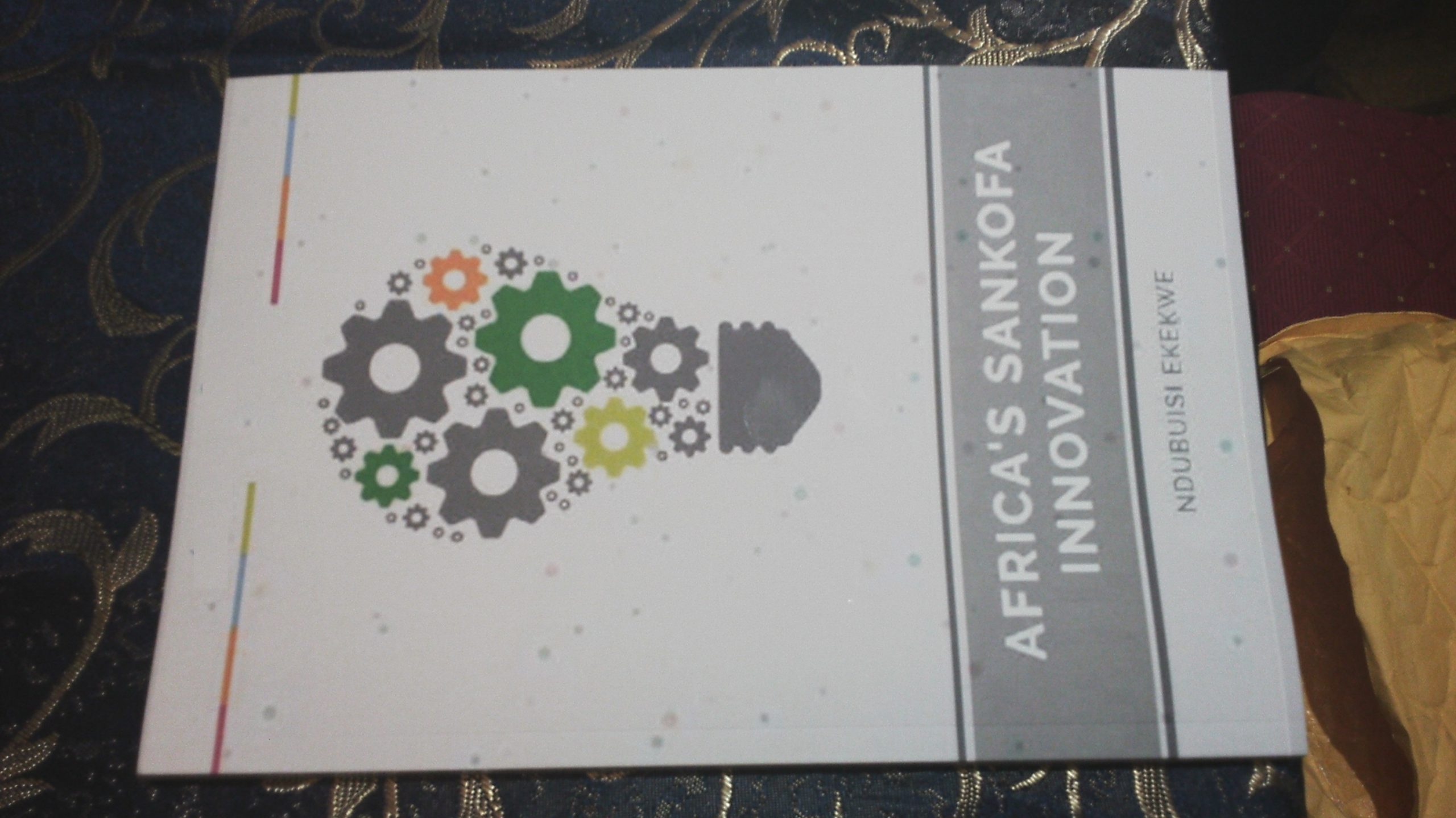
Get My Book – “Africa’s Sankofa Innovation”

0
Free for all Mini-MBA edition 2 participants

Sankofa is a word in the Twi language of Ghana that translates as “Go back and get it” (san – to return; ko – to go; fa – to fetch, to seek and take) and also refers to the Asante Adinkra symbol represented either with a stylized heart shape or by a bird with its head turned backwards carrying a precious egg in its mouth. Sankofa is often associated with the proverb, “Se wo were fi na wosankofa a yenkyi,” which translates as: “It is not wrong to go back for that which you have forgotten.” (Wikipedia)

Sankofa innovation which is “reach back and get it” type innovation. It emphasizes continuous improvement by looking back and learning from past experiences.

Read my book and understand Sankofa Innovation. If you have registered for Tekedia Mini-MBA, you get it free. Start reading.