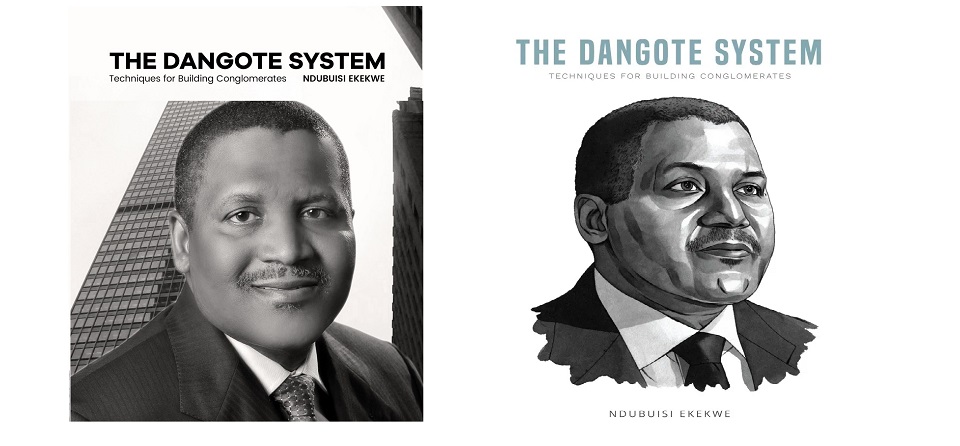
Since Adam Smith wrote his classic, in 1776, the Wealth of Nations, to upend the mercantilist system and set forward the basic foundations for modern classical economics, we have seen corporations come and go. The core pillars of productivity, and division of labour, have remained the tenets in the organization of firms which have succeeded in their missions of fixing market frictions. Across industrial sectors and market geographies, a free market system has provided the cement mortars for firms and nations.
Andrew Carnegie lived. John D. Rockefeller lived. Aliko Dangote is living. Bill Gates is living. Jeff Bezos is living.
These men are icons of their generations, pursuing the noble cause of entrepreneurial capitalism – aligning assets and knowledge to provide services where market fictions exist, between those that want products and those selling what they have. Corporations exist to simplify that interplay of demand and supply, and these entrepreneurs and others, thrived in providing solutions that eliminate frictions. They pursued different levels of innovations at scale, improving productivity, advancing specialization and deploying uncommon vision.
…from the book
This book is dedicated to Tekedia Mini-MBA co-learners, and is produced as an extended case study on our learning journey. So, it is exclusive to them. At 12 noon Lagos time tomorrow, a link will be active in the Board for the book. For edition 3 members, your Board is not ready yet; my team is going to figure out a way for immediate access to the book.
Despite varied challenges facing academic researchers in Nigeria, several reports have indicated the researchers are not relenting in their efforts of joining global conversations on a number of issues affecting society. Available information indicates that Nigeria increased in article publications from 2,500 articles in 2008 to over 4,000 in 2017.
From the University of Ibadan, Professor Oye Gureje is one of the scholars who contributed significantly to this feat with his publications. His efforts paid off in 2019 when he was recognised as Nigeria’s most influential researcher in the world. For more than 10 months that our analyst tracked Professor Gureje, his names always come up with academic and popular articles. He has been referenced and still be cited by academic scholars and news media. According to information, Professor Guruje is the Director of World Health Organisation Collaborating Centre for Research and Training in Mental Health, Neurosciences, Drug and Alcohol Abuse situated in the University of Ibadan.
Communicating his research outputs to the individuals and policymakers across Africa, Professor Guruje says “In 2009, I convened a landmark meeting of Ministers of Health or their representatives from several African countries in Nigeria to deliberate on the process of scaling up mental health service in their countries.”
As stated earlier, in terms of publications, Professor Gureje has not slept off once in a year. Our check, using Google Scholar, shows that he has published 451 journal articles (excluding chapters in books, conference papers, technical reports and datasets) between 1987 and 2020. Majority of these articles were as a result of collaborative efforts with local and international scholars. More than 9% of the articles were authored singlehanded.
His first most cited and ranked journal article, a collaborative effort, was published in 1997. The article titled ‘the validity of two versions of the GHQ in the WHO study of mental illness in general health care’ has been cited 3,262 times and ranked first out of thehis 451 publications. Between 1997 and 2010, his ten top ranked journal articles were published, according to Publish or Perish Tool. Three of the articles were published each in 2007 and 2008.
These articles were co-authored with a number of scholars in medicine, especially psychiatric field, and garnered 14, 462 citations from the starting year (1997) till this year. These ten publications have been cited 1, 022 times when the sum of per year citations is considered. On average, each of the ten articles has had 1,446 citations, while average citations within the per citation context is 102 times.
There is no doubt, Professor Gureje is making significant contributions to the academic community and some sections of the society where his knowledge and experience are needed the most. Meanwhile, this piece aims at evaluating his collaborative approach and present significant insights. Our expectation is that other scholars, especially those in sciences, medical and non-sciences would explore the insights towards being more productive in terms of publications.
The Place of Collaborative Advantage
Following some of his tactics as explicated in this piece will help established and upcoming academic scholars in overcoming some of the challenges associated with research collaboration in Nigeria and beyond. This is imperative as geographic distance and socioeconomic factors continue influencing how collaboration occurs and works among researchers across different countries. Like Professor Gureje, established and upcoming scholars need to understand that prioritizing scholars of related subject matter is key in having effective and productive collaboration.
This will become clearer as the article explicates Professor Gureje’s strategies and tactics. These strategies and tactics emerged from several months of studying him. From our analysis, we discovered that Professor Gureje is leveraging his social and academic capital for research collaboration. For instance, he has successfully explored some of his connections while heading or being a member of local and international organisations or committees.
Within the University environment, he has been able to have collaboration with his students and College/Faculty Members (colleagues). In line with this, our analyst notes that Professor Gureje is better described as a University Don, who has mastered SACAI Model (an approach that places university scholars in the midst of society for sustainable development).
This model is better understood from one of his publications we found and analysed. The article is titled “High-quality health systems in the Sustainable Development Goals era: time for a revolution” and co-authored with another 27 scholars. This article was published in Lancet Global Heath in 2018 and being cited by 449 scholars as at the time of writing this piece. The article focuses on the quality of care available to people in Low- and middle-income countries across a range of health needs included in the Sustainable Development Goals (SDGs). His collaborators are Faculty Members in various universities and personnel of institutes. A number of these co-authors have also authored and co-authored with other scholars with significant impact in terms of h-index, g-index, hl-norm and h-annual scores.
Margaret E. Kruk is Associate Professor of Global Health at the Harvard T.H. Chan School of Public Health. Anna Gage, Catherine Arsenault, Hannah H Leslie, Sanam Roder-DeWan are staff of the Harvard University. Olusoji Adeyi, Pierre Barker,Ezequiel García Elorrio, Svetlana Doubova, Frederico Guanais, Lisa R Hirschhorn, Lixin Jiang, Edward Kelley, Ephrem Tekle Lemango, Jerker Liljestrand, Address Malata, Tanya Marchant, Malebona Precious Matsoso, John G Meara, Manoj Mohanan, Youssoupha Ndiaye, Ole F Norheim, K Srinath Reddy, Alexander K Rowe, Joshua A Salomon, Gagan Thapa, Nana A Y Twum-Danso, Muhammad Pate and Bernadette Daelmans are also with local and international organisations. Mike English is a UK trained pediatrician who has worked in Kenya for over 20 years supported by a series of Wellcome Trust fellowships.
When one looks at these scholars’ years of publishing, it is obvious that the presence of Professor Gureje in their midst is a strategic one, a well thought out one. On average, including Professor Gureje, they have been publishing in the last 30 years with 136 publications and 7,408 citations. Our analysis further reveals that the average h-index, g-index, hl-norm and hl-annual of the scholars were 29, 65, 15 and 0.66 respectively. Analysis indicates that they are more connected within the h-index and hl-norm (99.0%),g-index and hl-norm (97.7%), h-index and g-index (96.9%); h-annual (73.5%) than other impact contexts [hl-norm and h-annual=69.7%; h-index and h-annual=65.6%].
Examination of the impact factors along with the years of publications shows that one year of publishing increases their h-index score by 19.1%, g-index score by 12.8%, hl-norm index score by 15.2%. Analysis further reveals that the scores for h-annual index is increasing at a speed greater than their years of publications. Our analyst specifically found more than 39% increase in their h-annual index when they published over 5 articles. Analysis also reveals that one publication increases their citations by 73.6%.
Exhibit 1: Years of Publications
Source: Google Scholar, 2020; Infoprations Analysis, 2020
Exhibit 2: Number of Publications (Excluding Chapters in Books, Conference Proceedings, Data and Technical Reports)
Source: Google Scholar, 2020; Infoprations Analysis, 2020
Exhibit 3: Citations Per Author
Source: Google Scholar, 2020; Infoprations Analysis, 2020
Exhibit 4: H-index and Year of Publications
Source: Google Scholar, 2020; Infoprations Analysis, 2020
These results have many implications. It is clear that the scholars, a significant number of them are within good (20 score), outstanding (40 score) and exceptional (60 score) thresholds of h-index expected of scholars who have published for 20 years. Based on this and the score recorded for other indexes, our analyst observes that their productivity and impact have been significant within academic globally with the possibility of one of them being ‘Oliver Lowery’ who have an article that has accumulated citations in hundreds of thousands.
To the Nigerian academics, the top place occupied [see Exhibit 5 and 6] by Professor Gureje among these scholars is an indication that collaboration beyond the Nigerian environment has the propensity of increasing visibility and global presence without necessarily spending economic capital. This insight becomes more useful when one looks at the extent to which Professor Gureje is centered and connected with these scholars [see Exhibit 7].
Exhibit 5: Dominant Authors based on Composite Impact Index
Source: Google Scholar, 2020; Infoprations Analysis, 2020
Exhibit 6: Severity of Composite Impact Index
Source: Google Scholar, 2020; Infoprations Analysis, 2020
Exhibit 7: Gureje’s Centrality to and Connectivity with Others
Source: Google Scholar, 2020; Infoprations Analysis, 2020
Contributing Factors for Higher H-Index and G-Index
To truly be ‘Professor Gureje’, established and upcoming scholars need to strengthen their social and academic capital beyond Nigeria. The strengthening should not be limited to academic environment alone. Industries should also be considered. This is essential considering the interest of some professionals in writing academic articles in preparation for a career change or continue theoretical understanding of their industries.
Apart from these, scholars also need to be media-friendly. There should be constant engagement with the media when an article is published. Significant results and lessons for the beneficiaries need to be shared. The only means of letting the public know is to speak with the media or writing a news worth policy brief. This increases visibility and the chance of being cited.
Since subject area can have an impact on the H-index, it is necessary to always consider trending issues or topics. According to a number of sources, publishing with a focus on trending issues increases h-index score than focusing on issues that occurred in the last few years. As explicated by the examined scholars, it is glaring that co-publishing can increase h-index. This should be embraced at lease twice a year. Focus should be more about publishing articles in open access journals than closed ones that require payment before people can access the articles. Like being media-friendly, this has also been suggested as means of making research outputs available to the public and increases chance of being cited.
Today, four of the biggest ICT utilities will converge to give evidence to members of the US Congress. These barons of our age, Mark Zuckerberg (Facebook), Sundar Pichai (Google), Tim Cook (Apple) and Jeff Bezos (Amazon), are expected to be grilled on competition. I share these words from Jeff Bezos – the world’s richest man – ahead of this meeting. The ecommerce pioneer teaches us something on vision.
“At Amazon, customer obsession has made us what we are, and allowed us to do ever greater things,..I know what Amazon could do when we were 10 people. I know what we could do when we were 1,000 people, and when we were 10,000 people. And I know what we can do today when we’re nearly a million.” Jeff Bezos
Regulating aggregators would be challenging primarily due to their natures: if you break Facebook into three pieces, one part would over time, through network effects, assume lead position. In a world of supply abundance, that emerging one which controls demand, will swallow the other pieces, via a virtuoso circle anchored on customers choosing the winner. I have explained thishere (April 2018), and it is reproduced below.
During his hearing on Capitol Hill, Facebook CEO, Mark Zuckerberg, largely asked the senators to regulate his company. Yes, he was open to it. But do not be deceived. Facebook and Mark are aware that no one can do that, effectively.
While it was possible to regulate or break Standard Oil (hello ExxonMobil, Chevron, etc) to make way for competition in the U.S. energy industry, the business structure of the web makes regulation harder. Yes, you can easily regulate a bank. You can do so on medical companies and hospitals. But to think you can accomplish same on web business is an illusion. There is no sector in the history of markets where marginal cost largely disappears when user base runs into millions.
At its peak in late 1970s and early 1980s, General Motors (GM) employed hundreds of thousands of people but yet could not serve the world because it was expensive doing so. In the web age, WhatsApp was serving the world with less than 20 people before it was acquired for roughly $19 billion. Simply, if you regulate or break WhatsApp, very soon another WhatsApp will emerge because making that happen is marginally not as tedious in terms of cost. You have no luck to tame aggregators without simply asking another aggregator to germinate and take over the void.
In a perfect market, the marginal cost of a digital product is zero. This means that the price of a digital product tends to zero: welcome freemium and ad-supported business. However, only firms with network effects dominate and benefit. The core reason is that if in a perfect market, and the marginal cost of producing digital product is zero, the price will inevitably go to zero.
This is the heart of the freemium model where you get many things free, which is possible because of the aggregation construct, where companies provide those digital products and then create an ecosystem to sell adverts. The firms benefit more than the suppliers by providing the platforms [Facebook makes money for photos supplied by families. Sure you like the Likes]. As shown in the Figure, great companies deliver the near-zero marginal price for high quality product, making it challenging for anyone that carries a non-zero marginal price to compete, exacerbated if the product is even not top-grade. This is one of the biggest challenges digital entrepreneurs face.
As I have noted that Facebook would be bigger and better if there is regulation because regulation will make it nearly impossible to have another Facebook. There is no regulation Facebook cannot absorb, and future web companies will be nipped as they may not have the resources to even begin.
Be careful what you wish. The world of Internet would change because of the GDPR(General Data Protection Regulation). Companies like Facebook and Google would be affected. In short, these companies are smiling at the bureaucrats in Brussels. U.S. Congress may have a regulation as more revelations emerge on how Facebook data was compromised by Cambridge Analytica.
If you decide to break Facebook apart, one part will grow and dominate others. This is possible because of the positive continuum of network effect where the biggest keeps getting bigger and also better. I explained that in a recent piece in the Harvard Business Review. You can regulate Facebook but another company will come to take over its position because in this sector, it is winner-takes-all. Yes, the best wins. Why? The scalable advantage improves with lower marginal cost.
And that is the problem. With their high scalable advantages running on aggregation construct, digital empires like Facebook and Google can take up offline empires, and may still not be within the crosshairs of the regulators. No one can effectively regulate Facebook, for example, unless you want another company (not named Facebook) to take its position. The operating structure of the business is mutative, and that means that it can grow through network effects which reward the best: a better service brings more users, and the more the users, the better the service, setting up a positive continuum. So, if you break Facebook, one part could grow and over time could dominate other parts, provided that part is the surviving best. Or another company with stronger advantage, post-Facebook breakup, would take over the new market and become the new category-king.
So, if U.S. breaks Facebook, one of those pieces can emerge to fill that void. Or another product from say China or India can emerge and become the world’s leader. It is a web business running on the aggregation construct. They are not structured to have 20 banks in Lagos. You expect to have one popular social media in Lagos for a specific sector. That one leader is what matters. If you break, the one that is best will grow (and win) because network effect will make it easier to attract users to it.
This is my take: U.S. will not regulate Facebook or its web companies at the level many are expecting [I expect nothing to change except cosmetics reporting of violations] because it knows that Chinese competitors which are also well-funded will go after Facebook users across the globe. And even if U.S. regulates Facebook by breaking it, the best surviving part will grow to dominate over time because of network effect where the best gets better and bigger. We just have to agree that Facebook is an ICT utilitiesand I was very happy when my editors in Harvard allowed me to use that against the company. You negotiate with your utilities [ electricity, water] because you have no alternatives. That is where we are with Facebook.
Australia’s competition regulator has sued Google on the allegation that the search giant is misleading consumers to get permission for use of their personal data for targeted ads.
The Australian Competition and Consumer Commission (ACCC) said on Monday that Google does not honestly get the consent of users as it tries to combine personal information in Google accounts with browsing activities on non-Google websites, an idea it introduced in 2016.
ACCC said the change is worth a lot of money and provides Google with extreme market power as it enables it to link the browsing behavior of millions of consumers with their names and identities.
“This change… was worth a lot of money to Google. We allege they’ve achieved it through misleading behavior,” said the commission chairman Rod Sims.
“We are taking this action because we consider Google misled the Australian consumers about what it planned to do with large amounts of their personal information, including internet activity on websites not connected to Google.”
This allegation is coming at a time when regulators in Europe and the United States are lining up antitrust cases against big tech companies. The CEOs of Google, Apple, Amazon and Facebook are due to appear before the House Judiciary Antitrust Subcommittee on Wednesday, over the dominance of a small number of digital platforms and other antitrust issues.
In June 2016, Google said it would not combine cookies from its advertisement display business, DoubleClick, with users’ private information unless it has user’s opt-in consent. But it deleted it on June 28 and replaced it with a new policy.
The new policy said: “Depending on your account settings, your activity on other sites and apps may be associated with your personal information in order to improve Google services and the ads delivered by Google.”
The 2016 change to Google’s policy means the California-based company will collect data about account holders’ activities in other sites. DoubleClick, an ad serving company used to collect the data and stored it separately from Google’s users’ accounts. In 2008, Google acquired DoubleClick and subsequently merged the users’ data on both platforms after the 2016 change of policy. The change however means that Google is using the combined data to reach more buyers of targeted ads.
The ACCC said from 2016 to 2018, Google account holders were met with a pop-up that explained “optional features” to accounts regarding how the company collected their data. If consumers click “I agree,” Google will begin to harvest a “wide range of personally identifiable information” from them.
Sims said “the ACCC considers that consumers effectively pay for Google’s services with their data, so this change introduced by Google increased the ‘price’ of Google’s services, without consumers’ knowledge… We believe that many consumers, if given an informed choice, may have refused Google permission to combine and use such a wide array of their personal information for Google’s own financial benefit.”
In response, Google said the change was optional and consumer consent was sought through prominent and easy-to-understand notifications.
“If a user did not consent, their experience of our products and services remained unchanged,” the company’s spokesman said.
This is the second time in less than a year ACCC is taking Google to court. In October last year, the regulator filed legal charges against the search company over what it described as “false or misleading representations to consumers about the personal location data Google collects, keeps and uses.”
The issue then was about users’ ability to opt out of location tracking on Android phones and tablets. When setting up the Android’s OS, users see an option for Location History. Disabling the option does not disable the collection of all locations unless the user turns off the “Web & App Activity” setting as well.
The commission said as a result of the on-screen representations, Google collected, kept and used highly sensitive and valuable personal information about consumers’ location without them making informed choices.
It is not clear the penalty ACCC is seeking for the stealing of personal information for targeted ad allegation. However, big tech companies are facing more scrutiny than ever before.