
DD
MM
YYYY

PAGES

DD
MM
YYYY

spot_img

PAGES

Home Blog Page 6227

Things Nigeria Should Consider Before Enforcing Stamp Duty On Rent

0

It all started with VAT increase. On February 1, 2020, the Federal Government implemented the increase of Value Added Tax from 5% to 7.5%. It didn’t go down well with many people but it was overlooked because, technically, VAT is not paid for all goods and services obtained. For instance, we don’t pay VAT when we buy goods from our local open markets. So, somehow, we can manage with the increase.

As Nigerians were getting used to seeing 7.5% VAT on invoices, banks landed with their N50 stamp duty on deposits. People wondered what was happening. We checked and learnt that the Federal Government approved the charges, even though it was for transactions above N10,000. But banks deducted the charges even if the money deposited was just N10,000. Well, we swallowed it; after all it is just N50.

But we didn’t know the FG is not done with us yet; they were releasing their lashes one after the other. The VAT increase and imposition of Stamp Duty on electronic and cash deposits into savings and current accounts were just their ways of testing the waters. It was “testing the microphone one-two”. They have more things coming. And the ones that come after each stage will affect more and more people. So they released the next level, this time for almost everyone, especially those that are struggling to breathe. This very monster was released on Wednesday 22 July, 2020.

On Wednesday 22 July, 2020, the Director of Communication and Liaison Dept, Federal Inland Revenue Service (FIRS), Mr. Abdullahi Ahmad, announced that henceforth, landlords and property agents should charge and collect Stamp Duty from tenants, renters and leasees. He made it known that the burden of this tax is on the tenants, renters and/or leasees, as was stated in the Stamp Duty Act.

Of course you must have known how Nigerians reacted to this, especially when the first press release generalised that the tax is 6% on the total sum of rent.

However, on 25th July, 2020, FIRS took to its Twitter page, @firsNigeria, to make clarifications on how Stamp Duty on rent will be paid. According to them, the tax is not 6% flat for all tenancy and lease agreements, as was earlier stated, but for those that will exceed 21 years. Hence, the tax will be charged thus:

  1. Tenancy/lease of 1 – 7 years = 0.78% (39kobo/N50).
  2. Tenancy/lease of > 7 years but < 21 years = 3% (N1.50k/N50).
  3. Tenancy/lease of > 21 years = 6% (N3/N50).

This shows that many Nigerians will be affected by options ‘a’ (residential) and ‘b’ (businesses). Option ‘c’ will, however, affect most companies such as banks and other multinational companies.

Let’s put this simply. What is going to happen from now onwards is that all the landlord’s tenants, shop renters and people that leased houses must pay either 0.78%, 3% or 6% of their rents to the government. These charges are not tax deductible. Whatever your landlord said you should pay as rent, you should pay the applicable percentage of that amount as stamp duty to the government. What is still shady is whether this payment is done once or whether it is renewable. We only found out that we will not pay 6% because of the public outcry.

I don’t know who drafted this law but it is obvious that the person has never known what it takes to live and survive in Nigeria. It is obvious that the people that put this law together have never experienced deprivation. It is obvious that they are not Nigerians. Or rather, they are not Nigerians that grew and lived in Nigeria. If they are, they would have realised the pains they will cause average Nigerians through this tax.

Like I noted earlier, it is unclear whether this tax is renewable. I mean, do we only pay it when we are moving into an apartment? Or is it something the landlord can wake up and say he made some amendments to his tenancy agreement and so all of us should pay stamp duty to make it legal?

Apart from that, why do we pay compulsory legal fees, agent charges, tenement, and what have you, to the landlord and then come back to pay stamp duty to the government so that our agreement will be legal? Are these not extortions? Why won’t the legal fee and the tenement cover up for stamp duty? I am just wondering, anyway.

Then coming to the government imposing tax on people for finding shelter, is the government indirectly telling us that finding a place to sleep is now luxury? Are we not supposed to live in houses anymore? Or did the government provide low-cost houses for us, which we rejected for cosy ones? Why exactly does the government feel that tenants should bear the burden of this tax? We constructed the roads that entered our houses. We clear bushes around them. We take care of our waste disposals. We buy water, electricity, electricity cables, even transformers, we bought all of them. So why should we pay the government for renting a house they did not build? It would have been a different ball game if the government provided housing units for us and decided to collect taxes from those that preferred private ones. But we know such a thing doesn’t exist; at least not in my area.

By the way, that money the government wants us to pay stamp duty from has already been over taxed. We pay income tax from our salaries, which were deducted before we receive the pay. We pay stamp duty when the money is paid into our bank accounts. We pay VAT for household consumables we bought with part of the salary. And then, we still pay stamp duty for rent, from that same salary. Mark that I didn’t mention other charges like electronic transfer charges among others. By the end of the day, you’re left to wonder what is happening. Are we going to kill ourselves paying taxes?

Another thing I am seeing here is that landlords will use the opportunity given by this stamp duty to victimise their tenants. As we are now, most of us condone our landlords and their unsuitable apartments because we can’t afford the extra charges that come with changing apartments. But here, the government is increasing the problems for us. Well, the government should consider regulating rents and attaching laws that will ensure that landlords do not abuse the implementation of this tax. For me, the only way this can happen is for the government to make sure that the landlords bear the burden of this tax. In fact, it should be done in such a way that the higher the rent, the higher the tax (and the tenant must not be forced to pay for it). That will make our landlords that increase rents indiscriminately think twice before adding any kobo to it.

But if the government insists on retaining the status quo, I want them to understand this:

  • Rents are not cheap in this country.
  • People suffer to pay rents (plus tenement and legal charges).
  • Landlords increase rents every year.
  • Tenants are not the beneficiaries of rent; we pay to stay out of the weather and to keep ourselves and belongings secured.
  • Rent is not luxury.
  • Government did not provide housing units for us.
  • We provided our own basic and social amenities.

I know the government needs tax to run its ministries but it will not kill the citizens in order to pay its bills. It should place that stamp duty on landlords because they are the ones that will spend the money paid as rent. Besides, that will help to curtail how they increase rents. Honestly, I don’t know why the government is letting off greedy landlords and punishing tenants for crimes they didn’t commit. The burden of stamp duty on rent should not be placed on tenants, renters and leasees.

Let those that made this decision go back and re-evaluate their plans. Nigerians are already passing through a lot; they shouldn’t add more problems to our already existing ones.

Work With An Innovation & Growth Partner – Innovate, Grow and Advance the Mission

0

When you send a minimum of ten staff to Tekedia Mini-MBA, our team will schedule a meeting with you, discuss your business frictions, and during our program, we will work with your company to find solutions to those frictions. The outcome of the process has been amazing: internal innovation at scale.

We are helping companies to make their workers to become better strategists, analysts,  researchers, and innovators. Yes, your staff would go through a methodological process to think of solutions for the business. 

With our class notes, videos, Live sessions, and cases, your team will have the right tools to produce that FUTURE for the business. You already have a great team, make them BETTER.

Let’s serve you as an Innovation & Growth Partner, and using your team, you will find a new nexus to innovate, grow and advance the mission.

Visit Tekedia Mini-MBA and register.

https://www.tekedia.com/mini-mba-3/

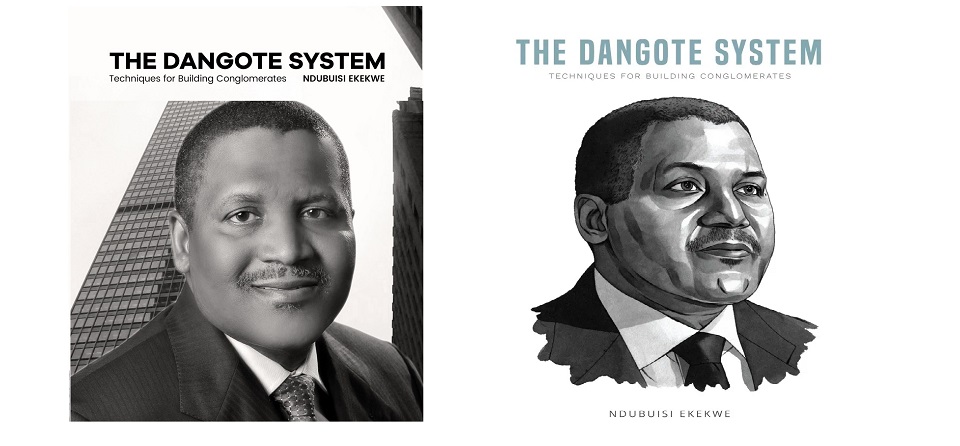
The Dangote System – Exclusive for Tekedia Mini-MBA Participants

0

“I built a conglomerate and emerged the richest black man in the world in 2008 but it didn’t happen overnight. It took me 30 years to get to where I am today. Youths of today aspire to be like me but they want to achieve it overnight. It’s not going to work. To build a successful business, you must start small and dream big. In the journey of entrepreneurship, tenacity of purpose is supreme.” – Aliko Dangote

“The Dangote System: Techniques for Building Conglomerates” arrives this week. Exclusive for participants of Tekedia Mini-MBA edition 2 and 3. REGISTER here.

https://www.tekedia.com/mini-mba-3/


Tekedia Mini-MBA: Get 2 Free eBooks, Free Facyber Cybersecurity Course; Beat Early Bird Deadline

0

Registration for Tekedia Mini-MBA edition 3 begins. This program is a 4-month weekly innovation management program, beginning Aug 10 to Dec 3, 2020. It will comprise videos, flash cases, written materials and webinars delivered online, and optimized for business execution and growth, with digital operational overlay. When we finish, we will issue a certificate from the Tekedia Institute USA.

Register and join us. You will emerge transformed with tools and capabilities that engineer confidence, performance and growth.  Accelerate your leadership ascent with us and have access to speak with me on your career and professional development! Tekedia is also unveiling certificate courses.

CODE PROGRAM
MINI Tekedia Mini-MBA costs US$140 (N50,000 naira) per person.
MINR Add extra (optional) $30 or N10,000 if you want us to review and provide feedback on your labs.
Add extra (optional) $60 or N20,000 for each certificate specialty course. You must have attended, begun or about attending Tekedia Mini-MBA to qualify. The following Certificate tracks are available:
CLSM Certificate in Logistics and Supply Chain Management
CSBM Certificate in Startup and Small Business Management
CETS Certificate in Exponential Technologies and Singularity
CPCD Certificate in Personal Career Development
CPFM Certificate in Personal Finance & Wealth Management
CBIS Certificate in Business Innovation, Growth & Sustainability

The Certificate program is completely capstone-based. Tekedia capstone is a research paper or a case study exploring a topic, market, sector or a company. Tekedia Institute supervises the work.

How To Register: click here to registerDo it on time for


The Raging Concerns That Forced Nigeria to Stop NIPOST From Increasing Logistics License Fees

0

The decision of the Nigerian Postal Services (NIPOST) to introduce new licensing fees for logistics has been greeted with backlash. NIPOST had earlier in the week announced a new list of logistics categories and the cost of their respective licenses.

In a post entitled: Minister of Comm. Tech and Digital Economy approves the Reviewed Courier and Logistics Regulator, the courier service claimed that the Minister of Communications and Digital Economy approved the new licensing fees.

“The honourable Minister of Communications and Digital Economy Dr. Isa Ali Ibrahim Pantami, has approved a new Courier and Logistics Regulations in accordance with the powers conferred on him by Nipost Act. This is timely and coming on the heels of an upsurge of Small and Medium players in the Courier and Logistics ecosystem.

“Hitherto, courier business was for big players. Provision was not made for MSMEs. The approval of the reviewed Regulations has now accommodated all types of emerging enterprises in the logistics landscape and will provide a regulatory framework for licensing and the provision of effective and efficient services. The essence of regulating the sub sector is to sanitize the industry,” the statement said.

According to the new requirement, the application forms and regulatory guidelines costs N20,000 while the logistics licenses cost between N250,000 and N2 million.

The fee for international courier license is N20 million with renewal cost of N8 million, national license costs N10 million with renewal fee put at N4 million, regional N5 million with N2 million renewal fee. On the other hand, those applying for state license are required to pay N2 million and renew with N800, 000, while municipal and special SMEs are expected to pay N1 million and N250, 000, with renewal options of N250, 000 and N100, 000 respectively.

The move has been tagged insensitive and reckless because it is coming at a time when businesses are striving under the strains of coronavirus pandemic, and the decision appeared not approved by the regulator, the Ministry of Communication and Digital Economy.

As Nigerians took to Twitter to register their displeasure over the development, the communication minister, Dr. Isa Pantami’s attention was called to it.

“Good morning, Honourable Minister. Have you considered the effect of the NIPOST Courier License requirement on the digital economy, small business and self-employment?” Dr. Joe Abah asked on Twitter. “It appears to go against your vision. I would like to understand the logic please. Thanks.”

In response to this question, Dr Pantami said “the increase is under investigation by my office since yesterday. The Ministry and Minister were not involved,” and ordered NIPOST to put the implementation on hold.

“Please NIPOST, our attention has been drawn to an increase of license fee, which was not part of the regulation I earlier APPROVED for you. Your Chair and PMG were YESTERDAY contacted to put the implementation on hold and send a report to our ministry by Monday. Best wishes,” he wrote on Twitter.

Stating further, he reminded NIPOST that the power to effect such change lies with the Minister alone, and he is not considering exercising it now as it would impose further economic hardship on Nigerians.

“The power of regulation of NIPOST lies with the Minister. Any change of fee must be specific & be approved by him before implementation. I know the economic challenges of NIPOST. However, looking at the economic hardship of citizens, we need to suspend any move,” he said.

While the swift response of the Minister is being applauded, the development has drawn attention to the fact that NIPOST tried to play double; being a player in the courier sector and at the same time playing the regulator.

It is one of the reasons Nigerians stand against it, as it means putting many courier services, which have been deemed more efficient than NIPOST itself, out of business, and consequently make life difficult for SMEs who depend on the courier ecosystem to stay in business.

“Does NIPOST even know there’s a pandemic, and that the world has been shut down over that?” Gimba Kakanda asked. “Instead of announcing grants and subsidies to keep small businesses afloat in the fashion of responsible governments in countries with thinking leaders, they chose cruelty.

“The same country that grants big businesses tax waivers is here to kill courier and logistics firms, which are mostly new and owned by youths. For a country with unbelievably high unemployment rate, this is both insensitive and unwise. Nigerians deserve better.”

Many more condemnations followed under the hashtag #SayNoToNipostFee.

“I think the powers that be in the Nigerian government wake up every morning and think “how do we increase the level of poverty and suffering in the nation. This NIPOST dastardly attempt at cutting down entrepreneurs must not be allowed to fly,” Uchenna Daniel wrote on Twitter.

“How much does the average logistics business make per month with a bike or two? Dr. Nonso Egemba asked. “Yet you’re requesting them to pay one million naira for a license! How much does the online vendor make per day? You’ll stifle many businesses struggling to survive.”

The Nigerian Postal services had justified the move saying there is SMEs upsurge, when the subsector is actually riddled with unfavorable fiscal policies and infrastructural deficiencies that stymie business growth.

Earlier in the year, the Lagos State government announced the ban of motorbike ride-hailing operation, which is part of the transport sector that had hundreds of youth under its employ. Many of those who were laid off due to the ban switched to logistics. Gokada, ORide and Max had to sell their fleet of motorcycles, and those who bought them have only one objective – to start courier services as the law allows for that.

With over 30% youth unemployment rate, it is regarded as insensitive for the Nigerian government or its agencies to make rules that will deprive the youths their means of livelihood, especially in the wake of global health crisis bearing a venomous fangs on economies. Other countries have been waiving taxes and subsidizing utility bills to keep people and businesses afloat.

Ghanaian government has reportedly extended its free supply of electricity and water for its citizens for another three months, at the same time, the Nigerian government is introducing six percent stamp duty charge on rents.

Many including Dr. Pantami believe that it’s the wrong time to introduce levies and tariffs. He said: “Due to the pandemic and economic hardship. I believe it is the right time to reduce, not to increase any tax or tariff.”

Others have expressed concern that if left unchecked, the governments and its agencies will introduce laws that will drive people to suicide.

“NIPOST should not be allowed to charge these ridiculous fees. Thousands of young Nigerians have lost jobs in the last few months. Some turned to courier services. a friend who lost his job bought these (two motorcycles) from ORide. Please don’t let him commit suicide,” Dr. Dipo Awojide wrote.