

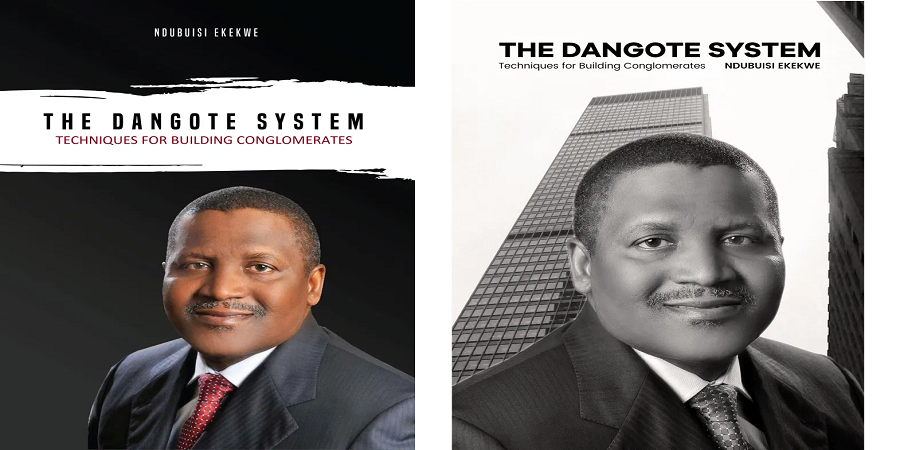
“Every morning when I wake up, I make up my mind to solve as many problems, before retiring home.” – Aliko Dangote Since Adam Smith wrote his classic, in 1776, the Wealth of Nations, to upend the mercantilist system and set forward the basic foundations for modern classical economics, we have seen corporations come and go. The […]
About the Author – Ndubuisi Ekekwe, PhD
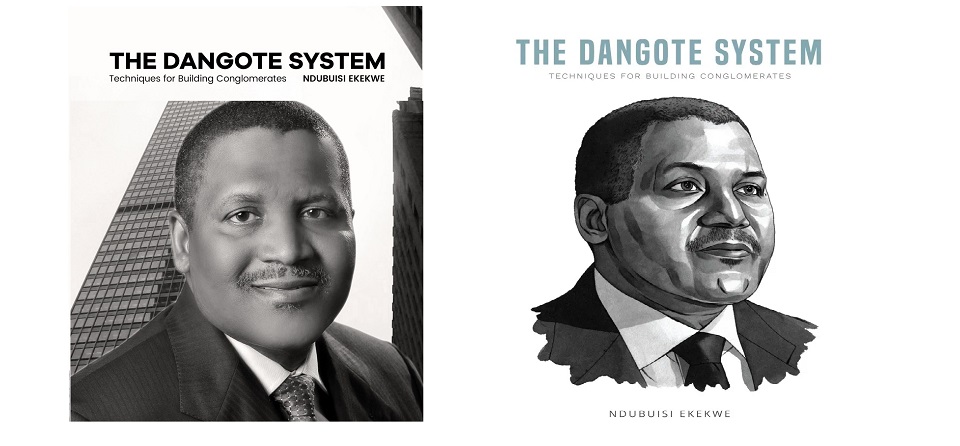
- Prof Ndubuisi Ekekwe
- Lead Faculty – Tekedia Mini-MBA
Prof Ekekwe invented and patented a robotic system which the United States Government acquired assignee rights. Dr Ekekwe holds two doctoral and four master’s degrees including a PhD in engineering from the Johns Hopkins University, USA. He earned undergraduate degree from FUT Owerri where he graduated as his class best student. While in Analog Devices Corp, he co-designed an accelerometer for the iPhone. A recipient of IGI Global “Book of the Year” award, a TED Fellow, IBM Global Entrepreneur and World Economic Forum Young Global Leader, Prof. Ekekwe has held professorships in Carnegie Mellon University and Babcock University, and served in the United States National Science Foundation Committee. The South African press called him “a doctor of innovation” for helping organizations on the mechanics of business innovation, strategy and growth. Since 2009, the Chairman of Fasmicro Group which controls many startups and entities has been writing in the Harvard Business Review. He is the Lead Faculty of Tekedia Mini-MBA.
 Dr Ndubuisi Ekekwe speaks at the EU Commission (2017)
 Prof Ndubuisi Ekekwe’s book received the prestigious IGI Global “Book of the Year” Award in 2010
Dedication
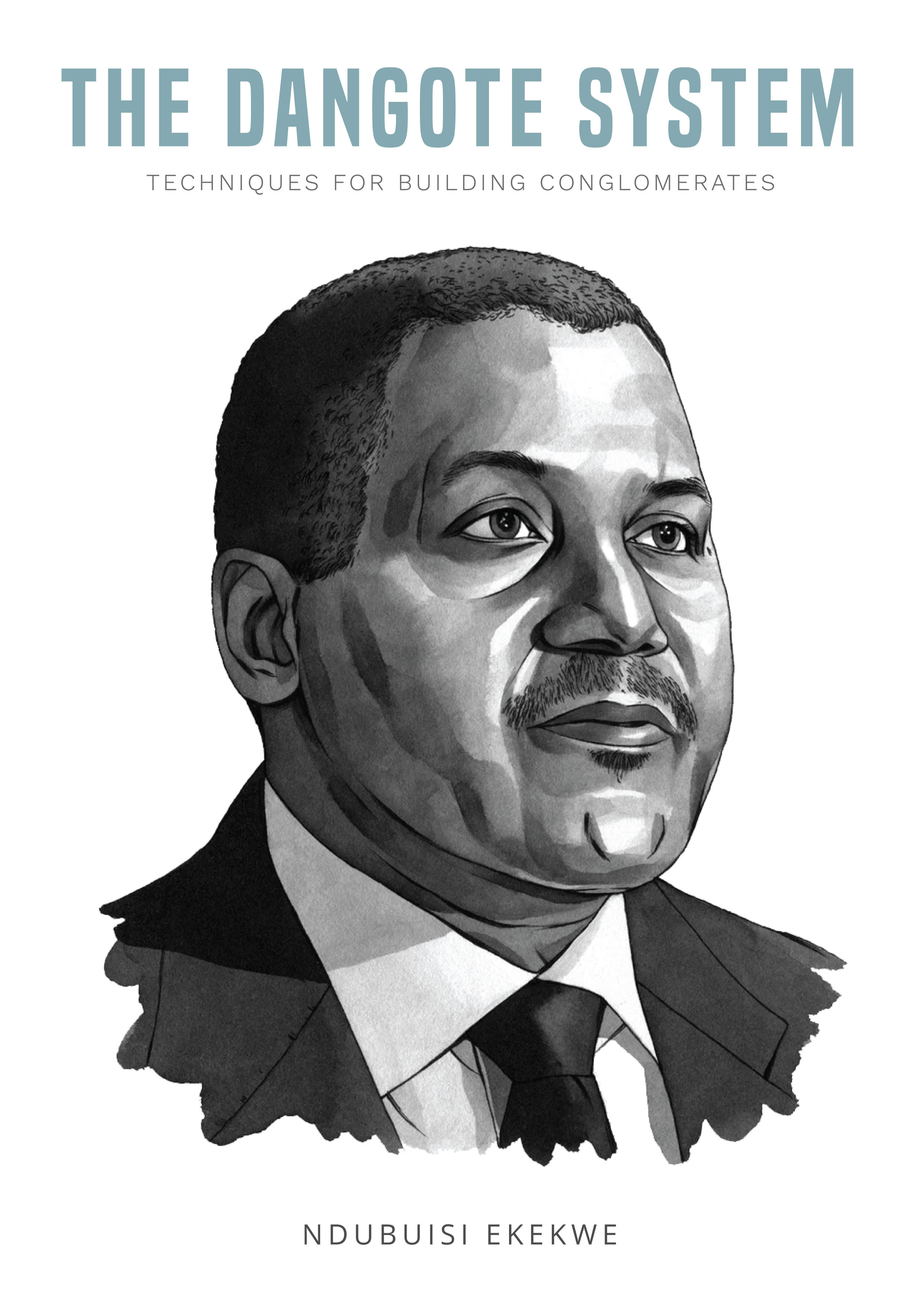
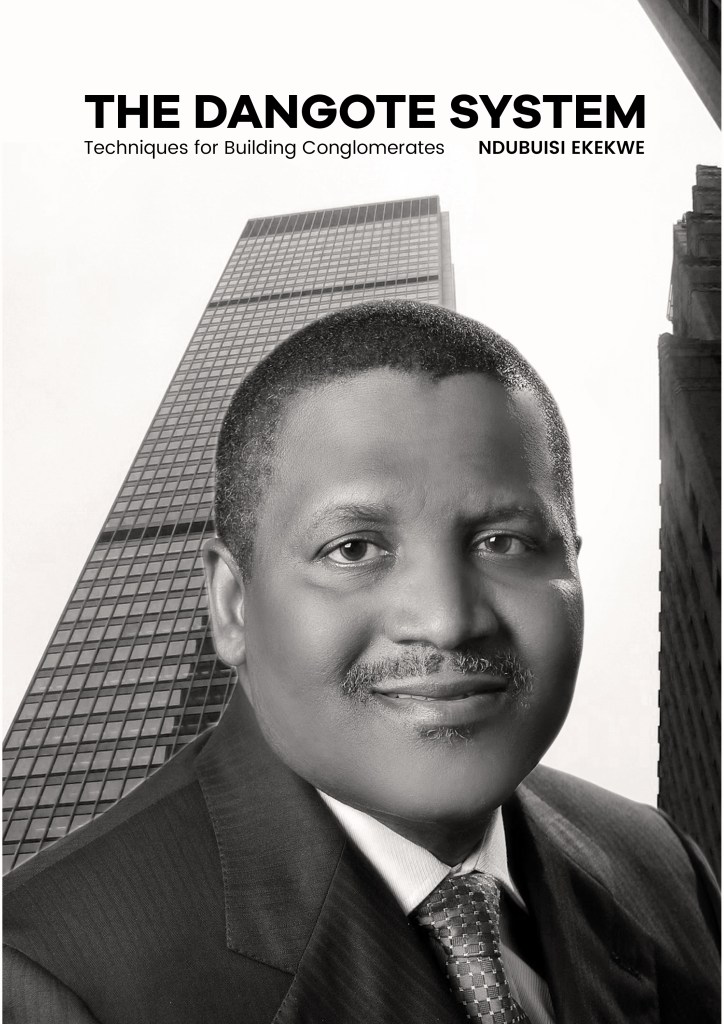
This book is dedicated to Tekedia Mini-MBA participants, and is written as an extended case study for them, on our learning journey. The goal is to use this book to demonstrate the power of vision, taking action and finding opportunities in markets. Aliko Dangote, the Founder of Dangote Group, an industrialized conglomerate, is one of the most important people in African business. His story is the type we hope to prepare our participants in our Mini-MBA program: business innovation, execution of playbook and unlocking leverageable growth across markets and business territories.

The Sovereignty Clause

The House of Representatives yesterday raised the alarm over clauses in Article 8(1) of the commercial loan agreement signed between Nigeria and Export-Import Bank of China, which allegedly concedes sovereignty of Nigeria to China in the $400 million loan for the Nigeria National Information and Communication Technology (ICT) Infrastructure Backbone Phase II Project, signed in 2018.
The controversial clause in the agreement signed by Federal Ministry of Finance (Borrower) on behalf of Nigeria and the Export-Import Bank of China (Lender) on September 5, 2018, provides that: “The Borrower hereby irrevocably waives any immunity on the grounds of sovereign or otherwise for itself or its property in connection with any arbitration proceeding pursuant to Article 8(5), thereof with the enforcement of any arbitral award pursuant thereto, except for the military assets and diplomatic assets.”
Source: Thisday
Indeed.
Population Equalisation of the 774,000 Local Government Jobs in Nigeria

Massive unemployment is always one of the signals of a depressed economy. During the Great Depression of the early 1930s, there was an economist of practical means who came to global limelight by advocating macroeconomics and state intervention on the battered world economy, and incidentally started a new economic school of thought. He was so influential that President Richard Nixon, a former president of the United States, in 1972 was quoted to have said, “We are all Keynesians now.” This was due to the fact that John Maynard Keynes, both in theory and practice helped the world to navigate out of the Great Depression.
According to Keynes, “The government should pay people to dig holes in the ground and then fill them up.” People would reply, “that’s stupid, why not pay them to build roads and schools?” Keynes would respond saying, “Fine, pay them to build schools. The point is, it doesn’t matter what they do as long as the government is creating jobs.”
I believe this to be the logic behind the ongoing recruitment of the 774,000 Nigerians across all the Local Government Areas, LGAs of the Federation. The Coronavirus Pandemic has changed the direction of the economy towards a recession. The ripple effect of reducing unemployment can be seen in rising aggregate incomes, demand, and expenditure. It’s therefore praise-worthy that President Mohammadu Buhari blessed the initiative and directed Mr. Festus Keyamo, the Minister of State for Labour and Employment, to execute the task. On the flip side of the significance of this project is the inequality of job distribution with respect to the individual population of each state.
The Inequality
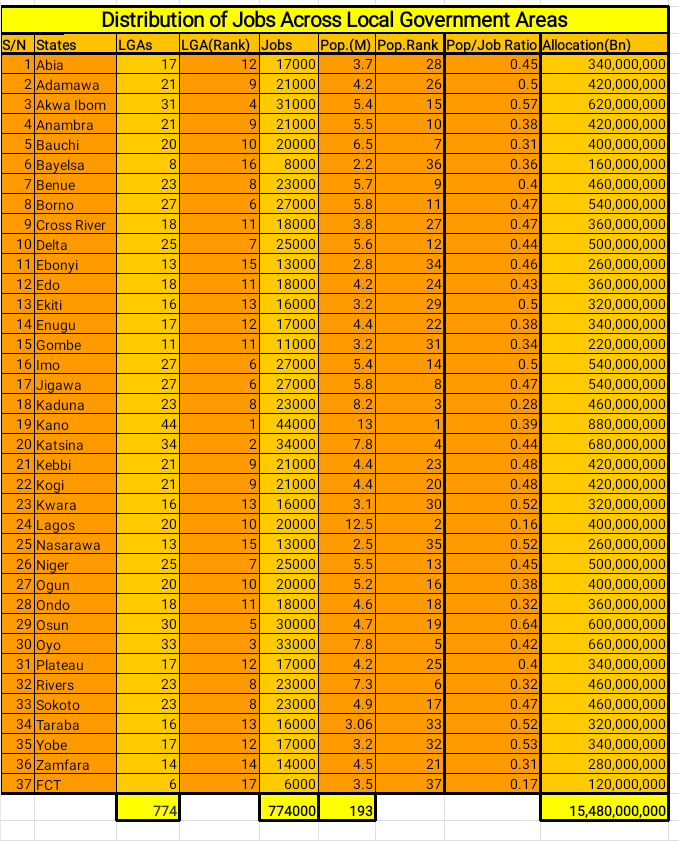
Extrapolating the 2016 population estimates from the NBS: National Bureau of Statistics (See the table below), we are going to see that the allocation of the 774,000 jobs according to local government factors alone is not equitable. If labour is a function of population size, then states with the largest population like Kano (13m), Lagos (12.5m), Kaduna (8.2m), Katsina (7.8m), Oyo (7.8m), and Rivers (7.3m) should be better off than other states by attracting the highest number of jobs. However, this is not the case.
Also, one would expect the states with the highest number of LGAs to benefit the most but, this isn’t the case either. States with the largest number of LGAs like Kano (44), Katsina(34), Oyo (33), and Akwa Ibom (31) are all behind Osun State. Yes, Osun State will be the greatest beneficiary from this employment. How did I know this?
I divided the number of jobs each state will get by its population and multiplied by 100% to get the ratio of the population that will benefit from the Special Work Project. The ratios I got range from 0.16% to 0.64%. Therefore, Osun State with a ratio of 0.64% tops the list of states that will get the most number of jobs. Conversely, Lagos State with the least ratio of 0.16% will get the lowest number of jobs. The logic behind this is that states with the largest population figures and relatively fewer number of LGAs will have small ratios while states with smaller population size with relatively larger LGAs will have larger ratios.
Reducing the Inequality
No doubt population size would have been the best determining factor for the distribution of the 774,000 jobs. Say, for every hundred thousand people, a state should get a thousand jobs. It’s not too late to include this factor as the state selection committees are still in the process of selection.
Reducing the inequality should be the responsibility of the state governments. As development partners in a federal structure and in a recession, rescuing the economy from sliding further into a depression should be a collective task. Using Lagos and Osun states as case study, which is most appropriate as the states with least and best benefits; if the federal government is recruiting a thousand labour from each local government area, Osun state with 30 LGAs will get 30,000 jobs with an injection of 600 million naira wages for three months. Lagos will get 20,000 jobs and 400 million naira wages. Where is the fairness in this? Why should Lagos with more than double the population of Osun State get 10,000 less jobs and 200 million naira less in wages?
Still on Lagos (this is also applicable to other states), it’s within its capacity ,for example, to recruit 500 more labour from every LGA to reduce the inequality. An extra 10,000 more jobs for Lagos will put it on the same level with Osun State. This is just an improvement and not an optimal adjustment. The federal government should not be asked to increase the numbers, this should be done by every state to underscore their commitment in providing the jobs they promised their citizens during the last general elections.
To avoid duplication of functions and conflict of interest, the states that desire to reduce this apparent inequality should work with the federal set-up state selection committees by sponsoring the number of slots they can fund. Please, be reminded that the population data I used is for 2016. This is four years after, certainly the population have grown. As the latest data available I had to use it to make my point.
Conclusion
I call on the National Assembly to sheath their swords for the sake of the masses you represent and allow Mr Festus Keyamo, the minister of state for labour and employment to execute the task given to him by President Muhammadu Buhari. The lives of the masses matter. As our representatives, it’s not your ego the minister supposedly bruised but ours and we don’t care. All we care about now is employment. Do not be anti-Keynesian.