DD
MM
YYYY

PAGES

DD
MM
YYYY

spot_img

PAGES

Home Blog Page 6252

Jumia, Africa’s Ecommerce Pioneer With Fintech Double Play, Doubles in Wall Street

3
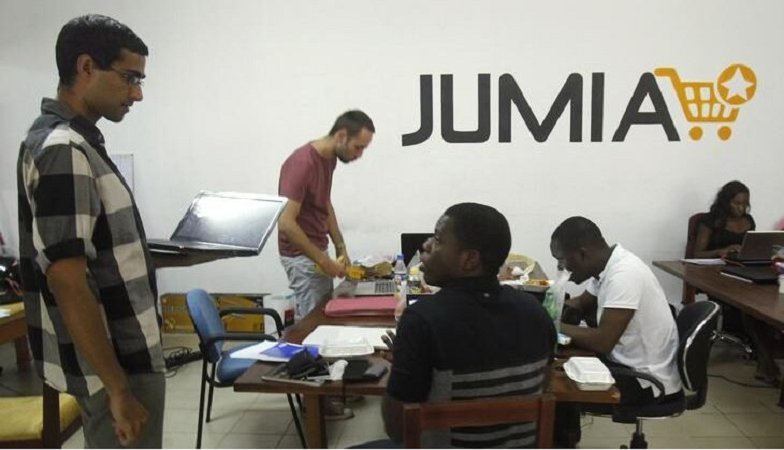
Jumia office

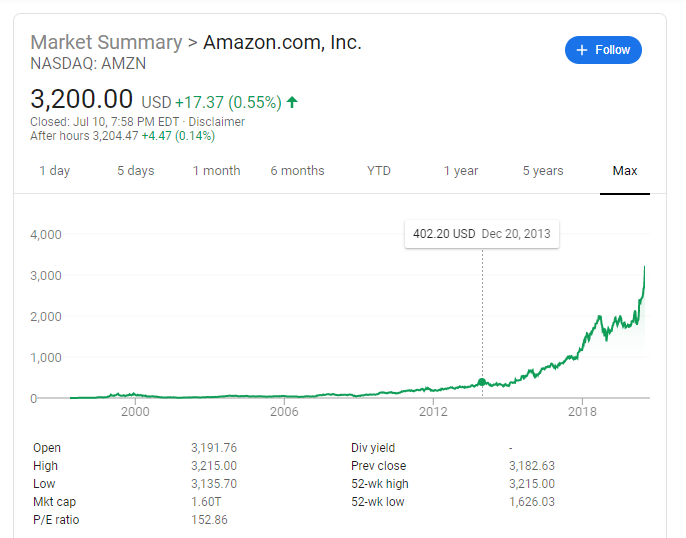
I have written so much about Jumia when it was a pure ecommerce company. I never liked the business model then. But when Jumia changed and added payment, I became a fan. My change of heart was supported by data: the world has not seen any successful ecommerce company without double play. In other words, you cannot make money just by doing ecommerce, especially in emerging economies. Rather, you add something on that ecommerce, and use the transaction volume which comes from ecommerce to make money from something else. Alibaba became better with Alipay, its paytech unit. India’s Flipkart depended on PhonePe to become a better company. Even Amazon relied on AWS to find favour before Wall Street.

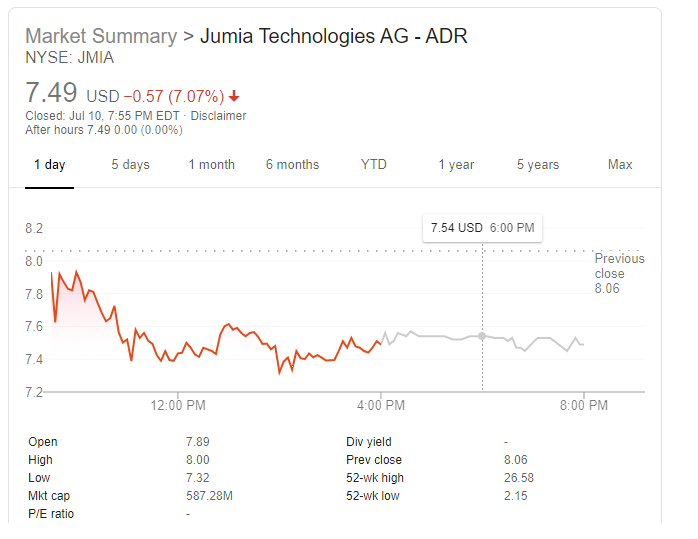
Jumia has gone paytech and today is one of the largest fintech companies in Africa with more than 6 million users. Wall Street has noticed and its stock is rebounding. In the last 3 months, it has doubled its market cap, and the trajectory looks positive.

Jumia has dramatically underperformed the market since its August IPO at $14.50 a share. The Africa-focused e-commerce company has struggled with fraud allegations on its platform and thin margins in some of its markets. However, Jumia’s revenue is still growing at a respectable pace, and the company has a convincing plan to turn things around over the long term.

To boost margins, management has divested from less profitable markets such as Rwanda, Cameroon, and Tanzania to focus on larger markets like Egypt, Nigeria, and South Africa, where consumers have larger purchasing powers and better access to the internet.

Internet access is a big driver of online retail adoption, and Jumia is well-positioned to benefit from several promising projects aimed at getting more Africans online.

American tech giant Facebook has partnered with several top telecom companies to build a 23,000-mile subsea internet cable called 2Africa to link 16 African countries to Europe and the Middle East. The connection is expected to go live by 2023 or 2024 and dramatically reduce bandwidth costs and improve internet speeds and access on the continent — three massive enablers for Jumia’s revenue growth.

Jumia reported first-quarter earnings on May 13, and the results show resilience amid the COVID-19 pandemic. Annual active customers grew by 51% to 6.4 million, while marketplace revenue grew 22% to 19.1 million euros ($21.48 million).


Comment on LinkedIn Feed

My responses to some comments

#1…It is important that those who have different views on Jumia are not seen as bad people. Before Jumia, there were Kalahari, Mocality, etc and all ended up in bankruptcy. People were simply telling Jumia one thing: ecommerce as a solo focus has never worked anywhere in the world.

Amazon was a lousy company before AWS and without AWS, Amazon may not be worth half of its current value. The good news is that Jumia is listening and adding those things people told it. For years, analysts wrote the same thing people wrote about Jumia on Amazon. Amazon responded by bringing a double play in AWS.

Amazon ecommerce changed retail. But AWS changed global technology forever.

Between 1994 to 2006 when AWS launched, Amazon stock was FLAT. It was when investors saw AWS impact in 2008 that its stock began to rise. When you write Amazon without that double play context, your readers may not see the big picture. Jumia as a pure play ecommerce has no future but with JumiaPay it is promising.

#2: To know those plays, I will go to things that would improve marginal cost since that is a huge determinant of scaling. Marginal cost = transaction cost + distribution cost. When a play adds payment, you reduce transaction cost. But the distribution cost is all atom (i.e all meatspace friction) which becomes harder when there is no national postal service. So, any 3rd play would be all players coming together to build a national postal network. If they do that, ecommerce will pick up in Africa. Unfortunately, no investor will give any company that type of money.
 

Apple Supplier, Foxconn, to Set Up $1 Billion Factory in India As Tech Exodus Looms in China

0

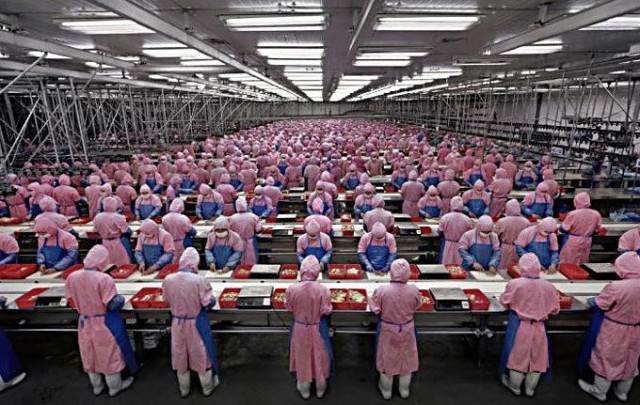
As the trade war between the United States and China escalates, companies are beginning to look for a safe alternative from the economic tussle in other countries. Apple is reportedly planning to invest $1 billion to expand a factory in southern India, where Foxconn, a Taiwanese contract manufacturer assembles iphones for Apple.

A source told Reuters that “there is a strong request from Apple to its clients to move part of the iphone production out of China.” According to the source, Foxconn’s planned investment in the Sriperumbur plant, where Apple’s iphone XR is made some 50 km west of Chennai, will take place over the course of three years.

Foxconn is expected to add some 6,000 jobs at the Sriperumbur plant in Tamil Nadu state under the plan, according to one of the two sources who spoke Reuters on anonymity.

Taipen-based Foxconn also makes smartphones for China’s Xiaomi Corp, where it operates a separate plant in the southern Indian state of Andhra Pradesh.

India is becoming a darling destination for manufacturers of mobile phone not only because of the US and China trade conflict, but because it offers cheap production cost with a large demographic of consumers.

Apple accounts for about 1% of smartphones sales in India, the world’s second-biggest smartphone market. But the cost of iphones, which is induced by taxes and shipment costs from China, has made Apple devices sacred in India.

Foxconn believes that moving production to India will ease the cost of Apple products and enable more sales. Neil Shah of Hong Kong-based tech researcher Counterpoint said the move will not only make Apple iphones cheaper, it will help the company to export from India.

“With India’s labor cheaper compared with China, and the gradual expansion of its supplier base here, Apple will be able to use the country as an export hub,” he said.

India’s Prime Minister Narenda Modi has been on a “make in India” campaign as part of his efforts to encourage electronics manufacturing in the country.

Last month, India launched a $6.65 billion plan that offers incentives to smartphones makers to establish in the country. The likes of Foxconn and other electronics companies moving to establish plants in India seems to be the best kind of news to the Prime Minister as it would create jobs to upset the country’s employment deficit.

It is becoming a global movement as the call to boycott China increases. The reasons have been piling up, victimizing not only companies of Chinese origin, but others with manufacturing plants in China.

Apart from its trade war with the US, China has been caught up in other controversies that are likely to jeopardize its economic growth, as many nations are now
Playing cautiously in their relationship with the South Asian country.

The boycott movement has been driven by factors bordering on political conflicts, the trade war, 5G infrastructure security concerns and COVID-19 pandemic.

The recent annexation of Hong Kong has aggravated the situation, making many other countries part of the controversy.

The Sino-India border tension came lately to escalate China’s political controversies to involve India. The border conflict between the two countries claimed no fewer than 20 Indian soldiers’ lives. Indian is seeking retaliation through economic retribution involving shunning Chinese goods and services, including tech and social media companies like TikTok.

COVID-19 outbreak also created a dysfunction that has impacted Chinese global supply chain and disrupted its economy. China is no longer a low wage, low regulation emerging economy. The labor cost in China has risen significantly, shifting the attention of companies looking for cheap labor to India and some other Asian countries.

Samsung ended its Chinese mobile phone production in September 2019 due to rising cost of labor, opening the way for other companies to seek refuge outside China.

Apart from having India as a destination, Apple is also considering a move to Vietnam where it intends to set a hardware production plant. A trial in Vietnam is reportedly selected to commence later in the year.

Microsoft is also working to push its hardware production out of China to other Asian countries. China has been its base of hardware manufacturing until now.

Google has asked a manufacturing partner in Thailand to prepare production lines for its smart home products. TikTok is also working to move its headquarters from China in order to distance itself from controversies.

It appears that China is gradually losing its position as the world’s leading electronics manufacturer, and India is positioning itself to be the next hub.

Presidential Statement on Former EFCC Boss, Ibrahim Magu

4

Following the development involving the arrest of the former acting chairman of Economic and Financial Crime Commission, Mr. Ibrahim Magu, the presidency has issued a statement explaining the situation.

The Special Assistant to the President on Media Matters, Garba Shehu, released a statement on Saturday, revealing that the former EFCC boss was caught up in gross financial misconduct that requires him to step down for due investigation to be carried out.

Read the statement below.

A series of documented allegations were made against the Ag. Chairman of the Economic and Financial Crimes Commission (EFCC).

Following a preliminary review of the allegations leveled against the Ag. Chairman and several other members of his staff, there were grounds for a detailed investigation to be conducted.

Hence, an investigative panel was constituted in compliance with the extant laws governing the convening of such a body.

As is the proper procedure, when allegations are made against the Chief Executive of an institution, and in this case an institution that ought to be seen as beyond reproach, the Chief Executive has to step down from his post and allow for a transparent & unhindered investigation

The EFCC does not revolve around the personality of an individual, and as such cannot be seen through the prism of any individual.

Therefore, the suspension of Mr. Ibrahim Magu, allows the institution to continue carrying out its mandate without the cloud of investigation hanging over its head.

The EFCC has many good, hardworking men and women who are committed to its ideal and ensuring that the wealth of our country is not plundered and wherein there is an act of misappropriation such person(s) are brought to justice.

Meanwhile, Mr. Magu is being availed the opportunity to defend himself and answer the allegations against him. This is how it should be, as is the fact that under the Laws of Nigeria every citizen is presumed and remains innocent until proven guilty.

We must realize that the fight against corruption is not a static event, but a dynamic and ever evolving process, in which the EFCC is just one actor, and as we continue to work towards improving our democratic process so shall every institution of ours also embark on that journey of evolution.

What is however important is that there must be accountability and transparency and our people must realize that they would be held to account.

This is the building block in the fight against corruption, the establishment of the concept of Accountability and the recognition of the Rule of Law.

Those who see Mr. Magu’s investigation, as a signal that the fight against corruption is failing, have unfortunately, missed the boat.

There is no better indication that the fight is real and active than the will to investigate allegations in an open and transparent manner against those who have been charged to be custodians of this very system.

Under this President and Government, this is our mantra and guiding principle. There are no sacred cows, and for those who think they have a halo over their heads, their days are also numbered.

Mr. Magu was not immune and regardless of the obvious embarrassment that potential acts of wrongdoing by him, given the office he held, may appear for the government.

No other administration in the history of Nigeria would have moved to bring into the light and public domain such an allegation.

The Disintermediation of Intel by TSMC

2

Intel is a fascinating company and a global innovator. But the news now is that Intel is no more the king as Nvidia has eclipsed it as the U.S. largest chip maker by market cap.  Blame TSMC, a Taiwan-based semiconductor contract manufacturer, for that. Despite the brilliance of Nvidia in making chips for gaming, AI and datacenters, the biggest factor remains that TSMC has created a new domain that could enable disintermediation of Intel.

In a surprising development in the US semiconductor industry, Nvidia has beaten Intel to become the most valuable chipmaker in the United States for the first time.

The company’s shares rose 2.3% on Wednesday to a record $404, to push its market capitalization to $248 billion, $2 billion above Intel’s $246 billion value, according to Reuters.

US chipmakers have suffered a hit following the emergence of COVID-19 that resulted in the S&P low on March 23. But Intel was coming out of it coldly while Nvidia has enjoyed a relative growth that has put it ahead.

Intel’s stock has lost almost 3% in 2020; Nvidia’s witnessed a 68% growth. The growth has been attributed to the evolution of remote work by investors who believe that the coronavirus pandemic will continue to spur Nvidia’s datacenter business to fast growth

Yes, Intel used to run the most advanced chip factories in the world, and companies depended on it for the most advanced chip designs. But with the advancement of TSMC and Samsung Electronics, companies can practically do the other thing Intel does: chip design. That means, they design and ask TSMC to manufacture. The ability to do that via TSMC without investing in foundries is a new level of disruption for Intel.

An Nvidia chip

Apple had taken its Mac chips from Intel, and would design and fabricate with possibly TSMC or Samsung since other players like GlobalFoundries remain weak. Other companies will do just that. As that happens, the largely closed system of Intel will begin to make way for the ARM business model. Provided there is TSMC to make the chips after circuit designs, most companies will go all the way to designing internally and sending to TMSC to fab.This was not possible in the past as TSMC was weak, but over the last few years, TSMC has evolved to be as good as Intel, if not better.

Simply, TSMC produces advanced chips that can match, if not surpass, Intel’s foundry capabilities. With that, Apple thinks it can design the Mac chips, and get the outside contractor to manufacture them. That saves it a lot of money in a business known for relatively low margins when compared with Apple mobile business.

More so, having Apple mobile business and Mac within the same chip architecture opens a better interoperability where your Mac becomes an extension of your iPad and iPhone, and vice versa. It un-bundles the mobility business, and opens a new age in what Apple can do at homes, on the go and offices. This is the grand unification of Apple business and the beginning of a new dawn of fandom.

Simply, Intel has to solve TSMC flank attacks even as it looks for ways to defend its castle from AMD and Nvidia. If not, the Apple Mac effect will become more common.

The Apple’s GRAND Unification And New Age of Fandom

TikTok Plans to Move Headquarters from China to Ease Security Concerns

1

As TikTok struggles to stay alive continue, the parent company ByteDance is considering taking some drastic measures to ameliorate the hits emanating from the paranoia that TikTok poses a security threat.

Senior executives of the company are having talks on how to create a new management board for TikTok, or establish headquarters for the app outside China, to distance it from troubles.

“As we consider the best path forward, ByteDance is evaluating changes to the corporate structure of its TikTok business. We remain fully committed to protecting our users’ privacy and security as we build a platform that inspires creativity and brings joy for hundreds of millions of people around the world,” TikTok told ET in a statement

Last week, India listed TikTok among 59 apps banned in the country in response to the escalated border conflict between India and China. Following the concern raised by the United States, India warily implemented a ban on the video app citing national security.

On Monday the US Secretary of States, Mike Pompeo said the United States is looking at banning some apps including TikTok. Pompeo said the US government is seriously considering the move to ban TikTok among other Chinese apps.

“With respect to Chinese apps on people’s cell phones, I can assure you the United States will get this one right too,” Pompeo said to Fox News Laura Ingraham. “I don’t want to get out in front of the president, but it’s something we’re looking at.”

Monday’s statement followed a series of other attempts by the United States government to kick TiKTok out of the country. The fear has been that the Chinese Communist Party would have access to users’ data giving the censorship laws of the Chinese government.

TikTok’s many attempts to distance itself from the perceived ties with China have done nothing to change the situation. In response to Pompeo’s statement on Monday, the app’s spokesperson said the company’s priority is to promote a safe experience for users and not provide data for the Chinese government.

“TikTok is led by an American CEO, with hundreds of employees and key leaders across safety, security, product, and public policy here in the US. We have no higher priority than promoting a safe and secure app experience for our users. We have never provided user data to the Chinese government, nor would we do so if asked.”

The Chinese app has repeatedly stated that it operates separately from the Beijing-based parent company, ByteDance, and none of its data is subject to Chinese law because its data center is in the United States with a backup in Singapore.

But about two weeks ago, TikTok was caught spying on users by Apple’s iOS 14’s beta version, which sends notifications to users whenever an app is found accessing users data. Though TikTok said it was triggered by a feature designed to identify repetitive, spammy behavior, and promised to protect users’ privacy and remain transparent about how the app works, the incident seems to have confirmed the fears of many.

On Friday, Amazon banned and unbanned the TikTok sharing app from employee mobile devices, though it was said to be a mistake and was handled when the representatives of the two companies met. However, earlier this week, Wells Fargo sent a letter to its employees directing them to remove TikTok from their devices.

“Due to concerns about TikTok’s privacy and security controls and practices, and because corporate-owned devices should be used for company business only, we have directed those employees to remove the app from their devices,” a statement from Wells Fago said.

These actions by companies have followed several governments’ move to ban TikTok. On Friday, the Republican National Committee sent an email to its members asking them not to download TikTok. The Democratic National Committee (DNC) also reiterated its guidance to members from December, asking them not download the app.

In March, two Republican senators introduced a bill aimed at banning federal workers from using TikTok on government-issued phones. Last year, the United States Navy banned TikTok from government-issued mobile devices citing cybersecurity threats.

Last November, the US government launched a national security review of TikTok owner Beijing ByteDance Technology’s $1 billion acquisition of social media app Musical.ly.

All these have been based on TikTok’s relationship with China. And for an app whose only crime is having a Chinese origin, it’s time to change the status quo.

ByteDance is taking steps to shift its center of power from china, as a way to address the concerns over its Chinese ownership, and to put an end to many of its security and privacy questions.