DD
MM
YYYY

PAGES

DD
MM
YYYY

spot_img

PAGES

Home Blog Page 6268

Why Blitzscaling Struggles in Nigeria

3

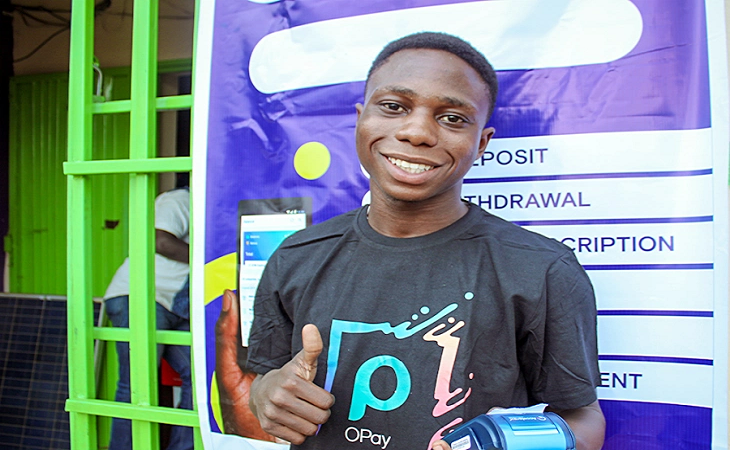
Many LinkedIn comments on the OPay piece. I spoke to a group of founders a few days ago, and the first question was the OPay article. Let me make it clear: OPay across its businesses have run validated business models.  No one is saying that the OPay business model is largely wrong. If you have read me, I have praised its aggregation and double play strategies. The core of my piece has remained that OPay has no patience. Yes, I have a problem with its intended rate of growth. In New York, London or Beijing, hyper-growth (or blitzscaling) delivers two options: win the trophy, or crash. In Nigeria, almost all the time, the only outcome is a crash because Nigeria does not have the conditions precedent to do any blitzscaling in the nation.

What is blitzscaling? Hoffman: Blitzscaling is what you do when you need to grow really, really quickly. It’s the science and art of rapidly building out a company to serve a large and usually global market, with the goal of becoming the first mover at scale. This is high-impact entrepreneurship

The point is that OPay put so much money into unlocking growth or better hacking growth. That does not work in Nigeria if done very aggressively. People will take the freebies and when they are gone, they move on. But in New York, people take the freebies and some will hang around. OPay had no patience and that is the issue; I contrasted with the “slow…stay the course” line in the piece.

See it this way: if you validate a product in New York, it is safe to write that you can raise money (as much as possible) and scale it across the United States. The U.S. is largely homogeneous which means the customer demographics are similar across most regions.

But in Nigeria, that is not the case. If you validate a product in Lagos and you think you can scale it across Nigeria, you would be surprised. There is no relationship between Zamfara market and Lagos market except that both use naira as a currency. So, a playbook that worked in Lagos will not work in Zamfara. 

So, the deal is this: if you look at that 200 million population, and think you can raise tons of money to scale a business that has worked in Lagos, across Nigeria, you will struggle because the other parts of Nigeria will disappoint you. Our communities and cities are heterogeneous with no apparent homogeneity making scaling any playbook harder. The implication is this: you need multiple playbooks in Nigeria across regions. And because of that requirement, you cannot blitzscale as you need effort and time to understand what each micro-market needs!

For most technology-based products, you have about 30 million people to work with as potential customers. Pumping insane amounts of money will not change that overnight. In short, your first $10 million investment could  show promise. But if you dump $100 million, you may be surprised, as that fund may not deliver efficiency as you utilize it because even the market you are pursuing has reached its absorption capacity. In other words, the Nigerian market is not that big to absorb all that big money. Yes, there is a diminishing returns on the amount of money you can invest in some sectors in Nigeria! That is because Nigeria is a relatively poor country when benchmarked with its population.

What people do is to diversify, putting that money in other areas, and then growing parallel businesses because a solo-focused business cannot absorb all the resources due to the sector carry-capacity. FarmCrowdy has diversified instead of putting so much resources in a sector that it may not grow further without losses. Why produce so much in farms only for them to waste? To deal with that, the company began buying processing factories knowing that if that expands, it will open opportunities in the stream of agro-processing. But blindly farming without thinking of the whole chain would ruin its business.

Back to OPay, it ran a good business model. But it had no patience with all those FREE this, free that. This is what I wrote when I predicted that OPay impatience was a problem. This is the heart of my OPay piece: if you serve Aba and you need people to be earning $4 per day to be profitable. But they are earning $2, and you give them freebies to join you. When you remove the freebie, you will likely lose most. How much freebies you give will not change that $2 core problem. A better strategy could have been adjusting the product to find a path in that $2!

Let me say it here: if OPay’s playbook is to “tax” Nigerians this way, it has no future. It has been proven that Nigerians like FREE things. If you try to ask them to pay, they move in exodus. Yes, provided it is free, you are the best service provider. Any playbook that depends on attracting users with freebies and expecting a paid conversion without a new level of product evolution will fail in Nigeria. So, OPay, you can burn your $50 million war chest, and the day that money runs out, all the users will look for the next deal in town. There is nothing like lock-in in Nigeria because the hardest thing is to get a Nigerian to spend money!

More so, because of the infancy of Nigerian market, we do not have depth. If you blitzscale in New York and lose a key customer, there are others you can rely on. But in Nigeria, you would be in trouble as there are very few of those customers to serve as backups. When such happens – losing a key customer- the blitzscaling will become muted, as you will start quenching fire to survive and all growth investments will stall. Lack of diversity in revenue base is a major element why Nigerian startups should be careful as they attempt to blitzscale..

OPay Other Businesses Fail

Week 3 Session Is Live; Week 2 Live Videos Posted

0

Good People, we have posted today’s Tekedia Live video session in the Board; our live session remains Saturdays 11 am Lagos time. Also, Week 3 class notes and videos are up in the Board.

The focus is on “Business Model & Transformation”.  I begin with “Modern Business Models and Growth”, looking at Aggregation Construct, Double Play, etc while Omowunmi Adenuga-Taiwo examines “Effective Organizational Change Management”. So, as technology and markets drive organization changes, triggering new business models, Omowunmi helps us on protocols to ensure that CHANGE is done effectively. 

Then, Femi Aiki, CEO of digital grocery startup, Foodlocker, took it home by looking at ecommerce. Yes, sector-transformation in action!

Go to the Board and experience positive business CHANGE. We have launched Tekedia Mini-MBA edition 3 which begins Aug 10 to Dec 3; register and join us. Learn about the Certificate courses also.

You must have attended, begun or about attending Tekedia Mini-MBA to qualify. The following Certificate tracks are available:
CLSM Certificate in Logistics and Supply Chain Management
CSBM Certificate in Startup and Small Business Management
CETS Certificate in Exponential Technologies and Singularity
CPCD Certificate in Personal Career Development
CPFM Certificate in Personal Finance & Wealth Management
CBIS Certificate in Business Innovation, Growth & Sustainability

I want to wish everyone a profitable week.

https://www.tekedia.com/mini-mba-3/

Week 3 Session

43

Notes: Nice piece from one of our community members on business model For Monday, July 13 at 11am Lagos time Tekedia Live, go to Week 4 board for a link to join. Updated version of Written Material (N. Ekekwe) has been uploaded. We fixed the terminology issue as discussed during the webinar. July 11 Live […]

This post is only available to members.

Tekedia Institute Unveils 3rd Edition of Tekedia Mini-MBA, Certificate Courses

0

Good People, we have launched Tekedia Mini-MBA 3rd edition (Aug 10-Dec 3). This is coming because industry stakeholders asked for it as companies re-strategize post-lockdown. This 3rd edition is simply the same as the 2nd edition: four months, online, and costs $140 or N50,000 naira and taught by world-class faculty of Tekedia Institute. The optional $30 (N10,000) Lab Review remains.

More so, we processed feedback from Edition 1 and members asked for final projects. Accordingly, we have unveiled Certificate courses which are completely capstone-based. Tekedia capstone is a research paper or a case study exploring a topic, market, sector or a company. You must have attended, begun or about attending Tekedia Mini-MBA to qualify to register. You pick a topic and the Institute guides you: you produce a report under our guidance.

Here are the Certificate courses: each costs $60 or N20,000.
– Certificate in Logistics and Supply Chain Management
– Certificate in Startup and Small Business Management
– Certificate in Exponential Technologies and Singularity
– Certificate in Personal Career Development
– Certificate in Personal Finance & Wealth Management
– Certificate in Business Innovation, Growth & Sustainability

To Register for the 3rd edition of Tekedia Mini-MBA and/or the Certificate courses, click here.

https://www.tekedia.com/mini-mba-3/

Central Bank of Nigeria Devalues Naira by 5.3% in Currency Auction – Bloomberg

3
Naira

The Central Bank of Nigeria (CBN) has devalued naira in one of its currency auctions. Bloomberg reported that the development took place at an auction on Friday, where the central bank asked that bids for foreign exchange be made at N380/$1 against the $360/$1 that it used to be. Sources with the knowledge of the matter said the CBN is keeping the matter confidential for now.

Nigeria’s central bank devalued the naira at one of its currency auctions, according to people familiar with the matter.

The weakening comes after Governor Godwin Emefiele announced last month that the bank plans to unify its multiple exchange rates to improve the transparency of its currency-management system.

At an auction for importers on Friday, the central bank asked that bids for foreign exchange be made at 380 naira per dollar, compared with 360 previously, the people said, asking not to be identified because they’re not authorized to speak to the media. Isaac Okorafor, a spokesman for the central bank, didn’t answer calls to his mobile phone or reply to messages seeking comment.

It has been an interesting journey by the apex bank to stabilize naira since the outbreak of coronavirus that resulted in plummeted oil prices.

In March, the CBN devalued the naira, pegging the official rate at N360 from N307, though the apex bank’s governor, Godwin Emefiele said it’s only a technical devaluation. Multiple exchange rates have characterized the Nigerian money market and the central bank has been trying one policy after the other to keep the market stable.

In 2017, the apex bank introduced the nafex, a separate rate for investors and exporters that offers a stable exchange window for naira. The nafex window was designed to woo investors who have been scared away by the fluctuating exchange rates, and it has been stable around N388 since May when the oil price started showing signs of recovery.

The CBN introduced nafex as it was trying to avoid devaluing naira formally. But it has contributed to the multiple exchange rates obtainable in the country’s forex market. The parallel market has been repeatedly accused of hoarding the dollar in order to create artificial scarcity.

The International Monetary Fund (IMF) has warned Nigeria about multiple exchange rates, which it said creates confusion and spooks investors.

However, many believe that the CBN has been responsible for the instability of naira through its sharp practices.

Sahara Reporters reported on Thursday that the central bank has been hoarding the dollars remitted by Nigerians in Diaspora for dubious reasons, and cannot say the correct amount of foreign currencies that have been sent to Nigeria and exchanged with naira.

The report said that contrasting figures that have been put out, which drew the attention of concerned Nigerians, after the Secretary to the Government of the Federation, Boss Mustapha revealed in 2019 that remittances received by Nigeria stood at $19,6bn, $22bn and $25bn in 2016, 2017 and 2018.

Those who questioned the figures said more monies were remitted than what was revealed by the SGF, and accused the CBN of concealing the real figures.

“It is pertinent to let the public know that apart from hiding the fact that revenue from remittances are far more than oil revenue, all foreign aids and Foreign Direct Investment, the CBN wants to continue to sabotage the national economy through dubious regulations and that was why it banned banks and other foreign exchange dealers from paying foreign currencies to recipients of foreign remittances.

“Thus, by warehousing the dollar component of remittances in foreign banks, the CBN has made it impossible for the naira to appreciate against the dollar in the foreign exchange market.

“In view of the decision of the Federal Government to mobilize the huge diaspora remittances to serve as a catalyst for economic development in line with the provisions of the Nigerians in diaspora Commission Act, the CBN should be restrained from hoarding information on the money sent to the country by Nigerians living abroad,” a financial expert with knowledge of the matter told Sahara Reporters.

But the central bank said it had restricted financial institutions from issuing foreign currencies in order to help naira appreciate. However, the decision has failed to yield the expected result as naira has been on free-fall ever since the apex bank took the step, and has been repeatedly devalued.

Several forex policies of the CBN have been pointed at by critics as reasons for naira’s underperformance in the international monetary market. The bottom line remains that the IMF and investors’ admonition to Nigeria to have a unified exchange rate is far from a reality, and it is hurting the country’s businesses and chances for Foreign Direct Investments.