DD
MM
YYYY

PAGES

DD
MM
YYYY

spot_img

PAGES

Home Blog Page 6269

The Unacknowledged Actors Behind the Best JAMB Result

21

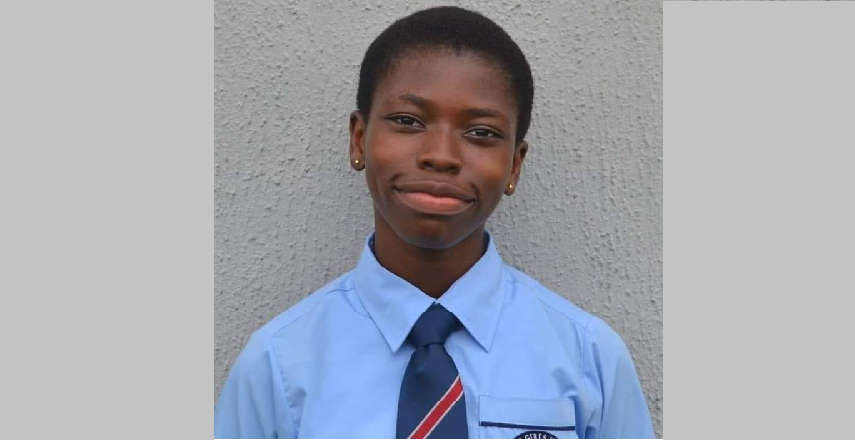
The first time I heard about the best ten candidates in the 2020 Unified Tertiary Matriculation Examination (UTME), aka JAMB, I was able to learn their various states of origin and their courses of choice. When I noticed that the first two candidates are from my state, I searched to see the schools that produced these wonders. I was hoping to see that they were students of one of the good schools in Anambra State, but alas, I found out much later that Maduafokwa Egoagwuagwu Agnes, the overall best candidate, schooled in Ogun State. The question I asked myself then was, “Why then should Anambra State take the glory while Ogun State did the job?”

This is not a case of being biased, but rather that of pointing out errors in our system. You can imagine suffering to raise a child from infancy only for her mother to come around when that child is an adult to claim her and then take all the glory that comes with the child’s achievements. Yes, I know a mother is irreplaceable, but the woman that raised that child should also be acknowledged at every point of the child’s life and success. Hence, there’s a need to acknowledge the players in these candidates’ success.

The State in which a person lives and schools matters a lot in the person’s academic performance. We know that some states in the federation pay much attention to education than other states do. Some of these states go as far as developing curriculum that ensures that children’s education is productive. They supervise teachers in public schools and ensure that private schools do the right thing. By the end of the day, the students they produce are adopted by other states because of the fallacious state of origin. All I am trying to say here is that candidates’ places of residence should be considered by JAMB as well. States of origin should only be an alternative for data purposes.

I know that the major reason why JAMB does not acknowledge states of residence (except when posting students to exam centres) is because of the modalities of admissions into higher institutions, where 45% is reserved for candidates coming in on merit basis, 35% for catchment areas and 20% for the 23 academically “disadvantaged states”. This means that someone that lives in Kaduna but is a native of Ibadan, may not be admitted into ABU, Zaria, unless he could compete for the 45% reserved for merit. If not, he has to go back to his state of origin, or to any other school close to Oyo State to seek admission. Yet, we shout “One Nigeria”.

The issue of catchment areas should not apply to states of origin, but rather to states of residence. Someone that spent all his life in Lagos may be denied admission into Unilag because he is Hausa. This is just unfair. We practice legal tribalism in all corners and we think Nigeria will be united.

As we demand that JAMB should acknowledge states of residence of its candidates (or even replace “States of Origin” with “States of Residence”), we should also ask them to acknowledge schools that trained their candidates. As far as I know, every child that is mentally balanced is intelligent. That A performed better than B could be because the teaching methods and level of exposure A enjoyed was denied B. Hence, even the best brain may still not shine if certain people did not make efforts to polish it. WAEC understood this and therefore published the best candidates’ names alongside the names of their schools.

Demanding that JAMB publishes names of schools of their best candidates is not being petty. When someone does well, the person should be rewarded. Maduafokwa did not make 365 in JAMB because she studied more than other candidates. It is obvious that her school gave her the opportunity she needed to shine. For instance, I learnt that she belonged to her school’s Mathematics Club and was once one of its executives. Belonging to this club gave her the leverage of scoring 99% in Maths in UTME. Maybe she wouldn’t have been able to make that if her school didn’t expose her to that. It is high time schools and teachers are appreciated for the jobs they do.

The Global Apps War Begins

1

In this world, everyone is a victim. It all depends on where you are coming from. Of course, there are dimensions in victimhood. America accuses China of ravaging its industrial belt regions  as jobs move to China. But if you look, everything the U.S. accuses China could be flipped against U.S. companies if you see what Google, Facebook and other U.S. companies are doing globally.

Yes, if Donald Trump has been the president of Gabon, with the same economic viability as the U.S, he could posit that U.S. technology firms,  like Chinese industrial companies, are distorting the architectures of global markets to the benefits of the United States. And he could begin a trade war against the U.S!

Simply, China uses its factories to redesign global markets; America uses codes to exert the same influence. In the league of trade wars, the U.S. is fighting China ferociously. Except for the mild slap from the EU, the world has not trade-fought the U.S. despite its tech firms causing huge dislocations globally. What Google and Facebook have done to global media companies are severe. Interestingly, there is no trade war against the U.S. for such impacts because the impacts are not in physical matter you can touch, unlike goods leaving Chinese Ports to the world.

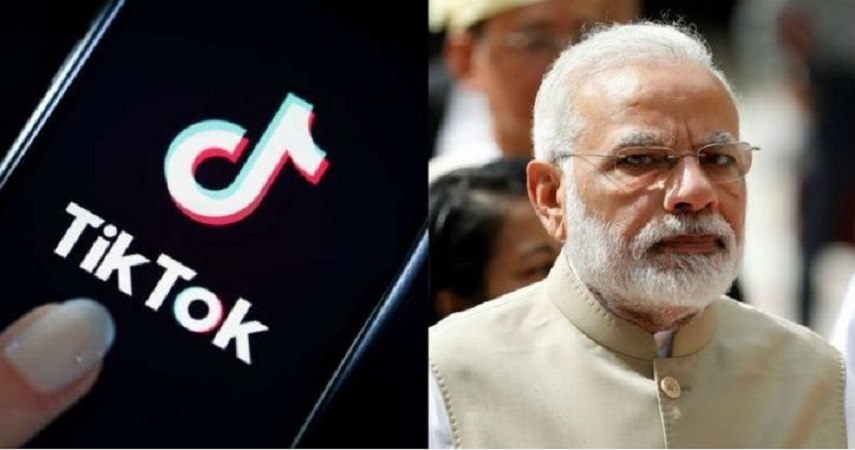
That takes me to the Apps War where India has banned TikTok. Managing and controlling apps would be one of the major economic wars of this decade. I have called this decade – the Decade of Apps Utility- where apps would be used to redesign many industrial sectors, from logistics to healthcare services. As that happens, nations will begin to understand that what matters may not be the buildings but apps which power the operations of markets, people and firms. And if that is the case, who controls those apps will become more important.

India on Monday said it has blockedTiktok and dozens of other apps mostly from China. The move followed a recent clash between Indian and Chinese soldiers along disputed borders of the two countries in the Galwan river Valley that claimed the lives of about 20 Indian soldiers.

The Indian Ministry of Electronics and Information Technology listed 59 apps in total posing a security threat. The statement issued by the Ministry said the technology poses a threat to India’s national security and public order.

“In view of information available, they are engaged in activities which is prejudicial to sovereignty and integrity of India, defense of India, security of state and public order,” the statement said.

India Bans TikTok, Offering Hope of Growth to Indigenous Apps

India Bans TikTok, Offering Hope of Growth to Indigenous Apps

0

India on Monday said it has blocked Tiktok and dozens of other apps mostly from China. The move followed a recent clash between Indian and Chinese soldiers along disputed borders of the two countries in the Galwan river Valley that claimed the lives of about 20 Indian soldiers.

The Indian Ministry of Electronics and Information Technology listed 59 apps in total posing a security threat. The statement issued by the Ministry said the technology poses a threat to India’s national security and public order.

“In view of information available, they are engaged in activities which is prejudicial to sovereignty and integrity of India, defense of India, security of state and public order,” the statement said.

The statement explained that the Ministry had received several complaints about apps on both iOS and Playstore “stealing and surreptitiously transmitting users’ data in an unauthorized manner to servers which have locations outside India.”

It added that “the compilation of these data, its mining, and profiling by elements hostile to national security and defense of India… is a matter of very deep and immediate concern which requires emergency measures.”

The banned apps include WeChat, Weibo, and Tencent’s QQ. The development is coming at a time when TikTok and other Chinese apps are enjoying a huge patronage in India.

India is TikTok’s biggest market with over 660 million installs, commanding a booming generation of people thriving on the app, who have been charmed by its features, including the ability to create contents. The ban could massively affect the fortune of TikTok’s parent company, ByteDance, which reported $5.6 billion in revenue in the first quarter of 2020.

It could also throw hundreds of workers out of job, and Kevin Mayer who was recently appointed TikTok’s CEO will face the challenge of driving the company out of revenue plunge if the ban lasts for long.

Though there is a global surge in TikTok’s downloads, with over two billion all time global downloads recorded in May, the short video clip app will be impacted heavily if it loses its presence in India. Bytedance is reportedly considering going public on the Hong Kong stock exchange, after recording 130% year-over-year revenue growth. Analysts said Tiktok’s IPO is valued between $150 billion and $180 billion.

Therefore, Indian ban is a development the company needs to avoid at all cost. Nikhil Gandhi, Head of TikTok, India said the company is complying with the authorities to work out a solution.

“We have been invited to meet with concerned government stakeholders for an opportunity to respond and submit clarification. TikTok continues to comply with all data privacy and security requirements under Indian law and has not shared any information of our users in India with any foreign government, including the Chinese government. Further if we are requested to in the future we would not do so. We place the highest importance on user privacy and integrity,” he said.

Inadvertently, TikTok is gradually becoming part of the tech companies to get caught up in the censorship politics that has shaped internet development in the past few years. Its Chinese origin has become a dent to its global dominance like mobile network technology company, Huawei. While the US has kept TikTok under surveillance, it’s been hoping to find solace in other countries including India with a huge population and adorable market size.

The US-China trade and political tension has triggered global paranoia in doing business with tech companies of Chinese origin. In the wake of the struggle by many countries to hold off US pressure urging them to shun Chinese companies for security reasons; last month’s border incident has created an excuse for India to strike.

While the decision to ban TikTok has forced about 2,000 people out of job, it has created an opportunity of growth to Indian owned apps. Naveen Tewari, founder and CEO in Bengaluru that operates two digital platforms, Glance and Roposo joined other internet companies’ executives in India in hailing the ban.

He said the ban offers his companies the chance to grow, as many of TikTok’s users are already thinking of alternatives in order to stay relevant online and retain their huge followership.

“The first thing we’re doing is just to assure the millions of users of TikTok that they have a platform that is homegrown. They can absolutely come there and continue their entertainment that they always had, probably in a slightly more responsible way,” Mr. Tewari said.

But TikTok has been here before. In April last year, the app was temporarily banned in India for allowing pornography and videos encouraging violence against women. Though this time, the case is politically different, TikTok’s executives are hoping to work out a solution with the Indian authorities in a shortest possible time.

The Generation’s GREATEST Innovator

1

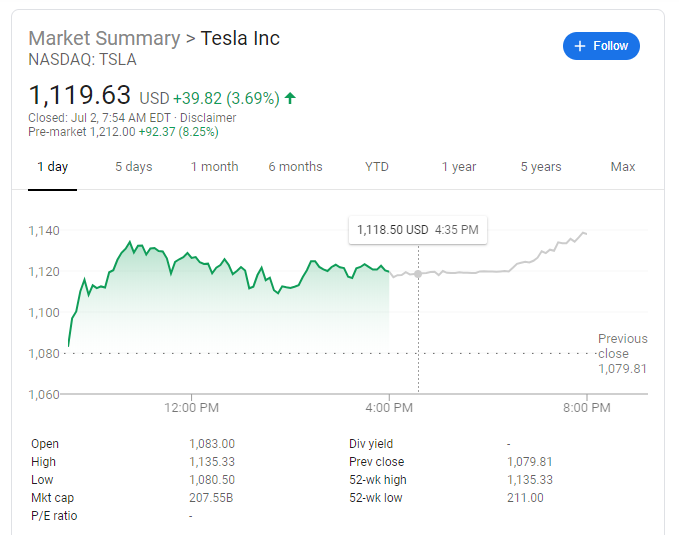
This is legendary: Tesla is now the world’s most valuable automobile company, overtaking Japan’s Toyota. What happened is uncommon. Tesla stock has pulsated from $211 per unit to $1,135 within the last 52 weeks. The consensus by analysts is  that Tesla will hit $2,000 in coming quarters. More so, Tesla is now “worth around three times the combined value of US rivals General Motors and Ford”.

Tesla has the best technology, best brand and remains well ahead of competitors on electric vehicles. Yes, the category-king has been anointed and Tesla will win the electric vehicle (EV) business. And provided it keeps that dominance, markets believe others will just break down. What GM and Ford are doing could be described as “marginal”, and daily, Tesla is extending the goal posts, making it harder for them to catch-up.

In the marketing construct of Needs, Expectations and Perceptions, Tesla is taking the world into Perception while other brands are meeting needs and expectations in the EV sector. When you are in the perception space, you set a new basis of competition, bringing new competitive ordinances that disrupt markets for your advantage.

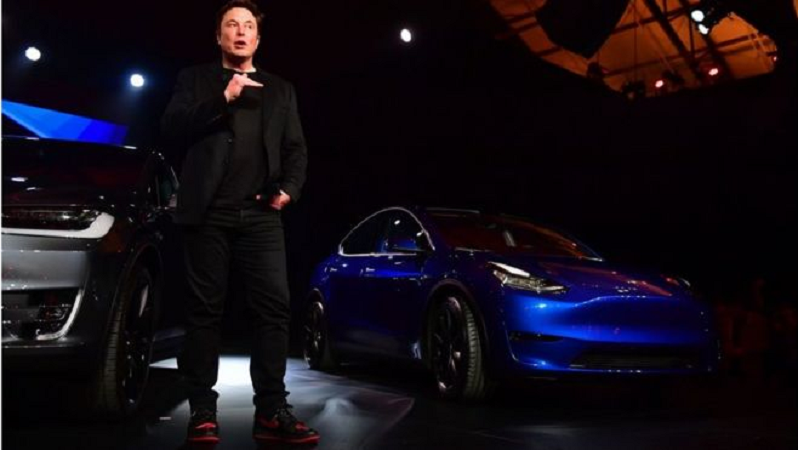
Elon Musk is the generation’s GREATEST innovator and no one comes closer.

However, investors are excited by the US firm’s potential, believing it could dominate the future electric car market.

Analysts at the stockbroker Jefferies said the firm remained “significantly ahead of peers in product range, capacity and technology”.

In a reflection of that, the firm is also now worth around three times the combined value of US rivals General Motors and Ford.

Mr Musk has said Tesla will deliver at least 500,000 vehicles in 2020, a forecast the company has not changed despite the coronavirus pandemic


SpaceX’s Crew Dragon and Elon Musk’s Moment of History