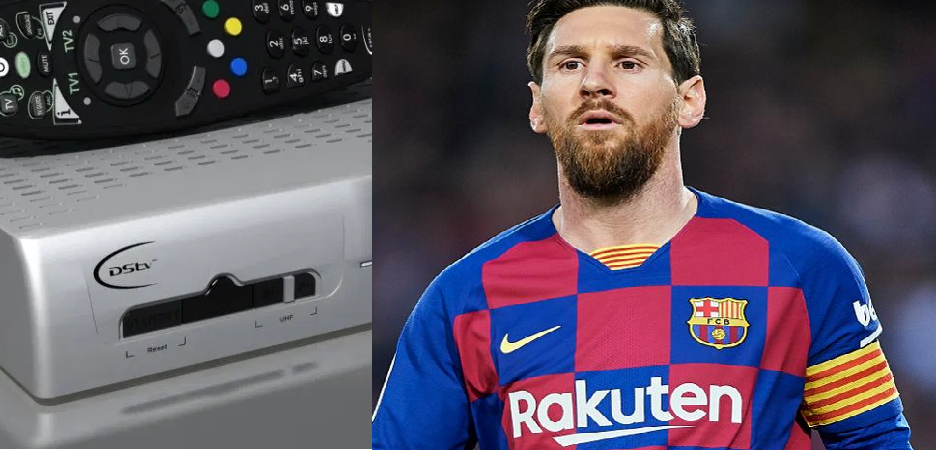
Great comments in our community on the MultiChoice (parent of DStv), Netflix and Amazon partnership. Some have called it a guerrilla warfare or battle; nothing like that though. In ancestral Africa, when three clans fight one another at once, be informed that a festival is taking place, not a war of strategic value. In other words, for Amazon and Netflix to fold parts of their African strategies into DStv, they want to improve margins in the easiest ways possible. DStv distributes the goods in Africa, while the American firms provide regular supply from their production studios. Expect Disney+ to join in coming years once it settles in the U.S. and Europe. Simply, DStv plans to become an operating system for video distribution in Africa, as a super-aggregator.
From the comments also, many do think that MultiChoice (DStv, GOtv) is a monopoly. While I do not sanction anti-market prices, it is important to note that MultiChoice’s raw materials – the European football- are free products for anyone to bid, and the company is not the primary producer with no apparent moat against anyone bidding. I have looked at the numbers, from an independent angle, the price growth in DStv has trail-correlated with TV rights costs in Europe. According to Statistica, revenue from Premier League broadcasting rights was $3 billion in 2013-2016; for 2016-2019, it shot to $5.1 billion. That is the raw material which DStv sells. Yes, it has gone up by close to 70%.
Raise your hand if you would not increase price when your raw material has gone up by 70%. If you did raise a hand, you are running a charity and once your funds finish (or your donors get tired), you would close shop. DStv is not running a charity and the 15% increase Nigerians experienced during that time might have happened because the company possibly got a discount as it was always the only one bidding for Africa! So, European football has to dance or it misses the revenue altogether.
Nothing stops companies like NTA, Channels, AIT, etc joining the bidding. My point is simple: anyone that holds these rights would at the end ask to be paid to recover its investments. Where we think we cannot take it, Enyimba, Rangers, Kano Pillars, etc, are still there.
So, when I read statements that Nigeria wants to force video entertainment companies to sub-license contents to competitors at aregulated price, you would ask, Why Not Ask Those Sub-firms to Go and Bid in Europe. So, DStv buys at say $100 and Nigeria will demand it sells for $50 knowing fully well that value makes sense when supply is not unbounded? Does not make sense to me how DStv will return in three years to pay Messi and C.Ronaldo equivalent of Abia State budget to keep them happy, kicking a round leather. Nigeria needs to live on FACTS as we make policies!
But DStv’s ambitions in Nigeria might hit a major wall if the new broadcast code by the regulatory commission goes into effect. The new code will prevent pay-TV and streaming platforms from making content exclusive and compel them to sub-license content at prices that it will regulate. (TC Daily newsletter)
Read more on this old piece where I explained further.
If MultiChoice does not increase rates, it has no business in Africa. It is irrelevant if the price in Nigeria is higher than what it prices in Ghana. It has made it clear that running a business in Nigeria is higher because it runs generators and hires private guards unlike in other economies where those are readily provided by governments.
The key reason why MultiChoice is increasing the price is thus: it is losing its best subscribers and to cover and service the loans it took to pay for the TV rights which have made it the best Pay-TV product in Africa, it needs to ask existing customers to pay more, and because TV rights are always going higher it has to budget more for the next cycle of licensing.
The statistic depicts the revenue from the Premier League television broadcasting rights from 1992 to 2019. From 2013 to 2016 the Premier League generated over 3 billion pounds in revenue from its marketing of TV broadcasting rights per year. (source: statista)
In other words, if it loses the most premium customers, it will not have enough money to pay for the TV rights. And if you ask it not to increase the prices on the existing customers, you have technically frozen its business. The product it sells was not created by it: England Premier League, Serie A, La Liga, etc decide their TV rights prices. As these brands continue to increase rights, and MultiChoice continues to see its customer base disintermediated, expecting it to keep prices static is not fair. What the court should have done is to demand that those selling TV rights freeze price increase and those leaving MultiChoice brands stop.
She is a highly skilled Learning and Development Consultant with 12+ years’ experience facilitating Soft Skills training. A change management consultant who earned organizational insights, from working with a broad variety of highly specialized work cultures and professions. A consultant with experience in curriculum design, mentoring business leaders to develop soft skills.
She is an innovative leader with national and international experience in data management, advocacy and program implementation and evaluation. Leads training sessions across Africa, focused on effective communication, building effective teams and finance for non-financial people.
A master’s degree graduate of the University of Aberdeen, she heads the Youth Engagement & Learning unit in the industry-king, and digital recruiter Jobberman. Precious Ajoonu will lead a session during Tekedia Mini-MBA on Career Planning, Professional Learning & Development.
Come and learn how to remain a valuable professional as you advance your career.
A U.S. accelerator is sending its participants to Tekedia Mini-MBA. They want to understand Africa better and connect deeper as they build relationships with African founders and partners. Find below selected testimonials from Tekedia Mini-MBA edition 1, and also what we are doing on scholarship funds.
Selected Testimonials
A testimonial from a Tekedia Mini-MBA 1st edition participant, Franklin Okafor FCCA, CFE: “The program was ‘loaded’. Informative. Insightful. Practical and knowledge-filled. I’m better off than when i started in February.” He then throws a challenge: “If you have the means, please register for the next batch starting on the 22nd of June. Thanks Ndubuisi and the entire faculty.” Source: LinkedIn
From a Fellow of Chartered Accountants and a Bank Manager, here is a testimonial, below. Source: LinkedIn
Scholarship Funds
On scholarship, kindly note that there is no need to send my team your bank statement to make a case for a scholarship for Tekedia Mini-MBA. And no one needs your BVN for any reason (never do that please). At N50k ($140), our program is relatively expensive since in some public schools in Africa, that is the cost of tuition in a semester. For some students, their parents cannot absorb that extra cost. We truly understand the challenges and are working hard to provide resources to assist more members. As I type, we have hundreds of pending scholarship requests. Where you can support young people in your community, do.
The Vice President Yemi Osinbajo-led Nigeria Economic Sustainability Plan 2020, commissioned under a presidential committee, has been released. This report was produced to evaluate how to mitigate the paralysis which Covid-19 has brought to the Nigerian economy. The outlook is extremely depressing. Download the report here (pdf).
Non-oil revenue, largely made up of taxes, has also practically dried up. This is because, like several economies around the world, Nigeria is faced with paralysis of economic activities due to lockdown measures in the Federal Capital Territory and the key commercial and industrial centres of Lagos, Ogun and Kano States. In addition, several other State Governments took similar steps to slow the spread of COVID-19 in their respective territories. These have cumulatively resulted in supply chain disruptions, suspension of commercial activities and large-scale job losses.
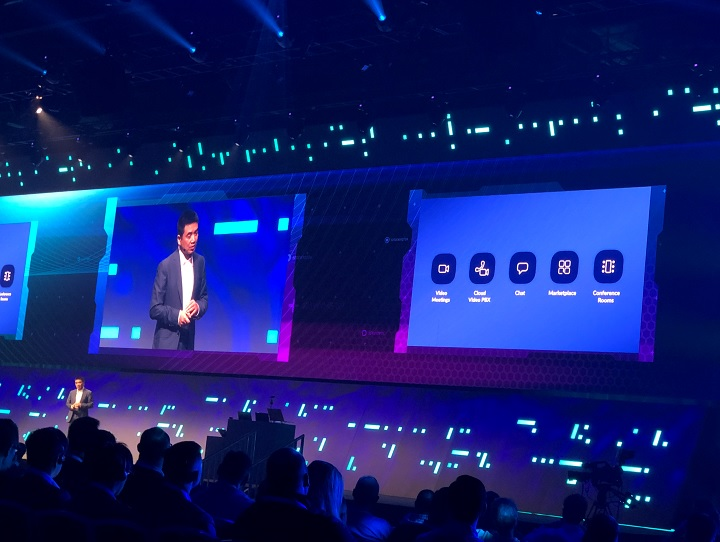
Zoom has enjoyed unprecedented growth in the wake of COVID-19 pandemic, rising to stardom as it became the center of teleconferencing and virtual interactions. However, its rise is facing challenges ranging from privacy issues to Chinese government’s interference.
On Thursday, the company issued a statement acknowledging that it was pressured by the Chinese government to shut down an event commemorating the 31st anniversary of the 1989, June 4 Tiananmen Square Massacre.
Zoom acknowledged that it was repeatedly urged to shut the event down by Beijing because it goes against the country’s laws.
“In May and early June, we were notified by the Chinese government about four large, public June 4th commemoration meetings on Zoom that were being publicized on social media, including meeting details. The Chinese government informed us that this activity is illegal in China and demanded that Zoom terminate the meetings and host accounts,” the statement from Zoom said.
Zoom’s compliance with the Chinese government’s request has stirred questions on where the loyalty of the company lies in the issue of privacy and security. The development has heightened the growing scrutiny emanating from security concerns over Zoom’s ties with Beijing.
The accounts of Zhou Fengsuo, a Chinese activist based in the US, was shut down days after he hosted a memorial for the Tiananmen massacre, and Lee Cheuk-Yan, a pro-democracy activist based in Hong Kong, who has been organizing a yearly vigil for the victims of the crackdown was suspended too.
Though Zoom said it has restored the accounts, human rights and pro-democracy campaigners are concerned about the growing influence that the Chinese government is having on the tech company. The two accounts suspended are based in outside China where the Chinese laws have no jurisdiction, which suggests that Zoom, which is operational in 80 countries around the world, is under the grip of the Chinese authorities.
Zoom is among few media-tech companies of foreign origin allowed to operate in China. Others have been shut out over their refusal to play by the censorship rules of the Chinese Communist party.
The Chinese government has been in the news of misinformation dissemination recently on social media platforms that are banned in China.
On Thursday, Twitter issued a notice disclosing 32,242 accounts of state-linked operations attributed to China, Russia and Turkey. The accounts were removed for various offenses hinging on violation of the platform’s manipulation policies.
However, it seems to be a tip of the iceberg in efforts that the People’s Republic of China is making to exert influence on tech companies around the world. Zoom has unfortunately been caught up in the controversy that may jeopardize its bright future.
Yan said Zoom’s willingness to allow China to pressure it to determine who uses the video app and who doesn’t is “shameful.”
“They have restored my account but Zoom continues to kneel before the Communist party. My purpose on opening Zoom is to reach out to mainland Chinese, breaking the censorship of the Chinese Communist Party. With this policy, it defeats my original purpose,” he said, adding that he has closed down his account and asked for a refund.
Zoom said it doesn’t have the technology to block accounts from certain countries, which led to the decision to shut the Tiananmen event down. The company said it is working on the technology that will enable it to block participants by country instead of shutting them down.
Zoom said it did not give any information to China, and “will not allow the Chinese government to impact anyone outside of Mainland China,” which alluded to the concern that the Chinese government will continue to exert a measure of influence on the company. The development thus confirmed the fears of many and brewed new antitrust concern from the US authorities and human rights activists.
Wang Dan, one of the activists commemorating the Tiananmen event, and whose account was shut down twice at the request of China said the Communist Party is intensely attacking democracy and free speech around the world.
“The Chinese Communist Party is actively attacking democracy around the world. They have already started to intervene in the social system and way of life in the US. The whole world should be on alert,” he said.
On Friday, China said Twitter should take down accounts that smear China if the social media platform is serious about fighting misinformation.
With the growing effort by China to control what goes out in platforms outside China, the United States government is beginning to take interest in the activities of Zoom. Representatives Greg Walden and Cathy McMorris Rodgers wrote Zoom’s CEO Eric Yuan, asking him to explain his company’s actions. Senator Josh Hawley also asked Yuan to “pick a side between American principles and free speech, or short-term global profits and censorship.”
China researcher for Human Rights Watch, Yaqui Wang, said given that China’s laws don’t conform to international human rights standards, tech companies should come together to fight their censorship influence.
“Tech companies should stand together to resist Beijing’s censorship demands and uphold the right to freedom of expression. Otherwise, the groveling will never end,” she said.
Many see Zoom as a young company with an impeccable reputation and future to protect, and its relationship with Beijing is putting it in a position that may hurt the progress it has made so far. Experts said the last thing Zoom needs right now is a sanction from the US government as a consequence of enabling Chinese censorship.