DD
MM
YYYY

PAGES

DD
MM
YYYY

spot_img

PAGES

Home Blog Page 6286

The Triple Evil: Racism, Slavery, and Colonialism

0

As George Floyd begged for his life that day, so does everyone that looks like him around the world begs for their lives daily. Our brother George is the face of the new movement that is asking for change, but systematic racism and hate that took his life is not confined to the street of Minneapolis or the United States. This ugly monster has a long history and parades itself everywhere around the world in different shapes and forms.

As an African immigrant living in the United States, I can feel the knee on my throat in two ways. I grew up in a continent that is in shambles due to the oppression of slavery and colonialism. I also live in a place where I get a daily dose of hatred and poison of racism. It is an everyday experience for black people around the world, even in their lands, to be looted, choked, and oppressed daily.

As we continue this discussion of racism, we should not forget the genesis of the problem. I believe that we cannot solve this problem without having a thorough understanding of its foundation. The history of racism goes back more than 400 years ago when the evil idea of seeing black people as inferior effectively came to life. The continent of Africa was invaded, robbed, and stripped of dignity, right, freedom, and opportunities. The colonial masters ruled Africa and looted the continent. The intelligent and articulate leaders that could ask questions were subdued, killed, or enslaved. By the time the colonial masters left most African countries around 50 years ago, it was too late for the continent to recover. It has been downhill from that point and still getting worse because of the policies towards Africa.

The descendants of the enslaved Africans and the Africans that migrated for opportunities still face discrimination in America and other places around the world. I was talking to a Caucasian man sometimes ago. He was impressed by the way I analyzed a topic. He then said, “When I saw you, I thought you are an African American, but I see that you are an African. I am not surprised because many of you are very focused and educated.”

I did not understand the discussion until a few years later. Whether the man understood what he was saying, I don’t know, but I do know that it is the narrative that pitches people with the same experience and background against each other. African Americans are told that African immigrants are taking their jobs, while African immigrants are told that they are more serious-minded and focused. Unfortunately, many people within both communities have subscribed to the idea. While many might think that slavery only affects the direct descendants of African American slaves, it affects the African immigrants too. The great grandparents, great uncles, and aunties of some of the immigrants were the slaves. Many African immigrants left the continent that was robbed of its dignity for opportunities. On the whole, racism does not distinguish between African immigrants and African Americans when it’s time to discriminate. The color of racism is the same, and both sub-groups experience harassment and denial of opportunities in the same degree. 

The effect of racism is not only felt by black people in the countries with majority Caucasians, but its impact is also profound in the continent of African. Africa remains the poorest continent in the world. The corrupt African leaders are allowed to keep the money they stole from their respective countries in the western financial institutions. Many of these corrupt leaders also see western nations as a save haven after they have looted their countries. 

Racism is rooted in the global policies that create a disadvantage for Africa and people of African descent. The economic, trade, financial, political, health, and other major global policies are against Africa. Just recently, a French doctor suggested that the Coronavirus vaccine should be tested in Africa. That shows how much a supposedly educated individual values the life of Africans.

The unattractive portrayal of Africa is amplified in the media, which is the source of information for many people. The view of Africans as barbaric, unintelligent, and inferior that led to slavery and colonialism is still being amplified in the media.  Bananas are thrown at black people to remind them of “where they belong” and “who they are.” Unfortunately, what the media projects is not the lived experience of 80% of the people on the continent. There is poverty in Africa, but Africans wear clothes, there are cars on the street, Africans go to school, and Africans do not live among wild animals. 

The picture of Africa created by media and global policies feeds racism that we see everywhere around the world. Until the inferior view of Africa changes, discrimination against black people across the globe will continue. The comment made by Danny Ferry (former Atlanta Hawks General Manager) in 2014 about Luol Deng, an NBA star, underscores this point. Ferry said, “He’s a good guy overall, but he’s not perfect. He’s got some African in him.” What is the African in Luol Deng? That is the general unpleasant view of Africa.

I have heard many times that African countries and people of African descent need to change their narratives. How can you rise above a tide that overwhelms you daily? How do you operate in a system that is set up against you? How are you expected to rise when people tell you that the skin that you cannot change is your problem, and it is your fault? How can you get better when oppression has become your way of life? However, just like brother George was chocked with the knee of his throat and cannot do anything because he was incapacitated, the same way Africa and black people cannot change until systematic racism is eradicated by those that enacted it.

We have a lot to do at the grassroots level, but racism against black people requires a global approach. We have to tackle this issue from its root. As long as the negative view of Africa as a barbaric and good for nothing continent remains the same, racism towards black people around the world will not change. We cannot just cut the branches of the tree of racism as we have done in the past and expect racism just to disappear; we have to uproot it. Otherwise, it will bud again at the scent of water of oppression. The change starts with removing the knee from the throats of Africa as a continent. We need a global political and systematic change towards Africa and people of African descent. The media portrayal of Africa has to change. There are beautiful things about Africa and black people that people need to know. 

The death of George Floyd must not be in vain, fade away, or become a lip service of sympathy. Donation of money by corporations is not enough. It must spark discussions to create an urgent need for a change that is long overdue around the world. There is a long road ahead, but the change can only happen when we start having the right conversations that focus on the root of the problem. These discussions are not calls for sympathy for black people or the African continent. They are requests for equity and an opportunity to compete without seeing our skins as a disadvantage. We are all equally created by God, and no one is inferior. Intelligence is not a function of skin color, and opportunities should not be a function of race. Eliminating racism against black people around the world starts with changing the view of Africa as a continent.

The MultiChoice (DStv, Gotv) Grand Unification of Africa

0

MultiChoice, the brand which owns DStv and GOtV, has a grand unification for Africa: aggregate all the best local and global video entertainment contents in its ecosystems and then impose fees on the African people. MultiChoice is the industry leader and a dominant category-king. It owns the castle and holds a fortified moat which increasingly no one has figured out how to crack. Because of its war chest, being indirectly controlled by Naspers, Africa’s largest company by market cap, it has liquidity to win any battle and war, in Africa, when it comes to contents. So, unless something radical happens, MultiChoice will remain the king.

Yes, its impacts will continue to grow stronger. In the 21st century, great digital tech companies are those that control demand, not supply. Because supply is increasingly unbounded, the problem is now who has the demand. For Netflix which has a streaming war with Disney in America, opening a new front in Africa may not be a good idea. So, Netflix gave to the company (DStv) which has the demand (i.e. users). The same goes for Amazon because building demand would take years in a highly fragmented and heterogeneous  market. The best deal is to go with the guy with demand and share revenue.

By 2022, I expect Disney+ and Apple to also arrive on DStv. It is a natural trajectory: supply while great does not matter that much in fragmented markets in Africa when there is a dominant player with demand. DStv has been around for decades, and catching up with it would take years. But working with DStv, these American firms can move into revenue accelerations since the presence of Netflix and Amazon will strengthen DStv brand.

“As more studios go direct to consumers, consumers have to make multiple choices about what content they get. They are having to do that individually. That’s not a nice user experience, to go through three or four different apps to get to the content,” Jacobs said. Instead, MultiChoice wants to position itself as a “super aggregator”, where it becomes the “go-to shop where you pick and choose what you want to watch in a very easy-to-access platform”.

At the end, DStv wants to become a super-aggregator and a one-stop destination for video entertainment in Africa. It has a promise for that because it currently controls demand. Unless regulators push it to sub-license contents, highly unlikely, DSTv’s parent company, MultiChoice, will unify video entertainment in Africa. The model is called Aggregation-Integration Construct: 90% of the world’s top leading tech firms have some elements of it. Yes, DStv is evolving as a tech firm where marginal cost drops further since it can even cut production budget, knowing that goods are coming from Netflix and Amazon.

But DStv’s ambitions in Nigeria might hit a major wall if the new broadcast code by the regulatory commission goes into effect. The new code will prevent pay-TV and streaming platforms from making content exclusive and compel them to sub-license content at prices that it will regulate.

While the National Broadcasting Commission (NBC) says its aim is to encourage competition in the movie industry, operators in the sector feel the impact will be the opposite. IrokoTV’s Jason Njoku has pointed out that it could destroy the pay-TV market in Nigeria. Moviemaker Naz Onuzo highlighted that the inconsistencies and confusion in the new code will make it largely unenforceable. (TC Daily newsletter)

A Quality Expert To Teach Quality & Asset Management in Tekedia Mini-MBA

0

Dr. Michael Odigie is a Vice President in a leading New York Stock Exchange (NYSE) traded company which provides crude oil logistic services. The firm owns, operates, acquires, and constructs crude oil and refined products logistics and marketing assets.

He holds a PhD in Quality Systems from Indiana State University. He is an Adjunct Professor at Kennesaw State University where he teaches Reliability and Sustainability, Linear Regression Analysis and Statistical Modeling.

Dr Odigie has developed a session for Tekedia Mini-MBA on quality management, asset management and reliability (register here).  For manufacturing companies, oil & gas players, hardware startups, this session is for you. In the asset management module, any industry can learn from how the best in the world does it.

Feedback From Kwara State on Right of Way for Telecom Firms

0
After publishing this article, Kwara State Government house reached out via the Office of the Governor. They sent this (below). Specifically, the state wants us to know “that Kwara State has reduced its Right of Way charges to N1 per km (N0.001 per meter)” for telecommunications firms.Of course, we are happy to help tell the world that Kwara is open for business.

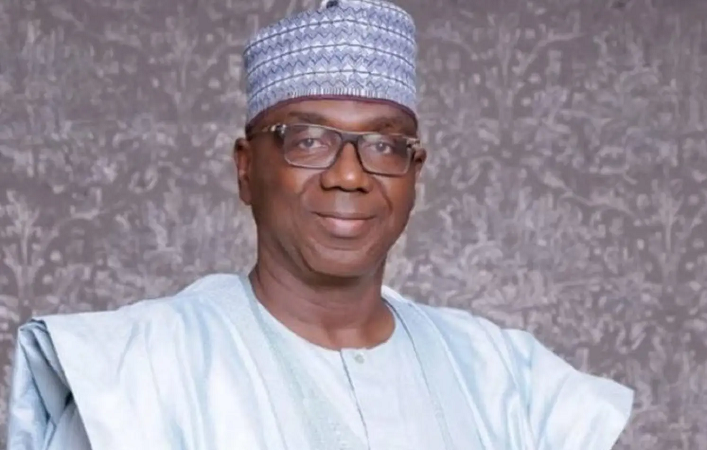
Kwara State Governor AbdulRahman AbdulRazaq has directed the slashing of the Right of Way (RoW) fee for telecommunications firms (telcos) from N5,500 per linear metre to N1 per kilometre of fibre — the second lowest in Nigeria after Kaduna.

The reduction takes immediate effect.

Until now, telcos were paying N5,500 per linear metre as the fee for laying fibre cables in the state to strengthen their digital connections.

But AbdulRazaq has directed that the RoW fee be slashed to N1 only per kilometre, a decision designed to deepen digital penetration in Kwara State, jerk up the state’s ease of doing business ratings, and ease people’s access to the internet and other digital communication even in the remotest part of the state.

“Apart from driving up investment in the sector, the long-term effects of this significant step such as strengthening access to digital communications and bringing more businesses to the hinterlands cannot be quantified,” according to the Governor.

Internet and broadband penetration have been known to have a direct correlation with economic development. A study carried out by the International Telecommunications Union (ITU) on Africa reported that a 10 percent broadband penetration would lead to a 2.5% increment of Gross Domestic Product (GDP) per capita.

The National Economic Council (NEC) had recently resolved to encourage technological advancement as a way to fast track economic development in Nigeria. The resolution was hinged on the need to create a favourable business environment for telecommunication companies and to further deepen broadband penetration for social and economic development.

Alhaji Murtala Olanrewaju
Hon. Commissioner for Communication

The Challenge Working With Young People

0

A close relative recently narrated her encounter with a young girl that needed her contact and connection for a job she’s targeting. She said that this young girl contacted her through WhatsApp and asked for her assistance. However, all through their discussion, the young girl composed her messages using short forms, smiley, numbers and what have you. According to this relative of mine, it takes her long stressful minutes to decode every chat the girl sends. In fact, she contacted me because she wanted to tell me that we, the English lecturers, are not doing our jobs well. Anyway, let’s just say that she decided she wasn’t going to bother herself discussing with the girl because the young girl refused to understand that her method of communication was improper.

Of course many people will not understand why this person decided to cut off someone that needed her help. Some may say that all that my relative needed to do was put all the characters in the message together to get the meaning. Those that reacted the way I did will suggest that she should have corrected the young girl and, maybe, taught her the right thing to do. Well, we have individual differences and many people expect that job seekers should portray a certain level of maturity. Anyway, my relative believed that the young girl isn’t yet ready to work because she should have noticed that responses she received for her messages were in full form and that the sentences were all grammatically correct. Besides, it is wrong to address your superior, who is not too close to you, with slang and short hands or whatever it is.

Nobody is debating the exuberance of the youth. And I don’t think anyone wants to take it away from them. But when it comes to the corporate world, no one cares about youthful mistakes and trends; it is expected that employees exhibit maturity irrespective of their age. Unfortunately, most young people don’t know this, and, hence, make mistakes that could cost them a lot.

If you really want to get a hold of how our youths behave and think, you may need to study them through social platforms like Facebook and Twitter. In some cases these young men and women are jovial and easygoing, in other cases, they are grumpy and aggressive. Sometimes they act decisively and at other times, they act irrationally. All in all, you can actually tell when you meet them from their posts and comments.

Note that not all youths are like this. Some of them started early to find their paths and make important decisions about their lives. Those that belong to this category are quick to learn and they always stand out among their peers, though they may be seen as odd by their counterparts. But then, they are the youths that made their landmarks on time and collect the glory that comes with that.

Nevertheless, there are several reasons why people find it difficult working with youths. Among others, youths are known to exhibit the following negative characters:

  • Aggression

For some reasons yet unknown, youths have taken it upon themselves to be aggressive. Most of them believe that the only way to get the attention of their elders and superiors is through violence. This character alone keeps a lot of people away from employing young people. And those that employ them keep them at arm’s length because they know how volatile they, the youths, can be.

  • Resistance to Correction

It will be improper to say that youths are incorrigible because that will be a mild way of putting it. When I say that youths resist correction, I mean that they fight corrections. There is a difference between someone finding it difficult to change a habit and someone deciding not to change his habit. For instance, when you tell a young lady that dressed wrongly to a job interview that what she wore is improper, you might be surprised to find your face on Twitter within the next hour and that you will be tagged negatively. And that will attract other youths to “drag” you for trying to correct someone who insisted on maintaining the status quo, even if it is wrong.

  • Desire for Quick Money

A friend of mine acted as the surety of a young man (the son of his neighbour) so he could get a sales job in the company he worked with. He regretted his action because the young man stole from the office and was dismissed. Though the office did not ask my friend to pay for the stolen goods because he had good records, he, however, lost his chance of helping others get jobs in that office. Of course it is not all youths that are like this, but the bad eggs in their midst have tainted the rest. Many youths no longer want to work their way up; they want to get in a day what they would earn in years. This has led many of them into crimes and troubles, but they still wouldn’t learn.

This article is not asking the youths to stop being themselves; it is only concerned that the youths should make all the necessary adjustments that will make them endearing to others. They need to understand that people can only entrust them with responsibilities when they give the impression that they are capable of handling them well. This is just to say that our youths need to start thinking like “adults” in all their endeavours, especially in wealth creation.