DD
MM
YYYY

PAGES

DD
MM
YYYY

spot_img

PAGES

Home Blog Page 6318

The African Continental Free Trade Area: What’s In It for Africa and Its Major Trade Partners?

4

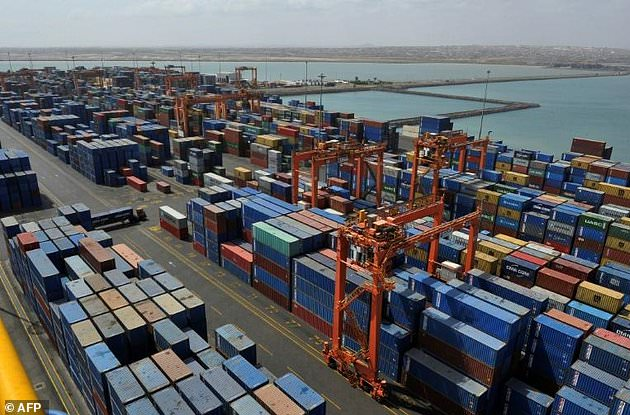
While global trends continue to move from integration towards heightened protectionism, and retaliatory trade measures, African countries improved their intra-regional trade levels and deepened their regional integration by collectively launching the African Continental Free Trade Area (AfCFTA). The AfCFTA seeks to deepen Africa’s market integration at regional and continental levels; boost intra-Africa trade; promote regional and continental value chains; and hopefully deliver Africa’s rejuvenation.

Based on its basic goals, the AfCFTA deal is to reduce heavy tariffs that have been slowing the intra-Africa trade speed and shall unlock many opportunities on the continent, redesign the architectural framework of Africa’s economic systems and hopefully anchor the modern Africa that African citizens want. Nevertheless, the success of the implementation of the AfCFTA agreement depends not only on documents signed in a conference room but rather on the functions of elements beyond African countries borders such as transparency and clear rules of play. How Africa as a continent can take advantage of the huge market opportunities and Africa’s demographic dividend to boost intra-Africa trade remain the big question needed to be answered. 

The signing of the AfCFTA has made solid progress in strengthening Africa’s regional integration, given much credit to Africa’s salvation, and is expected to be officially launched in July 2020. The successful launch of the AfCFTA will be an epoch-making event and a big step in promoting multilateralism on the African continent. Despite the rise of protectionism and unilateralism, why are African countries choosing to increase inter-connectivity between them? With Africa’s fragmented markets and a large number of countries, the best option to guarantee Africa’s rejuvenation would be strengthening their integration rather than promoting protectionism or unilateralism. Given the rising sentiment of anti-globalization, protectionism and unilateralism around the world, the AfCFTA aims to boost global trade facilitation and liberalization, and inject new impetus to promoting open world economy. 2018 estimates from Brookings Institution indicate that with the actual operationalization of the AfCFTA, the African continent is likely to become a US$ 3.4 trillion economic trade zone. 

At present, Africa ranks behind other regions in terms of its overall level of regional trade volume. Despite African countries’ cultural affinity and geographic proximity, it is unfortunate that between 2015 to 2017, only about 17% of trade was conducted among African countries, largely due to Africa’s intra-trade barriers, Africa’s fragmented market, poor transport and telecommunication connectivity. Furthermore, African countries remain keen on sheltering their internal markets from external influence, while Asia intra-continental trade, especially within the Association of South-East Asian Nations (ASEAN) is estimated up to 59%, North America by 37%, Latin America by 20%, and European Union by 69%. 

What’s in it for Africa’s major trade partners?

African countries have signed many trade agreements with western developed countries as well as developing countries. Despite all the promises that lies behind the AfCFTA, what’s in it for Africa’s major economic partners? The AfCFTA agreement will help forge closer economic ties between Africa and its economic partners. In fact, the AfCFTA will improve the relations between Africa and its external trade partners, so as to guarantee a Win-Win situation, by creating a bigger market for itself and for its trade partners. On one hand, the AfCFTA will effectively reduce the costs of imports, especially those from Europe and Asia. On the other hand, the deal will create a huge market for foreign investors, improve the business environment and attract more FDI, reduce barriers to foreign investment, so as lay a solid foundation for foreign enterprises to invest in African countries. 

China has been Africa’s biggest trading partner for more than a decade, with an accumulated investment for over US$ 200 billion by 2019. China’s President Xi Jinping in his congratulatory message to the 33rd Ordinary Session of the Assembly of African Heads of States and Governments pointed out that under the guidance of the African Union, African countries have actively explored development paths suited to their own conditions and realities, congratulated African countries for their collective efforts that they made in the pursuit of their unity and self-improvement. President Xi also noted that the China-Africa relationship is currently at its best history, despite many critics and allegations over the China-Africa friendship. The 2018 Beijing Summit of the Forum on China-Africa Cooperation (FOCAC) led to a new wave in developing the China-Africa friendship, with the implementation of its results injecting new vigor into their practical cooperation in various fields, notably the “eight major initiatives” plus the “ten China-Africa cooperation plans”, both backed by US$ 60 billions of financial support, additional to the same amount that was pledged in the FOCAC Summit in South Africa back in 2015. For China, the AfCFTA will inject new vitality into upgrading China-Africa bilateral trade cooperation. 

For the USA, it will be a chance for Washington to renew its engagements in Africa, and re-address the post-AGOA agenda as a single entity. With the launch of the AfCFTA, Washington will have access to a larger and integrated market, and have the opportunity to work with emerging economies like Brazil, India, Russia, which are already active on the African continent. It will also be a way for the US to work closely with the African Union in tackling terrorism in Africa. With the AfCFTA, the potential of the African market will be further realized, which will deepen and intensify USA-Africa cooperation in industrial and trade capacities. 

What Africa should do to ensure the success implementation of the AfCFTA?

– Reduction of tariff and Non-Tariff barriers: In Africa, tariffs between countries are higher than anywhere else in the world. In 2017, the United Nations Conference on Trade and Development (UNCTAD) reported that among developed countries, tariffs on tradable goods and services are at 1.2% more or less, which are very low compared to the average tariffs on tradable goods and services among African countries which stand at around 9%. Let alone high tariffs, African countries use Non-Tariff Barriers (NTBs) among them as part of their political or economic strategy. Unfortunately, existing high tariffs in Africa help some African countries to trade more with Europe and the United States at the expense of each other. Over 60 to 70% of total African trade is with countries that are thousands of miles away from the continent. Compared to the rest of the world, this is unfortunate to say the least.

– Establish a blockchain technology: The blockchain technology is among important things that African countries have to establish in order to guarantee the success of the AfCFTA. The establishment of the blockchain technology will ensure that no African or local industrialist or manufacturer colludes with European countries, America or even China to breach the rules of origin by bringing or import finished products from Western or Asian markets and package them as indigenous manufactured leading to the creation of dumping grounds for smuggled products. For instance, China has many companies already producing products on the continent. If the blockchain technology is not established before July, it will be hard for African country to differentiate what products are Africa’s made or imported from China, which may also enjoy free-tariff and hurt Africa’s local producers. The AfCFTA Secretariat, which is already operational in Ghana, should consider the adoption or set up the blockchain technology before the full implementation of the Pan-African Economic market in July 2020 to prevent inter-Africa illegal trade practices that could result in litigation, or even worse, the withdraw of membership by some members. At present, some Africa’s Regional Economic Communities are already having a hard time to maintain low-tariff on their respective borders. Some cases are already been seen where countries have threatened to leave one bloc to another. So, it is for Africa’s interest to consider establish a blockchain technology to put an end to that threat.

The U.S. Cuts Ties With The World Health Organization (WHO)

0

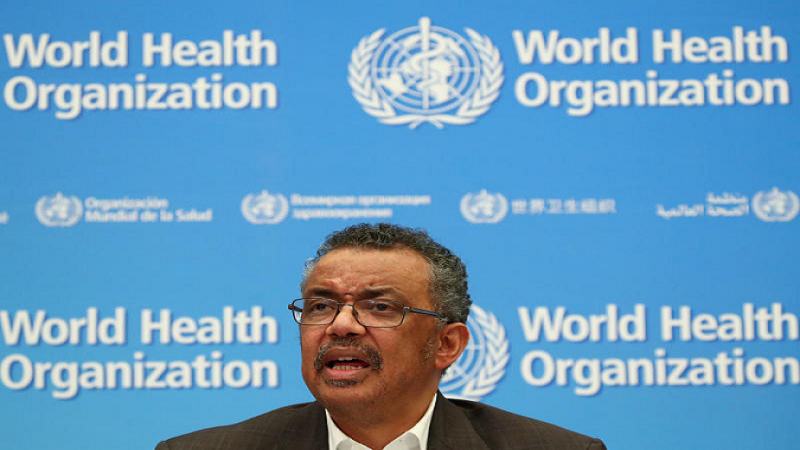
In yet another interesting announcement on Friday, the US president Donald Trump said he is severing the relationship between the World Health Organization (WHO) and the United States.

“We will be today terminating our relationship with the World Health Organization and directing those funds to worldwide and deserving, urgent global public health needs,” he said during a White House press briefing.

A few days ago, the administration had outlined detailed conditions that must be met by the world health governing body for a chance for reconciliation with the US. But the WHO did not respond.

Trump has fallen out with the UN’s health agency as COVID-19 took a devastating toll on the United States, killing over 100,000 persons and plummeting the economy. He has blamed the WHO for not doing enough to quell the pestilence and most of fall, taking side with China that he believes was responsible for the outbreak of the virus.

Though in the onset, Trump praised China’s approach to the crisis saying he trusts the Asian giant has what it takes to confront the enemy, the unprecedented toll it took in the US changed his stance. Trump now believes that China is culpable and the WHO is their partner in crime.

“China’s cover-up of the Wuhan virus allowed the disease to spread all over the world, instigating a global pandemic that has cost more than 100,000 American lives and over a million lives worldwide,” he said.

Trump’s distraught with the WHO has been largely based on the claim that the health body said it wasn’t necessary to initiate a travel ban when he wanted to. He said a ban would have prevented carriers of the virus from entering the United States from China, and that would have kept the impact to the barest minimum.

On January 31, the Trump’s administration announced the restriction of people entering the US from China, but the WHO said that such a ban is not necessary because it may not help to contain the spread and may lead to social and economic crisis.

In his push for China to take responsibility for the COVID-19 outbreak, Trump was hoping that the WHO would support his claims which includes that the virus was developed in a Chinese lab. The health organization’s failure to back up his claims appears to have hiked his discountenance for it, furthering his belief that China has pressured the WHO to mislead the world.

In February, Trump proposed slashing the US contribution to the WHO in half, from $122.6 million the previous fiscal year to $57.9 million. In April, he announced that the United States government would halt its funding to the World Health Organization. The development followed the rising belief among conservatives that the WHO is being too friendly with China. Trump has earlier demanded that the organization change its perceived friendly attitude with China as a sign that it is neutrally doing its job.

WHO’s failure to dance to his tone put it at the center of his blame game and consequently retaliatory actions.

The US relationship with China has deteriorated since Trump became the president, evidenced by the escalation of the trade war between the two countries, and he is seeing anyone who has a good relationship with China as an enemy too.

China’s recent interference in Hong Kong’s political unrest, imposing strict political crackdown laws that would trample civil rights and reflect its communist rules, has put Hong Kong in the way of the US. Trump said Hong Kong’s role as a global financial center has been jeopardized by the development and its preferential treatment will be revoked.

“I am directing my administration to begin the process of eliminating policy exemptions that give Hong Kong different and special treatment.

“We will be revising the state departments’ travel advisory for Hong Kong to reflect the increased danger of surveillance and punishment by the Chinese state security apparatus. We will take action to revoke Hong Kong’s preferential treatment as a separate customs and travel territory from the rest of China,” he said.

This is coming at the same time when the Trump administration has announced its intention to cancel the visas of thousands of Chinese graduate students and researchers in the US who have direct ties to universities affiliated with the People’s Liberation Army.

These events appear to have been triggered by the coronavirus crisis and it has escalated the existing tension between China and the United States. Multilateral organizations are getting caught up in the economic and political tussle, and WHO seems to be just a victim.

Become A Champion: Innovate, Execute & Grow – Join Tekedia Mini-MBA

0

I invite you once again to join us in the second edition of Tekedia Mini-MBA. Click here for everything you need to learn about this program – world-class faculty, top-grade curriculum and African-focused business cases. Accelerate your management ascent and play in the business growth orchestra. I will lead that orchestra with the enviable support of business professionals from NNPC, Shell, Microsoft, MIT, Flutterwave, Polaris Bank, Access Bank, Queen’s, Infoprive, Sherwin Williams, Nigerian Breweries, Coca Cola, etc. 

Four months, self-paced, online, and costs $140 or N50,000 via Paypal, Bank Transfer, & debit/credit cards. It is rated “E” for everyone reading. Register by June 5, get two ebooks and a free course at Facyber cybersecurity. 

We are agents of Symphonic Innovation – an innovation system that is domain agnostic, and anchored on a unified and harmonious approach in the deployment of technology components to accelerate productivity gains and cushion competitiveness. With Symphonic Innovation, you do not deploy and launch a blockchain only to be tripped by AI; you launch with a mindset that these technologies are like extended musical compositions which must be carefully organized to make the orchestra an unforgettable experience. 

Extending  the symphonic nexus to law, strategy, branding, project management, audit, human capital, fundraising and other areas in our syllabus, you will see that Champions will emerge from this program.

Be a Champion, REGISTER.

https://www.tekedia.com/mini-mba-2/

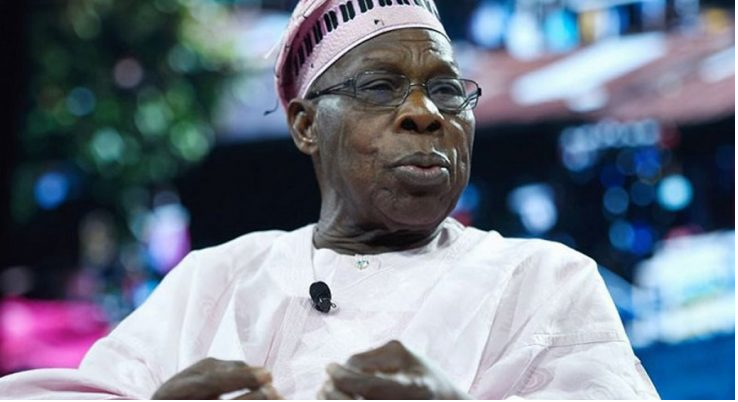
The Full Statement of Former African Leaders on Allegations Against AfDB President

1

From the press statement (PDF)

This is why we are concerned with the recent developments at the Bank. Dr. Adesina,
who some whistleblowers alleged to have violated the Banks’ Code of Ethics, has firmly
and consistently declared his innocence of these allegations. The Ethics Committee of the
Board of Directors, a legal oversight body of the Bank, made up of representatives of
shareholders, cleared Dr. Adesina of all 16 allegations, declaring them as baseless and
unsubstantiated and exonerated him completely. The Chairman of the Board of Governors,
based on the report of the Ethics Committee, declared Dr. Adesina exonerated. We
understand that the Bank fully followed its rules, procedures and governing systems, which
have served it well since African countries established it in 1964.

Governance is all about respecting and abiding by rules, laws and established
governing systems of organizations. In the case of the AfDB, while differences may exist
among parties, the best way to address them is to first respect the rules, procedures and
governance structures of the Bank. To do otherwise will be tantamount to undermining the
Bank and its long and hard earned reputation, and that of its President.

The African Development Bank is a pride for all of Africa, and its President, Dr.
Adesina, has taken the Bank to enviable heights. At this critical time that Africa is battling
with COVID-19, the Bank and its President should not be distracted

What is Zenvus Yield? [Video]

2

If you double farm yield in Africa, you will cut poverty by 37%. Why? More than 65% of the working population are engaged in agriculture. As a farm boy, I lived farming in Ovim, Abia state. My grandmother taught me everything about it; school in the morning; after school, come to the farm. It was a way of life. But I went to college and saw a better way. Zenvus Yield is a camera, created from scratch.

It does the job of the high priest. Yes, instead of sacrificing goats and chickens to the gods for good harvest, it helps the farmer make better decisions. When good decisions are made, farming productivity improves. If that happens, poverty goes to the museum of last century!

Zenvus Yield is looking for government partners. At the moment, we do not work directly with individual farmers as the marginal cost does not make sense yet. Have contacts? Connect us.

Zenvus >. Intelligent systems