DD
MM
YYYY

PAGES

DD
MM
YYYY

spot_img

PAGES

Home Blog Page 6329

Remember The FREE Facyber Cybersecurity Course with Tekedia Mini-MBA Registration

5

Good People, remember that registering for Tekedia Mini-MBA edition 2 qualifies you for a FREE First Atlantic Cybersecurity Institute (Facyber) certificate course. Facyber has courses on cybersecurity policy, technology, management, intelligence & digital forensics.

  • Certificate in Cybersecurity Policy (CCYP)
  • Certificate in Cybersecurity Technology (CCYT)
  • Certificate in Cybersecurity Management (CCYM)
  • Certificate in Cybersecurity Intelligence & Digital Forensics (CCDF)

Each module takes 12 weeks and is self-paced. The course syllabus and Table of Contents are provided in Facyber.com.

What To DO:

  • Visit Facyber and create your account (use the same email used for Tekedia Mini-MBA).
  • Activate the account in your email
  • Email team with the certificate course of interest.
  • Admin will respond after setup & activation
  • Login back to Facyber, you will see the course

REGISTER for Tekedia Mini-MBA here if you have not.

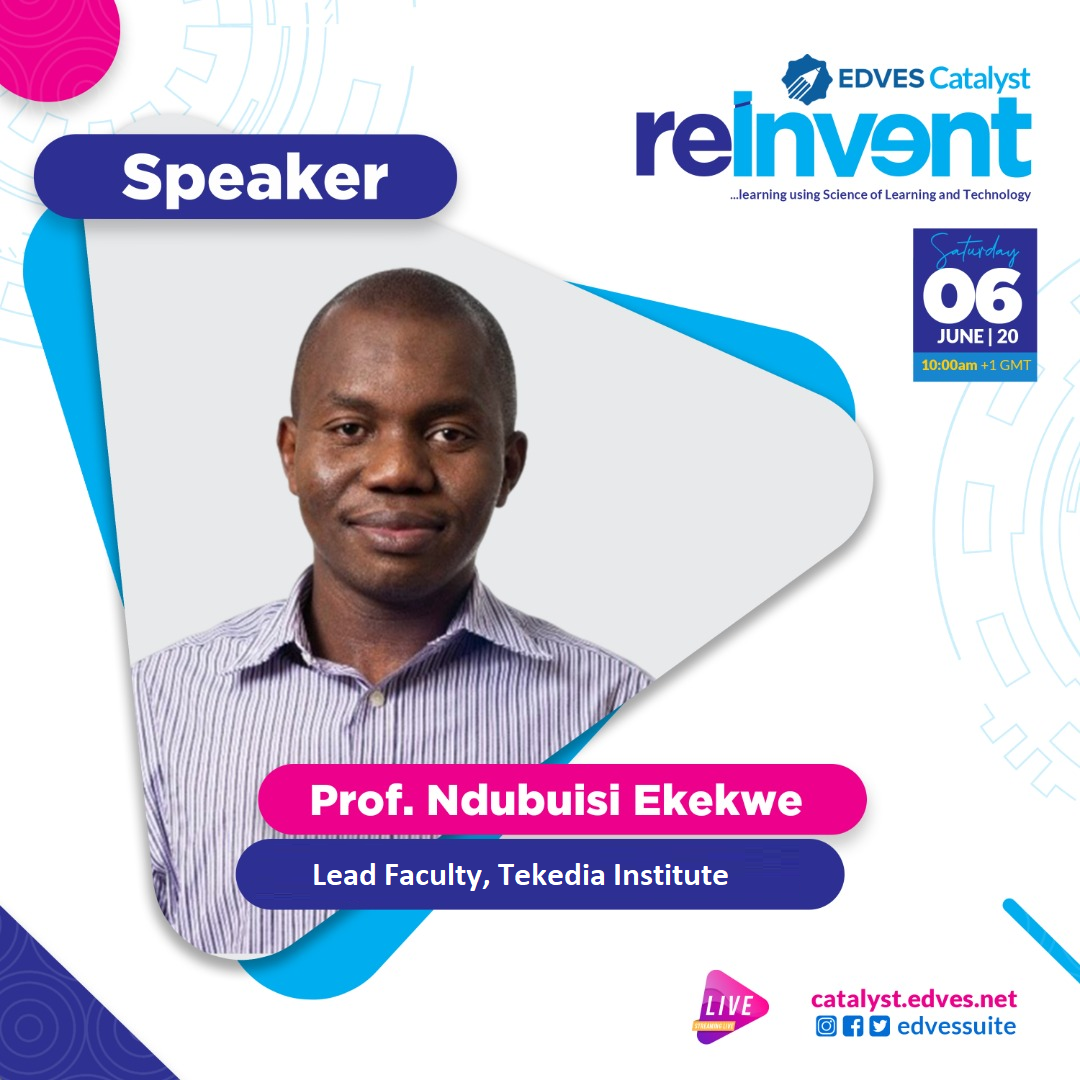
Will Deliver Edves Catalyst Keynote at 10.25am Today

0

At 10.25am Lagos time today, I will be delivering the Keynote at Edves Catalyst. The Link is below….

Edves Catalyst is the largest edtech conference in Nigeria. It is a virtual gathering of thought-leaders from around the world, to discuss mechanisms to deepen education, accelerate human productivity, and advance economic systems. I will keynote the event with a speech titled “Leading in a tough economy”. Dimeji Falana leads Edves.

https://zoom.us/j/95051288726?pwd=eHRHUktUOEtibjZzWTFWdzJpaWthUT09


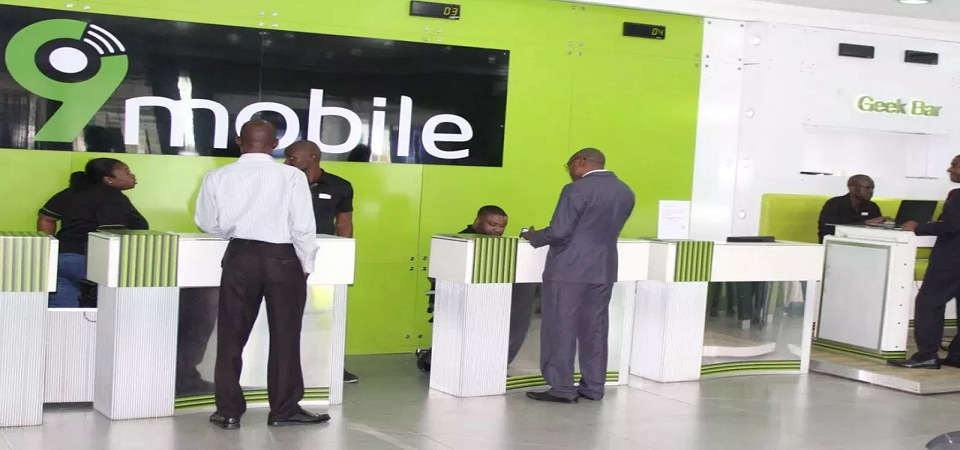
Nigerian Telcos Scorecard for the Month of March, And 9mobile’s New CEO

0

The Nigerian telecommunication industry has continued to record an increase in the number of subscribers. For the month of March, there’s an addition of about 4 million subscribers from February, putting the total number of GSM internet users to 136,203,231 according to data published by the Nigerian Communication Commission (NCC).

Globacom gained the highest share of subscribers with over 2.9 million new users. MTN came behind with 794,020 new subscribers to put the total number of its subscribers at 57,282,123. Airtel was the third gainer on the table with 654,549 new subscribers to reach 36,827,677 in total number of users.

MTN’s subsidiary, Fisafone was stagnant from February to March, maintaining its 88,818 subscribers. 9mobile came fourth, losing 181,973 subscribers to maintain the loss from February. The total number of subscribers on the 9mobile network stands at 7,762,068.

In porting, 9mobile leads the table as the favorite network. A total of 8,225 GSM users ported to 9mobile from other network operators. Airtel lost more subscribers than any other operator. About 6,466 subscribers left its services. MTN also lost 3,701, while 9mobile was the least loser with 1,756 users.

The NCC put the total number of GSM subscribers in Nigeria at 188,989,051 in March, indicating a 1.84 million increase from the previous month.

Out of over 188 million subscribers, MTN leads the chat with 73,573,788 users, a 38.93% of total number of subscribers. Globacom follows with 51,856,114, total number of users, a 27.44% increase. Airtel took the third place with 51,298,878 subscribers while 9mobile took the fourth place with 12,123,1185. The two companies contributed 27.14% and 6.41% respectively of the numbers. Visafone was at the bottom of the table with 0.07% representing 137,086 subscribers.

There is an increase of 39.90% in broadband penetration for the month of March, representing a 0.53% gain from February. 3G and 4G subscribers rose to 76,163,674 from the 75,555,604 subscribers in the preceding month.

Unfortunately, 9mobile has not been able to gain more subscribers since March 2019. The company has instead lost about 4.7 million subscribers.

However, it has continued its push to beat the challenges that resulted in the failings. On Monday, the company announced the appointment of a new chief executive officer, Alan Sinfield. 9mobile said he has the wealth of experience, accumulated through operational activities in the telecom and banking industry, to revamp the company.

“He brings extensive international and operational experience from wireless telecom. Fintech, and banking sectors to his new role at 9mobile. His global experience covers countries as diverse as the United Kingdom, Germany, Portugal, Slovakia, Iraq, Qatar, Myanmar, South Korea, Cambodia and Hong Kong. He was previously the CEO at Amara Communication Co. (ananda), a 4GLTE mobile broadband operator in Myanmar, and before this, he was the CEO of Cadcomms (qb), in Cambodia.

“Other earlier roles included being CEO at Ooredoo (Starlink), a subsidiary of the listed Qatari Telecommunications Group, operating in Qatar and regionally, and also as chief customer services officer at orascom Telecom (IraQna), a subsidiary of the listed Egyptian telecommunications group, operating the first mobile network in Baghdad and surrounding territories providing voice and nascent data and satellite service,” 9mobile statement said.

It was based on this heap of experience that 9mobile hired Sinfield, trusting that he would wield the charm needed to resuscitate the dying telco.

Sinfield has also acquired wealth of experience working in the banking sector. He started with the Bank of America, and later became a programmer and business analyst. After his spell at Bank of America in Frankfurt, Germany, Sinfield joined the Barclays Bank in South Africa. Other countries where he worked in the banking sector include Slovakia, Hong Kong and Portugal.

The Chairman of 9mobile Nigeria, Alhaji Nasir Bayero said he trusts Sinfield’s ability based on his experience, to turn the table for the good of the company.

“Alan’s wealth of experience of building high performance and high-growth organizations will play a pivotal role in strengthening 9mobile’s market position in the highly competitive telecommunications industry. He brings with him vision, passion and years of experience from diverse environments, which will consolidate our priorities to provide superior customer experience and sustained network quality.

“He is expected to work closely with the Board of Directors and all stakeholders to define credible and achievable long-term business plans, through the introduction of solutions to address the evolving needs of the Nigeria telecommunication market,” he said.

Accepting the challenge before him, Sinfield acknowledged the competitiveness of the Nigerian market and vowed to use his experience to lead 9mobile out of trouble.

He said: “The Nigerian telecoms industry is characterized by strong competition, but it is also an industry that is important to people everywhere. Nigeria is rich in diversity and boasts of energetic, resilient, friendly and hardworking people. I am delighted to join the 9mobile family and look forward to using my experience and unique value propositions to lead the company in the next exciting phase of its journey.

“The goal is to build on the existing strong foundation of the company to create value that will transform the Nigerian telecoms sector. I also look forward to embracing the people, the culture and the unique knowledge that Nigeria has to offer.”

Though I left Nigeria before 15, I have always felt in my heart that I have a role to play in her future- Moses Emuze

0

Moses Emuze is a Netherland-based Nigerian Data Analytics Consultant. He was raised in Sapele but has spent most of his adult life in the land of the Dutch. In a chat with Rasheed Adebiyi, he spoke about his growing up, work life and his obsession with the country of his birth. Here are the excerpts.

Tekedia: Please Tell us about Yourself.

Moses Emuze: My Name is Moses Emuze and I’m living in the Netherlands and have been living here since I was fourteen. I came here when I was young.  I did my High School here in the Netherlands and University and afterwards now I an owner of a company,  Emuze Consultancy.  I’m a Data Analytics Consultant.  I help companies to get insight out of their data. I was born in Nigeria. I grew up in a small town in Delta State called Sapele. My parents are from Edo State from Isan. I grew up there but I moved to the Netherlands at the age of 14.

Tekedia: What is  growing up in the Netherlands like? I mean going to High school and then college and growing up generally?

Moses Emuze: Growing up in the Netherlands, I would say it was good but also different because when I was in Nigeria, before I came to the Netherlands, I was already in S.S.1 and I was 13 because I skipped some classes in primary school. Theoretically speaking, I was supposed to be two more years in high school then I would be going to University.  but when I came to the Netherlands, It was a whole different country. They spoke Dutch and I was not speaking Dutch at all. So, I went to a school where international students learn Dutch.  My dad did not want to put me in an international school where I could learn only English but an international school where I could learn Dutch. So I learnt Dutch that cost me about 6 months, normally it takes about 1 year. I thought I was going to start in S.S.1 where I was in the Nigerian high school but I started all over in the first class in the high school in the Netherlands. I was 14 and I was the oldest guy in the class and normally when you start High School in the Netherlands, you should be about 12 or 13 but in Nigeria, it was different. I was one of the youngest at school. I managed to do one of the highest levels in secondary school afterwards to University. I did an English Course, even though I speak Dutch fluently, I chose to do an English course, That was  International Business because I wanted to do something back in Nigeria. So that was why I chose an English course.  Growing up generally in the Netherlands is also different because when I first came here, I could not speak Dutch like I told you. I was playing in a football team and everybody spoke Dutch and I could not really understand what they were saying but as a young man, I tried to fit into the culture. I didn’t have any difficulty fitting into the culture. I was open-minded, I was young. So I was eager to learn. I quickly learnt the language and I was staying in a Dutch neighbourhood, so that also helped me in the beginning to fit in. I was social. I was innocent. So it was easy for me to just blend with the culture.

Tekedia: What does it mean being an Entrepreneur in Netherlands? What kind of Support do you get from the Government?

Moses Emuze: Being an Entrepreneur in the Netherlands is something that I could say it gives us an advantage because the Netherlands has an entrepreneurial culture. I chose to be an entrepreneur right from school. I chose to be a full-time entrepreneur because I used to work for one of the biggest consultancies in the World. Ideal Consultancy Firm, CGI. It is a company with about 70,000 employees. It was a good company where I had a good position with a good pay but I chose to be an entrepreneur because I wanted that freedom, to be able to create, put my mind in a thing I really want to achieve. In the Netherlands, there was just different kinds of support for entrepreneurship  from the government you can apply for different funds where the government will fund part of a project. I am into a different field, I do consulting. I am actually helping other companies and in the field of Data Analytics, there is a lot of demand around here in the Netherlands, because data is seen as the new gold. So, I would say I chose the right segment and the right sector.

Tekedia: So what kind of Support do you get from Dutch Society and Government?

Moses Emuze: I did not specifically get any kind of help from the government when starting  my own company because I am in a service industry. so it is well different.  But I know that, for example, during the Corona crisis, the government agreed to give a specific amount to every entrepreneur, so you could apply for it and you could get it if Corona affected your business, you could apply and you could get specific fund for your business so that you will be able to continue after Corona pandemic. Another one is that, we have different organizations in the government that promote several competitions that you can apply for as an entrepreneur. So, if you win it, you get a certain amount of fund for your company. Specifically, I did not apply for any kind of support or funds from the government.

Tekedia: How do you manage the diversity in your former work place being black and Foreigner?

Moses Emuze: One of the advantages I have in being dark in my former working place is that I could speak the language fluently. I had no issue with the language. So, I could communicate in their language.  I was in a company in our branch in the Netherlands, I was like maybe one of the only few three to four dark people in the whole building. We have like an 11-storey building. So it was not that diverse. I saw it as an advantage. Some people might see it as a disadvantage being dark in a foreign environment. I found it as an advantage because everything I do get easily noticed. If I did something good, everybody knew about that. When I was working at the company, we participated in an international Hackathon it was organized by the municipality of the city I live in and there were participants from all around the world. We had panelists from NATO and NCIA. So, I participated and our team won the competition. I was the one who did the presentation, at the end so we won. I think we have about 10,000 Euro or something  like that. The whole company got to know about me at that moment. I found it actually as more of an advantage being black in foreign environment because every time I do good, everybody come to know about it quickly.

Tekedia: Generally, What is your experience relating with people in the Netherlands?

Moses Emuze: To your first question, my experience relating to people in Netherlands is all mostly positive and of course you might have some certain racist situations but that was a few on the whole scale. I have a really good relationship with Dutch people on a whole. Most of my friends are also Dutch. Right from the beginning, I was in depth into the Dutch culture from the beginning.

Tekedia: Even though, You left Nigeria at an early age so to say, do you have any fond memories of the Country

Moses Emuze: Yes I left Nigeria early but I still have lots of good memories about the country. That was where I grew up. That’s my country and I am even looking forward to start something in Nigeria in the nearest future. I have been trying to see what I can do there to help my country. I was there two years ago to visit families and friends. So, I really have good memories about my country. I am looking forward to be of added values to the country as a whole. It is the country I first saw the day light. It will always be my country.

Tekedia: What are Your usual reaction when you get to watch or read about Negative things happening in Nigeria?

Moses Emuze: When I get to see negative things going on in Nigeria, it kind of hurt me a bit. My Dad is still reading Nigerian news everyday and I do speak to him often. So, when things are going wrong he always tells me. I feel it because its my country and  I will always defend my country. People will say I stand by the country because I am Nigerian. I will say No. it is because you have not been there, you don’t know what is going on there. So, if I heard any negative news about Nigeria, it kind of hurt me.  I always think of what to do and how I can help do something about it. I think of how to help in bringing change to how the world perceives the country because Nigeria is a blessed country with a lot of talented people. Our population is the most talented in Africa maybe in the whole world. This is because everywhere there is a Nigerian in the whole world, they are making it better. So a lot of positive things are going on in Nigeria.

Tekedia: Finally, any plan to return to home or raise your children in Nigeria?

That is a big one. Yes definitely, I know in future, part of my life will be in Nigeria because I am looking forward to give back to the country where I grew up. So, Nigeria is always in my heart as I have said before. So, I don’t know if I will offer my kids to grow up there but I am looking forward to go back and be of value to the country. The skills that I have acquired here, I can use that in the country. As for the kids, we would see at that time when it’s that far.

Nigeria Evolves With Pivotal Moment in Buhari’s Presidency

2

Two things: 

(1) Lord Lugard handed over Lagos to Bola Tinubu to rule with splendour, YES or NO?. If you checked YES, you may have to return to primary school. 

(2) Nigeria is going through a metamorphosis as the nation goes for full liberalization of the downstream petroleum sector by removing any price ceiling on petroleum products: “The Petroleum Products Pricing Regulatory Agency (PPPRA) has on Thursday, announced the removal of the price cap on petroleum products, giving marketers the right to fix prices and sell as they deem fit”.

The Petroleum Products Pricing Regulatory Agency (PPPRA) has on Thursday, announced the removal of the price cap on petroleum products, giving marketers the right to fix prices and sell as they deem fit.

The agency communicated the decision through a document signed by its Executive Secretary, Mr. Abdulkadir Saidu, which was titled: Market Based Pricing Regime for Premium Motor Spirit (PMS) Regulations, 2020.

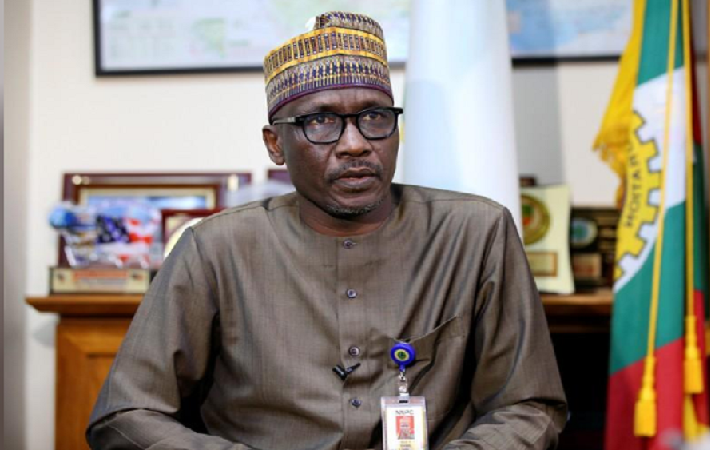
The document stated that henceforth, the PMS pricing will be determined by market forces, but the agency will continue to monitor the oil market and offer the Nigerian National Petroleum Corporation (NNPC), and marketers, advice on monthly pricing..

This is a big deal and this could shape Buhari’s legacy. It is a very pivotal moment in his Presidency because if he follows through and makes this happen, Nigeria will economically evolve from multiple angles: 

  • Save money wasted through forex issued at non-market rates.
  • Eliminate corruption associated with fuel subsidy.
  • More money for the government since these players will pay taxes on improved revenues.
  • Less borrowing since Nigeria will not need to borrow to make millionaires more crazy with subsidy scams. 

Yet, Nigeria has to find a mechanism to help the poor. If the cost of transportation rises, due to high cost of fuel, a huge percentage of the poor will struggle. This is a very interesting moment as Covid-19 continues to change the world in more ways. But do not rejoice: this could be a poison pill as the price of crude oil continues to rise. But do not rejoice: this could be a poison pill as the price of crude oil continues to rise. Due to market imperfection in a highly heterogeneous market like Nigeria, with challenging infrastructures, we could have a situation where rural dwellers with limited supply (i.e. fewer fuel stations) may have to pay more, well ahead of those in places with many stations. Of course, using basic economics, one would expect more fuel stations to be built in those rural areas to shift the price equilibrium point. Nonetheless, in the interim, there could be pain for many people, especially those in rural communities, due to this market-driven pricing of petroleum products.

You know the implication? These cities and nations are advancing and will possibly formalize their largely informal economic systems.  Most of these redesigns would not have happened without Covid-19 as some activists would have mounted ferocious challenges. But with the virus ravaging things, those counter-calls have been muted. Why? If you think collecting cash is the way to go, governments will ask you to go and mount the toll gates and be paid for doing that job.

Covid-19 is evil. Yet, it has provided opportunities for some economies to reform. I do hope Nigeria takes actions across our market sectors and territories. There are many positive things the government can do now with no opposition in the name of Covid-19. Call this moment a generational opportunity to bring reforms in markets and economic structures.

Nigerian Government Removes Price Cap on Petroleum Products As Oil Price Rises