DD
MM
YYYY

PAGES

DD
MM
YYYY

spot_img

PAGES

Home Blog Page 635

NITDA Explains Why It Pushed for ICT GDP Rebasing, Citing Digital Economy’s Role in Driving Growth

0

The Director-General of the National Information Technology Development Agency (NITDA), Kashifu Inuwa, has explained why his team urged the National Bureau of Statistics (NBS) to rebase the Information and Communications Technology (ICT) sector.

Inuwa, who delivered the keynote address at the 3rd Annual Economic Confidential Lecture & PRNigeria Book Presentation in Abuja, explained that the rebasing exercise is long overdue. He said Nigeria must begin to capture the full weight of its digital economy, which, according to him, cuts across agriculture, healthcare, finance, education, and even media.

“There is no such thing as a digital economy standing on its own. Digital is the power engine behind everything else. If you remove IT from finance today, growth will decline. If you remove IT from journalism, it will reduce. Therefore, we need to rebase, because the digital economy is about using technology to empower economic activities,” Inuwa told the gathering.

Why Rebasing Matters

Nigeria last rebased its GDP data in 2014, shifting the base year to 2010. That decision expanded the economy by nearly 90 percent overnight, capturing previously overlooked sectors such as film, telecoms, and online services. A similar exercise was carried out by the NBS earlier this year, this time pegging 2019 as the new base year—a period it described as one of “relative economic stability” before the shocks of the pandemic, oil price crashes, and inflationary waves.

Inuwa’s call is rooted in the view that without rebasing the ICT sector specifically, Nigeria risks underestimating one of its fastest-growing economic engines. He insisted that digital technology should no longer be treated as a side contributor but as an embedded driver of national productivity.

“Finance cannot survive without IT. Healthcare is going digital. Agriculture today relies on precision tools. Rebasing will help us measure this reality,” he said.

The Special Adviser to the President on Economy, Dr. Tope Fasuwa, represented by Aremu Olayinka Elijah, echoed this sentiment, adding that rebasing will help Nigeria reposition its economy for the future.

“We are shifting from traditional models to a tech-driven future,” he said, stressing that the Tinubu administration is determined to recalibrate the economy in line with global trends.

The Numbers Behind the Push

The urgency is underscored by recent data. According to the NBS, the ICT sector recorded a remarkable 31.63 percent year-on-year growth in nominal terms in Q1 2025. This was a dramatic jump compared to just 3.40 percent growth in the same quarter of 2024. The sector’s share of nominal GDP also climbed to 10.29 percent in the first quarter of 2025, up from 9.25 percent a year earlier.

Those figures confirm ICT’s rising importance as a growth engine. Yet experts argue that because GDP accounting methods often lag behind reality, Nigeria may still be undervaluing the sector’s contribution.

Backstory: Digital Transformation as a National Strategy

Nigeria’s digital economy push began gaining momentum under former Minister of Communications and Digital Economy, Isa Pantami, who championed the National Digital Economy Policy and Strategy (NDEPS 2020–2030). The policy envisioned ICT as the backbone of Nigeria’s growth trajectory, aiming to make the sector contribute at least 45 percent to GDP by 2030.

Since then, the sector has expanded beyond traditional telecoms into fintech, agritech, healthtech, and edtech. Startups like Flutterwave, Interswitch, and Andela have attracted global attention, while mobile money has deepened financial inclusion. Yet, official data has often struggled to keep pace with this reality, fueling calls like Inuwa’s for rebasing.

Economists say the exercise could reshape fiscal planning, foreign investment decisions, and even Nigeria’s borrowing capacity, just as the 2014 rebasing elevated the country to Africa’s largest economy at the time.

Currently, Inuwa and other advocates believe the rebasing of ICT GDP is not just a statistical update but a political and economic statement—that Nigeria is ready to embrace a digital-first economy where technology is no longer peripheral but central to its national prosperity.
Google Unveils Pixel Care+ as New Standard for Device Protection, Replacing Preferred Care and Fi Protection

0

Google has taken a bold step to streamline its device protection services with the launch of Pixel Care+. This comprehensive new plan replaces the long-standing Preferred Care and Fi Device Protection programs in the United States.

The announcement, made Wednesday in a company blog post, signals Google’s effort to consolidate its hardware services under one umbrella, while also raising the bar on what customers expect from device insurance.

Unlike its predecessors, Pixel Care+ promises a “higher level of coverage, service, and peace of mind for Google hardware owners.” The program eliminates many of the pain points that users often face when dealing with device damage or malfunction. Subscribers will be able to file unlimited accidental damage claims—a notable upgrade from traditional capped protection plans—alongside extended warranty coverage and mechanical damage claims.

One of the biggest highlights is cost: Pixel Care+ offers $0 screen and battery repairs, as well as $0 post-warranty malfunction claims, all carried out with genuine Google parts. Customers also gain access to priority support from Pixel experts, streamlined self-service claims through the Google Store, and free upgraded replacement shipping, including next-day delivery. For those worried about loss or theft, an optional add-on ensures their devices remain covered in worst-case scenarios.

Pricing is relatively straightforward but varies by device. For instance, owners of the new Pixel 10 will pay $10 per month or $199 for two years. Coverage extends to a broad portfolio of Google devices, including the Pixel 8 and newer smartphones, Pixel Watch 2 and newer, Pixel Tablet, as well as Fitbit models such as the Ace LTE, Versa 4, Sense 2, Charge 6, and Inspire 3. Importantly, users must sign up within 60 days of purchase to access the benefits.

The program also makes claims more accessible. Customers can file directly in the My Pixel app or through the Google Store, then choose a location and time for repair. Google says this process is designed to cut through delays and friction that plague many third-party insurance services.

Why Google Is Doubling Down on Protection

Google’s move to roll out Pixel Care+ comes at a strategic moment. With its hardware ecosystem—spanning smartphones, tablets, wearables, and fitness devices—expanding rapidly, customer confidence has become as critical as innovation. Unlike AppleCare+, which has long set the benchmark in device protection, Google’s earlier protection services were fragmented and often criticized for limited claim allowances and higher out-of-pocket repair costs.

By unifying coverage under Pixel Care+, Google is clearly seeking to compete more directly with AppleCare+ and Samsung Care+, both of which have leaned heavily on premium protection plans to build customer loyalty. Device protection has become not just an afterthought but a core selling point in the highly competitive premium hardware market, where consumers expect both cutting-edge features and minimal downtime when accidents happen.

The inclusion of Fitbit devices also highlights how Google is weaving wearables into its broader ecosystem strategy. As fitness trackers and smartwatches become more essential to users’ daily routines, seamless repair or replacement services are key to keeping them locked into the Google ecosystem.

Analysts say Pixel Care+ is also about reputation management. Google’s hardware division has faced criticism in the past for quality-control issues—from Pixel phone hardware quirks to Pixel Watch battery concerns. The company is making a clear statement about durability and long-term support, which could help it build trust in a segment where its rivals are more established, by offering $0 repairs and emphasizing genuine Google parts.

The pricing model also suggests Google is taking a measured approach: affordable enough to attract uptake but designed to ensure coverage for higher-end devices like the Pixel 10 doesn’t eat too heavily into margins.

However, some analysts note that whether Pixel Care+ becomes a true differentiator may depend on how well Google handles claim turnaround and customer experience, two areas where competitors have struggled. However, with unlimited accidental damage claims, priority support, and next-day shipping, Google appears intent on setting a new industry standard.

Currently, Pixel Care+ is available only in the U.S., but its design suggests global expansion could follow as Google ramps up its international hardware ambitions.

DMCA Takedown: How to Respond to a Copyright Violation in 2025

1

Content piracy continues to rise in 2025, with Telegram, Discord, and cloud services making it easier than ever to share stolen media. But creators and brands are not defenseless. In this article, we explore how DMCA takedowns work, how to respond quickly, and how to protect your digital work

DMCA Takedown: How to Respond to a Copyright Violation

In today’s digital economy, content is currency. Whether you are a coach, streamer, model, educator, or entrepreneur, your media output is one of your most valuable assets. Unfortunately, as content becomes easier to share, it also becomes easier to steal. Piracy is no longer limited to torrent sites or obscure forums. It now thrives on mainstream platforms like Telegram, file-sharing services, and even social media. When your copyrighted material is reposted without permission, the consequences are not just personal, they are financial and reputational.

This is where the DMCA takedown process becomes essential. Understanding how to use it can be the difference between recovering your rights or watching your work spread across the internet without control.

What Is a DMCA Takedown Notice?

The Digital Millennium Copyright Act (DMCA) was established in the United States in 1998 to protect digital content and copyright owners. A DMCA takedown notice is a formal legal request to remove copyrighted content that has been posted online without authorization. While it is a U.S. law, many global platforms comply with DMCA regulations to avoid legal liability.

If your content appears on Telegram, cloud drives, unauthorized streaming apps, or piracy websites, you have the legal right to submit a takedown request. This notice alerts the host or service provider that the content infringes on your intellectual property and must be removed.

When Should You File a DMCA Takedown?

You should act immediately when you see your paid or private content shared publicly. The faster you act, the more likely you are to minimize damage. Here are some examples of when to file a takedown:

  • Your OnlyFans or Patreon content is leaked on Telegram or forums
  • A full training course or ebook is being redistributed on Google Drive
  • Your copyrighted photos or videos appear on adult sites or clones
  • A competitor reposts your work without credit or payment

The longer pirated content remains online, the harder it becomes to control. In many cases, stolen files get duplicated and spread to other platforms, which increases the workload of removal and the loss of potential income.

How to Write a Valid Takedown Notice

Your DMCA notice must be clear, specific, and legally compliant. It should include:

  • Your full name or the name of your company
  • Your contact information (email and address)
  • A direct link to the original content you created
  • The exact URL(s) of the infringing content
  • A statement affirming that you are the rights holder or authorized to act on behalf of the owner
  • A good faith statement that the use is not authorized
  • A declaration under penalty of perjury
  • Your signature (digital is accepted)

Many platforms, including Google, Telegram, and hosting companies, have specific email addresses or web forms to submit these notices.

What to Do if the Platform Does Not Respond

In a perfect world, all takedown requests would be processed quickly. But many platforms are slow to respond or outright ignore requests, especially when they operate anonymously or from offshore jurisdictions. In these situations, professional DMCA enforcement services can help.

For example, Telegram DMCA takedown services offered by MyMedia Agency allow creators to track, document, and remove stolen content from Telegram channels, bots, and groups. These services collect all evidence, submit removal notices, and follow up until the infringing content is permanently deleted.

The advantage of using experts is not only speed, but efficiency. They know where to look, how to pressure platforms, and how to get results even in difficult cases.

Why It Matters More Than Ever in 2025

Piracy has evolved. Telegram channels now operate like black markets for stolen content. Groups sell subscriptions to access “vaults” of leaked materials. Some monetize through crypto donations or resell bundles of pirated content. It is not just theft, it is a commercial operation.

If creators do nothing, their content becomes part of this ecosystem. Every leaked video or file reduces its original value and damages the creator’s business model. Moreover, some of this content may appear in search engines or be used to scam potential clients or fans.

DMCA enforcement is not just about taking down content. It is about protecting your brand, income, and reputation in a world where digital media moves fast and boundaries are easy to cross.

Conclusion

The DMCA is one of the most powerful tools a creator has to fight back against unauthorized distribution. It gives you the legal foundation to demand the removal of infringing content and the ability to restore control over your digital property.

But it is not always easy to manage the process alone. That is why dedicated takedown services exist to help creators, agencies, and brands act quickly and decisively.

If your content has been leaked or misused, don’t wait for the damage to multiply. Act fast, document everything, and submit a proper takedown request. And if needed, rely on professionals who understand how to handle the modern piracy landscape.

Business Model Egoras Case Study: Manufacturing, Blockchain and Financing [video]

0

The Egoras business model, championed by Ugoji Harry, presents a compelling case study on the convergence of manufacturing, blockchain, and financing. By leveraging Web3 principles, Egoras pioneers a new archetype of industrial capitalism, challenging established norms. This model isn’t just technology; it’s about re-imagining how to fund and operate tangible, manufacturing-based enterprises.

At its core, Egoras uses a decentralized ledger to connect capital with real-world manufacturing. The blockchain serves as a trust layer, enabling transparent and secure transactions. This decentralized finance (DeFi) approach allows for fractional ownership and new forms of collateral, creating a new financial system for a capital-intensive sector.

The significance of the Egoras model lies in its capacity to unlock dormant economic potential. By democratizing access to capital for manufacturing, it bypasses traditional financial gatekeepers and fosters a new generation of industrialists. This demonstrates Africa’s economic destiny can be built on first-principles innovation, blending physical production with cutting-edge digital infrastructure.


Podcast VideoSign-up at Blucera and check Tekedia Daily podcast category under Training module.

Shiba Inu (SHIB) and Dogecoin (DOGE) to Break ATHs Before a 2022-Style Crash, While Little Pepe (LILPEPE) Is Set to Explode 19377%

0

The cryptocurrency market is constantly growing and a new memecoin with great potential is beginning to emerge. Shiba Inu (SHIB) and Dogecoin (DOGE) are two of the most popular representatives of the meme coin market and are showing signs that they could soon break out and reach their all-time highs (ATHs). Despite potential returns there exists the danger of an abrupt plunge as was the case of the 2022 market correction. In the meantime, a new entrant into the race, Little Pepe (LILPEPE) is positioning itself to gain what some experts say is a mind-blowing 19,377% rise.

Shiba Inu (SHIB): An Awaited Breakout, Yet a Crash Potential Like in 2022

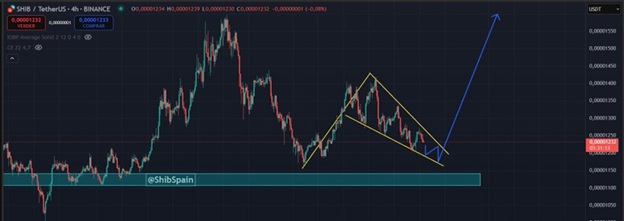
Shiba Inu (SHIB) is among the top meme coin tokens and demonstrates bull potential as it presents a bull flag on the chart, indicating that it might distribute after the period of consolidation. At the moment, the price of SHIB is at $0.00001230.

The levels of resistance affecting SHIB are at $0.00001450, where it has previously failed. If this was broken upward, it would help drive the price into an ATH of $0.00001500. It is supported at $0.00001200 – $0.00001250; a fallout below this supports a possible bearish change, up to the range of $0.00001000. The next upper resistance of SHIB is the price at $0.00001500, and another significant advance is possible, although one must remember the possibility of a correction in the market.

Dogecoin (DOGE): Positioned for a Breakout, but Could Face a Crash

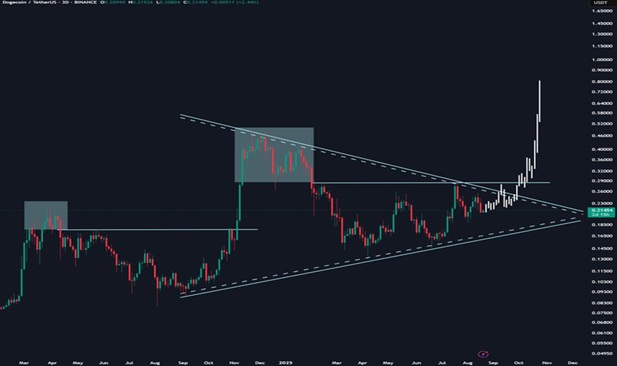
DOGE has been a popular meme coin within the crypto market. As of now, it is still inside a symmetrical triangle pattern indicating that it might be due either a breakout to the upside or downside. DOGE is at the moment trading at $0.21.

The resistance is at $0.29 and it is a critical resistance. As soon as DOGE pierces through, it might shoot up to the levels of its former heights, approximately to reach $0.49. Its support is at about $0.18 and a fall below this mark might trigger additional losses towards $0.12. Provided that DOGE exceeds the level of $0.29, the asset may hit the target as high as $0.35 and even more, up to $0.49. Nevertheless, in case of a failed moveout, DOGE could turn back to at least $0.18. There is still a chance of a 2022-style crash, as a DOGE rally coming too hastily risks provoking a market downturn, which could beget substantial losses.

Is Little Pepe (LILPEPE) the Coin of the Future?

Little Pepe (LILPEPE) may make it big in the meme coin market since it resembles SHIB and DOGE. As opposed to other meme coins, Little Pepe is developed on a Layer 2 network that is an Ethereum-compatible network that provides faster transactions, near-zero gas fees and scalability. This exclusive structure makes the difference between Little Pepe and the rest.

The major aspects of Little Pepe (LILPEPE) are the following:

  • Zero Tax Transactions: LILPEPE transactions do not attract tax and this is a major draw to other meme coins which attract substantial transaction tax.
  • Sniper-Bot Protection: The project has put in place superior sniper bot protection options to make sure that the distribution of its tokens is handled fairly during its launch.
  • Staking, DAO Governance and Meme Launchpad: Holders can earn passive income by staking their LILPEPE and can also have a say in the project by taking matters to voting as the project is DAO-based. Further, the imminent Meme Launchpad will enable creators to deploy their own tokens with ease.
  • Purpose-Built Layer-2 Blockchain: Little Pepe does not use the mainstream and generic blockchain like many of its meme coin counterparts; it is instead a platform built specifically to support meme-based applications. It is 20x faster than Ethereum mainnet, with 90% less fees, that could make it an attractive alternative to meme coin traders and developers.
  • Massive Potential Growth: The presale by Little Pepe has already brought in more than $22.6 million, and the token may grow up to 400% by the end of 2025. And with future NFT integrations and cross-chain and significant listings on exchanges, LILPEPE can easily become a significant force within the meme coin sector.

Little Pepe (LILPEPE) Price Forecasts

By End of 2025: Little Pepe has the potential to hit the $0.01 mark, which translates to a 400% rise in value as compared to its current presale price of $0.0021.

By the end of 2026: LILPEPE can reach the price level of 0.015 USD because the project is progressively developing its ecosystem. Market reprices might send it down to a level as low as the price of $0.0015 in the bear market.

At the end of 2030: LILPEPE may be enjoying the interest of the market and growing acceptance of its Layer 2 blockchain, with a price of up to $0.03, representing a viable investment over a long period of time to its holders.


For More Details About Little PEPE, Visit The Below Link:

Website: https://littlepepe.com