DD
MM
YYYY

PAGES

DD
MM
YYYY

spot_img

PAGES

Home Blog Page 6350

Facebook Shop, Instagram Shop, Google My Business Shake African Tech – To Affect Ecommerce, Fintech, etc

2

Two things: Facebook unveiled Facebook Shop, and Google partnered with Ecobank to “offer timely and relevant solutions, including Google My Business and Google Ad products” to the bank’s customers. Both solutions from the ICT utilities go back to my warning call in a Harvard Business Review article where I examined the future of African tech in a world dominated by Google and Facebook. The Google product will abstract what many African tech firms offer for largely free and Facebook Shop will become a mortal threat to many ecommerce companies. By the time Facebook adds Libra and an evolved payment system, turning Facebook, Messenger and Instagram into a global market platform, African fintechs may struggle. Practically, if you can buy from a Facebook Shop and pay therein, you will not see any incentive of clicking out or launching another app.

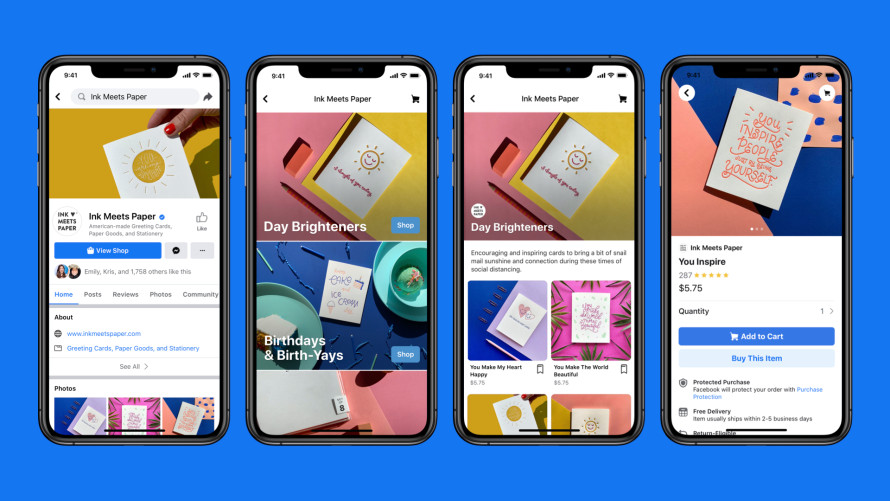
Starting today, you’ll be able to browse and buy products directly from a business’ Facebook  Page or Instagram profile.

Both Facebook and Instagram already supported a degree of e-commerce — for example, Facebook has its Marketplace and will likely make a bigger push through its Libra cryptocurrency initiative, while Instagram allows users to buy products featured in posts and ads. But the company’s new tools go further, enabling businesses to create a full-fledged Facebook Shop.

Creating a Shop is free. Businesses just upload their catalog, choose the products they want to feature, then customize it with a cover image and accent colors. Visitors can then browse, save and order products.

Yet, this can also be good for small companies especially those with solid digital game plans. Simply, all you need is to have a Facebook Shop or Instagram Shop, and by doing that Facebook helps you run a digital platform. Yes, there is no need to hire a web developer and maintain a website since you can sell right on Facebook. This service will knock out many tech services and make some fintech solutions irrelevant especially not selected as integration partners. People may even send you to Facebook to process their payments form their websites.

Those businesses will be able to create a Facebook Shop for free — they just upload their catalog, choose the products they want to feature, then customize it with a cover image and accent colors. Visitors can then browse, save and order products.

Facebook’s vice president of ads Dan Levy said that while the company will charge “small fees” on each purchase, the real monetization will come from driving more advertising. (Shops can also be featured in ads and stories.)

Yet, there is nothing new here. Facebook has been the #1 ecommerce operator in Africa. In January 2018, I wrote on what was to come: “This has been expected. I have predicted that by 2022, the ecommerce platforms we may have are really Facebook, Instagram and WhatsApp in Africa.  I expect these ICT utilities to add store features in their platforms to make it easier for people to list and sell things. That also means that people can get paid easily”. According to Mark Zuckerberg, Facebook CEO, Covid-19 pandemic accelerated the evolution of the Shop product in a video stream to Facebook users.

According to Geopoll, a polling company, Facebook group is growing massively, threatening companies like Jumia and Konga on ecommerce. The informal groups in Facebook are now ecosystems of digital commerce as users use them to shop without going to the traditional ecommerce companies.

.. Yet, this goes beyond Facebook; Instagram would be the best show room most businesses would have in Africa. That is already happening in the continent as photographers, designers, and artists are abandoning traditional websites to focus on their Instagram engagements. As ICT utilities like Instagram put store features, in their platforms, many things would happen: they will disrupt the traditional nexus of ecommerce.

What To Expect

The dominance of Facebook group as an ecommerce ecosystem, especially for marketplaces, would be driven by the following as noted in that Jan 2018 piece:

Free Internet: When you shop on Facebook, under the Internet Free Basics, you do not waste mobile credit. This means that more people will increasingly adopt it. It puts the traditional ecommerce players on clear disadvantage.

Trust: Facebook deals with the issue of trust in African ecommerce. Both the buyer and seller have clear linkages with others as the accounts do not just appear. So, it makes the bonding better. You would see a seller account with 2000 likes and that boosts your confidence level that the seller is genuine. Traditional ecommerce companies do not enjoy that since accounts are not socially associated in their platforms.

Commission: We expect Facebook commission to be lower compared with traditional ecommerce. The implication is that more people will flock to Facebook group. The Facebook group has an element of entrepreneurial freedom since the sellers can “build” the stores themselves.

Network effect: While a company like Konga is hosting about sub-500k active users in its platforms, Facebook has largely everyone that is online in Nigeria. That is a huge advantage. That can move sellers to operate accounts there.

Facebook vs. Amazon

Interestingly, Facebook may offer a real challenge to Amazon in ways Walmart’s Jet was unable to do. Walmart is shutting down Jet and repositioning its Walmart.com. So, this evolution of Facebook, of turning business profiles into shops, should worry Amazon.com because if people feel very comfortable buying things while on Facebook, the incentive to open the Amazon website will diminish. Yes, if people do not visit Amazon, that will do it for Amazon. A high degree of abstraction and disintermediation would be expected with this industry-shaping move by Facebook. For eBay, it may be the end.

Facebook is expanding into the world of e-commerce, announcing a new service that puts it in competition with Amazon and eBay. Facebook Shops will allow businesses to set up free “storefronts” on Facebook and Instagram, working with third-party services including Shopify. CEO Mark Zuckerberg says the move will help rebuild the economy and support small businesses, which have been suffering in recent weeks as physical shops are shuttered. Online shopping has seen a bump during the pandemic and e-commerce companies have drawn record sales.
Facebook Groups To Become Africa’s #1 Ecommerce Platform

People, African ecommerce and fintech in a world of Facebook Shop and Instagram Shop will be different.
Bloggers and Media Platform Owners – Let’s Work Together

0

If you own a blog or a media platform, and would be open to put our banner ad for Tekedia Mini-MBA, email my team via the email provided below. We have something amazing for you.

Tekedia offers an innovation management 4-month program, optimized for business execution and growth, with digital operational overlay. It runs 100% online. The theme is Innovation, Growth & Digital Execution – Techniques for Building Category-King Companies. All contents are self-paced, recorded and archived which means participants do not have to be at any scheduled time to consume contents. Class begins June 22.

If you pay, you get two free ebooks:  “Africa’s Sankofa Innovation” and upcoming “The Dangote System: Techniques for Building Conglomerates” and a free cybersecurity Certificate course on Facyber.

Certificate Programs

Each module takes 12 weeks and is self-paced. The course syllabus and Table of Contents are provided in Facyber.com.

  • Certificate in Cybersecurity Policy (CCYP)
  • Certificate in Cybersecurity Technology (CCYT)
  • Certificate in Cybersecurity Management (CCYM)
  • Certificate in Cybersecurity Intelligence & Digital Forensics (CCDF)

For Payment, email tekedia@fasmicro.com after payment for instructions.

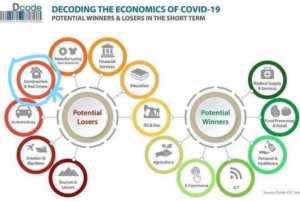
Post Covid-19: Femi Akintunde, Alpha Mead CEO, Proposes CAR for Businesses to Wither the Storm

0

As some states in Nigeria open their economy after strict and flexible measures taken in the last few weeks for the containment of Covid-19, Engineer Femi Akintunde, the Chief Executive Officer Alpha Mead Group has reiterated the need for business leaders to tweak their strategy towards successful business activities in the new normal.

The Chief Executive Officer of one of the leading Total Real Estate Solution companies made this call while expressing his views about the impact of the virus on businesses globally on his professional medium page a few hours ago.

Discussing under the title “WARNING: Don’t waste the crisis!”, Engineer Akintunde notes that many business leaders are worried and panicking over the likely effect of the current pandemic on their businesses, the uncertainties around how long it will last and in what state it will leave the economy and the people afterwards.  Experts have advised that the disease has come to stay so rather than worrying about when it will go, we should think more about how to leave with it.”

To further buttress his position, he cited a number of companies that emerged during crises and making significant growth today. According to him, over 50% of the Fortune 500 companies today were established during one form of crisis or recession.  He copiously cited GE, GM, IBM, HP, Microsoft, Google, Airbnb and Uber as companies that evolved between 1892 and 2009.

Contributing, Praveen Kapur notes that “there is no adversity that does not present opportunities. Only we need to have a vision to locate these opportunities. Such opportunities may not necessarily be in the profession that one has been in or the education that one has taken. But an opportunity is an opportunity; and we must have the courage to take it forward.”

Stating his strategy for business leaders, Engineer Akintunde points out that “my strategy is encapsulated in this 3-letter word CAR. CAPACITY: Use the opportunity to develop capacity to grow and become more efficient; people, processes, systems, technology and strategic alliances. AGILITY: Study & learn from the situation, decide and act fast. RESILLENCE: Develop resilience to withstand the shock, minimise impact on the biz and be able to recover quickly.”

Reacting our analyst notes that “going forward companies would be better when your CAR approach is viewed and utilized collaboratively. In your industry, as I noted in my forthcoming article, those components you mentioned under Capacity will be more useful for sustainable value creation and capturing when businesses don’t necessarily see themselves as competitors. This is necessary considering the emerging nature of the FM industry in Nigeria. Many smaller players need the bigger ones to survive post Covid-19.  And, as a matter of fact, this is the time Alpha Mead Group must prove its status of a company that inspires other companies towards growth and survival through value co-creation and capturing platform.”

“The CAR approach will keep any business afloat. The reality to absorb and live with the norm is so important. Many decisions will need to be made fast and without all the relevant information, a hard one I must say,” Michael Damilare, a Project Manager, says.


Could 2022 Usher in an Era of Boundless and Limitless Connectivity for Africa?

0

In the past, Prof Ndubuisi Ekekwe cited the year 2022 as the year of immersive connectivity where broadband internet will become affordable in Africa. He suggested that the sector would witness fierce competition from satellite broadband vendors to Mobile Network Operators (MNOs) deploying balloons, drones, relays, antennas, satellites etc., which would ultimately drive growth ().

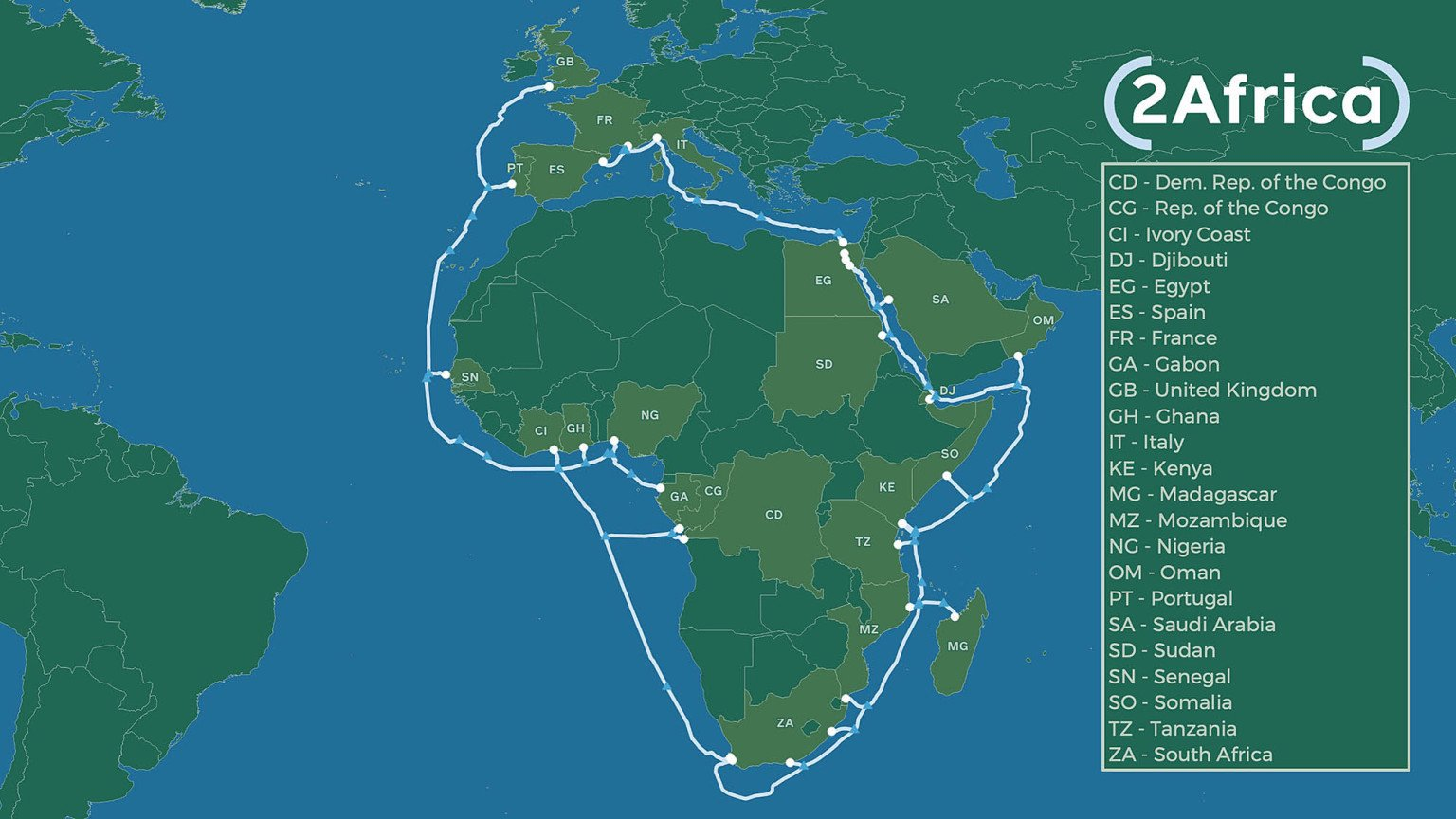
Recently, Facebook made the headlines when it decided to invest $5.7B in India’s Reliance Jio Platforms for a 10% stake. Interestingly, Facebook has also decided to invest in connectivity in Africa by joining a consortium of China Mobile, MTN, Vodafone etc., with plans to build 2Africa, a subsea cable which would deliver internet capacities more than the total combined capacity of all the current subsea cables serving Africa. 2Africa will provide service providers with capacity in carrier neutral or open access cable stations on a fair and equitable basis. 2Africa would no doubt improve internet penetration in Africa as well as support the growth of 4G and 5G systems.

The 2Africa cable is expected to go live between 2023 and 2024. Pricing would be determined by local operators but it is expected that the increased data availability and fierce competition will cause a drastic reduction in the price of data.

It is also believed that the continent may start to see deployment of 5G networks within this time frame (2024 and beyond). Now, could the 2022-2024 era indeed usher Africa into an era of immersive connectivity with boundless opportunities? Only time will tell if Prof Ndubuisi is indeed right.

Thank You India. Thank You China.

2

Thank you #India. Thank you #China. Since May 1, Indian and Chinese participants have recorded 27% of our Tekedia Mini-MBA registrations. We have also noticed that more than 23% of corporate registrations are affiliated with #Indian and #Chinese companies in Africa. Largely, there is an interest in understanding Africa for commerce.

If you are an executive, at continental or country level, in any Africa-India or Africa-China chamber of commerce or association, or a trade envoy with understanding of India and China business systems in Africa, we would need your help. Largely, initially, we did not even see what we are noticing as an addressable market. But with the data we have, we plan to offer a session that clearly showcases the promises, opportunities and trajectories for intern-continental partnerships and developments in Africa, from the domain of entrepreneurial capitalism.

Please connect on click.

Register for Tekedia Mini-MBA.

Best courses. Best faculty. GREAT Results.

https://www.tekedia.com/mini-mba-2/