

Well, there are many ways to have enterprise security. Deciding what your scope and approach are going to be is the primary step. With knowledge groups of your organization, you can formalize a process. Here are guidance for this: Collect existing and developing Security requirements from the business/division’s department. […]
22.0 – Secure Enterprises & Organizations
Large organizations face more challenges compared to smaller enterprises. In a small enterprise, it’s common for the system administrator to be responsible for maintaining account administration, servers, network security and in their free time maintain the enterprise web presence. While in a larger organization, it is not uncommon to have a team dedicated to each […]
The Dislocation in Nigeria’s Education Funding
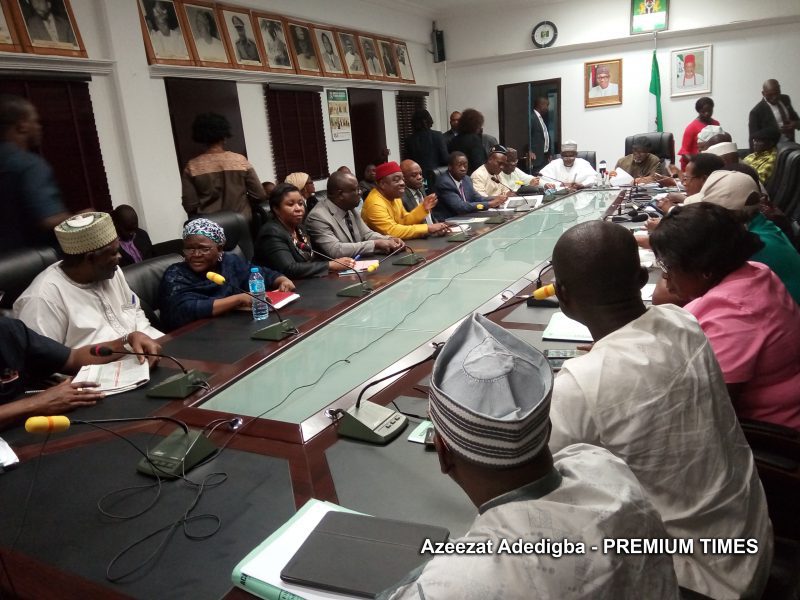
Nigeria’s education sector paralysis is not just funding. Our incentives are wrong. University professors strike largely yearly for more funding. I am not aware of any strike involving primary school teachers who go at minimum wage between $50 to $90 monthly. Our current trajectory will not help the nation.
China has 99% primary education enrollment with less than 10% university attainment. They put all the good money in primary education. America does the same where primary and secondary are largely free. But in Nigeria, we flip it, taking care of few to the detriment of many. Why should a professor be paid $2,000 per month when a primary school teacher cannot even get $90 monthly? The most important education is primary education. Yet, from state to federal levels, Nigeria continues to pump more money into universities, leaving primary and secondary severely underfunded.
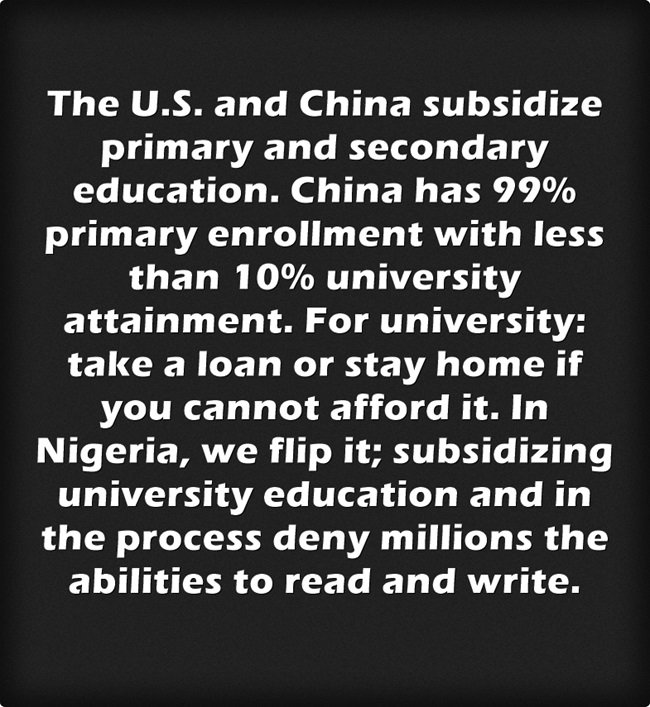
The U.S. and China will subsidize primary and secondary education making both largely free. For the university, you are on your own: take a loan or stay home if you cannot afford it. In Nigeria, we flip it; subsidizing university education and in the process deny millions the abilities to read and write.
Nigerian University Publishing and the SDGs – Dejavu?
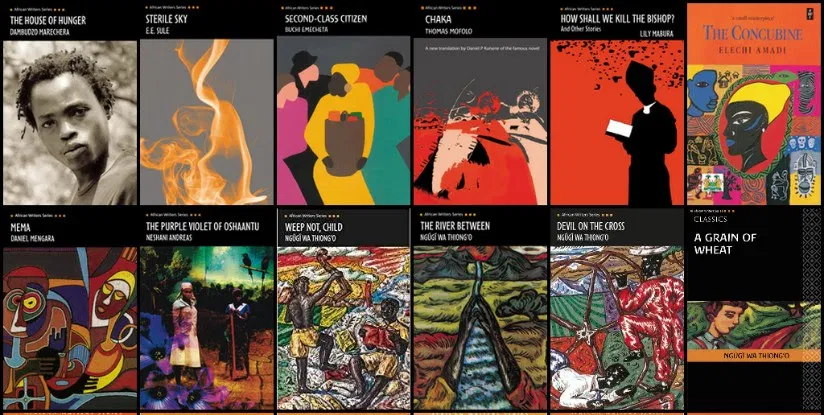
I was just tidying up my files and deleting old messages in order to declutter my storage space when this article I wrote a decade ago popped up. Entitled “University textbook publishing in Nigeria,” the article seems to have foreseen the SDGs (sustainable development goals) even before the MDGs (millennium development goals) had lapsed.
It was published in a book entitled “Achieving Sustainable Development in Africa: Science, Technology and Innovation Trajectory” by an equally interesting publisher “World Association for Sustainable Development.”
In this current post, my intention is to reflect on some of the key points I had put forward at the time of writing the 2010 article.
First, I argued that “most studies on book publishing in Nigeria do not seem to have tackled its challenges head-on.”
They have more often than not ended up discussing the problems and prospects of book acquisition by libraries with very little recognition of the important role of indigenous publishing of university textbooks as a contributory factor.
Second, I pointed out that, “it is also well documented that more and more indigenous publishers have tended to exhibit a penchant for publishing primary and secondary school textbooks (which usually yield a quick return on investment) over university textbooks.” This is something I alluded to an “entrepreneurial handicap” considering the “teeming crop of academics cutting across over 100 Higher Education Institutions (HEIs) in 36 federal universities, plus a cache of private universities, polytechnics (both federal and state) and colleges of education…” Indeed, at some point I was privileged to review a book on Marketing in Nigeria: concepts principles and decisions, a collaborative initiative by big names in Nigerian universities.
Third, I proposed an agenda for action as follows:
In order to realign this education handicap with sustainable development in Africa …Nigerian textbook publishers must begin to leverage their entrepreneurial capacities to coincide with the knowledge base of ‘home-grown’ academics. This can be achieved by tapping into the expertise of a network of key players in the sustainable development of Africa.
Looking back on these three points, I have noticed a marginal development in this area. One notable example of this diaspora collaboration with the home-based, can be found in a recent book, or Festschrift if you like, on Leadership, Entrepreneurship and Development in Nigeria published by the Nigerian Defence Academy Press in honour of its past Academy Provost, Professor Sonny Nwankwo.
NUC Must Have Students Protection Plan In Case Some Private Universities Struggle in Nigeria
The Nigerian Government approved six new colleges of education this week. That is a tough call when the same government has been complaining that funding is tight. Yet, if you look at the whole thing, you will agree that these politicians are not necessarily out of sync. I will not like a scenario where only UNN is the only university in South-East Nigeria, admitting say only 500 engineering students yearly. Sure, standards would be better with more funding per student, but many would be denied access.
Go back to your village, say 70-80 years ago, they used to select representatives to send to universities (then mainly polytechnics like IMT Enugu, Yaba Tech, UCI etc). Largely, very competent people could not find space. But with improved access, many started going to schools – that is a good thing, even though that same trajectory reduced quality.
The federal government has approved the establishment of six new federal colleges of education in each of the six geo-political zones of the country.
A spokesperson for the Federal Ministry of Education, Ben Gooong, confirmed this to PREMIUM TIMES Thursday night.
The new institutions would be located at Bauchi, Benue, Ebonyi, Osun, Sokoto, and Edo States.
A letter signed by the permanent secretary in the ministry of education, Sunny Echono, said an inspection was due for May 11 to “facilitate early take-off.’
The Osun school is to be located in Iwo Local Government Area, PREMIUM TIMES learned.
While I like the expansion of access, I also note a really challenging future for private universities in Nigeria. My prediction is this: more than 20% of private universities in Nigeria will be out of business in the next 3 years. Because this Covid-19 pandemic will take longer for families to recover, public schools will become more attractive. My model shows that private universities are competing in the 70-40% range of the middle class in Nigeria. Those above 70% prefer to send their children to North America, UK or Ghana. With Covid-19 dislocation, the 70-40% will shrink on absolute financial capacities, denying private universities target markets.
The National Universities Commission (NUC) must have a process in place to ensure students are protected. What happened in Abia State College of Education where the government forgot a school and its students to collapse when the teachers went on strike MUST not be a standard playbook. If private universities struggle, students should be assisted into other schools.