DD
MM
YYYY

PAGES

DD
MM
YYYY

spot_img

PAGES

Home Blog Page 6360

Nigeria’s GDP Grew by 1.87% in Q1 2020

1
LAGOS, NIGERIA - JULY 15: A general view of congested traffic in central Lagos on July 15, 2008 in Lagos, Nigeria. (Photo by Dan Kitwood/Getty Images)

Against the backdrop of global economic strains resulting from COVID-19 pandemic, Nigeria’s Gross Domestic Product (GDP), grew by 1.87% Year on Year (YoY) in real terms, according to the data published by the Nigerian Bureau of Statistics (NBS).

The performance recorded in Q1 2020, represents a drop of -0.23% points compared to Q1 2019 and -0.68% points compared to Q4 2019, reflecting the earliest effects of the disruption, particularly on the non-oil economy. Quarter on quarter, real GDP growth was -14.27% compared to 5.59% recorded in the Q4 2019.

The oil sector performance stood at average daily production of 2.07 million barrels per day (mbpd). The production level was higher than the 1.99mbpd recorded in the same quarter of 2019 by 0.08mbpd and the fourth quarter of 2019 by 0.06mbpd.

There was a record of real growth rate of 5.06% yoy in the Q1 2020, indicating an increase of 6.51% points relative to the rate recorded in the corresponding quarter of 2019. However, there was -1.30% points decrease compared to Q4 2019 which was 6.36%. Quarter-on-quarter, the oil sector recorded a growth rate of 11.30% in Q1 2020.

Consequently, the non-oil sector added 1.55% growth in real terms in Q1 2020. That’s -0.93% points slower compared to the same quarter in 2019, and -072% slower than the Q4 of 2019.

The non-oil sector was sparked mainly by telecommunications, finance, agriculture, mining and quarrying and construction. The non-oil sector contributed 90.50% to the nation’s GDP in Q1 2020, in real terms, compared to 90.78% of the same quarter in the preceding year, and 92.68% in the Q4. Road transport, quarrying, accommodation, real estate and food services recorded the lowest performance.

In the mining and quarrying sector, which consists of crude petroleum and natural gas, coal mining, metal ore and other minerals, there was a nominal growth of -10.57% yoy in Q1 2020. While metal ore recorded the highest growth rate of all sub-activities at 8.72%, followed by crude petroleum and natural gas activity which stood at -10.20%, it was crude petroleum and natural gas that contributed most to the sector with 99.51% growth in the Q1 2020.

The mining and quarrying sector grew in real terms by 4.58% yoy, compared to the same quarter of 2019, the Q1 2020 was higher by 5.95% points but lower by -1.49% points when compared to Q4 2019. The quarter on quarter growth recorded stood at 9.36%. The total contribution of mining and quarrying to the real GDP was 9.54% for Q1 2020.

In the agricultural sector, there was a 22.47% yoy growth in nominal terms in the Q1 2020, indicating a decline of -0.11% points from the same quarter in 2019. The sector recorded an increase of 8.66% points when compared to the 13.80% growth rate of Q4 2019. Crop production accounted for 90.54% of overall nominal growth in the sector. Quarter on quarter growth stood at -19.58% in Q1 2020. The agricultural sector contributed 20.88% to nominal GDP in the Q1 of 2020.

The agricultural sector grew by 2.20% year on year in the first quarter of 2020, in real terms, indicating a -0.97% points compared to the same quarter in 2019. On a quarter on quarter basis, the real agriculture sector growth was -27.81%. The sector made 21.96% contribution to overall GDP in real terms in Q1 2020.

Information and communication sector’s growth stood at 8.94% in nominal terms yoy, a -2.51% points decrease from the rate of 11.45% recorded in the same quarter of 2019, and -0.93% points lower than the rate recorded in the preceding quarter. There was a -7.20% quarter on quarter growth in the first quarter of 2020.

The information and communication sector contributed 10.31% to total nominal GDP in the Q1 2020, lower than the rate of 10.60% recorded in the same quarter of 2019. In the first quarter of 2020, the information and communications sector recorded a growth rate of 7.65% in real terms, yoy. Compared to the same period of the preceding year, there’s a decrease of -1.84% points. Quarter on quarter growth stood at -8.02% in real terms. The sector contributed 14.07% to total real GDP in Q1 2020.

The increase recorded in most of the sectors contributed to the 1.87% GDP growth, but compared to the preceding year, the Q1 2020 has underperformed, mainly, due to the decline in oil price and events that the year 2020 was ushered in with.

With this scorecard, the second quarter of the year will undoubtedly yield negative growth due to the impact of the coronavirus crisis. The International Monetary Fund (IMF)  said Nigeria should brace up for its worst recession.

When Your Company Goes WFH, Your Leverageable Value Drops

5

If your company introduces a Work from Home (WFH) policy, do not just blindly rejoice. I just finished reading a paper by a big U.S. bank economist who is advising its customers that (1) WFH will help them expand their talent pool (2) Reduce wage growth for their workers over time (3) Solidify an employer-market, arbitraging best talent and lower cost.

As companies like Twitter, Facebook, Amazon, Microsoft, and Zillow embrace this redesign, do not think it is because they want you to have extra sleep by keeping you at home over jumping into early morning traffic. This is the fact: Covid-19 has forced a huge global experiment, pushing companies around the world to pilot something many would not have done. And the results came out largely just fine.

Both of Jack Dorsey’s companies will now allow employees to work from home permanently.

San Francisco-based Square said Monday it would let people work remotely, even after regional shelter-in-place orders end. The news came a week after Twitter, also run by Dorsey, announced its employees would have the same option.

“We want employees to be able to work where they feel most creative and productive,” a Square spokesperson told CNBC. “Over the past several weeks, we’ve learned a lot about what it takes for people to effectively
Be aware that WFH will offer a new domain of competition where talent sources will be both local and global at the same time.  Simply, talent becomes unbounded and unconstrained, making it possible that plug-and-play can happen at scale. Yes, if you are in San Francisco, earning $8,000 per month, you can be replaced with someone in Nairobi, earning $2,000, and the company will justify it as adopting a new way of work philosophy. But deep behind is a clear value-creation for employers, through reduction of the cost of labour!
“We can get talent anywhere. There’s a lot of folks out there that do not want to move to San Francisco. They feel comfortable working in a much smaller office or just home.” CEO of Twitter, Jack Dorsey
It is arbitraging the best, lowest cost workers globally, pushing workers on the edge downward trend. While some workers will lose, some will benefit. A positive impact on workers is the new Andela policy to adopt WFH for experienced software developers.

ICT created value for companies through improved productivity. The internet has done the same. But there is a key difference: the web does create value but it is also great on destroying and shifting value. If you make a phone call with Whatsapp from Lagos to New York and spend one hour, you may be spending about $1 via equivalent broadband cost. 

But if you have called direct via MTN, a telecom company, you may be off by $40. Yet, the $39 you have saved is not going to Whatsapp which remains free. So, for companies the value has been destroyed, not transferred between. This trajectory cuts across industries making it possible that you can innovate, and yet not earn any income from it; you just end up destroying value for everyone!

The WFH is a new technology app: it would destroy value for some workers (others will benefit) and help employers save while improving overall efficiency through a more talented workforce! It is basic economics, whenever supply increases, other things being equal, price drops. If WFH increases talent for companies, expect wages to drop for workers in some expensive regions of the world! If you live in those regions, you must ensure you can bring more value to avoid displacement. And understand where you stand in this dislocation.

On The Allegations Against AfDB President, Akinwumi Adesina

2

Since the news broke on allegations against the African Development Bank (AfDB) President, Akinwumi Adesina,  and the American government’s rejection of the Ethics Committee conclusion, I have tried to understand what happened. I have asked some friends in the Bank and read some online articles. Of course, this is a whistleblower complaint; not many things are online. This is the summary: In the Nigerian standard, these are not allegations because we operate that way, from local governments to the presidency. Of course, AfDB is not Nigeria.

There were some accusations against Dr Adesina by some AfDB stakeholders. The Ethics Committee of the Bank’s Board was put into action; he was exonerated by the Committee.

The big news now is that the United States Government through the Secretary of Treasury, Steven T. Mnuchin, has rejected the conclusion, and is asking for an independent investigation. That changes the dimension of this whole thing. The letter is attached here (pdf). Dr. Adesina was largely walking into the second term of the AfDB presidency before this investigation began.

From this you can see the heart of Dr. Adesina, he gave out the $750,000 he won on prizes to charity but the Bank’s whistleblowers would have preferred he sent it to its vault. That the U.S. government read through these allegations and is getting involved (read letter) is surprising. What he is accused of happens everyday in Washington DC. That does not mean they are good, but with all the issues in the world, and America can find time for this does mean Adesina has more challenges than these allegations.

The original complaint seen by PREMIUM TIMES include 16 cases of alleged breaches perpetrated by Mr Adesina and an additional four cases of breaches later sent to the Board of Governors.

The allegations range for alleged misconduct and favoritism, arbitrary recruitment, private gain, impediment to efficiency, singlehandedly overruling decisions taken by directors, nepotism, political lobbying, use of bank resources for private gains.

That said, this is a lesson for all of us from Nigeria: one of the accusations is that 25% of the newly recruited managers and leaders are Nigerians; Nigeria holds 9% stake in the bank. If that is indeed true, we must condemn it, but that is not a fire-able offense. The Bank president can be given time to normalize it.

In 2014, I went to Aso Rock, Nigeria’s seat of Power. I got to a section… People there were speaking Ijaw – most of them came from the Niger Delta area. I returned to that same place when I went for an event where I met the Vice President in 2017, everyone was now speaking Hausa. Largely, in Nigeria, our “it is my turn” is a way of life. But that should not be, and some may not accept it.

Premium Times has some of the allegations.

ALLEGED BREACHES OF CODE OF CONDUCT

The original complaint seen by PREMIUM TIMES include 16 cases of alleged breaches perpetrated by Mr Adesina and an additional four cases of breaches later sent to the Board of Governors.

The allegations range for alleged misconduct and favoritism, arbitrary recruitment, private gain, impediment to efficiency, singlehandedly overruling decisions taken by directors, nepotism, political lobbying, use of bank resources for private gains.

[…]

The whistleblowers claimed that almost immediately after Mr Adesina’s assumption of office, he usurped the role HR manager, “playing very active role in the recruitment of all managerial positions”.

[..]

The whistleblowers also alleged that under Mr Adesina’s presidency, the bank’s organisation chart was altered to promote Nigeria to an almost full-fledged region.

[…]

“Admittedly, Nigeria is AfDB’s largest shareholder with over 9%, but it’s not clear if this justifies a preferential treatment. Nigerians have also been particularly well treated in the massive recruitment drive that was launched due to the restructuring of President ADESINA between 2016 and 2018. When roughly 9% of new recruits were Nigerians (or dual nationals of Nigerian origin) – in line with Nigerian shareholding –, they made up roughly 25% of the newly recruited managerial functions. It is not clear if this preferential treatment was justified by a previous under-representation,” they said.

[…]

The whistleblowers described Adesina as “the unchallenged travel champion” of the bank and accused him of using the opportunities of his travels to meet regional heads of States and making financial promises to obtain their support for his re-election.

Cybersecurity Review May End Huawei’s 5G Deal with the UK

0

In the latest move, the National Cyber Security Center (NCSC) has launched an emergency review of the UK’s contract with Huawei for 5G roll out. The NCSC is expected to find out if Huawei could still be allowed to continue with the planned deployment of its technologies in providing 5G services in the UK.

The review was announced on Sunday as part of Downing Street’s push to eliminate Huawei’s involvement in the activities of the 5G network in the UK.

The UK government has been under intense pressure from the US government to sever ties with the Chinese Company. The pressure was intensified earlier this year with the Trump administration threatening to stop intelligence sharing with London if it continues its relationship with Huawei.

London has been adamant to push Huawei away due the cost of 5G roll out. Huawei offers the cheapest services available in 5G deployment and has used it to keep a lot of customers in their grip. The UK believes it will cost the government more to switch to another company right now.

But the latest sanction announced by the US government against Huawei that requires that chip and semiconductor producers in the US stop supplying Huawei with telecommunication components, has necessitated the emergency review and created a fresh ground for the UK authorities to oust the Chinese company.

Now, the new turn is coming from Downing Street, pushing to see that Huawei is eliminated from all British telecommunication by 2023.

According to Guardian, it was suggested on Friday that Downing Street is preparing the ground for a dramatic climbdown. A government spokesman was quoted as saying: “Following the US announcement of additional sanctions against Huawei, the NCSC is looking carefully at any impact they could have to the UK’s networks.”

The new US sanction billed to take effect from September means Huawei has only China to source chips and semiconductors from. And that’s where the concern lies. London believes the situation increases the chances of security breaches and requires urgent attention.

Guardian reported Whitehall sources saying that the effect of the US sanctions will mean that Huawei will rely on unfamiliar and untested components that could be exploited. And that makes the security threat it will pose inevitable.

Moreover, the coronavirus pandemic has put a strain on the relationship between china and the United Kingdom. The British government has suspected that the Chinese government has a hand in the outbreak of the virus, and they are not being honest about it. The situation has dampened the UK’s determination to allow Huawei to lead its 5G roll out.

The sanction will mean that Huawei’s lead in global 5G deployment will suffer a severe setback, and Ericsson of Sweden and Nokia of Finland may see themselves dominating the 5G market.

Conservatives MPs, led by Sir Iain Duncan Smith and Bob Seely have been pushing for the reduction of Huawei’s involvement in the UK’s 5G deployment to zero. Spurred by US pressure and lack of trust in China, the duo believe they now have the numbers to stop the British government from legislating for a 35% cap on Huawei in Britain.

The opposition to Huawei’s participation in the UK’s 5G deployment is increasing daily, and will likely rise to the numbers needed to oust Huawei in coming weeks. Seely reportedly tweeted, “now 59 MPs” on Sunday. Meaning that the Conservative Huawei Interest Group, has beaten the numbers (44) required to defeat Boris Johnson and the Tories to it, though they are the majority.

With intensifying pressure within and outside Britain, it may be game over for Huawei. Mathew Henderson, director of the Asia Studies Center the Henry Jackson Society said the push for a review is evidence that the government’s previous position was untenable.

“This review is recognition that the government’s previous position on Huawei was untenable, both due to the scale of opposition in parliament and from our allies,” he said.

Huawei has repeatedly pledged to be transparent in its business and operate independently from the influence of the Chinese Communist Party. Its vice chairman Victor Zhang said they will be glad to discuss the issue with NCSC.

“We are happy to discuss with NCSC any concerns they may have and hope to continue the close working relationship we have enjoyed for the last 10 years.”

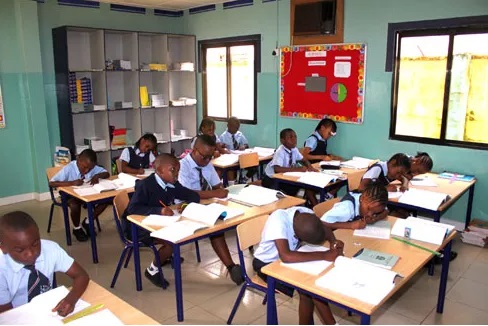
Why Nigeria Is Not Yet Ripe For Online Schools

1

I came across a post, where someone blamed the government for not finding a way to ensure that children continued with their formal education despite the pandemic. The person insinuated that the government’s laissez-faire attitude towards education during this pandemic shows how education is not valued in Nigeria. He further stated that other countries have found ways of keeping children’s academic activities running smoothly and so our government should follow suit.

Of course the only way to send children back to school at this time in history is through the internet. Alternatively, we can try the “radio schools” programme that is happening right now in Enugu State. But, unfortunately, Nigeria is not ready for online teaching. As for teaching through the radio, that is the joke of the century.

It should be noted that some private school owners have considered engaging their students through online tutorials but a lot of factors are hindering their plans. Many entrepreneurs that recently kicked-off something close to an online school are actually targeting secondary school students, especially those that are about to write their WAEC. Some of them may be succeeding, anyway, but their impacts are yet to be felt.

For the many that have considered engaging their students through online teaching and learning, the factors hindering the execution of their plans include cost of data, lack of access to computers, unstable power supply, poor economy, lack of technical know-how, lack of interest, and unsuitable methodology.

  • Cost of Data

Mobile data is very expensive in Nigeria. To be able to participate in these classes, both the students and their teachers will need to subscribe to a data plan. If the classes require that video and audio files should be used, it then means that these people will spend a lot of money during a 30-minute or one hour class. When you check how much that will be spent on data alone in a week, you will be discouraged.

  • Access to Computer

When many people talk about online classes I feel the urge to ask them how the children will gain access to computers for their learning. Some may tell you that the children should use their parents’ own, but they forgot that it’s not all the parents that own computers. The parents that have usually use theirs for business transactions, which they wouldn’t want their children to jeopardise. Even the option of mobile phones may not work here because most children don’t own phones until they’re through with secondary school.

  1. Unstable Power Supply

Of course going into this problem is unnecessary. Every Nigerian knows what NEPA (aka Disco) does to the system. So you can imagine paying for online classes for your children, providing laptops or desktops for them, connecting the computer to the internet, loading up data, and then running generators on top of everything. The thought of this alone is enough to shut down the plan.

  • Poor Economy

Poverty and unstable power supply are two monsters that have found fertile soils in Nigeria. Actually, poverty seems to be more powerful and can bring about the birth of other minor monsters. Coming to online teaching and learning, children from poor and working class homes cannot afford to register and partake in these classes. It will also be hard for them to obtain the logistics needed for the classes. So if the government gives a go ahead order for online tutorials for primary and secondary schools, children from these social classes will lose out.

  • Lack of Technical Know-How

Children in urban areas may be able to operate computers but I can’t say that for those in rural areas. Apart from the students, some teachers are also not computer literate. Even if these people know how to boot and shut down a computer, how many of them know how to navigate through the lesson platform to be able to access their class activities? It is true that practice makes perfect but this is something that may require some training before it kicks off. However, it is necessary that schools use this period to realise how important computer practice lessons are so that when schools reopen, they can teach these children practical computer operations.

  • Lack of Interest

As the saying goes, you can take a horse to the stream but you can’t force it to drink. There are certain things about physical classrooms that virtual ones don’t have. For instance, companionship, friendship and team spirit these children have built over the years as classmates in physical classrooms cannot be found in virtual ones. Truth is that most at times, these students go to school because it provides them with the opportunity to meet and relate with their friends. This opportunity is lacking in virtual classrooms. The result here is that these students easily feel bored with lesson activities when they face their computers.

  • Unsuitable Methodology

My children’s school online tutorial was designed so that parents and guardians attend online classes with the children. They expect parents and guardians to be there to monitor and explain the lesson contents to their children. It automatically made parents home lesson tutors except that this time, parents will obtain their materials from the school’s online classes. This method may be favourable for children that have private tutors (which is not advisable in this period) and/or less busy literate parents. But for those whose parents are illiterates and/or busy, this method won’t work.

Like I told one of my neighbours, we shouldn’t worry so much about our young children going back to school; they will definitely pick up from where they stopped before the COVID-19 lockdown. Maybe we need to bond with them more during this pandemic before they go back to their 7 to 5 academic routine. As for older children, especially those that will soon sit for their SSCE, parents should provide them with books and other educational materials that they will study and acquire knowledge. Those that can afford online tutorials should go ahead with that. But let it be known that Nigeria is not yet ripe for online schools.