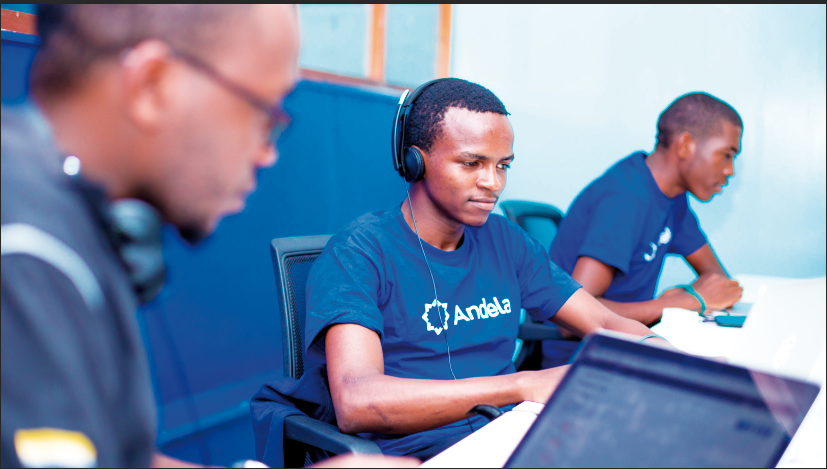
I follow Andela because it is a very brilliant company. The business model can be replicated across industrial sectors, well beyond software development. But that can only happen if the marginal cost paralysis is fixed. Since I wrote the piece – The Andela Problem – the company has done practically everything to deepen its positioning in the market. Andela began by training and preparing young Africans for software opportunities in the U.S, Europe and beyond. What it does today has evolved from that mission – and there are things we can learn from it as it plots its post Covid-19 playbook. Once it executes the playbook, a new business will emerge; I do think for better.
A few days ago, I extrapolated one of my articles in Harvard Business Review to posit that AI and robots would dislocate Andela’s mission at the downstream of junior developers. In other words, Andela has to find experienced and talented developers because those are the ones its core clients would need. The company knows that as noted in a recent piece by the CEO: “A company organizes itself around the problem it’s trying to solve, and the problem we solve today is different from the one we initially set out to tackle”.
In the new piece from the company’s CEO, the following are noticeable:
- You do not need to move into a city where Andela has office to be part of the mission. Simply, you can be part of Andela if you are living in Umuahia. That unlocks more talent pool for the company as many talented and experienced developers may not like to move into some cities just for jobs.
- Andela has embraced Remote Work at scale. This one is unique as that Remote Work can mean Work from Home! More talent pool unlocked.
This week, we announced at an all-hands that we are going to be a remote-first company. While we’ve always been a leader in distributed work, we’ve now proven that we can operate fully remote by delivering excellent work to our customers over the past couple of months. We will continue to ensure that our engineers have the infrastructure needed to operate at a world-class level.
- Andela placement offerings are now available to non full-time employees. Simply, you can be running your business and have free time, and if you have the talent, Andela will get you into its projects. The key is making sure that you deliver as agreed to Andela clients. Things like this happen when a market is an “employee” market. Here, the employees are the experienced developers – and Andela is exploring all possible ways to get them into its network.
While we’ve trained more than 100,000 people through programs like the Andela Learning Community, in order to actually be placed with a company, you’ve historically had to be a full-time Andela employee. This limits the opportunities we’re able to provide, and it also limits the breadth of talent available to our customers. Moving forward, we will expand the network to include top engineers from across the continent, and eventually around the world — and we won’t require engineers to be full-time employees to apply for opportunities.
This company is evolving – and it could create a new framework on how modern firms organize in our part of the world. Yes, a job where people can earn $7,000 monthly in Nigeria, and still be working as non full-time staff! Andela 2.0 has a promise. The firm has fixed many things at once by upgrading its playbook.