The world is faced with an economic and health crisis never seen before in decades. Consumer demand remains strong and supply infrastructure is still healthy, but both are tied in lockdown and unable to function. Supply has built up, but demand is crashing, even though latent demand hasn’t crashed that much.
The clampdown on physical activities plus the latent demand, has simultaneously reduced pressure on physical infrastructures, such as building, roads, and has increased pressure on digital infrastructure. Digital readiness cannot be overemphasized at this moment, as COVID-19 has demonstrated the need for more location-agnostic constructs in order for business and life to continue. Organizations who have built necessary infrastructures to support digitalization are enjoying leverageable moments.
Emergency spikes have been observed in data consumption, online shopping, contactless payment, remote work, distance learning, tele-health, online entertainment. Notably, this is more evident in businesses, where products and services can be distributed and transacted digitally. Zoom (Video conferencing), Amazon, (online shopping) Activision Blizzard (video games), Netflix (video streaming), Teladoc Health (telehealth), Flutterwave (Digital payment), Ubongo (distance learning), Zipline (medical drone) etc., are among the biggest winners of this spike.
On the other hand, businesses such as food, manufacturing and logistics who are using digitalization tools, to scale up efficiencies partly, are experiencing some disadvantages, because human interaction is much needed at pivotal nodes. During the .com boom in the 90s, the idea of “death of distance” gained momentum. With the increasing web-based and telecommunication tools then, it led to the spatial unbundling of business units and reduced the value of physical proximity. So, companies do not have to be vertically integrated to maximize value. As communication became cheaper, faster, supply chain transformed from just-in-case to just-in-time, which created room for more flexibility, agility and adaptivity. It has equally reduced the cost of holding inventory. Today, the exact opposite is right before us. Not having a robust inventory to absorb the external shocks of the pandemic, can put a company in serious troubles.
Another thing to consider is that supply chain is global and interconnected across multiple geographies today. Now, this very idea is being challenged. Yes, the idea of globalization. Countries across the world have imposed travel restrictions to control the spread of the coronavirus. A study revealed that “at least 93 percent of the global population now lives in countries with coronavirus-related travel restrictions, with approximately 3 billion people residing in countries enforcing complete border closures to foreigners”. The implication of this is that companies will find it difficult to source for components, parts or raw materials. Thus, supply chain will need to become more resilient, and distributed. This will call for a need to shift to a more dispersed sourcing technique across multiple geographies. In the bid to also reduce cost inefficiencies and increase control along the supply chain, companies might consider the partial integration of processes that have initially been outsourced. This can lead to greater innovation, however, managing finances, becomes even more critical.
As we have seen in the above paragraphs, technology coupled with this pandemic has encouraged continued shrinking of physical distance in wholly digital companies. While for labour intensive companies, it might lead to the re-bundling of physical distances. And, it thus appears that this period is making the distinction between digital companies and traditional companies who are leveraging on digital technologies clearer. Irrespective of the divide a company falls, automation, of key processes can offer some soft landing.
Automation has grown over the last few years, with hundreds of millions of jobs estimated to be affected. Companies operating in sectors including manufacturing, transportation, warehousing, agriculture, mining, oil and gas, retail trade, construction and utilities, are posed to have high automation potential. On the other hand, studies have shown that growth in automation does not follow a linear path. Rather, it happens in spikes and it is more concentrated during economic dips, when humans become relatively more expensive as companies’ revenue decline. The University of British Columbia reported that over three recessions in the last 30 years, nearly 9 out of 10 job losses took place in automatable job functions. Of course, everyone and every industry is not equally vulnerable to this.
In the case of a pandemic related recession, it does not only cripple the economy, it can also have a severe impact on the workforce. During the Black Plague that ravaged Eurasia and North Africa, peaking in Europe in the 14th century, it resulted in deaths of up to 75-200million people. This decimated the workforce, and plunged the economy into dip. As a result of the shortage of workforce, the need to fill the labour gaps led, to a series of technology and social innovations popularly referred to as the European Renaissance. One of the technologies invented during this period was the printing press, and it changed the ways humans communicated.
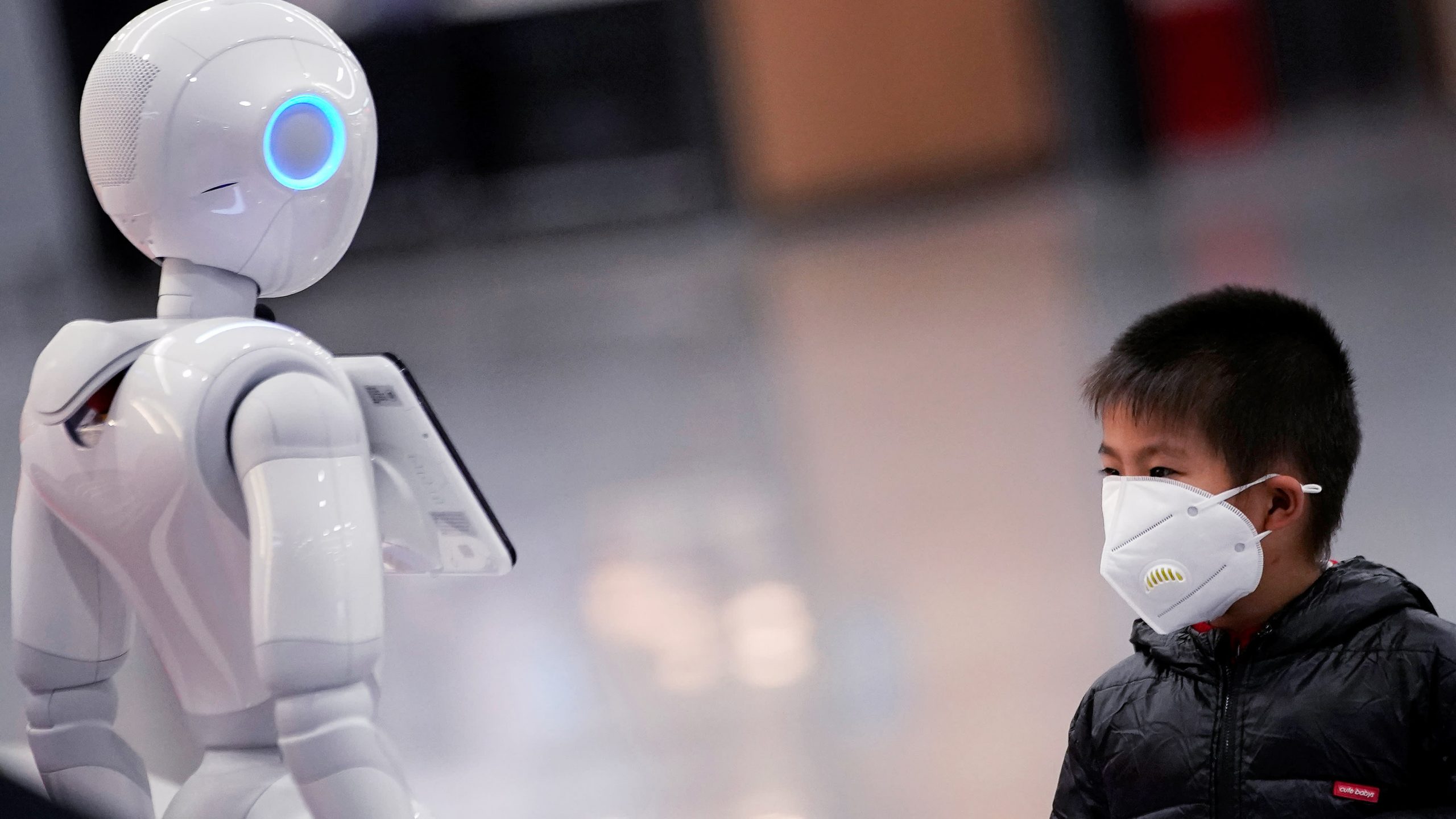
While we do not hope for a replay, there is enough evidence to show that automation could increase much more, as economic recession not only stares at us, but social distancing is also becoming the new norm. COVID-19 has made us realize how we still depend heavily on human interactions to get things done. We can now begin to imagine a world of business, where human interaction is minimized. A case where you place an order on an ecommerce store with your device, and a robot/drone drops it off at your doorstep. We are in no doubt, moving towards a greater stage of human-device and device-device interaction and communication. This crisis is accelerating the defining moments and pivot points in technology revolution that will bring us closer to the exponential age.
For businesses, the impact of coronavirus is profound. Will companies rebound after this economic shock, or will it suffer lasting damage? Will companies retain existing market positions without substantial efforts to respond to changes confronting the sector as a whole? Will the current changes in consumer attitudes towards health, social distancing and finance be sustained? We have seen tremendous growth in medical research, biotech, drug development, health policies and spikes in some digital businesses. These positive outbursts, is nothing in comparison to the scale of the catastrophe caused by coronavirus. The impact of this period will be felt more in coming months. And needless to say, that the decisions made during this period will be critical to redefine the future of technology and businesses at all levels.