DD
MM
YYYY

PAGES

DD
MM
YYYY

spot_img

PAGES

Home Blog Page 6383

Zenvus Unifies Soil And Vegetation Health Data

0

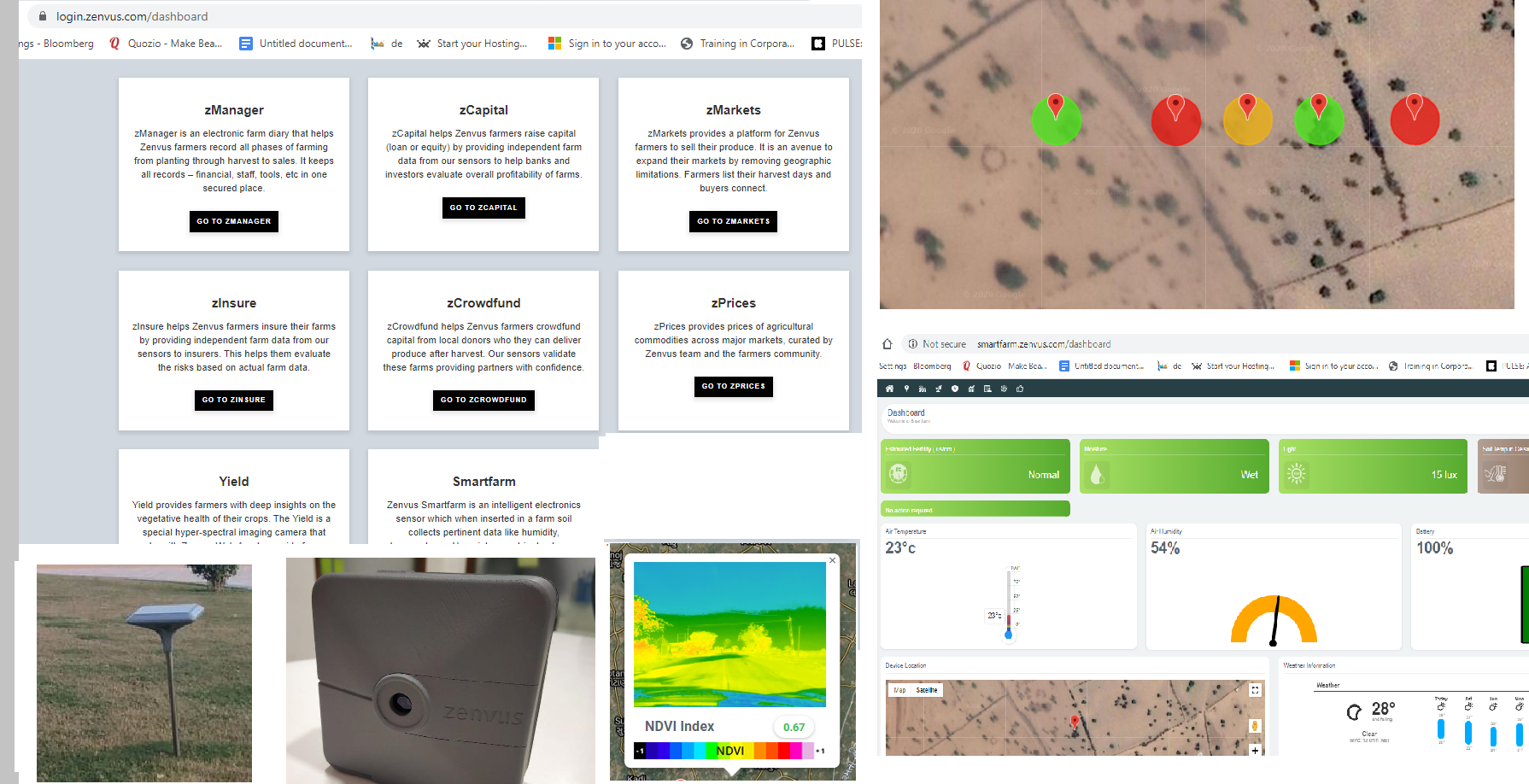
To all our global customers, we understand the challenges during this Covid-19 pandemic. So, we are doing everything possible to reduce frequent need of visiting farms. We have integrated all Zenvus technologies, making it possible that you can access all platforms from one dashboard. 

Zenvus is an intelligent solution for farms which uses proprietary electronic sensors to collect soil data like moisture, nutrients, pH, etc. It then sends the data to a cloud server via GSM, satellite or Wifi. Algorithms in the server analyze the data and advice farmers on farming processes. As the crops grow, the system deploys special cameras to build crop vegetative health index for detection of drought stress, pest and diseases. Our system has the capability to tell a farmer what, how, and when to farm. It has in-built GPS, compass and XL making it possible to map farm boundaries which could be useful during loan and insurance applications.

When you login, you will see the farm diary, the funding ecosystem, insurance solution, farm pricing engine, etc. There are also Yield and Smartfarm links. Clicking the Smartfarm takes you to the main dashboard where you can see the health of your soil. Green means “everything is fine”, red “action required” and yellow “pay attention”. It is now on the map, integrated with Google Earth. Click any of the sensors, the live sensory data will be displayed on temperature, pH, moisture, rainfall prediction, etc. No need to visit the farm is all marks show Green.

Also, we have integrated the Yield data on top of the soil to close the loop, validating the soil condition and crop vegetation. Walk/fly the Yield camera around your farm, an NDVI engine will quickly give you areas that need help. We have also put documentation to help.

Thank you all for the support. Zenvus sells exclusively to governments and cooperatives at the moment.


COVID-19 Pandemic: Motivation for a Greater Nigeria

0

Mr. Godwin Emefiele (FCIB), the Governor of the Central Bank of Nigeria has articulated policies of the CBN in response to COVID-19 in a 24 page essay titled ‘TURNING THE COVID-19 TRAGEDY INTO AN OPPORTUNITY FOR A NEW NIGERIA’ published on the 15th of April, 2020. 

All over the world, people and institutions have always used lessons learnt from terrible experiences to reposition their country for a better future. They do this by being methodical and determined to achieve the set goals. There is no room for compromise, as they mobilize the entire nation to key into the objectives of becoming a self-reliant and truly independent country. To be fully independent is not just a political objective, it’s an economical goal to guarantee the wellbeing of the citizenry.

There are so many examples one can draw from, from America, to Europe to Asia and other parts of the world. This COVID-19 pandemic is another opportunity for countries to redesign their strategies in terms of research and development. When this pandemic is over, and I hope that happens soon, watch out for the reactions of these developed nations towards health infrastructures, education, science, technology and manufacturing to prepare their system and the people for a better future. 

Japan had as early as1870 decided that superior engineering knowledge will guarantee a better future for the country. So, they had invited very young British and American Engineering teachers, average age was at 27 to teach in their Universities and colleges recognizing that their future depended on science and technological advancement.

According to Professor Emeritus Shunsuke Otani ‘…it took only 15 years for the change in engineering education; from education by invited foreign teachers to that of trained native teachers.’ The rest is history, Japan’s contribution to the world in the areas of architecture, automobiles and electronics engineering has indeed provided the people with a better future.

The CBN has undertaken a task that should serve as a national call to walk the talk. This present Nigeria has been talk and talks but nothing to show for it. Before the advent of crude oil exploration in commercial quantities, this country depended so much on groundnuts, cocoa, rubber and palm oil, there were talks about diversification of the economy/revenue base instead of depending on Agricultural produce alone. 

Then came crude oil reign, and we abandoned agriculture and depended on oil, and since 1970 to date, we are still echoing the chorus on ‘diversification of the economy’. Oil is so cheap now that we are better off being a consumer rather than a producer.

The Governor of the CBN has outlined a policy document for immediate-term, short -term, and medium-term policy priorities commencing now up until 2023. 

These policies priorities are mainly to support government fiscal policy. However, they are also within the CBN’s mandate. The core mandate of the CBN is to maintain price stability and drive economic development. Monetary policy alone is not enough, as a matter of fact, interventions in the fiscal policy aid the effective implementation of monetary policies towards achieving price stability. Issues such as inflation targeting, unemployment, exchange rates management can better be managed with strategic fiscal interventions.

According to the Governor, the CBN will be providing N3.5 trillion stimulus packages in response to this COVID-19 pandemic, and there are plans to establish a N15 trillion Infrastructure Company that will provide funding for projects in the transport sector to unlock the value chain in the agriculture industry. 

This N15 trillion Infrastructure Company is a very ambitious project, but it can be done. The CBN has in recent times been very articulate in their plans and there are results to show for it. This COVID-19 pandemic can indeed become Nigeria’s opportunity to guarantee the future wellbeing of her citizens. There will always be global pandemics of this nature going forward, therefore, how we learn from this experience and our determination for creating a truly independent country that will be the bastion of the black race in human development will be vital for our future.

As a country, we have not been exploiting our potentials, it took the CBN intervention for our people to start looking inwards and producing goods that hitherto, we spent our foreign reserves in imports from China and the rest of the world. 

Don’t forget that when CBN restricted access to the official FX market for certain goods and products that can be produced locally, there were many condemnations from several quarters including some segment of manufacturers association. Today, we can see the positive results of such protectionist policy on the economy.

The lessons to learn from this COVID-19 is that going forward, nations that can guarantee the wellbeing of her citizenry are nations that are truly independent. This independence is not just political, but economically and self-reliant is the ultimate goal.

China, USA, Italy, France, Spain, Japan, Canada, Germany, Russia, United Kingdom, Korea, and India who have developed manufacturing capabilities for several items that are needed for the containment of COVID-19 pandemic immediately stopped or banned or restricted production for export. They needed to survive first before helping others, and that is fair. 

Global pandemic of this nature will continue to plague the world periodically, it’s not a curse, it’s just the times we are in, and so Nigeria needs to be prepared to help herself first, before others and before others can assist her.

This COVID-19 pandemic offers Nigeria the opportunity to build and operate world class medical facilities across the country, and we can! Since we can’t fly abroad to these countries with state-of-the-art medical facilities.

The Medical and Dental Council of Nigeria and the National Universities Commission can be encouraged with improved funding to continue to ensure the highest quality of medicine, dental and alternative medicine practices in our country is maintained. Today, Nigerian universities trained medical practitioners are highly revered all over the world, we must continue to train more to work within our improved post-COVID -19 medical facilities.

As affirmed by the CBN in this policy document, the Manufacturing sector is key in driving a new Nigeria. Investments in machinery and equipment which are the major inputs in economic production is very vital. The CBN has vowed to provide finance for these very important inputs in production, therefore capital to invest in machinery and equipment should never be a hindrance to our economic growth going forward. The CBN plans to make available an initial N500 billion for intervention in this area.

Constant power supply is also important because machines need to be powered and there are plans for investments in the power sector that can provide constant electricity generation and distribution. This is where we have the greatest challenge as a nation. However, we can overcome this, electricity should never be a rocket science, so we have the expertise to mystify this darkness and power the country to greatness.

Finally, the new Nigeria we envisage post COVID-19 is possible with more investment in education, research and development, particularly in sciences, engineering and technology. Our universities must now concentrate on the practical aspects of things as we have imbibed the theories for too long. 

Take a look at the following items required for managing COVID-19 pandemic; Breathing face masks, protective suits, medical gloves, alcohol-based sanitizers, ventilators and other breathing devices, vitamin C, hydroxychloroquine and other malaria drugs. 

All these items can be produced 100 percent local content in Nigeria. Today our chemistry and biology laboratories across our universities are busy producing some of these items for their internal use. A visit especially to our first and second generation faculties of engineering will convince you that we still have very creative and innovative students. There are some forms of innovation in application knowledge. Our students and teachers are fabricating and designing useful machines to solve today’s problems and needs. Sadly, these are just for exhibition, and requirements for some engineering courses examinations. It all ends in the laboratory junkyard. There is no synergy between our universities and our manufacturing sector that can transform these projects to commercially viable products. 

Therefore, our businesses and manufacturing sectors need to collaborate with our universities in the areas of research and product development to commercialize some of these innovations. Our businessmen and women should change their orientation from being importers of goods to becoming producers and exporters of made in Nigeria goods. This creates massive employment and economic activities in the county.

Yes, quality is important, and we already have a quality assurance and certification regulatory body such as the Standard Organization of Nigeria (SON) that should actually certify the quality of goods and products made in Nigeria. And we have to trust these certifications. It will take a while for Nigerians that have been so used to foreign things to believe that goods and products made in Nigeria are indeed of quality.  

Many of the locally fabricated machines that mirrored several sophisticated technologies used during Nigeria’s civil war were products from Nigerian universities students and their teachers based on the theories underlying those inventions. It’s now time to galvanize our academics to re-transform our universities to Centers of innovations and development.

Let us take a stand today, that Nigeria as a country and Nigerians as a people have the capabilities to be self-reliant, to take care of our people first, and to offer help to other countries in need. There is indeed opportunity in this pandemic, as Professor Ndubuisi Ekekwe said ‘….The human spirit is indestructible and will always rise HIGHER. Let’s take this as a lesson and a motivation: the world is not folding up because of COVID-19’, in response to Apple’s launch of a cheaper iPhone amid  the COVID-19 pandemic. May this N3.5 trillion initial stimulus package from the CBN motivate us all for a greater Nigeria.

A Bigger Magic for 22 Million!

2

Trump performed one magic: he got Saudi Arabia and Russia on the same table to reduce oil production volume, and then went ahead to promise that the United States of America will reduce its production volume! Read deeper, that is a zen-like strategy. Why? Mr. Trump knew that Covid-19 had reduced the level of production in the American mass-small-scale, shale-mixed oil production volume. Technically, the production volume that Trump promised was not necessary because of the Covid-19 impact in the U.S. energy sector. But with the promise for America to also reduce volume, Saudi and Russia agreed! Oil picked up, marginally; he celebrated.

But one number today shows that Trump needs a bigger magic: “Another 5.2 million workers filed for their first week of unemployment benefits last week, bringing the total number of Americans who have filed initial jobless claims to over 22 million”. That number is tracking the coronavirus pandemic period of 2020!

The month of April has seen a rise in layoffs and consequently unemployment claims. About 13.5% of American workforce has been impacted and more are expected to be laid off in the coming weeks.

“As shutdowns continue, job losses will likely extend into other areas of the labor market, such as business and professional services where firms may begin to see lower revenues from a second order pull back in demand,” said Robard Williams, a senior vice president for Moody’s Investors Service noted.

The layoffs started with service jobs, then workers at restaurants, hotels and retailers felt the hit.

Now the pandemic appears set to touch white collar jobs among others it will likely hit if it doesn’t slow down in the next few weeks.

Making that 22 million to disappear is the magic before Mr. Trump right now.

The U.S. Unemployment Rises As Coronavirus Keeps Businesses Closed

The U.S. Unemployment Rises As Coronavirus Keeps Businesses Closed

0

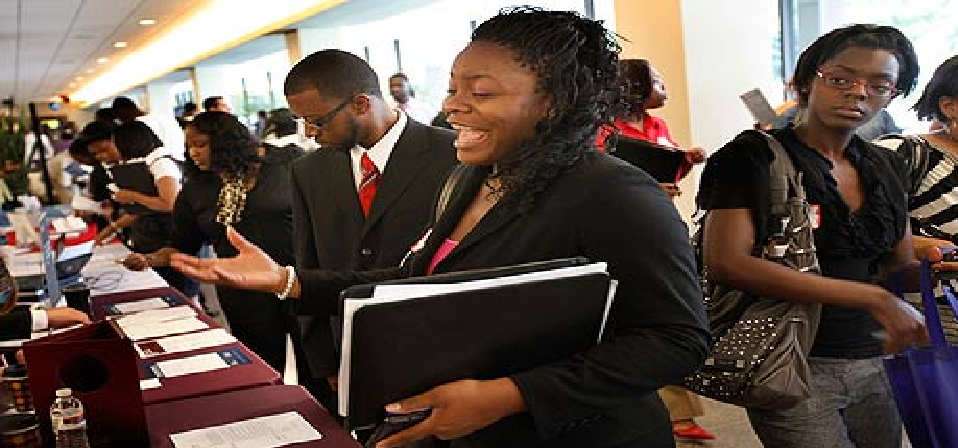
As coronavirus keeps businesses and offices shut around the world, many workers are beginning to come in terms with unemployment. In the US, the number of people filing for unemployment benefits is rising weekly.

Another 5.2 million workers filed for their first week of unemployment benefits last week, bringing the total number of Americans who have filed initial jobless claims to over 22 million.

The month of April has seen a rise in layoffs and consequently unemployment claims. About 13.5% of American workforce has been impacted and more are expected to be laid off in the coming weeks.

“As shutdowns continue, job losses will likely extend into other areas of the labor market, such as business and professional services where firms may begin to see lower revenues from a second order pull back in demand,” said Robard Williams, a senior vice president for Moody’s Investors Service noted.

The layoffs started with service jobs, then workers at restaurants, hotels and retailers felt the hit.

Now the pandemic appears set to touch white collar jobs among others it will likely hit if it doesn’t slow down in the next few weeks.

The recent surge in claims trashed all previous records since 1967, according to the Labor Department tracking data. The unemployment trust fund in many states has seen drastic depletion by the overwhelming number of out-of-job people filing.

The events of the last four weeks have depleted the economic gains of the past 11 years, sounding warning that the worst may be just ahead.

While the markets show defiance now and then, the overall performance of every sector of the US economy tells a sad tale of devastation by coronavirus. And it puts workers in a sorry state of uncertain future, even after the pandemic is over.

“As we fully know the current state of the labor market with mass waves of layoffs, the key question turns to how many of these people will be rehired when the economy starts to reopen. We can assume it will take a long time for that to happen but hopefully we’re getting closer to at least getting started,” said Peter Boockvar, chief investment officer at the Bleakley Group.

Government’s efforts to save small businesses and help as many employees as possible keep their job has been stymied by lack of funds, and it has blown the crisis into a disproportionate state. A major contributor to the escalation is the government’s decision to allow independent contractors and others who previously were not eligible to file for benefits.

The numbers jumped significantly in four weeks to 6.066 million with an increase of 2.568 million, in the past week. Though unadjusted data appears promising, economists say it’s not something to rely on given the circumstance.

The unadjusted total stood at 4.9 million, which represents a 20% plunge or over 1.2 million from the past week. According to the Labor Department, seasonal factors should have reflected about 1% gain. That means, compared to a week this time in 2019, the figures should have shown 196,364 claims. Therefore, the coronavirus pandemic has made the little gains insignificant.

Paul Ashworth, chief US economist at Capital Economics said the total claims of 22.03 million filed since social distancing took effect shows a 13.5% drop in household employment, though he expresses hope that the unemployment rate would come down, he said he expects April jobless rate to be 15%-20%.

“Nevertheless, we do still expect the unemployment rate to come down much more quickly than during a normal economic recovery, as temporary layoffs return to work once the lockdowns are lifted, so we still wouldn’t characterize this as a depression-type event,” he said.

Even though the numbers have risen beyond those of the great recession, economists believe that chances of recovery are high since it mostly depends on reopening of businesses.

Meanwhile, many more workers are expected to get laid off as the number of COVID-19 cases increase in the United States, dimming the hope of lifting the lockdowns soon. The US Small Business Administration (SBA) said it has stopped accepting applications for the two programs designed to help small businesses stay in business during crises such as this.

The SBA said on Sunday that the $349 billion Paycheck Protection Program (PPP) that is meant to keep workers on payrolls has been exhausted. And the fund for the Economic Injury Disaster Loan Program (EIDI), offering government loans and emergency grants has also been drained.

While Congress debates injecting more $250 billion to the PPP, many small businesses are laying off workers, increasing the number of filers for the unemployment benefit.

Brad Close, president of the National Federation of Independent Business, said the worst fears of the members just came true. As the congress struggle to reach a consensus on the $250 billion extra fund for small businesses.

“America’s small businesses are on the brink, trying desperately to keep their doors open and support their employees. They have been let down by lawmakers and the bureaucracy, with the smallest businesses most disadvantaged in attempting to participate in the paycheck protection program,” he said.

The Controversy of Nigerian Government’s COVID-19 Palliative Distribution Method

1

On Wednesday, the Federal Government of Nigeria through the office of the Ministry of Humanitarian affairs announced that the palliative it intends to give to vulnerable Nigerians are for those who have less than N5,000 in their bank accounts.

The Minister of Humanitarian Affairs, Sadiya Farouq, said this during her chat with State House correspondents, that the modalities are for the urban poor, but it’s going to be disbursed using BVN verified bank accounts.

President Buhari had, on his broadcast on Monday, promised to make cash disbursement to most vulnerable Nigerians as a palliative to cushion the effects of the coronavirus lockdown. The Minister said his instruction is that the money be given to the most vulnerable, who can be classified as those with less than N5,000 in their accounts.

“You are aware that the president in his broadcast of Monday, 13th April, directed that we expand the beneficiaries of the conditional cash transfer by one million and in this regard, we are going to focus more now on the urban poor.

“These are people who depend on the informal sector to earn their livelihood; they are daily wage earners and these are people that we are really going to focus more on as well as people living with disabilities” she said.

Farouq added that the Ministry has adopted three methods to distribute the palliative across the country. She said that apart from using the BVN, the Ministry has adopted a phone recharge ratio as a criteria of cash disbursement; and those who recharge above N100 will be unworthy to receive cash from the federal government.

“Well, we have three options. One, we are going to use the national social register that we already have. Two, we are also going to focus on the urban poor as I mentioned by using their verified BVN accounts to get them, that is, people that have an account balance of N5,000 and below.

“We are also using mobile networks to know people that top up the credit units for their phones with maybe N100 or less. These are people that we consider to be poor and vulnerable. So, these are the three options that we are exploring and I am sure that by the time we get this data, we will be able to give this intervention,” she said

The Minister also explained that what is available for now will not be enough to go round, and only 25% of the total population will be covered.

“Let me also say that we have a standard. Twenty five percent of the total population is what we will take out. It cannot go round everywhere, but we are starting from somewhere. Twenty five percent of let’s say the location Lagos State, for example, is what is going to benefit from this intervention that we are doing. Going forward, we might expand it but this is what is obtainable for now,” she said.

Following this announcement, many have been wondering why N100 recharge and N5,000 account balance will be used as a standard.

Although in a country where the living standard of many falls below $2 per day, it is expected that the majority of the populace will fall in the category described by the government. But at the same time, it doesn’t rule out the fact that those who live above the described standard are also poor and need help at this time.

Many have faulted the standard of distribution adopted by the Nigerian government, saying it will hurt the majority of the people who need the palliatives. The argument is based on how long N5,000 ($13) can take an individual let alone a family, especially in the urban places in the country.

Given the value of Nigerian money, those who have N5,000 in their bank account are not different from those who don’t have. They are all considered so poor since the money can’t afford them life’s basic needs. And in a time like this, when the cost of living has increased following the lockdown of businesses, the money becomes even more meager.

On the other hand, it is believed that many who use the N100 call card top up may have limited need for calls, and those who top up with more than N100 may be doing so out of necessity not because they have enough to spare. It is also believed that anyone could receive N5,000 or more than N100 call cards as a gift from anyone.

A concerned Nigerian said at the breaking of the news that the government is going to use N100 recharge ratio as basis for the disbursement of cash: “What is paining me most is that my brother that has never given me money just sent me N200 airtime. I do not know who asked him to send it; now see what he has caused.”

As many look forward to the government to survive the lockdown, it is expected that everyone is taken care of. But in an apparent situation of insufficiency, the government has been urged to adopt methods of palliative distribution that will not cheat people out.

“In a country where the minimum wage is officially N30k, to deny a citizen  5k because he has 5k under lockdown with no end in sight is illogical and irrational,” said former senator Shehu Sani.