DD
MM
YYYY

PAGES

DD
MM
YYYY

spot_img

PAGES

Home Blog Page 6389

Innovation Lessons from 12 Companies

0
The 12 firms

Next week, we will be examining these companies, focusing on the innovation lessons we can learn from them. The broad theme dwells on the state of the tech nation, and the emerging opportunities which are coming up. Our goal is to discover the leverageable factors which are cushioning the scalable advantages in the firms – and in the process, we can learn, and apply in our firms. 

You can join the second edition of Tekedia Mini-MBA here.

Tekedia Academic Programs

Nigeria in a Dilemma

0

Nigeria is in a state of dilemma. She is currently in a position that placed her between the devil and the deep blue sea. Any direction she takes now spells disaster for her. So she needs to choose the lesser evil; though none of the options seems less disastrous.

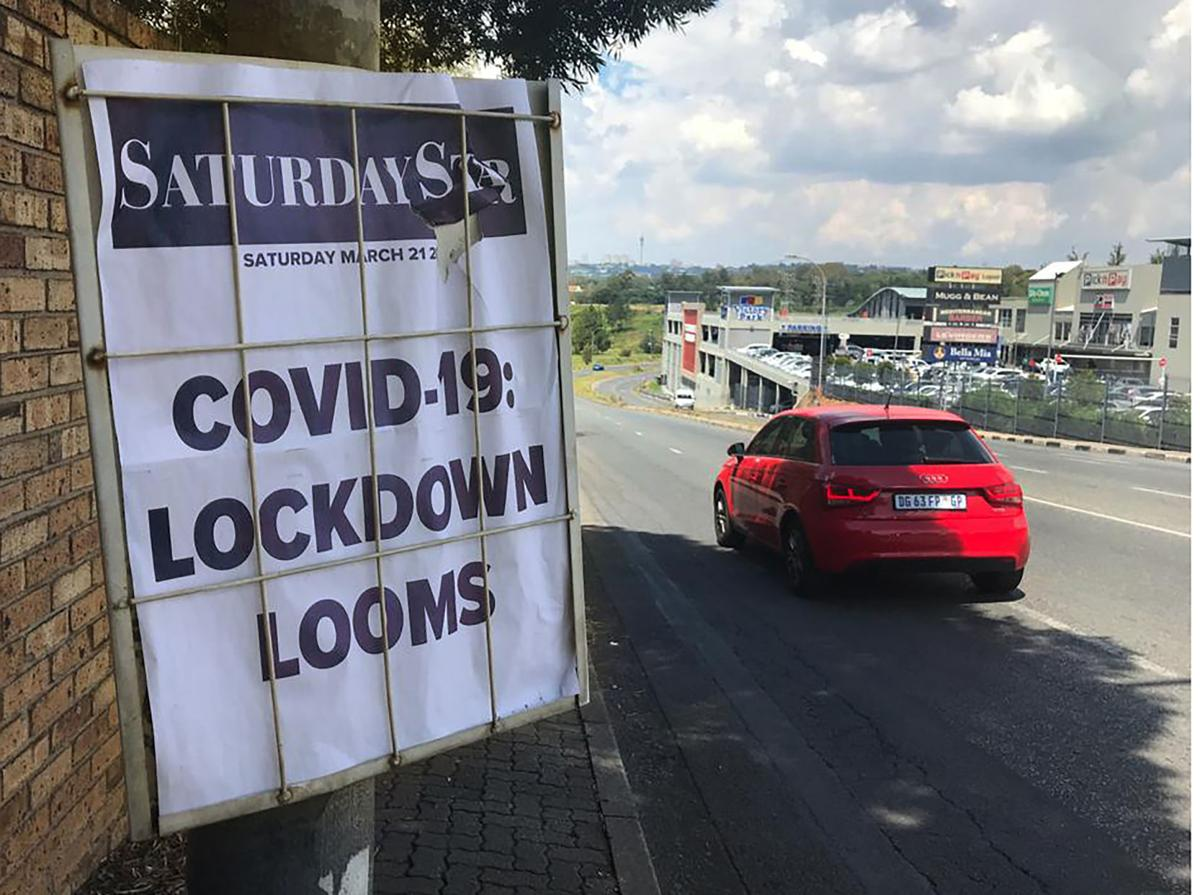
The moment it became obvious that restriction of movement order will be enacted to minimize and contain the spread of COVID-19, people became afraid. People knew that the lockdown was the best option but they couldn’t imagine what their lives would be like during the period. They hoped against all odds that the order wouldn’t be put in place. But alas, they were disappointed to find out that there is no running away from a lockdown.

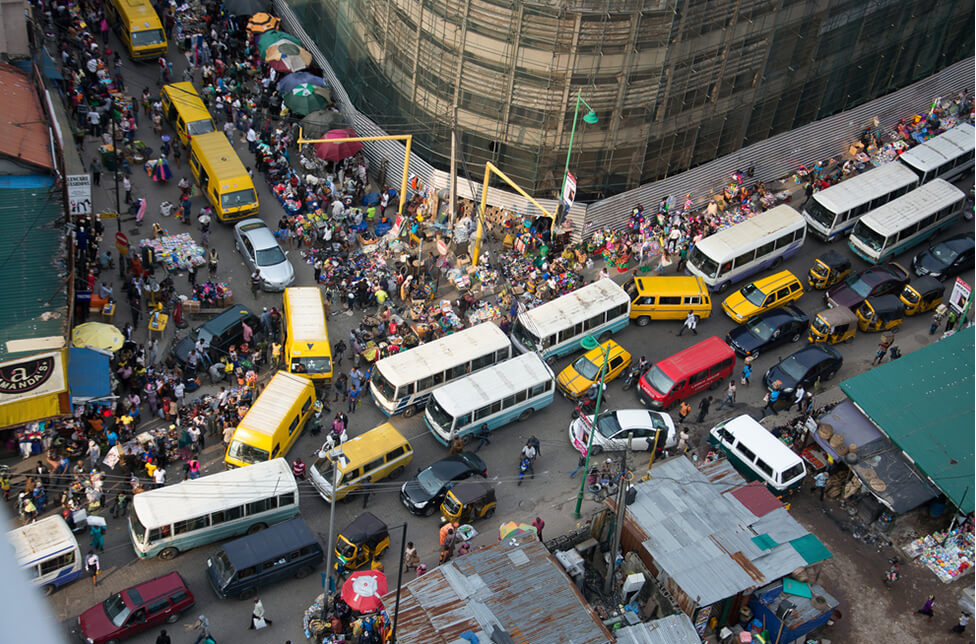
Then people were only afraid of not being able to find daily meals. Those that survive on daily income were the most concerned. The people that could afford to stock up necessary supplies in their houses did so while those that couldn’t, trusted on providence to provide for them. That was the state of the nation when state and federal governments began issuing lockdown orders and started placing security personnel in place to enforce them. Then, the only worries of every average Nigerian was hunger. Today, the worries have surpassed fear of starvation.

The COVID-19 induced lockdown has woken up a lot of sleeping demons. These, in addition to hunger, include inflation, extortion, bullying and armed robbery.

  1. Inflation: The 30th of March, 2020 is a day that marked the peak of inflation in many parts of Nigeria. The prices of goods in the market escalated beyond imagination. For no reason whatsoever, traders increased the prices of essential goods such as food stuffs and toiletries. They knew that people must buy things they will use during the lockdown and decided to use that day to extort buyers of their hard earned money. This hike in prices continued into the lockdown. Right now, the reasons traders give for the price hike is that the lockdown made it difficult and expensive to “import” food stuffs from their producing states.
  2. Extortion: Officers of the Nigerian Police Force, as usual, are using this period to make money. In fact, the traders claimed that policemen are part of the reasons why food stuffs are expensive nowadays. It is said that police mounted roadblocks days before the lockdown commenced and started from that period to extort motorists that want to “cross the border”. Speculation has it that lockdown only works for those that don’t have money to settle the police. However, it is quite unfair that members of NPF should disturb the movement of foodstuffs despite knowing that lockdown should not affect flow of food. Extorting from motorists, especially from traders that bought food ingredients to sell is wrong and should therefore be checked.
  3. Bullying: Several disheartening videos of members of the NPF and the NA bullying people they met on the road have emerged. Some health workers and other people in essential services have narrated their ordeals in the hands of security agents who manhandled them when they, the workers, were on their way to work. These security agents did not bother to verify these people’s given reasons for leaving their homes but rather decided to abuse the power given to them. There are also cases of sick people going to hospitals that were forced to go back home by these security agents. Most of us must have heard of the Warri incident, where a civilian and a soldier lost their lives all in the name of maintaining lockdown order. These attitudes are threats to the maintenance of the lockdown policy.
  4. Robbery: Several cases of harassment, intimidation, extortion, robbery and shoplifting filtered into the news on Saturday, 11th April, 2020. An eye witness of the Abule Egba robbery took to Twitter to narrate how a group of young boys took to the street in broad daylight, shot sporadically, harassed and stole from residents and broke into shops. These people had their field day and later left undisturbed. Some people have linked these robbers to miscreants operating in those areas while some others linked them to people pushed over the edges by lockdown-related hunger. No one can categorically state what caused these young men to go into such an occupation, but what we all are sure of is that in a matter of time, such an act will spread to other parts of the country unless something is done to hold it at bay.

The dilemma Nigeria is facing now is whether the lockdown order should be lifted or if it should be sustained. Lifting the restriction means that COVID-19 will become epidemic in the country and claim as many lives as it could before it becomes contained. But maintaining the restriction means that hunger, inflation, intimidation, extortion, robbery, and many other social vices may go berserk. Put differently, Nigerian government is faced between losing the citizens to death by COVID-19 and losing them to death by the lockdown demons.

The only hope Nigeria has is that it can control the second option while the first one is out of anybody’s control until a vaccine is found. This is just to let the concerned authorities know that they still have a lot of things to do so that the lockdown will not become a nightmare.

Rethinking Covid-19 Lockdowns

0

According to Worldometer, every year, an estimated 290,000 to 650,000 people die globally as a result of complications from seasonal influenza (flu) viruses. The viruses causing flu have been around for thousands of years,  and every year different strains appear as a result of slight mutations taking place in them.They are constantly evolving taking forms slightly different from older pre-existing ones. 

According to the  United States CDC, around 61200  people died as a result of this in the 2018-2019 flu season which runs roughly from November to April in the United States alone. About 42.9 million people were infected between this same period. The flu(COMMON COLD)  is caused by over 200 different viruses including the Human Coronavirus. 

In all of this, nothing was shut down as a result as life moved on as usual. Of course there is an obvious difference between SARS-COV-2 ,the virus which causes Covid-19 and other Coronaviruses including the ones causing SARS, MERS and the seasonal flu. Nobody is disputing that as the case reproduction number R0 which ranges from 1.5 – 2.5 according to WHO for Covid 19, clearly shows ,whereas common flu is 1.3. Don’t forget that chicken pox has got a case reproduction number of about 10 .Still it is important to consider what exactly we are sacrificing and why for COVID-19.

Counting the Cost

Proponents of the lockdown say that doing so saves a lot of lives. These people are professionals and I have no intention to doubt their observations. Still it is important to run a multivariate analysis on how people are affected across different layers of existence so as to ascertain what exactly is going on and who is really affected. 

Consider this for a moment, that COVID-19 has got a 98% survival rate among those tested. Consider also that the majority of those who have the virus are asymptomatic, and as a result never get tested. Factor this in and the survival rate goes up to around 99.5%.

These are not my figures, these are figures from experts from around the world. The significance of this figure is that it helps us to compare how fatal this pandemic is when matched  against other life taking incidents or diseases. 

Let’s for a moment consider the first death recorded in Nigeria as a result of COVID-19 , a man in his sixties who had cancer and was receiving chemotherapy. He also had chronic diabetes. It’s very difficult to say how much of his demise was as a result of SARS-COV-2 or as a consequence of a combination of factors. 

Away from that.Take for instance in Africa, 3000 children die every single day as a result of malaria. 

In Nigeria, an average of 12 persons were killed every day as a result of road accidents in 2019 alone according to data from the Federal Road Safety Corps. 

So then, should we shut down the country or continent until every single mosquito is killed?  or should transportation by road be banned until our roads are safe for humans to ply? 

The chances of a Nigerian or by extension an African dying of COVID19 is far lower than the chances of dying from Malaria ,HIV /AIDS or hunger related complications, and is likely to remain so. Research has shown that there is a direct correlation between poverty and malaria deaths. Poverty makes people  more vulnerable to a lot of things ranging from Malaria, to Maternal mortality to death by malnutrition to AIDS and a lot of other pitiable things. And an obvious fact is that prolonging the lock down will lead to more poverty and hunger both of which are killers in their own clime. 

It would be a very unforgivable mistake for Africa to copy the Chinese/American/European templates in tackling the COVID19 crises for a number of reasons which includes but not limited to the fact that Europe and the rest has got a better social security system and a more effective way of dealing with hunger and that Africa has got a very young population, with a median age of 19.7 years and  60% of the population being aged below 25 years according to the Wikipedia .Then also factor in the fact that the average life expectancy in Africa is far lower than what obtains in the developed nations. All these add up to make Africa Very unlikely to suffer the same complexities the rest of the world has been hit with. 

This isn’t my opinion, this is a fact. The chances of any one dying as a result of COVID-19 diminishes as the age reduces.  

The figures below are from a Worldometer showing the COVID-19 mortality rate as it relates to age.

(80+ years old)14.8% , (70-79) 8.0%, ( 60-69 years) 3.6% ,(50-59 years) 1.3% , (40-49 years) 0.4% ,(40-49 years) 0.4% ,(30-39 years) 0.2%, (20-29 years) 0.2% ,(10-19 years) 0.2% , (0-9 years) no fatalities. 

*Death Rate = (number of deaths / number of cases) = probability of dying if infected by the virus (%). 

Looking at these figures, and then relating it to the fact that the median African age is 19.7 years and that 60% of the populace is below 25 diminishes further the possible severity of the pandemic in Africa. 

Most of the casualties of the lock down induced hunger are going to be children in very poor communities, the same group that has the least likelihood of dying as a result of COVID-19(0% mortality rate between ages 0-9) and these numbers are going to exceed by far any fatalities from COVID-19. 

What matters at the moment ?Is it how many lives saved in general  or how many from COVID-19? 

This is a paradox Africa must solve moving forward. 

Should they sacrifice the youth and children who are likely not going to die of COVID-19 to save the old and aged who are more predisposed to it? 

Could there be anything worse for Africa than 3000 child malaria deaths daily or the possibility of this figure rising due to hunger? 

Hardly! 

Recommendations

  1. Since going by available data children (0-9 years)  are theoretically safe from COVID-19 complications, it could be advised that they go back to school to be taught by  mostly young teachers.
  2. Since young people have between 0.2-0.4% probability of dying from COVID-19 complications, it could be recommended to send them back to work with adequate sanitary measures followed, PPE’s and social distancing techniques, while the elderly are advised to stay back. 
  3. People in categories 1 and 2 with any pre-existing health condition should not be included as COVID-19 hardly kills any healthy individual.This does not imply that pockets of deaths have not been recorded amongst healthy people.
  1. Since going by available statistics, women are less likely to be victims than men, a modality should be worked out temporarily to get more of them involved in essential services back to work. 
  2.  Sanitizers should be available in all public places, and social distancing should be maintained.

In the end it boils down to doing whatever it takes to save more lives as the emphasis should be on numbers. 

Follow Me Here On LinkedIn

0

Good People, LinkedIn has provided a great platform to co-learn, co-share and impact professionally on people. If you are reading me and not a FOLLOWER or direct connect, I ask you to click FOLLOW. (You cannot Connect at the moment as I have exceeded the 30k limit, just click FOLLOW). Thank you.


Economy, Finance, Business News Headlines & Insights: 14th April 2020

0

Oil Market Update:

‘Having been involved in the negotiations, to put it mildly, the number that OPEC+ is looking to cut is 20 Million Barrels a day, not the 10 Million that is generally being reported. If anything near this happens, and the World gets back to business from the Covid 19 …’ President Trump

President Trump’s tweet was corroborated by Saudi Arabia’s energy minister, Prince Abdulaziz bin Salman, in an interview with CNBC. Though, what’s widely reported is 9.7 million bpd, there are other agreements and voluntary commitments to cut production in the coming months until it gets to around 20 million bpd.

The twenty million bpd production cut is historic and significant because it’s closer to what commodity experts say is required to sop up excess crude flooding the market, address the destruction of demand caused by the COVID-19 pandemic and position oil prices for stability in the coming months.

The cut is a major boost for oil-producing nations like Nigeria, it will boost our revenue, provide some assurance around our foreign reserves and stability of the Naira. The cut also officially ends the price war between Saudi Arabia and Russia that flooded the world with unneeded crude and amplified the crash in oil prices.

On the flip side, since subsidy has been removed, a sustained increase in oil prices will surely lead to an increase in pump price of fuel in Nigeria…’let’s wait and see’.

Stock Market Update:

Nigeria’s equity market is off to an early gain, currently up by 0.47%, FTSE (UK) – down by 0.38%, DAX (Germany) – up by 1.05%, CAC 40 (France) – up by 0.23% and Nikkei 25 (Japan) – up by 3.13%.

Click on the link https://bit.ly/2XrvIf9 to open a stockbroking/share purchase account and trade within 24 hours.

Money Market Update:

Our money market fund is still open and yield is currently over 11.5%, reach out to our team to grow your cash. We are digital, we are working from home, we are online and we are active. You can also do deposits with us at a starting rate of 10%.

See below for more news headlines.

Headlines:


Debt service to revenue ratio rises to 48%
The revision of the 2020 revenue framework has raised the Federal Government’s debt service to revenue ratio from the initial 29 per cent to 48 per cent. The Executive last Wednesday sent a revised 2020 budget proposal to the National Assembly following a drop in crude oil prices caused by the impact of the coronavirus pandemic. Read more
Crude cuts: Nigeria to earn $10.61bn in eight months
Nigeria may earn about $10.61bn from crude oil sales between May and December this year following latest decision by members and non-members of the Organisation of Petroleum Exporting Countries to cut production. Also, the country will earn about $22.74bn from crude oil between January 2021 and April 2022 going by the volume of crude oil curtailment to be implemented by Nigeria during the 16-month period, as agreed by OPEC+. Read more
IMF excludes Nigeria from 25 nations granted debt relief
The International Monetary Fund has granted debt relief to 25 countries, mostly African nations excluding Nigeria. A statement by the Managing Director of the IMF, Kristalina Georgieva, said it would provide $500m in grant-based debt service relief to these countries. Read more
Oil rises amid hopes for quick decline in U.S. shale output
Oil prices rose more than 1% on Tuesday after the main U.S. energy forecasting agency predicted shale output in the world’s biggest crude producer would fall by the most on record in April, adding to cuts from other major producers. The Organization of the Petroleum Exporting Countries, along with Russia and other producing countries – known as OPEC+ – agreed over Easter to cut output by 9.7 million barrels per day (bpd) in May and June, equal to about 10% of global supply before the viral outbreak. Read more
Oil hovers around $31 despite OPEC+ cut deal
The international oil benchmark, Brent crude, wobbled on Monday, despite the historic oil production cut deal sealed by the Organisation of Petroleum Exporting Countries and its allies on Sunday. The OPEC, Russia and other countries agreed on Sunday to cut output by 9.7 million barrels per day in May and June, representing about 10 per cent of global supply. Read more
Dollar slips as Chinese trade data brightens mood
The dollar slipped on Tuesday and the Australian dollar led a rally in riskier currencies as China’s trade data painted a less gloomy picture of the coronavirus’ economic fallout than markets had feared. China’s March exports fell 6.6% from a year earlier, compared with a forecast for a 14% drop and imports fell by less than 1%, compared with a 9.5% drop anticipated by economists. Read more
Latest on the spread of the coronavirus around the world
More than 1.88 million people have been reported to be infected by the novel coronavirus globally and 119,168 have died, according to a Reuters tally, as of 0200 GMT on Tuesday. Read more
Trump Says Decision to Restart U.S. Economy to Be Made ‘Shortly’
President Donald Trump asserted in a tweet Monday that the decision to restart the economy was solely his and that such a decision will be made “shortly”. “It is the decision of the President, and for many good reasons” and not that of local officials, Trump tweeted. Read more

Corporate Disclosures:
Union Bank Nigeria Plc – Dividend Information for 2019 AFS
Union Bank of Nigeria Plc hereby announce as follows: A Final Dividend of N0.25k for every 50 kobo ordinary share, subject to appropriate withholding tax and approval of shareholders at the next Annual General Meeting will be paid to shareholders whose names appear in the Register of Members as at the close of business 24th April 2020. Read more


Fidelity Bank Plc – Notice of Board Meeting and Closed Period for 2020 Q1 Accounts
Fidelity bank has announced that its board of directors will hold a board meeting on Thursday, 24 2020 to consider and approve the bank’s unaudited financial statement for the first quarter of the 2020 financial year. Read more