DD
MM
YYYY

PAGES

DD
MM
YYYY

spot_img

PAGES

Home Blog Page 6392

Covid-19: Nigeria’s Looming Hunger Crisis

2

It is no surprise that farmers, meat producers, and other players in the agricultural space can neither find buyers nor procure inputs for production amid the pandemic. This phenomenon can be easily traced to the lockdown and uncoordinated nature of the industry’s supply chain.

I was on a call with my dad the other day, he is a trained veterinary doctor and runs a fishery and piggery in Imo state. He lamented on how it has become difficult to get the feed the animals required and how if this lingers, he may be forced to euthanize a good number of them to reduce the burden of feeding and sell some others as prices have dropped.  

This phenomenon is currently playing out in the different segments of the industry, affecting the entire value chain. The restriction of movement has impeded farmers from farming, and food processors from processing without fear, as well as a potential shortage of farm inputs, which could affect food production.

Nigeria’s agricultural sector is made up of predominantly smallholder farmers (circa 80%) – they usually own small plots of land of less than a hectare, on which they grow one or two crops at micro and small levels. The sector contributes 25% to Nigeria’s Gross Domestic Product (GDP) and accounts for 48% of the labour force. The sector’s growth rate over the last 5 years averaged 4%. Crop production dominates the sector, accounting for 22.6% of GDP alongside livestock (1.7%), fisheries (0.5%) and forestry (0.3%).

In the last five years, government has devoted a lot of energy at deepening the industry, with an initiative like the Anchor Borrowers Programme (ABP), ban on the importation of some agro commodities and the shutting down of its land borders, all without addressing fundamental issues of mechanisation, irrigation, seeds, extension service, insurance, research and development, among others.

As the reality of the impact of COVID19 hit the economy, coupled with the crash in the price of crude oil, the Central Bank of Nigeria’s (CBN) Governor, Godwin Emiefele, in a recent report titled, “Turning The COVID-19 Tragedy Into An Opportunity For A New Nigeria”, said in line with the vision of President Muhammadu Buhari, the apex bank has created several lending programmes and provided hundreds of billions to smallholder farmers and industrial processors in several key agricultural produce.

The looming crisis:

Fall in Production: The lack of inputs for existing producers in various segments of the industry such as seedlings and fertilizers for the crop growers; cattle and poultry feeds or fingerlings for meat producers, among other inputs will greatly affect overall production. With a domestic production gap pre-COVID19, a further decline will lead to shortages and thereby causing a rise in price of the available produce. For a population that has experienced declining earning and purchasing power due to the pandemic, a rise in price will lead to more hardship and poor nutrition.

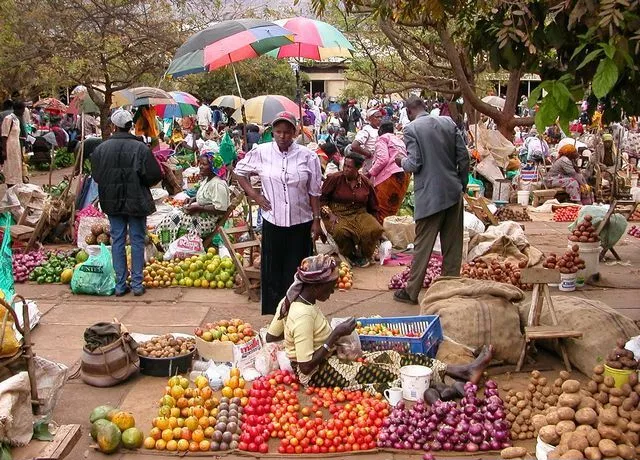
Increased Wastage: It may appear counterintuitive to say there will be a fall in production and then wastage. This isn’t far-fetched as the produce available cannot easily get to markets and store shelves due to the restrictions placed by the Federal and various state governments to curb the spread of the virus. The Nigeria agricultural value chain has an inter-dependent nature, where production can be done in one geopolitical zone, with the target markets being in another. This can be seen in the case of cattle and vegetables, which come predominantly from the Northern region to the rest of the nation.

With lack of access to the market, farmers will be forced to either sell-off their ready produce at give-away prices, donate the excesses to charity organizations or watch them spoil if they are perishable. 

Increased Unemployment: With the lack of inputs, fall in production and ultimate decline in revenue or its total obliteration, farmers and numerous players along the value chain will close down shop as business will struggle, leading to their employees being laid-off, with no alternate source of livelihood. Knowing this segment barely has enough to live by and having savings to fall back on is a luxury they don’t have; the threat of increased risk of depression and other health-related risks cannot be overemphasized. The ripple effect of job loss alone is enormous.

What needs to be done

The ravaging pandemic has offered Nigeria a unique opportunity to organize the agricultural supply chain. The food supply chain, which is the system that takes food from farm to fork through production, processing, distribution, and consumption, can be designed more efficiently and made robust. The development of such a highly effective supply chain is dependent on the level of cooperation and coordination between existing private players.

Other key solutions include:

  • The Expansion of the Essential Service List and Adequate Sensitization of Lockdown Enforcement Agencies: The current list of essential services as designated by His Excellency, President Buhari, includes food processing, distribution, and retail companies. It is equally important to include food production to the list. The sensitization of the various enforcement agency on the need to grant free passage to logistics companies carrying produce across states is key. I understand the risk of inter-state transmission of the and propose that the relevant health agencies work with the ministries of agriculture and transport,  to produce a common health-code that will guide the transportation and distribution of produce across the nation, to curb the spread of the virus and possible contamination of produce.  
  • Ecommerce Operations Expansion and Improved Partnerships with Experts:  Creating access to finance and a ready market are great advantages firms such as Thrive Agric, Farmcrowdy, PorkMoney and Kerekusk Rice, among others have brought. However, for us to effectively fill the gap, productivity needs to be emphasized, as Nigeria continues to suffer low levels of agricultural productivity due to infrastructural deficit and practice of obsolete farming methodologies across the country. “Data from the Food and Agricultural Organisation (FAO) shows that Nigeria has the least average yield per hectare of five selected crops, among its African peers like Ghana, Kenya, South Africa, and Ethiopia”. This boost in the face of the pandemic can be achieved through partnership with indigenous experts, such as IITA and PRODA Enugu, among others, for quality seedling and other inputs, supply of locally fabricated equipment as importation isn’t an option at this time, as well as adequate training of farmers.
  • State-Led Initiatives: It is time state governments stop playing second fiddle in the development of the nation. They have more power and influence than they choose to admit or care to utilize. I saw a report of an initiative by the Cross-River state government in producing and distributing rice seedlings initiative. This is being done, even as the threat of the pandemic spreads towards their state. State governments can also develop and implement targeted policies to encourage the small farm owners and other players to keep production level steady, through but not limited to special grants and input supply.
  • Establishment of Make-Shit Markets: Knowing that not all Nigerians are tech savvy or have a smartphone to order their needs online, it is important to consider the “off-grid” population.  I suggest a review of the lockdown order, to create better access to essentials in a safe environment by creating make-shift markets, under the supervision of the state for absolute compliance from all. This can be modelled to be neighbourhood-centric, to reduce over population and further spread of the virus.

Yes, the pandemic is deadly, so is hunger. We all- Government, Private sector and citizens- need to work together to weather this storm. Nigeria 

References
(NIPC), Nigerina Investment Promotion Commission, 2020. NIPC. [Online]
Available at: https://nipc.gov.ng/opportunities/agriculture/
BusinessDay, 2020. Businessday. [Online]
Available at: https://businessday.ng/agriculture/article/prospects-challenges-of-nigerias-agriculture-in-2020/
[Accessed 2020].
Eje, U., 2020. The Guardian. [Online]
Available at: https://guardian.ng/opinion/driving-sustainable-growth-in-nigerias-agricultural-sector-2/
[Accessed 20 April 2020].
Okojie, J., 2019. BusinessDay. [Online]
Available at: https://businessday.ng/agriculture/article/nigerias-agriculture-59-years/
The Nation, 2020. The Nation. [Online]
Available at: https://thenationonlineng.net/COVID-19-need-to-avert-the-imminent-food-crisis/
[Accessed April 2020].

Nigeria’s Oil Developmental Breakeven Point is $133 Per Barrel

2
Nigerian children attend independence day celebrations in Lagos in October 1, 2013. Nigeria's president Goodluck Jonathan said he had formed a panel tasked with laying the ground for a national dialogue to tackle contentious issues such as religious tensions and the sharing of oil wealth during an address marking the 53rd anniversary of Nigeria's independence. AFP PHOTO/ PIUS UTOMI EKPEI (Photo credit should read PIUS UTOMI EKPEI/AFP/Getty Images)

I wrote a piece a few minutes ago where I quoted a Wall Street banker, noting that Nigeria’s break-even point for oil, is $133 per barrel. Some people have asked questions via comments. Let me throw more lights on that number.

Nigerian generates about 60% of its revenue from Oil and 90% of foreign exchange. Nigeria is generating massive losses for every barrel it produces. Nigeria spends 4X as much money subsidizing fuel as it spends on schools, healthcare, etc. Nigeria’s breakeven is at $133 per barrel! Cost to produce is about $17 per barrel. Millions of barrels are sitting around unsold. Nigeria is losing $35M a day in unsold inventory. Country debt stands at $84B,  and 2/3 of its revenue goes towards servicing it, and China holds the majority of it through bilateral agreements.

The $133 per barrel break-even point is the number for Nigeria to get any sustained value in oil. Some banks  model fraud, leakages, subsidies, opportunity cost, loss of value of assets, etc to arrive at that. That is different from the typical break-even point for accounting ( the point at which total cost and total revenue are equal, i.e. “even”). This one focuses on developmental economics of commodities which tracks opportunity costs lost.

So, you can produce at $17 crude oil, sell it at $30 but import it back via 4-6 different products with massive subsidies, steal some parts of that $30, refuse to invest some parts of that $30 for the future, etc, they think you need to sell at $133 to breakeven on that stupidity to compensate! It is different from typical accounting where selling at $30 could deliver breakeven, after adding other costs to the cost of production. That accounting breakeven does not include the future opportunity costs of that lack of visioning which has characterised Nigeria for decades. The developmental breakeven captures that!

 Simply, unless we sell at $133, oil cannot save Nigeria’s future.This number saves you from all wastes before the oil wells drop, using estimated reserves and when they will run dry. If you are not selling at $133 per barrel now, oil has not served you!

https://www.tekedia.com/nigeria-could-go-bankrupt-like-venezuela/

Tekedia Institute Appoints Results Institute As Regional Partner for Southern Africa

0
South African flag

Good People, I am very happy to announce that we now have a local presence in Southern Africa to make it easier to connect with innovators and co-learners in the Tekedia Mini-MBA. South Africa and the broad Southern Africa brought some of the largest members in our current program. So, when @Sifiso wrote to us that he would like to establish a local company that would focus on expanding our works in the area, we were thrilled. He dropped that email with a keyword, “Fantastic” training. He is a current member, and this are his words.

Another great insight by Ndubuisi Ekekwe. He keeps them coming fast. Many of us miss the significance of stories that make the news headlines. For the past few years, I have followed Ndubuisi (even digging up some of his old articles). Everything tech globally and in Africa is treated with same incisive analysis and broken down as it happens.

This year, it has been a privilege to be in the mini-MBA he is running through his Tekedia Institute (USA). Weekly case studies based on current events and the underlying strategy constructs have made it easy to understand the rise and fall of technology-based businesses.

Given current trends, I am glad I took the decision to follow and enroll in the mini-MBA. Friends interested in joining the next course (22 June to 22 October 2020) can explore the course and contents at https://results.institute

Ladies and gentlemen, the payment issue is solved and fixed, Results Institute Continuing Education is approved to collect payments as a Regional Partner (Southern Africa) for Tekedia Institute.

Once Covid-19 passes, I would be visiting Cape Town and Johannesburg as usual to continue what we do therein. South Africa has always supported my works, baptizing me as a “Doctor of Innovation” after a well received program for bank leaders in Africa’s most advanced economy.

If you are in Southern Africa, Results Institute can answer any question you may have on Tekedia Institute. It is working in Zimbabwe, South Africa, etc linking governments, corporations, startups, etc for Tekedia Mini-MBA. Visit the site here – https://results.institute/

https://www.tekedia.com/mini-mba-2/

Why You Need Consistency!

0

Getting an audience is hard. Sustaining an audience is hard. It demands a consistency of thought, of purpose and of action over a long period of time.”Bruce Springsteen

Consistency is a special commitment we make to accomplish a goal. It refers to the progressive steps taken to meet specific targets. Every great person or institution that is renowned became influential as a result of the steady steps taken on a daily, weekly or monthly basis.

Consistency does not deliver instantaneous results; instead, it requires discipline, dedication and determination.

Sometimes, nobody may want to pay attention to what you are doing, but as long as you are doing something the right way, without giving up, you will succeed. There are times when you might feel discouraged. You may want to compromise your standards or even give up on your dreams. However, consistency tells you to be patient, and to persevere. There are people that will cherish your work, and your services. These people are your loyalists , and if you are consistent, they will be your public relations officers, as they will throw in some good words for you in your absence. You may be framed by your competitors, or malicious rivals. However, if you are consistent, your good works will stand the test of time, and will speak for you.

Some time ago, I began a small business. The first day I went to distribute my goods, I heard all manner of discouraging words from my potential customers. To them, a graduate should not engage in such ventures. Although I understood why they found it difficult to believe, I also knew that I wouldn’t engage on such a scale for a long time. I ensured that my customers knew me, through quality goods and an awesome customer experience. I kept on going until almost everyone had become my customer. I made sure my customers’ needs were always met, as I always delivered as promised. There were times I went the extra mile to ensure that I delivered. And of course, it paid. Not only did I see an increase in my earnings, I also had a larger chunk of the market share in my niche. It was during that time that someone recommended me for a job in Abuja – Nigeria’s Capital. How did this happen? I was consistent.

Consistency teaches you to do the little things you can with confidence and joy, knowing that there will be a harvest time.

The mistake most people make is that they expect to reap the same day they sow. In most cases, this doesn’t happen thereby making them lose patience, and to retract” ~ Godswill Ekwughaonu


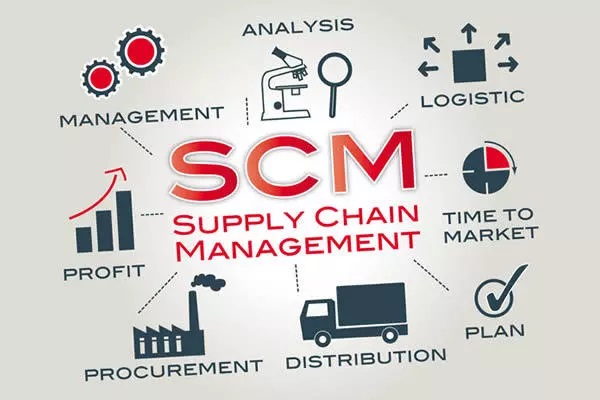
Tekedia Mini-MBA – New Sessions, and MIT Expert for Supply Chain Management

0

Good People, we have added the following sectors under Sector Innovation and Focus for the second edition of Tekedia Mini-MBA: Logistics, Ecommerce, Fintech, EdTech, Agtech and HealthTech. Only Founders or CEOs of related startups would facilitate them. Meanwhile, an MIT expert on supply chain management will handle a session on Effective Supply Chain Management. Our updated courses and faculty are available here.

https://www.tekedia.com/mini-mba-2/