DD
MM
YYYY

PAGES

DD
MM
YYYY

spot_img

PAGES

Home Blog Page 6399

Economy, Finance, Business News Headlines & Insights: 15th April 2020

0

Stock Market Update:

The stock market appears to be the only source of comfort for Investors at the moment, it’s where the real palliative is in abundance. Yesterday, we reported that the market had recovered over N630 billion for Investors in the last 4 trading days, what a palliative!

Again, Nigeria’s equity market is off to an early gain, currently up by 1.52%, that’s massive for an hour plus 30 minutes of trade. FTSE (UK) – down by 2.06%, DAX (Germany) – down by 2.12%, CAC 40 (France) – down by 2.06% and Nikkei 25 (Japan) – down by 0.45%.

Click on the link https://bit.ly/2XrvIf9 to open a stockbroking/share purchase account and trade within 24 hours.

Oil Market Update:

Since the agreement of OPEC+ and other oil producers to cut oil production significantly, oil prices have not impressed as expected. The effective month of the agreement is May, as a result, Saudi and other major producers have left their tap opened to enable their oil flow into the market at heavily discounted prices. We expect this trend to continue at least till May.

Until then, most of Nigeria’s oil cargoes may remain stranded at sea looking for buyers at prices they can’t compete with Saudi & co., instability in reserves will persist and the fear of the next round of devaluation will continue to take refuge in our minds.

Money Market Update:

Our money market fund is still open and yield is currently over 11.5%, reach out to our team to grow your cash. We are digital, we are working from home, we are online and we are active. You can also do deposits with us at a starting rate of 10%.


See below for more news headlines.

Headlines:
Nigeria shouldn’t expect oil price rebound soon — Experts
Nigeria should not expect to see a significant increase in crude oil prices anytime soon despite the production cut deal by the Organisation of Petroleum Exporting Countries and its allies, industry experts have said. The international oil benchmark, Brent crude, fell by $1.78 to $29.96 per barrel as of 5.50 p.m. Nigerian time on Tuesday. Experts, who spoke with our correspondent in separate interviews on Tuesday, said the cut was not enough to prop up prices as supply glut remained in the market. Read more
Nigeria’s economy will contract by 3.4%, says IMF
The International Monetary Fund on Tuesday said the recession caused by the COVID-19 pandemic would be the worst economic downturn witnessed since the Great Depression. According to the IMF, Nigeria’s economy will contract by 3.4 per cent in 2020, but rebound with 2.4 per cent growth in 2021. Read more
60 Nigerian oil cargoes unsold despite price cut
A total of 60 Nigerian crude oil cargoes have not been sold despite the reduction of the official selling prices by the Nigerian National Petroleum Corporation. A glut of Nigerian and Angolan crude weighed on the market on Tuesday with demand from China slower than in the last few weeks, Reuters reports. Read more
80,000 apply for CBN’s N50bn COVID-19 intervention fund
Three weeks after the Central Bank of Nigeria released the guidelines for the N50bn targeted credit facility, over 80,000 applications have so far been received from businesses and individuals. The Managing Director, NIRSAL Microfinance Bank, Mr Abubakar Kure, confirmed this during a media briefing in Abuja on Tuesday. Read more
Latest on the spread of the coronavirus around the world
More than 1.97 million people have been reported to be infected by the novel coronavirus globally and 128,445 have died, according to a Reuters tally as of 02:00 GMT on Wednesday. Read more
Trump cuts WHO funding over coronavirus, global death toll mounts
U.S. President Donald Trump on Tuesday halted funding to the World Health Organization over its handling of the coronavirus pandemic, drawing condemnation from infectious disease experts as the global death toll continued to mount. Read more
Oil climbs on bargain-hunting, hopes for purchases for reserves
Oil prices climbed on Wednesday, bouncing back from the previous session’s large losses, as investors looked for bargains and supported by hopes that consuming countries will look to fill their strategic reserves. Still, worries about oversupply amid global coronavirus-related lockdowns and a warning from the International Monetary Fund (IMF) about a deep recession kept gains in check. Read more
Asia shares take a breather, China cuts medium-term rates
Asian share markets took a breather on Wednesday as warnings of the worst global recession since the 1930s underlined the economic damage already done even as some countries tried to re-open for business. China moved again to cushion its economy, cutting a key medium-term interest rate to record lows and paving the way for a similar reduction in benchmark loan rates. Read more
Dollar held back on virus hopes, yuan down after rate cut
The dollar nursed losses on Wednesday as investors cautiously stepped into riskier currencies after U.S. President Donald Trump edged toward rolling back some restrictions put in place to contain the coronavirus outbreak. The greenback also remains under pressure following heavy measures by the Federal Reserve to boost dollar supply, though analysts say it is too early for a full-scale retreat from safe-havens with the public health threat not yet fully contained. Read more

Corporate Disclosures:

Divestment of Holdings: FBNH hereby notifies the market, in line with the Group’s strategic objectives, that it has commenced discussions with Sanlam (PTY) Limited (owners of the 35% equity of FBN Insurance Limited), with a view towards selling 65% holdings to Sanlam. Read more

Fidelity Bank Plc – Notice of Board Meeting and Closed Period for 2020 Q1 Accounts
Fidelity bank has announced that its board of directors will hold a board meeting on Thursday, 24 2020 to consider and approve the bank’s unaudited financial statement for the first quarter of the 2020 financial year. Read more

How Know COVID-19 Nigeria is Saving Public from Spreading Coronavirus and Infodemic

0

Before the emergence of Coronavirus as a global pandemic, people in Nigeria and other countries have had and still having bad experiences regarding misinformation and fake news from a number of sources such as social media and professionals in the mainstream media who do not regard ethics of journalism as imperative for disseminating information that enhances personal and societal development. 

In line with this, “Know COVID-19 Nigeria was established to ensure the provision of adequate, relevant, reliable and relatable information, debunk fake news and provide safety, health and precautionary tips that could help people stay safe, informed and protected.”

According to the report from the organisation, issued by one of the Co-Founder,  Abdulhakeem Abdulkareem, “Fighting fake news goes beyond putting red flags, it is about ensuring the right information gets to the people.”  In this regard, the organisation has been using a number of platforms to disseminate undiluted messages about the virus to the public and concerned stakeholders leveraging verified sources such as the National Centre for Disease Control. 

With over 100 volunteers from different fields of disciplines, more than 30 fake news have been debunked  in the form of audio, videos, pictures and written posts. The report says the government is optimistic about stopping the spread of the virus, while citizens have been supportive since the first case was reported on February 27, 2020 in Lagos, the commercial centre of the country. 

“We noticed some uncorrelated data in NCDC Database and alerted the centre but no action was taken. For example, the Governor of Oyo State, Mr Seyi Makinde, announced that he has tested negative to the virus on 06 April 2020. However, the NCDC database recorded zero (0) recovered cases in Oyo state as of 07 April 2020. NCDC acknowledged our email but did not reveal any intention of taking action. We are, however, watching the situation closely,” the report says.


Read full report here

Africa’s Covid-19 Moment

0
AU

Because of Covid-19, America will revamp its healthcare system, Western Europe will push for new vistas on human welfare and Japan will strengthen how its industries work. Yes, Covid-19 will possibly give the U.S. a ticket to rebuild its infrastructure, as it looks for ways to quickly jump start and re-grow its economy. Indeed, the world will not miss this moment, which even though extremely unfortunate, has come!

Hospitals gets their wish: $100 billion

What they got: Health care providers would secure $100 billion in grants to help fight the coronavirus and make up for dollars they have lost by delaying elective surgeries and other procedures to focus on the outbreak. They would also get a 20 percent bump in Medicare payments for treating patients with the virus.

[…]

Telemedicine investment: $200 million

What they got: The Trump administration would get $200 million for boosting Skype-style health checkups by investing in services and devices that help health care providers connect remotely with patients.

in this piece, Temitayo, writes that Africa must not miss the Covid-19 opportunity. Who could have believed that rich men can stay home to use local hospitals? An abomination a few months ago, but we have had governors who were touched and treated by “local” doctors, and they are well! Who could have imagined that all the politicians with fraud related legal problems are suddenly healthy, and none of their lawyers have asked the courts to grant them permissions for medicals in Europe or the U.S.?

People, there is an opportunity here – to rebuild our healthcare, schools, etc, and engineer a restoration in Africa. We must not miss the moment, no matter how the push is coming!

COVID-19: An Opportunity for Africa

COVID-19: An Opportunity for Africa

0

COVID-19 has not only created a health crisis; it has metamorphosed into an enormous economic situation that will have far-reaching impact now and even in the long term. It has exposed the weaknesses in the world’s systems we have grown to trust, testing the very fibers of globalization and its essence, and forcing leaders to have a rethink about what matters most and why. 

Since the worldwide outbreak began in February 2020, it has literally brought global productivity to a halt, with collective efforts focusing significantly on survival measures. A number of organisations have had to quickly transform their manufacturing outlets into fit-for-purpose production lines for COVID-19 medical equipment or protective kits such as masks, alcohol disinfectants, gloves etc. Even hotels have stepped up to provide their spaces as makeshift hospitals to bridge the gaps created by inadequate medical facilities.

In parts of Africa, there’s an additional layer of security challenges emanating from youth unrest. Africa is the youngest continent, having about 80% of its population less than 35 years old with over 50% of them being unemployed or underemployed. While there are many underlying factors to blame including youths themselves, in reality, this translates into the fact that there are able-bodied young men and women, most of whom are willing but unable to maximize their potential mostly due to lack of, and access to opportunities.

In Lagos, one of the most vibrant cities on the continent, prior to the outbreak of the pandemic, a number of these young fellows wake up in the morning and head to the streets for ‘collection’ from public transport players: cab and bus drivers, tricycle riders and motorcyclists. They act as quasi modern-day tax collectors, who harass these players and are often blamed for the hike in prices. 

Additionally, a lot more do daily menial jobs from which they get something to ‘carry hold body’ (to keep body and soul together). They leave in the morning with just the transport fare to get to their place of business and some cannot even afford a meal until they have made their first sale of the day. Since they hardly make enough money to even sustain their basic lifestyles, there’s often no savings left. Did I hear you say investment?

Again we have the young entrepreneurs who are trying to build something across sectors. Many have realized that there are no jobs hiding anywhere and that an engineer can actually be a great tailor. Some are in the tech space hoping to hit the next Airbnb-kind-of-idea, or become the next Mark Zuckerberg. A few have gotten some investment and exposure here and there. However, the story remains the same: young Africans generally feel betrayed and somewhat helpless, lacking opportunities and access to capital, and those in Lagos are not left out of this dilemma. 

With the initial two weeks stay-at-home directive by the government, there were already murmurings about the inability of different groups of people to cope. The government announced some relief packages to be distributed to the most vulnerable but as expected, this will hardly suffice. By the last week of the directive, some young chaps had started taking advantage of the situation to help themselves through criminal activities. The spate of armed robbery attacks had gone up, with communities and streets reporting invasions by groups of 200 or more coming in single attacks.

Now that the Federal Government of Nigeria has issued an additional two weeks of extended lockdown directive, one will begin to wonder what new turns the security challenges will take, and how people will cope without savings and no new business from which to earn money. Without discounting the Federal Government’s announcement of plans to expand the relief support to more households, if there were already significant turbulence in the first two weeks, how will we manage the next two weeks, bringing the stay-at-home to one full month? 

Of course, as a matter of urgency, just as many people have cried out, the expectation is that the government will put more effort into security of lives and property this period. As with the COVID-19 hotlines, security hotlines need to be working effectively at this time. If not handled properly, breaches in security will eventually affect the social distancing rules and cause a total breakdown of health and order.

However on a long term view, the government and indeed all key players including the private sector, civil society and academia will need to develop innovative approaches towards Africa’s sustainable development. Drawing from the Milken Institute’s Prosperity Formula, the development strategy must focus on four focal elements: human capital, social capital, real assets and financial innovation.

Coming right from the continent are organisations such as Mo Ibrahim Foundation, LEAP Africa, Co-Creation Hub, WeForGood International and many more that have stepped up to play their part. For example, WeForGood International, an innovative tech company that brings people together to act on causes they care about, launched the Sustainable Solutions Africa Project in 2019. Through this project, the organisation provided coaching, training and funding to young entrepreneurs who in turn impact over 500,000 people. 

While these are great, there is more to be done for significant impact to be made on the continent. More than anything else, the governments must provide an enabling environment for innovation to thrive. Directly tied to this is the need to set policies in place that allow for positive exploitation of human capital, social capital, real assets and financial innovation in a way that ensures predictable prosperity. 

The outbreak of the COVID-19 pandemic presents our continent with an opportunity to rethink our place and strategy, with the realization that a prosperous Africa is not only possible and good for this generation and for those yet unborn, but it is essential for our sustainability as a people in every sense of the word. 

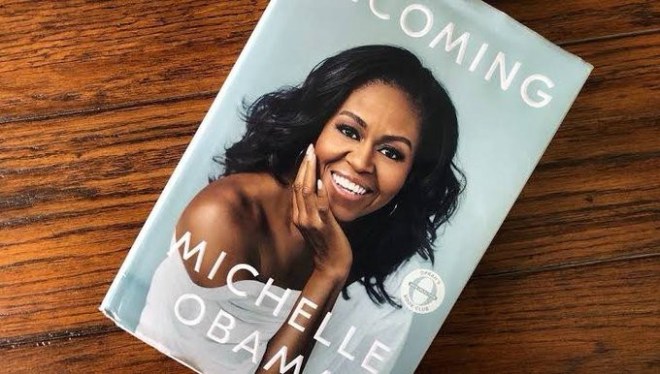
Becoming – A Deep Review on Michelle Obama’s Book by a Young Nigerian Female Educationist

0

I have always opined for people to take up reading as a hobby. Probably because I am an Educationist, people feel intimidated by my proposals for reading books. Well, I am not the only one proposing books or reading materials, there are other folks who are doing great at this.

On March 31, 2020, I had opined that the book by the former First Lady of the United States (Michelle Obama), was a groundbreaking book for anyone to actually read. If you missed my tweet on that, click here to see what I had earlier tweeted.

As you well know the lock down has been extended in various countries globally as everyone continues to battle the silent enemy; CODVID-19. In Nigeria, the lock down has been extended in a drastic measure to curb the spread of the virus. During this time in Nigeria, there is hardly stable electricity and the citizens (commoners) are finding it difficult to find relief as hunger, and crime rates are really high.

You might ask yourself (as you’re lying down), if this is the best time to read a book? My answer is, Yes! This is a great time to sober reflect and learn new things

Amarachi Emmanuella Azubike, courtesy of Facebook.

A young Nigerian female leader who goes by the name: Amarachi Emannuela Azubike, did a deep insightful review of the book – Becoming. It was written by Michelle Obama and it has received tons of review. But why is her own review special (at least to me)?

Let’s go inside her full thoughts on this.

“In all of these lock-down, with a little moment off social media, I had voraciously read every piece of content and book I could lay hands on including “Becoming” Michelle.

I was to find out that my beginning wasn’t much different from that of Michelle in Euclade avenue though in a more localized setting amid a jungle where the weak got eaten up by the strong.

Consuming each page of this book, I fell more and more inclined with the 9 year old Michelle, how she had felt living with her family in an all black district where a lot of whites were emigrating from.

It reminded me of family, school, and those check boxes you never get to finish ticking and the questions of whether you’re enough constantly niggling you until you’re older than 30 with each feat and accomplishment making you feel impressed with yourself and then another obstacle posing same question and the cycle repeat all by itself, again and again.

For a young girl, there was the yearn to maintain the approval of family, friends and relative, impressing them in all she did ranging from the course she studied in school to her lifestyle generally, giving thoughts about what people would think about her and allowing it to become a part of who she was.

It’s a pressure we all get too comfortable with, like you’ve gotten placed high up there and must exist in a certain way so you don’t fall the hands of people looking up to you, or rather, looking out for you.

I’ve always loved planning and a little more pessimistic than I pretend not to be, and just like Michelle, I made plans and plans and plans before I eventually carried them out. I kept ticking those imaginary check boxes all the time, not wanting to at any moment make any mistake or slip my foot. I paid attention to details and being a long-term thinker, if it doesn’t feel like it, I dumped it right away.

Unlike Michelle though, I didn’t have a boyfriend at 17. I never had one even during university, and even though at some point I felt I should consider it, those check boxes starred at me all the time. I had a lot on the list to do, and I’ve not reached the part of having a man.

When I had an idea, I’d think it over and over, weighing all the sides until whatever emotions/enthusiasm I should have had dies alongside it.

Am I enough?

Back in school, even though most people considered me a hyper, the question was there.

Few months into tech and the question was there.

Before I spoke at an event, it was there.

Before I applied for a job/scholarship, It was looming.

And somehow, it never ever goes away.

It was there as Michelle tore through Whitney college, sprinted through Princeton University and aced. It was there when she at 25, had graduated from law school and worked in a high profile law firm in Chicago.
It was there more than ever when she struggled through loosing her dad, dealing with the dissatisfaction her job gave her and a confusion as to whether to quit or not. As her to-be husband Obama, gently nudged her about “what her passions were”.

There, as she quit her job at the law firm and took a job with Chicago commissioners office, down to when she passed through the hectic job of trying to balance working and being an absolute mother and the stress of having a not-at-home husband.

Her dislike for politics because of what it was doing to her home made her hesitant in consenting to her husband’s running for presidency in 2004. She’d preferred he waited till the children grew, so the check boxes can be properly ticked.

When she finally consented because she didn’t want to stand in the way of who her husband is, she was unsure herself avid numerous jeer-on from American citizens.
And then after Obama’s public declaration of running for the presidential seat, and the ensuing spark in her like never before seeing the supporters stand en-masse in the icing cold, which birthed the key roles she played to ensure the campaign ran smoothly especially in Ihuo, After the incessant flights, the meetings, the pessimistic Michelle said to herself at the end of the day “He will never win”, considering all the circumstances.

Their were times the optics, news and bloggers picked at and dissected her every word, her dressing, her gesticulations leaving her hurt and sad.
Heralding the victory and gradual transition which made her to take a leave of absence from her job at the Chicago University hospital to take on her first lady duties. She became a POTUS to her FLOTUS and it was all a series of events each one spiraling and unfolding to the next chain of events and all the while the question came popping up at intervals.

But one thing is to be understood and made clear. It wasn’t about the questions, rather, it was about the answer. Young Michelle had no answers then, she basically worked to show herself approved with each feat giving birth to another up to the point where the answer became clear enough. Just as it was clear to me. That I’m enough.

Yes, I am enough, and so are you. That’s the answer and that’s the only thing that makes sense.”

Speaking of reviews? Now, that’s one hell of a review combined with a unique story telling approach. What do you think of her review?