DD
MM
YYYY

PAGES

DD
MM
YYYY

spot_img

PAGES

Home Blog Page 6401

U.N. General Assembly Adopts Resolution on COVID-19

0

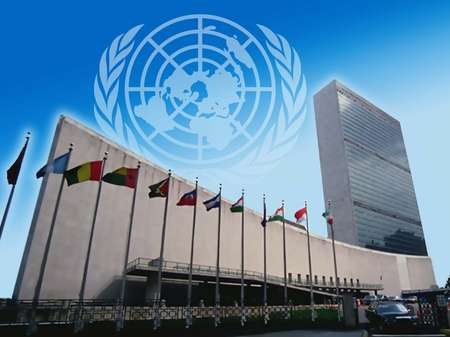
The U.N. General Assembly unanimously approved a resolution Thursday recognizing “the unprecedented effects” of the coronavirus pandemic and calling for “intensified international cooperation to contain, mitigate and defeat” the COVID-19 disease- AP reports.

It was the first resolution adopted by the 193-member world body on the pandemic that is sweeping the world and reflects global concern at the fast-rising death toll and number of cases.

The assembly did not approve a rival resolution sponsored by Russia calling for U.N. solidarity in the face of the challenges posed by the new virus and urging an end to trade wars, protectionist practices and unilateral sanctions without U.N. Security Council approval.

Under new voting rules instituted because the General Assembly isn’t holding meetings, a resolution is defeated if even a single country objects to it. Normally, assembly resolutions are adopted by majority votes or by consensus.

Diplomats said the European Union, United Kingdom, United States and Ukraine objected to the Russian draft, which was co-sponsored by the Central African Republic, Cuba, Nicaragua and Venezuela.

General Assembly President Tijjani Muhammad-Bande sent a letter to member nations late Thursday saying that although an extension for objections to the Russian draft had been granted until Tuesday at 6 p.m. EDT, “subsequent consultations with several delegations clearly indicated that further time will not facilitate the resolution of the differences expressed.” Therefore, he said, the time for objections “has come to an end, effective immediately,” and the resolution remains defeated.

Bande sent a letter earlier Thursday evening informing all U.N. member nations that there were no objections to the other resolution, titled “Global Solidarity to fight the coronavirus disease” and sponsored by Ghana, Indonesia, Liechtenstein, Norway, Singapore and Switzerland. He said it was approved and is in effect.

The resolution reaffirms the General Assembly’s “commitment to international cooperation and multilateralism and its strong support for the central role of the United Nations system in the global response to the coronavirus disease 2019 (COVID-19) pandemic.”

It calls on U.N. Secretary-General Antonio Guterres to lead the mobilization and coordination of a global response to the pandemic “and its adverse social, economic and financial impact on all societies.”

The resolution recognizes COVID-19’s “severe disruption to societies and economies, as well as to global travel and commerce, and the devastating impact on the livelihood of people,” and stresses that “the poorest and most vulnerable are the hardest hit” and must be helped.

The resolution also emphasizes the need to respect human rights and oppose “any form of discrimination, racism and xenophobia in the response to the pandemic.”

The 15-member Security Council is expected to discuss the pandemic sometime next week. It is likely to have two resolutions to consider, one backed by the council’s 10 elected members and the other by permanent member France.

On March 1, the UN released $15 million in aid for vulnerable countries as coronavirus spread across the world – its first monetary response to the health crisis that started in China in late December 2019. The fund was released to the World Health Organization (WHO) and the United Nations Children’s Emergency Fund (UNICEF), to be used on essential activities such as monitoring the spread of the virus, investigating cases and the operations of national laboratories.

The Emergency Relief Coordinator and Under-Secretary for Humanitarian Affairs, Mark Lowcock said then that there was no evidence that the virus was spreading freely, but there is a need for the world to act fast in putting up preventive measures to contain the spread.

“We do not yet see evidence that the virus is spreading freely. As long as that’s the case, we will still have a chance of containing it. But swift and robust action must be taken to detect cases early, isolate and care for patients, and trace contacts. We must act now to stop this virus from putting more lives at risk.

“This grant from the UN’s Emergency Fund will help countries with fragile health systems boost their detection and response operations. It has the potential to save the lives of millions of vulnerable people,” he said.

The current speed of the spread proved the UN underestimated COVID-19’s capabilities and therefore called for further action. On March 23, the Secretary General called for immediate global ceasefire as everyone’s attention is needed to focus on the one fight the virus has brought upon humanity.

“To warring parties: pull back from hostilities. Silence the guns, stop the artillery; end the airstrikes. This is crucial to help create corridors for life-saving aid, open windows for diplomacy and bring hope to places among the most vulnerable,” UN’s Spokesperson said on March 23.

Following this call, the UN’s Secretary General launched the Global Humanitarian Response Plan on March 25. It’s a $2.01 billion humanitarian aid aimed at cushioning the effects of COVID-19 globally, especially in developing countries.

This Resolution urging further global cooperation has become necessary as the virus ruthlessly escalates across countries, undermining previous resolutions and measures put in place by the WHO and UN.

The Finance Ministry’s Tweet

0
Finance Minister, Nigeria

As ventilators go into popular demand around the world due to increasing cases of coronavirus, governments are looking for help from manufacturers to fill the demand from hospitals. Each country affected by COVID-19 pandemic has a need for more ventilators now than it previously had, but the need appears higher in Europe and the United States.

On Friday, President Trump said he was invoking the Defense production Act to make General Motors (GM) accept federal contracts to produce ventilators and make it a priority. A couple of automakers in the U.S. including Ford, Tesla and Toyota had agreed to venture into production of ventilators just to make enough for hospitals struggling with overwhelming cases of coronavirus patients.

On Wednesday, Elon Musk tweeted that Tesla has enough vent machines to distribute as it hopes the gesture would help in cutting down the number of deaths resulting from the pandemic.

“We have extra FDA-approved ventilators. Will ship to hospitals worldwide within Tesla delivery regions. Device and shipping cost are free. Only requirement is that the vents are needed immediately for patients, not stored in a warehouse.”

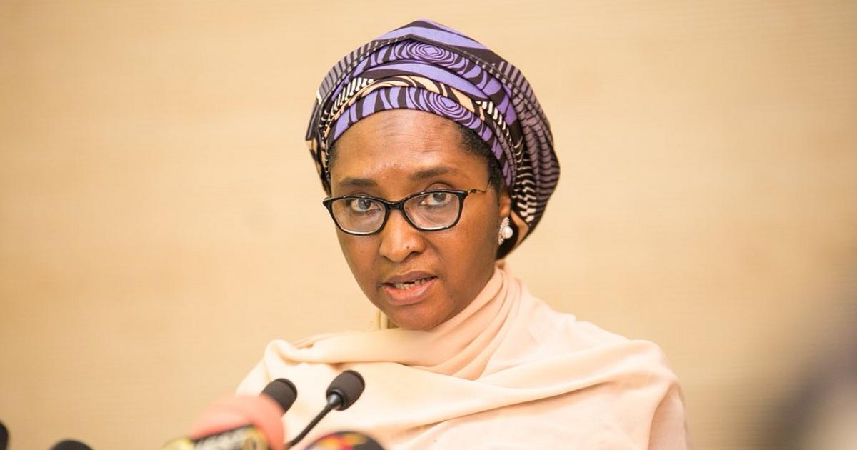
Upon this tweet, the Federal Ministry of Finance, Budget and National Planning responded:

“Dear Elon Musk and Tesla, Federal Government of Nigeria needs support with 100-500 ventilators to assist with COVID-19 cases arising every day in Nigeria.”

In a matter of minutes, this conversation generated a heavy backlash that forced the Finance Ministry to take down its tweet. Nigeria has only one coronavirus patient on a ventilator, according to Nigeria’s Ministry of Health, and would likely keep the ventilators in store waiting for the need to arise if they are shipped.

But that’s not why the Federal Ministry of Finance is receiving backlash; Nigeria evidently needs more ventilators than it has. It has more to do with what happened in the past, leadership and management of public funds. After all, Ukraine, Argentina and Spain begged Musk for ventilators too.

“I’m ashamed that the Nigeria Ministry of Finance is begging for ventilators on Twitter. This is the same ministry that released $15.3 million to buy cars for 469 lawmakers but can’t release just $2.7 million to renovate hospitals for over 200 million people,” an angry Nigerian tweeted.

That appears to be the major reason why many Nigerians are livid with anger over the solicitation made by the Finance Ministry. It is believed that the plea has resulted from misplaced priorities that have plunged the Nigerian health sector, among others, into rot.

“Not much here, just Nigeria’s Ministry of Finance begging Elon Musk to assist Nigeria with 100-500 ventilators,” tweeted Jack Robinson, another concerned Nigerian. “We budgeted N37 billion to renovate National Assembly this year; this could have gotten us 3,807 units of ventilators.”

The Ministry of Finance has since issued a statement of regret over the tweet: “An unauthorized post was made on the verified Twitter handle of the Federal Ministry of Finance, Budget and National Planning. The fact of the post is regrettable because of which it is brought down. We have made sure our internal processes are strengthened that such doesn’t happen again. The error is highly regrettable,” the Special Adviser, Media and Communications to the Minister of Finance, Yunusa Abdullahi said in the statement.

However, the damage control statement failed to settle the dust that the original statement had erupted. The whole controversy appears to be part of the wounds that Nigerians have been nurturing in painful silence before now, which has been brought to bear before the entire world.

Nigerian elites have always found their way out of the dilapidated health system through medical tourism until the whole world got caught in a health crisis that is forcing everyone to stay in his country and make use of what he has.

While some believe there is nothing wrong in appealing to developed countries for medical help, as desperate times call for desperate measures, others believe these events are presenting opportunities for Nigerians to put their leaders to shame.

“If Elon Musk has ventilators to give to Nigeria, for the sake of the common people, I hope they give us. However, you have to understand the criticism. A country that can afford to pay its senators $450,000 per year in allowances should not be begging for ventilators on Twitter,” a Twitter user said.

In December 2019, President Buhari approved N37 billion for the renovation of the national assembly complex, a development that like many others, drew outrage and condemnation. The dissenting voices had been voluminous based on the fact that there are so many more important things to do with such a huge amount of money, and the healthcare system was an example of such.

Letter to Edition 2 Subscribers

0

Dear Sir/Madam,

Thank you for joining us for Tekedia Mini-MBA Edition 2. Many edition 2 subscribers have requested to have access to Edition 1’s next week session on “A Playbook for Founders and CEOs During Pandemic, Recession or Market Upheaval”. We understand the timely nature of the session and are providing access to it. Please note that we have not created the Digital Board for Edition 2 – that will come in early June. This email will provide instructions on how you will access that specific content. Here is what to do:

  1. We have created your account with your email address we have (the very one you are receiving this email). Visit this link https://www.tekedia.com/my-account/lost-password/ to get your password. Type your email and click “Reset password”. (If you currently have a Tekedia account, we have updated your status. Move to step 3 below.)
  2. Then go to your email box, and click the link in a new email from Tekedia titled “Password Reset Request for Tekedia”. Type any password of your choice; repeat the same in the space provided. Then click SAVE. You have completed your account setting.
  3. To test that everything is working fine, visit this link https://www.tekedia.com/my-account/ and try to login with your email and the new password you have created. If successful, you made it.
  4. Then, visit this link  from 1pm Lagos time on Monday https://www.tekedia.com/dboard/ . Click the link for April 6 only. That will take you to the content. 

(In June, you will get Edition 2 proper setup email with the Digital Board.)

If you have any questions, let me know.

Regards,

Team Tekedia

Adetokunbo Omotosho, CEO of Cybersecurity firm Infoprive, Joins Tekedia Mini-MBA Faculty

0

I am happy to share that one of Africa’s leading cybersecurity experts and the CEO of Infoprive, a leading cybersecurity company, will lead the Cybersecurity for Business Leaders session, in the second edition of Tekedia Mini-MBAAdetokunbo Omotosho managed the first Payment Card Industry Data Security Standard (PCI DSS) compliance in Nigeria and is a respected leader in the broad digital security domain.

He was formerly the Divisional Head, IT Infrastructure & Enterprise Security at Interswitch Limited, the pioneering transaction switching and electronic payment processing company in Africa. A graduate of Obafemi Awolowo University, he holds CRISC, CISM, COBIT and ISO27001 certifications. Infoprive provides digital security for top leading banks, fintechs, airlines and more, across Africa and the Middle East. Some of its customers include Air Arabia, Venture Garden Group and Flutterwave.

If you are a business executive with operational experience in African markets, we welcome you to join our faculty. Look at the available sessions and email us your choice along with your LinkedIn profile. Our program covers strategy, business law, technology, innovation, marketing, etc, and we use a mix of academics and market players to deliver them.

https://www.tekedia.com/mini-mba-2/

How to Deal with Anxiety in Quarantine – My Story So Far

0

Initially, I didn’t care about COVID-19. After all, there was only one confirmed case in Nigeria. “Besides, it’s like the flu and it doesn’t affect young people,” I remember telling a friend four weeks ago. But, so much has changed since then.

Right now, I’m in quarantine and it seems like the world is a horror movie.

On the first day of the quarantine, life seemed pretty much the same. I performed some of my “pre-quarantine” tasks. However, like a predator waiting patiently for its prey, the next days ambushed me. The constant consumption of information, panic in the media, and the indefinite pandemic left me in the blues. 

After writing two COVID-19 related articles, I wanted nothing but to lay on my bed and wish this could end with a magic wand. I struggled to return to my normal state. Each day was hellish as I anticipated the worst news from the media. I wanted to get back to writing, but my mind was like a blank paper, I couldn’t come up with anything.

The camel’s back broke when the sad reality dawned on me – I can’t achieve most of my set goals until the pandemic is over. This new reality flooded me with emotions that I held back for months. Thoughts accelerated in my head. Consciously, I wanted to slow down the thoughts, but my subconscious had the upper edge. My thoughts rushed faster than I could control. I breathed in gasps while my heart hammered in my chest. For seconds, I felt I was passing out. But it stopped. The panic stopped, and I slept that night feeling emotionally numb. I could not tell my parents as they are the typical conservative Nigerian parents who would rather “pray” about a problem, than “talk” about it. 

Waking up the next day, I decided it was time to deal with anxiety. After reading several guides and the personal experiences of others, the first step was to consume less information. Luckily, I discovered Refind (an app that brings you only relevant news). Also, I use my phone’s downtime feature to limit my social media consumption. Not only has this freed my time, but it has also given me the chance to focus on what matters. I use the free time to maintain my pre-quarantine routine except for the ones that require me to go outside. If there is anything my experience taught me, it’s that not only do we need social distancing in this period, we also need news/information distancing.

While it’s vital to stay updated, consuming every information only heightens panic and anxiety. 

As someone who loves being a free bird, the lockdown seemed like a “trap.” This perception did more harm than good. Fortunately, I’ve reframed my initial perspective. Rather than perceiving the lockdown as a “trap”, I see it as a “chance for me to stay at home and focus on myself.” An opportunity I lacked until now. 

Before the outbreak, I never had the chance to focus on myself. I had emotional baggage that I didn’t pay attention to. I pushed people away whenever they attempted to love me. Sometimes, I felt empty. Alas, I was too “busy” to heal. I was obsessed with checking off goals on my list. But in the face of the real enemy, Coronavirus, none of the glamorous positions, certifications, or metrics matter. The present goal is to survive. The beauty of wanting to survive is that it allows us to focus on the neglected aspects of our lives. For me, self-focus means emotional healing and building my self-awareness. This new perspective puts me at ease.

The beauty of wanting to survive is that it allows us to focus on the neglected aspects of our lives.

Sometimes, the best way to resist a problem is to embrace it. The same applies to anxiety. Rather than resisting negative thoughts, I write them down. When I’m not writing these thoughts, I create helpful resources to help people in this period. People need support. While I don’t have millions of dollars to donate, the best I can offer is positivity. By adding positivity to people’s lives, I feel better and more optimistic. 

Sometimes, the best way to resist a problem is to embrace it. The same applies to anxiety.

Right now, the typical spa and idyllic getaways self-care are impossible. But who said self-care has to be fancy or time-consuming? So far, my quarantine self-care is adequate sleep, meditation (with the breathing app), reading, dancing, and a 2-hour daily unplug from technology. I also use the excuse to get foodstuff at the grocery to spend some time in nature.

In between these activities, I maintain communication with my friends and loved ones. I’m not one to keep in touch, but this quarantine has improved my communication skills faster than I thought. If permitted, loneliness can heighten anxiety. So, keeping up with my friends is my way of combating loneliness. I’ve facetimed more people this month than the last two months combined. 

I don’t know how long this lockdown will last. But while staying safe, I hope to maintain my sanity. 

Likewise, you have a role in contributing to “flattening the curve”. While contributing your quota, ensure you don’t lose your mental health to the claws of isolation. I hope some of these shared tips help you in dealing with anxiety as the world battles the pandemic. I implore that we pay more attention to our mental health when this is over.