
DD
MM
YYYY

PAGES

DD
MM
YYYY

spot_img

PAGES

Home Blog Page 644

SharpLink’s $360.9M Ethereum Acquisition Positions It as a Bold Player in Crypto Space

0

SharpLink Gaming, Inc. (Nasdaq: SBET) acquired 56,533 ETH at an average price of $4,462, valued at approximately $360.9 million, during the week ending August 24, 2025.

This purchase, funded through their at-the-market (ATM) facility, increased their total Ethereum holdings to 797,704 ETH, worth about $3.7 billion, making them one of the largest corporate ETH holders globally. They also earned 1,799 ETH in staking rewards since launching their treasury strategy on June 2, 2025, and announced a $1.5 billion stock buyback plan.

Implications of the ETH Acquisition

SharpLink’s substantial investment in Ethereum signals a strategic shift toward integrating cryptocurrency into its corporate treasury, a trend seen in companies like MicroStrategy with Bitcoin. This diversifies their asset base beyond traditional gaming and betting operations, potentially hedging against volatility in their core business.

By allocating ~$3.7 billion to ETH, SharpLink positions itself as a major player in the crypto space, gaining exposure to Ethereum’s ecosystem, which powers decentralized finance (DeFi), NFTs, and Web3 applications. The acquisition, coupled with a $1.5 billion stock buyback plan, could boost investor confidence by signaling financial strength.

However, it also introduces risk, as ETH’s price volatility could impact their balance sheet. The move may attract attention from crypto-focused investors, potentially increasing SharpLink’s stock (SBET) liquidity and visibility, but it could also alienate traditional investors wary of crypto’s risks.

Holding such a large ETH position exposes SharpLink to regulatory scrutiny, especially as governments worldwide tighten cryptocurrency regulations. Compliance costs or adverse regulations could affect their strategy.

Price fluctuations in ETH could lead to significant unrealized gains or losses, impacting financial reporting and investor sentiment. SharpLink, operating in the gaming and betting sector, could leverage Ethereum’s blockchain for innovations like decentralized betting platforms, smart contract-based payouts, or tokenized loyalty programs.

How Staking Rewards Facilitate High Yield on ROI

Ethereum staking involves locking up ETH to support the network’s proof-of-stake (PoS) consensus mechanism, earning rewards in return. SharpLink’s 1,799 ETH in staking rewards since June 2, 2025, demonstrates the potential for high-yield ROI.

Staking rewards provide a steady stream of additional ETH, effectively increasing SharpLink’s holdings without additional capital expenditure. For example, 1,799 ETH earned over ~87 days (June 2 to August 24, 2025) equates to roughly 20.68 ETH per day.

At an ETH price of $4,462 (the average acquisition price), these 1,799 ETH are worth ~$8.03 million. Annualized, this suggests a staking yield of ~2-5% (typical for Ethereum PoS), depending on network participation rates and validator performance.

Staked ETH and earned rewards can be restaked, compounding returns over time. For SharpLink’s 797,704 ETH, even a conservative 3% annual staking yield could generate ~23,931 ETH per year, worth ~$106.8 million at $4,462 per ETH. This compounding effect significantly boosts ROI over the long term.

Staking rewards provide a buffer against ETH price declines. Even if ETH’s market value drops, the additional ETH earned through staking increases SharpLink’s holdings, allowing them to benefit from potential price recoveries.

For example, if ETH’s price falls to $3,000, their $3.7 billion portfolio would drop to ~$2.39 billion, but continued staking rewards would still accrue, enhancing long-term value. Unlike traditional investments requiring active management or high operational costs, staking is relatively low-maintenance once validators are set up.

SharpLink’s staking infrastructure (likely through a third-party provider or self-managed nodes) generates yield with minimal ongoing costs, maximizing ROI. The $1.5 billion stock buyback plan can be partially funded or supported by staking rewards.

Selling earned ETH at opportune times could provide liquidity for buybacks, reducing outstanding shares and potentially increasing EPS (earnings per share), which enhances shareholder value and ROI. If Ethereum’s price appreciates (e.g., due to network upgrades, DeFi growth, or broader crypto adoption), the combination of staking rewards and capital gains could yield exceptional ROI.

For instance, if ETH rises to $6,000 in a year, SharpLink’s 797,704 ETH would be worth ~$4.79 billion, a ~29% gain on their current valuation, plus staking rewards of ~$106.8 million annually (at 3% yield). $360.9 million for 56,533 ETH (part of their 797,704 ETH total, worth $3.7 billion at $4,462/ETH).

Assume a 3% annual yield on 797,704 ETH = 23,931 ETH/year, worth $106.8 million at $4,462/ETH. Assume ETH grows 20% in a year to $5,354/ETH. The total portfolio value becomes 797,704 × $5,354 = ~$4.27 billion. Capital gain ($4.27B – $3.7B = $570M) + staking rewards ($106.8M) = $676.8M.($676.8M / $3.7B) × 100 ? 18.3% annual ROI, excluding buyback impacts or operational synergies.

A sharp decline in ETH’s price could erode ROI, though staking rewards mitigate this by increasing ETH holdings. Slashing penalties (for validator errors), network issues, or changes in Ethereum’s staking mechanics could reduce yields.

Locked ETH in staking may limit immediate liquidity, though SharpLink likely uses liquid staking solutions (e.g., Lido) to maintain flexibility. The ~2-5% annual staking yield, compounded over time, combined with potential ETH price appreciation, could deliver significant returns (e.g., ~18.3% annualized in the example above).

This strategy aligns with their $1.5 billion buyback plan and potential blockchain innovations in gaming, though it carries risks from price volatility and regulatory uncertainties. By leveraging staking, SharpLink maximizes passive income, hedges against market downturns, and strengthens its long-term financial position.

Anthropic Announces Plans To Train AI Chatbot Claude With User Data, Reaches Tentative Settlement in AI Copyright Case

0

Anthropic has announced that it is changing its Consumer Terms and Privacy Policy, with plans to begin training its AI chatbot Claude with user data.

Under the updated terms, new users will be presented with the option to opt out at signup, while existing users will encounter a pop-up notification titled “Updates to Consumer Terms and Policies.” The notification includes a toggle labeled “You can help improve Claude.” Leaving it checked permits Anthropic to use conversations for training, while unchecking it prevents chats from being included.

Acceptance of the new terms will allow all new or resumed chats to be used by Anthropic. Users must make their choice—either opt in or opt out—by September 28, 2025, to continue accessing Claude.

For those wishing to review or change their decision later, Anthropic is also making the feature accessible through Claude’s Settings under the Privacy option, where users can toggle off “Help improve Claude.”

Anthropic explained that the policy shift is designed to help it deliver “even more capable, useful AI models” while simultaneously reinforcing safeguards against misuse such as scams, disinformation, and abusive content. The updated terms will apply across all consumer-facing plans, including Claude Free, Pro, and Max. However, they will not extend to services governed by separate commercial contracts, such as Claude for Work or Claude for Education.

The new policy also includes a significant change in data retention. If users opt in to sharing conversations for training, Anthropic will now keep that data for five years. Deleted conversations will not be used for model training. For those who opt out, the company will maintain the current policy of storing data for 30 days for security and abuse-monitoring purposes.

Anthropic says that a “combination of tools and automated processes” will be deployed to filter sensitive information before it is used in training, and it emphasized that no user data will be sold or provided to third parties.

“To protect users’ privacy, we use a combination of tools and automated processes to filter or obfuscate sensitive data,” Anthropic wrote in the blog post. “We do not sell users’ data to third-parties.”

Until now, Anthropic had not used user conversations for training Claude, except in cases where individuals explicitly submitted feedback. The new approach marks a major shift in strategy as the company positions Claude to better compete in the rapidly evolving AI marketplace.

At the same time, the move comes as Anthropic faces mounting legal pressure over copyright infringement. According to a court filing on Tuesday, the company has reached a preliminary settlement with a group of U.S. authors who accused it of unlawfully using their copyrighted works to train Claude. While the terms of the settlement have not been made public, analysts believe the decision reflects Anthropic’s effort to resolve disputes quietly and avoid protracted courtroom battles that could stall its growth.

Against the backdrop of growing legal challenges over copyright infringement, it is believed that the timing of both the settlement and the policy change underscores a dual-track strategy: strengthening Claude with more robust training data while preemptively reducing exposure to further legal entanglements.

Anthropic Reaches Tentative Settlement in Landmark AI Copyright Case With Authors

Anthropic, the Amazon-backed artificial intelligence company behind the Claude chatbot, has agreed to a preliminary settlement with a group of U.S. authors, averting what legal experts say could have been one of the most financially catastrophic copyright trials in history.

According to a court filing published Tuesday, the deal is expected to be finalized on September 3, though its terms remain confidential. Anthropic declined to comment, while the authors’ legal team described the resolution as “historic.”

“This settlement will benefit all class members,” said Justin Nelson, a lawyer representing the plaintiffs. “We look forward to announcing details in the coming weeks.”

The lawsuit, filed in 2024 by authors Andrea Bartz, Charles Graeber, and Kirk Wallace Johnson, accused Anthropic of illegally training its AI models on their copyrighted books. Initially, Anthropic appeared to be on solid footing. In June, Judge William Alsup of the U.S. District Court in California ruled that the company’s use of the books for training was protected under the doctrine of fair use.

But Alsup also determined that Anthropic had acquired many of those works through “shadow libraries” like LibGen, widely known as hubs for pirated materials. That finding opened the door to a class-action trial on copyright infringement. With roughly 7 million works in question and statutory damages starting at $750 per title, Anthropic faced theoretical liabilities stretching into the trillions — a doomsday scenario for the startup.

“They had few defenses at trial, given how Judge Alsup ruled,” said Edward Lee, a Santa Clara University law professor. “So Anthropic was starting at the risk of statutory damages in ‘doomsday’ amounts.”

Why Anthropic Blinked

Observers say the settlement reflects both the scale of the legal risk and the broader uncertainty surrounding how U.S. courts will handle AI and copyright. Chris Buccafusco, a law professor at Duke University, told Reuters he was surprised by the move, given that Alsup’s fair use ruling gave Anthropic a foothold to defend itself.

“Given their willingness to settle, you have to imagine the dollar signs are flashing in the eyes of plaintiffs’ lawyers around the country,” Buccafusco said.

James Grimmelmann, a digital law professor at Cornell, added that Anthropic’s unique situation — a looming December trial and potentially astronomical damages — likely pushed the company toward compromise.

“It’s possible that this settlement could be a model for other cases, but it really depends on the details,” he said.

Authors Left Waiting

The settlement came as many authors were only just learning they could be part of the lawsuit. Earlier this month, the Authors Guild issued a notice alerting writers that they might qualify as claimants, with lawyers scheduled to submit a list of affected works to the court by September 1. That meant many writers had little visibility into the negotiations.

“The big question is whether there is a significant revolt from within the author class after the settlement terms are unveiled,” Grimmelmann said, calling author reactions a “barometer” of wider copyright sentiment.

Ripple Effects Across AI Copyright Battles

Anthropic is not out of legal disputes over copyright infringement. The company faces separate lawsuits from record labels, including Universal Music Group, which allege it pirated millions of song lyrics to train Claude. Plaintiffs in that case recently claimed Anthropic used BitTorrent to download music illegally.

Meanwhile, OpenAI, Microsoft, and Meta are fighting their own copyright battles, with courts just beginning to address how fair use applies in the age of generative AI. Legal experts say the Anthropic deal delays, rather than settles, the biggest unresolved question: whether large-scale ingestion of copyrighted materials without permission can be deemed lawful.

By settling, Anthropic avoids being the first test case on appeal. “This removes an early opportunity for a federal appeals court to weigh in on fair use,” said Grimmelmann. “That decision would have been binding on other cases and could have fast-tracked the issue to the Supreme Court.”

The confidential deal, for now, spares Anthropic a potentially ruinous verdict, but it also leaves other AI companies to fight the next round of legal battles without the clarity of precedent.

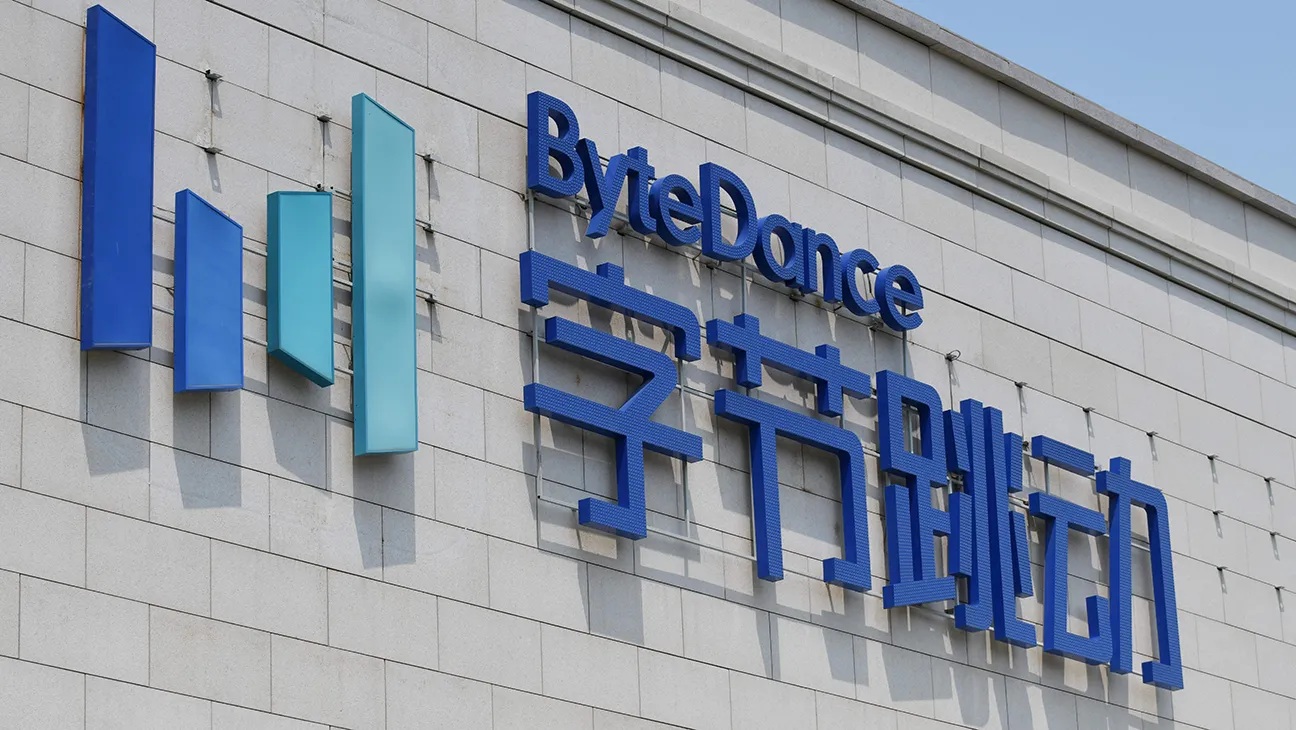
ByteDance’s $330 Billion Valuation Solidifies Its Position as a Global Tech Titan

0

TikTok’s parent company, ByteDance, is set to launch an employee share buyback program that values the company at over $330 billion.

This valuation reflects a 5.5% increase from the $315 billion valuation six months prior, driven by a 25% year-on-year revenue growth in Q2, reaching about $48 billion, mostly from the Chinese market. TikTok itself is estimated to be worth around $100 billion with its algorithm, though valuations vary widely, with some estimates as low as $20 billion without it.

ByteDance faces pressure in the U.S. to divest TikTok’s operations due to national security concerns, with a deadline extended to September 17, 2025. The 5.5% valuation increase from $315 billion to $330 billion, coupled with 25% year-on-year revenue growth in Q2 (reaching ~$48 billion).

ByteDance’s robust financial health, primarily driven by its dominance in the Chinese market (via Douyin and other apps). This bolsters its ability to invest in new technologies, AI, and global expansion. The employee share buyback program signals confidence in sustained growth, potentially attracting top talent and retaining key personnel, which is critical for innovation and scaling operations.

ByteDance’s valuation positions it among the world’s most valuable private tech companies, rivaling giants like Tencent and Alibaba. This enhances its leverage in negotiations with investors, partners, and regulators globally. The company’s diversified portfolio reduces reliance on TikTok alone, providing resilience against market-specific risks, such as U.S. regulatory pressures.

The high valuation provides ByteDance with options for future funding rounds, potential IPOs, or acquisitions to expand into new markets or technologies. However, any IPO plans may be complicated by geopolitical tensions and regulatory scrutiny in key markets like the U.S. and India.

ByteDance can use its financial strength to double down on AI and algorithm development, maintaining its competitive edge in content recommendation, which is central to TikTok’s and Douyin’s success. The valuation highlights ByteDance’s global influence, but it also intensifies scrutiny from governments, particularly in the U.S., where TikTok faces a potential ban or forced divestiture.

A high valuation could complicate divestiture talks, as finding buyers capable of meeting ByteDance’s price expectations may be challenging. ByteDance may face increased pressure to separate TikTok’s U.S. operations or sell them at a discount, potentially impacting its global growth strategy.

For TikTok

TikTok’s estimated standalone valuation of ~$100 billion (with its algorithm) positions it as a leading player in the global social media market, competing directly with Meta (Instagram Reels), YouTube (Shorts), and Snapchat. Its algorithm-driven content delivery remains a key differentiator, driving user engagement and advertiser interest.

The valuation reflects TikTok’s massive user base (over 1 billion monthly active users globally) and growing ad revenue, particularly in markets outside China. This strengthens its appeal to advertisers, who see TikTok as a critical platform for reaching younger demographics.

The U.S. market, which accounts for a significant portion of TikTok’s global revenue, remains under threat due to the looming divestiture deadline. A forced sale or ban could erode TikTok’s valuation and user base in the U.S., potentially weakening its global brand.

Without its proprietary algorithm (which may be excluded in a forced U.S. sale), TikTok’s valuation could drop significantly (to as low as $20 billion), reducing its competitive edge and attractiveness to buyers. TikTok’s financial backing from ByteDance allows it to invest in new features (e.g., e-commerce integrations, live streaming, and AI-driven tools) to maintain user growth and engagement.

The platform can leverage its valuation to expand into emerging markets (e.g., Southeast Asia, Africa) where social media penetration is still growing, offsetting potential losses in regulated markets like the U.S. or India.

TikTok’s high valuation reinforces its status as a cultural phenomenon, shaping trends in entertainment, marketing, and user behavior globally. This strengthens its bargaining power with content creators, brands, and partners, ensuring a steady pipeline of influencer-driven content.

ByteDance’s valuation sets a high benchmark for tech unicorns, potentially driving up valuations for other social media or AI-driven startups. It also signals to investors that short-form video and algorithm-driven platforms remain high-growth sectors. The U.S.-China tensions over TikTok highlight a broader trend of decoupling in the tech industry, with implications for how global tech companies operate across jurisdictions.

ByteDance’s ability to navigate these challenges will influence other Chinese firms’ global strategies. TikTok’s growth in ad revenue pressures competitors like Meta and Google to innovate in short-form video advertising, potentially reshaping digital marketing budgets and strategies.

U.S. TikTok remains a dominant force in social media, but its future hinges on resolving regulatory challenges and maintaining its algorithmic edge. ByteDance’s ability to balance these dynamics will determine whether it can sustain its valuation and global influence in an increasingly fragmented tech landscape.

OpenSea MCP Merges Blockchain’s Decentralized Data with AI’s Analytical Power

0

OpenSea has announced the beta launch of its Model Context Protocol (MCP) server on August 27, 2025, enabling AI agents to access real-time NFT and wallet data across over 20 blockchains, including Ethereum, Polygon, Base, Solana, Ronin, and Gunz.

The MCP server provides plug-and-play access to contextual data like collection verification, NFT rarity, ownership trends, wallet balances, marketplace stats, and live listings/offers, which goes beyond what’s available directly on-chain. This allows developers to integrate AI agents for tasks like market research, portfolio analysis, trading preparation, trend monitoring, and token discovery.

For example, prompts could include querying top gaming NFT collections by volume on Polygon or calculating a wallet’s total portfolio value. OpenSea’s CEO, Devin Finzer, emphasized that the MCP server offers a single, real-time connection to NFTs, tokens, and marketplace activity, streamlining development by eliminating the need for complex infrastructure setups.

MCP enables AI agents to tap into real-time, contextual blockchain data (e.g., NFT rarity, wallet balances, marketplace trends) across multiple chains. This makes complex blockchain data more accessible to developers and end-users without requiring deep technical expertise in blockchain infrastructure.

Developers can build AI-driven applications that simplify user interactions with NFTs and DeFi, such as automated portfolio management tools, personalized trading recommendations, or predictive market analytics. This lowers barriers to entry, making blockchain ecosystems more inclusive for non-technical users.

AI agents can automate tasks like market trend analysis, rarity scoring, or trading strategies, leveraging MCP’s real-time data. This reduces manual effort and enables faster, data-driven decisions in NFT trading and collection management.

Automation could lead to hyper-efficient NFT marketplaces where AI agents act as brokers, advisors, or arbitrageurs, increasing liquidity and market efficiency. This also fosters innovation in use cases like dynamic pricing models or AI-curated NFT collections.

MCP’s support for over 20 blockchains (e.g., Ethereum, Polygon, Solana) allows AI agents to operate across diverse ecosystems, unifying fragmented data sources into a single access point. This promotes interoperability, enabling AI agents to provide insights or execute actions across multiple blockchains seamlessly.

For example, an AI could compare NFT valuations across Ethereum and Solana to recommend arbitrage opportunities, fostering a more connected blockchain economy. By integrating blockchain’s transparent, immutable data with AI’s analytical capabilities, MCP enables trustless, verifiable AI-driven applications. Users can rely on blockchain’s auditability to ensure AI outputs are based on accurate, tamper-proof data.

This paves the way for decentralized AI marketplaces, where AI agents can autonomously trade NFTs, manage DeFi portfolios, or even create generative NFT art based on verified on-chain data. It also supports Web3 principles of user sovereignty and data ownership.

While MCP provides open access to blockchain data, integrating AI agents raises concerns about data privacy and potential misuse. OpenSea’s token-based access model aims to mitigate unauthorized use. The need for secure AI-blockchain integrations will drive advancements in privacy-preserving technologies, like zero-knowledge proofs or encrypted AI computations, ensuring user trust as these systems scale.

AI agents using MCP could democratize access to sophisticated market insights, leveling the playing field for retail investors and creators in NFT and DeFi spaces. This could disrupt traditional financial systems by enabling decentralized, AI-driven wealth management tools. Socially, it may empower creators and collectors in emerging markets by providing AI tools to optimize their participation in global NFT ecosystems.

Broadening Intersection of Blockchain and AI Agents

Blockchain provides a trustless, transparent foundation for AI agents to operate autonomously, enabling new economic models like decentralized autonomous organizations (DAOs) powered by AI. For instance, AI agents could govern NFT marketplaces or DeFi protocols, voting on proposals based on on-chain data analysis.

The integration allows AI services to be tokenized and traded on blockchains. Developers could create AI agents that offer premium analytics or trading signals as NFTs, monetizing their expertise in a decentralized marketplace. Blockchain’s real-time data, combined with AI’s predictive capabilities, enables applications like dynamic NFT pricing, fraud detection, or automated portfolio rebalancing.

AI agents can leverage blockchain data to generate or curate digital art, music, or virtual experiences, with ownership recorded as NFTs. This fosters a creator economy where AI and blockchain collaborate to produce unique, verifiable digital assets.

The broadening intersection raises concerns about centralization risks (e.g., reliance on platforms like OpenSea), AI biases in market predictions, and environmental impacts of blockchain networks. Addressing these will require governance frameworks and sustainable blockchain designs.

Gemini, Grok, Meta AI tighten race as ChatGPT remains top global AI app — a16z report

0

A new report by venture capital firm Andreessen Horowitz (a16z) shows that rivals like Google’s Gemini, xAI’s Grok, and Meta AI are fast closing the gap on ChatGPT, OpenAI’s flagship chatbot, which has dominated the consumer AI market since its release in late 2022.

The report, the fifth in its series on the consumer AI landscape, according to TechCrunch, draws on two and a half years of data sourced from third-party market intelligence platforms, including Similarweb for web traffic and Sensor Tower for mobile app usage.

ChatGPT maintained its position as the No. 1 AI app globally, both on web and mobile. But for the first time, Google’s Gemini has emerged as a formidable challenger. Gemini is now the No. 2 AI app on mobile, with nearly half of ChatGPT’s monthly active users — a sharp rise driven largely by its dominance on Android, where it accounts for almost 90 percent of its user base.

On the web, Gemini also ranked second, attracting about 12 percent of ChatGPT’s visits. Google’s developer tools are gaining traction as well: Gemini’s AI Studio debuted at No. 10 among top AI web products, while NotebookLM ranked No. 13. Google Labs, home to experimental projects like Flow and Doppl, came in at No. 39.

Elon Musk’s xAI product, Grok, has also made remarkable strides. Though it launched only in late 2024 as part of the X platform, Grok now boasts more than 20 million monthly active users. Its standalone app helped it rank No. 4 on the web and No. 23 on mobile. Growth accelerated in July 2025 following the release of Grok 4, which lifted usage by nearly 40 percent.

Meta AI, the company’s general assistant, remains a smaller player in the market. It ranked 46th on the web and failed to make the mobile top 50, partly due to controversy earlier this year when users discovered that Meta AI was making some of their posts publicly visible on the web without clear consent.

Other top players

Perplexity, Claude, Poe, Character AI, Midjourney, Leonardo, and ElevenLabs all held firm among the 14 AI companies that have appeared on every edition of a16z’s ranking. These products cover a wide range of consumer applications — from general assistance and creative writing to image and voice generation.

Claude and DeepSeek showed mixed performance: Claude continued to grow steadily, but DeepSeek saw declines, dropping 22 percent on mobile and more than 40 percent on the web compared to its February 2025 peak.

Chinese companies are also rising fast. ByteDance’s Doubao placed No. 4 on mobile and No. 12 on the web, while Moonshot AI’s Kimi chatbot landed at No. 17 on the web. Alibaba’s Quark also broke into the top 20. Seven other Chinese AI developers, including DeepSeek and Kling, were recognized for exporting AI tools globally.

Market shifts and new entrants

A striking trend in this edition of the report is the number of new entrants, especially on mobile, where 14 fresh apps made the top 50 list. Vibe-coding startups Lovable and Replit debuted strongly, benefiting from increased traffic tied to projects built and published on their platforms.

Meanwhile, apps on the brink of breaking into the rankings include PixAI, Bolt, Blackbox AI, and Microsoft’s Clipchamp on the web, and Talkie, Seekee, and AI Mirror on mobile.

What the numbers show

Andreessen Horowitz’s analysis underscores how the generative AI market, once dominated almost exclusively by ChatGPT, is rapidly diversifying. While OpenAI retains the lead, competitors like Gemini and Grok are now expanding aggressively, with Google leveraging its Android ecosystem and xAI riding on Musk’s influence through X.

The shift suggests that the next phase of the AI race will not be defined by a single platform, but by a broader ecosystem of apps competing for consumer time, creativity, and trust.