


Notes. There is a special session – Pandemic Preparation – we are planning next week. On May 4, 2020, we will release a special series titled Winning in Business. Unlike our typical session which includes written materials, the series would be delivered via videos. Learn more here. There is no webinar this week; no questions received. […]
Coronavirus: Tips on Coverage from UI Professor of Development Communication
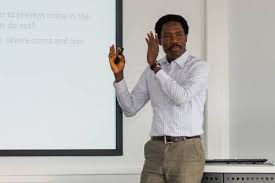
Ayobami Ojebode, a professor of Development Communication at the University of Ibadan, is one of the scholars who have conducted and still conducting significant studies with a view of revealing various pain points associated with the roads towards sustainable development in Africa.
Before 2002, the year he earned his PhD in Development Communication, and after the certification, has been teaching and researching issues within political, economic, social and environmental components of sustainable development. For more than two decades, his interest in teaching and researching has been exclusively on finding solutions that resonate with the students, C (corporate) and F (functional) levels executives in industries, and public administrators in Nigeria and other African countries.
How would you describe the coverage of the virus by the media before the first case was reported and after it?
Before the first case was discovered in Nigeria, there was little media attention. It ran as one-item news lines without analysis or commentary. This was understandable because (1) it seemed like a Chinese problem alone, and (2) little was known of it, so not much could have been said by the media. Social media was however already awash with all sorts of information and misinformation. After the first case was discovered, the media pressed the panic button – in my view. Before they would settle down to education and information, they first panicked in the news reports. That immediate phase was more like, “Breaking News: Corona is here and we cannot contain it”
What aspects (containment and mitigation) would you say the media have been doing well?
Prevention… They have done very well in encouraging preventive measures. Handwashing and so on. But no one is hammering on preparedness of government in other states beyond Lagos and Abuja.
If they are not doing well, what can you attribute to that?
I think many media organisations lack the basic resources to partner with academics and researchers in these matters. A lot is being done in the teaching hospitals and in the departments of Virology. However, both the researchers are not talking to each other.
How would you describe the quality of the coverage so far?
We are still having much more of news than commentaries and analysis. Radio stations are adding jingles. All these are good. But in-depth commentaries and analysis are needed. What are the research institutes doing? What does that mean? What should government do? For weeks, we have been told that Corona cannot affect a black person fatally. Now that we have the first black casualty from Italy, a Nigerian, one hopes that the media will begin to counter that unscientific declaration of black invincibility.
The Global Worth of Coronavirus Cure or Antidote – US$4.3 Trillion
There are few things that can not be restricted. While human and other tangible things can be restricted from entering a place, these few things are immune to restrictions. The government of every country has a security slogan that reads “protection of national integrity ”. while this is a great security strategy there are ways by which security can be affected but not physically.
One of such ways is the outbreak of epidemics. An outbreak of pandemic is like “an injury to one, an injury to all situations.” An epidemic that happens in a place has the tendency of traveling to other countries without detection at the initial stage. it is border-less, race-less and location-less It is a global affairs.
That is exactly the story of the coronavirus diseases (COVID-19) outbreak. It started in a city called Wuhan Hubei China when a 55 year old man was detected with the virus. This quickly spread to many people and countries such as Italy, South Korea, North Korea, Japan, Iran, USA, Nigeria among others. Experts say the coronavirus is an airborne disease that spreads through respiratory droplets. Which means it is contamitable through the breath of humans, sneezing and coughing that comes from humans.
Due to the injury-to-one-injury -to- all coronavirus pandemic, the current statistics as reported by worldometer as at 15th March 2020 are;
- Global cases of Coronavirus is 149,596
- Global death caused by Coronavirus is 5604
- Global recovery from Coronavirus is 73,716.
In the space of two months and few days of the outbreaks it has created negative global impacts that have shaken the roots of economic prosperity of nations.
Negative Multiplier Effects of COVID-19 to Global Economy.
National economic recession is very bad for an economy that talks more of global economic depression. We should pray it should not happen. But with the spread of this pandemic and the impact it has created, there are gloomy forecasts. Here are the negative impacts of the virus so far;
1.Decline in International Trade:
As part of the measures to contain this disease, many counties have placed bans on international travelling. Business conferences and events have been cancelled. China, which is a major manufacturing economy has also shut down production. As everybody is afraid of contracting the deadly covid-19 diseases. The virus could be contracted via contact with people, conversations, public gathering etc.
That means every country will witness a decline in its Balance of Trade (BOT) and Balance of Payment (BOP). This will affect global business activities.
2.Impact on Foreign Exchange Market:
Forex markets thrive when there is a robust international trade. This is because it is international trade that triggers the demand for currency and supply of currency. So at this time, currencies of many nations will depreciate in value because of its low demand by other countries. If there is no business transaction between nationals of a country with nationals of another country, it will lead to no demand for the country’s currency. So, international trade is the grease of the Forex market.
3.Impact on Stock Exchange Exchange:
Will you buy stock in times like this? A time when economic activities across many countries are almost being halted by the coronavirus pandemic? It is not risk averse to buy stocks at this time.
Many companies are recording decline in their market capitalization due to the problem posed by the pandemic.
According to a report by Forbes the Dow Jones has declined by about 28% between February 11 and march 12, 2020, driven by the coronavirus pandemic and turmoil in the crude oil markets. That is in a period of one month, the companies that drive the US economy have declined in market cap by 28%. That is serious!
4.Cancellation of Sport Events:
According to an article from Tekedia which stated that scientists believe that coronavirus can survive in the air for three hours, it can stay alive on copper for four hours and 24 hours on cardboard and 72 hours on plastic and steel. This has led to the cancellation of match and sport events by football associations and other sports associations. It has also been confirmed that some footballers are now diagnosed to be coronavirus positive.
What a big problem to the sport industry.! What a shock to the football clubs!
What do you think could be the worth of the cure or antidote to this globally ravaging virus?
The Economic Worth of Coronavirus Antidote
We can only know the worth of a product when we know the cost of the problem it helps to solve. We have analysed the global problems the coronavirus had created. We shall know the cost of the virus from this world bank statistics;
An internal report from the world Bank stated that in a severe pandemic, sagging tourism, transportation, retail sales, and productivity, coupled with workers absenteeism, could reduce global GDP by 4.8% according to Bloomberg.
What does this mean? It means that;
- The global 2020 GDP is predicted to be $90,519.61bn.
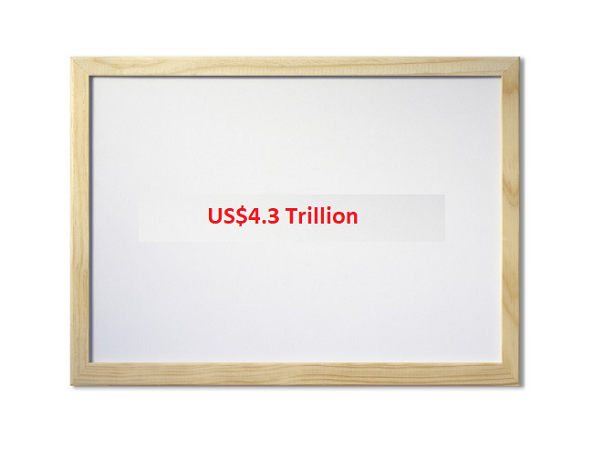
- A 4.8% decline of the global GDP caused by the negative multiplier effects of the virus will be $4,344.94bn.
So the global monetary worth of the cure is estimated to be $4.3 trillion. That means if the cure or the antidote is discovered we will not lose this huge money.
What then shall we do? The answer is to develop the cure.
I hereby use this medium to call on government stakeholders, Bill Gates and Melinda foundations, Global citizens, entrepreneurs ( Strive Masiyiwa, Jack Ma), Milken Institute and others to rise collectively to combat this pandemic that could cause a global economic recession. If we don’t solve this problem collectively, then we are small together and the coronavirus is stronger than us.
What is in your mind on this global trend? Comment below and join the conversation.
Subscribe to my personal blog.
Coronavirus – Our Victory Is Certain

- Father, we’re here
- We’ve lived the grace – the amazing and abiding grace.
- As you send your angels on assignments today
- Lord, we are here.
- As you send them to bless men and women
- Father, our hands are raised up.
- In the deepest of the night, and the brightest of the day
- Our hope remains on Thee.
- Oh Lord, our God, thou has taken us out of the miry clay
- Into thy greener pasture.
- Coronavirus will find no strength in us.
- As we listen to doctors and follow health experts
- In thy bosom, we will dwell.
- Thy dew is mild, oh Lord
- Thy oil soothes the nations
- Thou ruleth the ecclesiastical bond with thy wisdom.
- David made joyful noise with cymbals and flutes
- Our lives will be thy praise and joy.
- Protect us. Preserve us. Keep us.
- From coronavirus.
Ndubuisi Ekekwe
3/15/2020
Bill Gates Steps Down from Microsoft Board
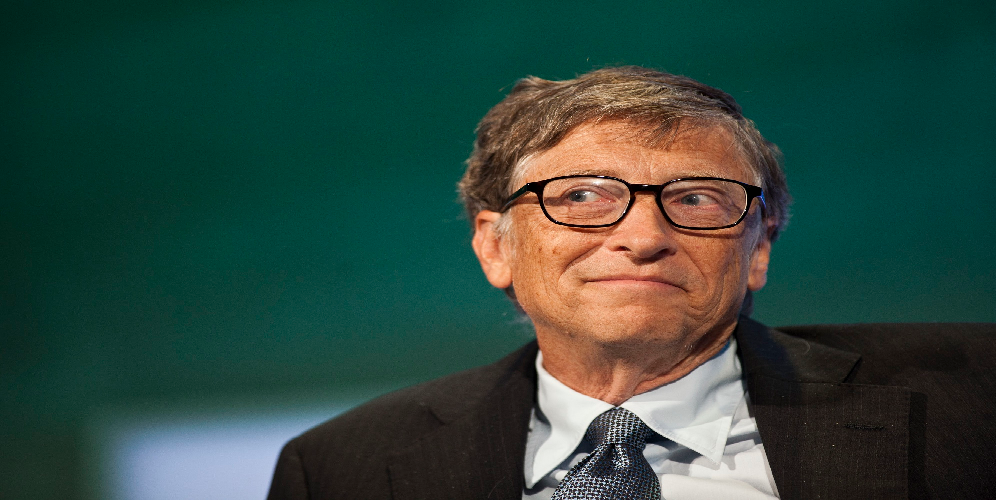
Microsoft cofounder, Bill Gates, is stepping down from the board of the company. The former CEO announced on Friday that he will be concentrating on philanthropic works of the Bill and Melinda Gates Foundation.
“I have made the decision to step down from both of the public boards on which I serve – Microsoft and Berkshire Hathaway to dedicate more time to philanthropic priorities including global health and development, education, and my increasing engagement in tackling climate change,” Gates wrote on his LinkedIn page. “The leadership at the Berkshire companies and Microsoft has never been stronger, so the time is right to take this step.”
“Serving on the Berkshire board has been one of the greatest honors of my career. Warren and I were the best of friends long before I joined and will be long after. I look forward to our continued partnership as co-trustees of the Bill & Melinda Gates Foundation and co-founders of The Giving Pledge.”
It has been a long fulfilling adventure for Gates, and Microsoft and Berkshire have borne testimony of an incredible 45 years journey that has treated the world to a taste of technology that was only imagined.
In 1975, Paul Allen and Bill Gates co-founded Microsoft. Gates had dropped out of college and moved to Albuquerque, in New Mexico in search of answers to innovative questions his inquisitive mind was full of. There he teamed up with his childhood friend Allen to set up Microsoft.
Five years later, Microsoft was signing an agreement with IBM to develop the MS DOS operating system. It was a breakthrough that spurred spontaneous growth for the company. In 1986, Microsoft went public. A year later at age 31, Bill Gates was making history as the youngest self-made billionaire.
Gates served as Microsoft CEO until 2000 when he made way for Steve Ballmer. Eight years later, he relieved himself of the day to day work in the company. In 2014, Gates resigned his position as chairman of the board dedicating much of his time to charity works.
Nevertheless, Gate was still a member of the Board of Directors until Friday when announced his decision to put that position behind his philanthropic priorities. But he said he’s never running away from Microsoft.
“With respect to Microsoft, stepping down from the board in no way means stepping away from the company. Microsoft will always be an important of my life’s work and I will continue to be engaged with Satya and the technical leadership to help shape the vision and achieve the company’s ambitious goals. I feel more optimistic than ever about the progress the company is making and how it can continue to benefit the world,” he said.
Gates will still serve as technology advisor to Satya Nadella, who personally requested that in 2014 when Gates stepped down as the chairman of the Microsoft’s Board. Satya said he has learned a lot from Gates and looks forward to continuing learning.
“It’s been a tremendous honor and privilege to have worked with and learned from Bill over the years. Bill founded our company with a belief in the democratizing force of software and a passion to solve society’s most pressing challenges,” Satya said in a statement. “The Board has benefited from Bill’s leadership and vision. And Microsoft will continue to benefit from Bill’s ongoing technical passion and advice to drive our products and services forward. I am grateful for Bill’s friendship and look forward to continuing to work alongside him to realize our mission to empower every person and every organization on the planet to achieve more.”
Gates reiterates his commitment to ensure that Microsoft and Berkshire stay strong in the tech space, while he pursues philanthropy as his next priority.
“I am looking forward to this next phase as an opportunity to maintain the friendship and partnerships that have meant the most to me, continue to contribute to two companies of which I am incredibly proud, and effectively prioritize my commitment to addressing some of the world’s toughest challenges,” he said
Bill Gates is famously the second richest person in the world after Jeff Bezos, with a fortune worth $103.6 billion according to Forbes. The 65 years old has reportedly reduced his stake in Microsoft with $4.6 billion donations.
The Bill and Melinda Gates Foundation has doled out $100 million to combat coronavirus. The foundation appears eager to do more in its bid to solve problems, especially in developing countries.