DD
MM
YYYY

PAGES

DD
MM
YYYY

spot_img

PAGES

Home Blog Page 6457

Festac Explosion: Why People Are Angry With Lagos State Government

0

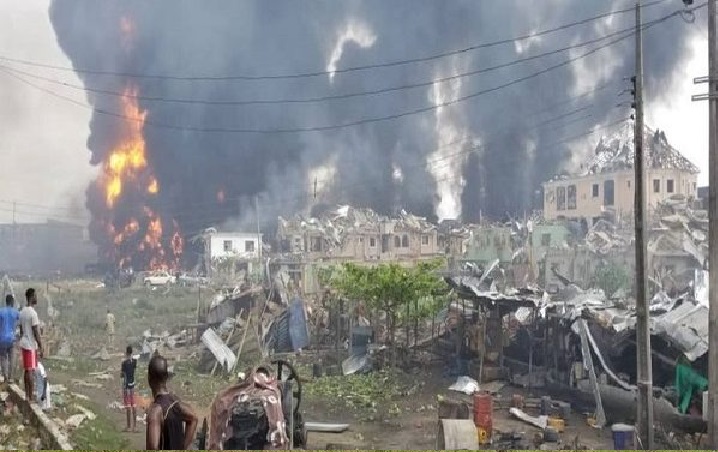
Sunday, the 15th of March was a terrifying day in Lagos. The horror started with a boom that collapsed buildings and ignited an inferno that raged through lives and properties. Pictures and videos flood the internet with gory depiction of residents of the FESTAC area of the state, wailing helplessly as the tragedy unfolds.

There have been arguments about what triggered the tragedy. Some said it was a pipeline explosion, others said a burning truck set the pipelines on fire. At the end of every side of the argument, people are counting their losses.

Over 15 people lost their lives, over 50 houses were destroyed by the fire; vehicles, schools, and churches around the area were also razed down. Bethlehem High school, a boarding secondary school with hundreds of young girls was at the center of the incident. Wrecked to ruins, the students felt the horror they could only have imagined. Some, including the principal, died as the impact of the explosion brought down the school buildings.

As emergency services worked to curtail the situation, the question many keep asking is; how long will this continue?

In late 2019, another part of Lagos, Abule-Egba was hit with a pipeline explosion disaster that resulted in loss of life and property. It was just one among many other times, and Lagosians were evidently not ready to witness another episode so soon.

But then it happened, and the usual wailing and mourning followed, with cries for help from the government. It was an avoidable disaster, but like many others, people have paid the price. But in the end, the governments did show sympathy.

“We are working with NEMA, NNPC and other agencies to make life easier for everyone affected in the tragic incident at Abule Ado, which claimed lives and caused extensive property damage. I offer my condolences to everyone affected,” Lagos State Governor, Babajide Sanwo-Olu tweeted after the incident. “I have instructed the Lagos State Environmental Protection Agency to immediately release personal safety materials to the people living around the area especially to first responders and all safety workers at ground zero. We will continue to monitor the situation.”

The Federal Government responded to the incident as well with a statement from President Muhammadu Buhari.

“I received with sadness the news of the explosion in Lagos, which caused loss of lives and property. While the NNPC makes efforts to determine the cause of the incident, I send my deepest sympathies to the victims, their families, and the Government and people of Lagos State,” Buhari said.

It is expected from the governments to make sympathetic statements that show concerns for the citizenry in times of disaster. It is also expected from the governments to provide shelter and relief material, and that’s where the clamor of the people mainly lies.

Sanwo-Olu did respond to it by setting up a N2 billion relief fund for the victims.

“I spent sometime today at the site of the tragic incident at Abule Ado, to give immediate relief and support to the victims of the disaster. I have set up N2 billion relief fund to be chaired by Dr. Obafemi Hamzat (deputy governor). The state government has put N250 million into the fund immediately,” the Governor said.

The last sentence of the statement and the subsequent statements, where Sanwo-Olu shared account details of the relief fund and urged people to make donations, didn’t go down well with people. People’s anger stems from two major facts.

At the end of 2019, the Lagos State government generated a total of N666 billion in revenue. The monthly revenue target has been placed at N50 billion monthly and it is being realized.

About N2.4 billion has been spent within 11 months for procurement of exotic cars for the 40 members of the State House of Assembly. According to Guardian, each of the cars cost N51.8 million and N36.5 million respectively. The new cars are replacement for those used in 2019.

But at the same time, the Lagos State Government is appealing to taxpayers in the state to donate toward the relief fund of the explosion victims.

There are over 50 razed houses, which means that the number of displaced persons, who are counting on the governments are high.

The responses from the Federal and Lagos State Governments have been described as insouciant and void of solicitude. Sanwo-Olu’s decision to travel to Abuja to show President Buhari pictures of the incident has been greeted with scorn. The Governor said the core plan is to “provide relief and rebuild affected areas” which means he is appealing to the federal government for assistance. But that has irked already disappointed Lagosians even more.

“What a great achievement! You went Abuja to show him pictures? As Lagos is not outside Nigeria, he (Buhari) can’t personally go to see and assess the situation. Since he can’t travel or view live feeds from the area. Anyway, I hope your trip made him donate money to the GoFundMe account,” an angry Nigerian responded to Sanwo-Olu’s statement.

It is generally believed that a tragedy that needs N2.4 billion relief fund is not above the financial powers of the Lagos State Government, and it is a shame that the victims are left at the mercy of public donation.

Global Interest On Coronavirus Increases By 72% Per Day

0

Coronavirus was first identified in December, 2019 in Wuhan, China. After several confirmed cases and deaths, including some recoveries, the World Health Organisation recognised the virus as a pandemic on March 11, 2020. The virus is affecting over 160 countries and territories globally and 1 international conveyance (the Diamond Princess cruise ship harbored in Yokohama, Japan). Beyond Wuhan as the epicentre of the disease, the World Health Organisation has also stated that Europe had become the new epicentre.

To contain the global spread of the disease, handwashing, social distancing, self-isolation among others have been suggested by experts, individuals and organisations. Open access papers and citizen science are some of the sources of information available to people and businesses for proper understanding of the virus and specific containment and mitigation messages.

As global leaders and businesses battling the outbreak, our exponential analysis of the world interest in the virus through the categories of information sought between December 1, 2019 and March 17, 2020 reveals that public interest in understanding the virus is increasing by 72% per day, while the interest in deaths associated with the virus is increasing by 86%. This figure is not quite different for interest in recoveries. We found 86.4% increase in understanding the number of people recovered from the disease per day.

Exhibit 1: Exponential Growth of World Interest in Coronavirus and Its Components

Source: Google Trends, 2020; Infoprations Analysis, 2020

Exhibit 2: Comparative Scores of Top Related Search Terms by Coronavirus Top Related Search Terms

Source: Google Trends, 2020; Infoprations Analysis, 2020

Analysis had earlier indicated that the total global volume of interest in the virus was 1, 111. The total search interest in deaths, cases and recoveries was 759, 578 and 547 respectively. While exploring various sources for better understanding of the virus, our analysis suggests that people had significant interest in symptoms and cases. Apart from this, analysis indicates that people also had specific interest in knowing the countries and continents with the highest number of cases and how the stakeholders are responding to the virus.

We found phrases such as coronavirus China, UK coronavirus, Italia coronavirus, coronavirus France among others. Within the deaths, analysis establishes that people developed interest in deaths using deaths coronavirus, flu deaths, deaths today among others. For the cases, coronavirus was the index keyword used by the people while coronavirus cases, how many cases of coronavirus and US coronavirus cases constituted the main search phrases.

Our analyst observes that the use of country name for understanding of the cases could be situated within the recent view expressed by Professor Ayobami Ojebode, University of Ibadan. According to the Professor of Development Communication, “before the first case was discovered in Nigeria, there was little media attention. It ran as one-item news lines without analysis or commentary. This was understandable because it seemed like a Chinese problem alone.” Coronavirus recoveries and recoveries from coronavirus were the dominant phrases used for the retrieval of relevant messages on the number of recovered people.


Tekedia Mini-MBA: Seeking Partners; Licensing Options Available for Hubs, Schools, Firms

4

To apply for the partner opportunity in any location, email our team.

We have some updates here on our learning program. We successfully got qualified as a Learning Vendor by a multinational corporation in Lagos to offer basic management training to its staff. . We will deliver via our General Management Program, and Advanced Management Program customized sector-focused and company-focused contents to the firm. This makes it possible for their staff to co-innovate and co-create under Tekedia faculty facilitation. Anyone with the company’s official email will access the dedicated Board. We welcome more companies and startups under our GMP and AMP.

  • 1. Tekedia mini-MBA: Sector- and firm-agnostic open program comprising videos, flash cases, contents, pulses, challenge assignments, labs, written materials, webinars, etc delivered online. Options for grading labs available.
  • 2. Tekedia General Management Program (Tekedia GMP): The same as Tekedia mini-MBA but customized for a specific organization with flash cases, contents, pulses, challenge assignments, labs, etc developed around the firm and its sector. Challenge assignments and labs not graded.
  • 3. Tekedia Advanced Management Program (Tekedia AMP): GMP with Challenge assignments and Labs graded.

Also, we have started licensing Tekedia Contents to African Hubs, Incubators, Accelerators and makerspaces. Instead of creating your contents, Tekedia is here to support your mission by helping to prepare your innovators, startups and founders. Send email to our team for details.

By next week, a dedicated innovation digital board for a university in Nigeria will go live. Working with the Students Union, we will offer a dedicated innovation board for the students. Because they are students and have other things to do, the duration is structured to be only 2 months even though they will have a 12-month access. We welcome other schools; reach us if you have contacts and links.

Finally, we are looking for partners. These are companies that can help us deepen our presence in Africa. Our contents are only on English. You will help us reach schools, firms, trade associations, etc while Tekedia handles the content delivery. You will be compensated via commission.

Contact: tekedia@fasmicro.com


https://www.tekedia.com/mini-mba/

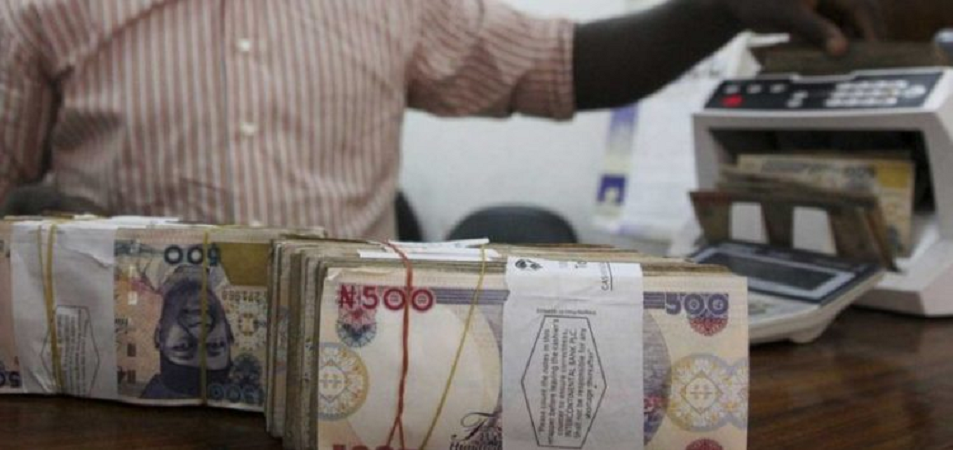
Things To Consider for Cashless Policy in Nigeria

0

If you have a tenant that keeps coming home in the middle of the night, and you’re not comfortable with it, there are two ways to curb the issue; it’s either you get confrontational and threaten him with a quit notice, or you find ways to make coming home late inconvenient for him. The latter is the better option.

On the 1st of July 2014, the Central Bank of Nigeria henceforth referred to as CBN rolled out its cashless policy nationwide. Some key reasons for this policy include;

To drive development and modernization of our payment system in line with Nigeria’s vision 2020 goal of being amongst the top 20 economies by the year 2020.

To reduce the cost of banking services (including cost of credit) and drive financial inclusion by providing more efficient transaction options and greater reach.

To improve the effectiveness of monetary policy in managing inflation and driving economic growth.

I really can’t say how effective the cashless policy has been, but I don’t think I would be wrong for saying it probably hasn’t been as successful as intended. One of the key reasons I believe is a wrong strategy.

One of the key tactics the CBN had intended to use to push the cashless policy was basically charging people for transactions above a certain amount. In other words, the CBN wanted to discourage people from using cash by simply raising the costs of executing certain transactions. The major problem with that approach is that although it may push some people to consider using cash less, it however will get others agitated, but after a while, people get used to it and revert to using cash.

The Truth is this; you can’t force people to use cash less, it’s not a coherent approach as long as cash is the most convenient way to get most things done in Nigeria. If you want to make people use cash less, you have to make it inconvenient to use cash.

If you’re opportune to travel to China, especially Beijing, you’ll observe certain things; one of which is that spending cash is largely inconvenient, the cab driver may not take it, the local grocer may not accept it, you may have a good amount of money with you, but without Wechat or Alipay, you’re going to find using cash largely inconvenient. If you want people to use cash less, make using cash inconvenient.

If someone flew into Nigeria with a thousand US Dollars, except he intends to purchase something specific that the merchants only accept dollars for, you don’t have to force him with any kind of fee’s to convert that money to Naira, it would be largely inconvenient not to do so. He can’t pay the Taxi Driver in Dollars, he can’t pay the market woman in Dollars, he can’t buy a snack from a local retailer in Dollars, it’s really common sense for him to convert that money to Naira to avoid the inconvenience.

When I was an undergraduate, and my parents sent my weekly allowance, I would usually withdraw everything to use, why? Because 90% of everything I needed to do could be done by cash. Some weeks back I needed to pay an artisan for some work he had done, so I requested for his bank account to do a transfer. I was surprised when he told me his account was dormant and had been dormant I think for a while. Here we have a matured man, probably married, who can live his life, do business, and conveniently move around without a bank account, and running primarily on cash.

As long as using cash is the most prevalent way of getting things done in Nigeria, raising charges on transactions will really be pouring water in a basket.

What To DO

The real strategy lies in making using cash for transactions inconvenient. These are what can be done:

  • Grass root outreaches to Market women and Local retailers

In Design, there’s something we call empathy. The root and foundation of empathy is a deep understanding of the user, or rather stepping into their context of use, not assuming you understand them. If you want to buy a car in Nigeria, it’s very likely you’ll perform a bank transfer or issue a cheque, if you want to buy a phone that costs anywhere above #100,000, chances are you’ll use a POS terminal, but if you want to buy the everyday things people spend money on daily, you’re much more likely to use cash. Most of the transactions made in Nigeria are done in cash, because that’s the only option the retailers who are usually the last mile between the customers and that specific product subscribe to.

Performing a comprehensive study, and user research with these local retailers would help bring out their major concerns about using digital financial services, and help decide whether the solution would be a re-education campaign, or redesigning the digital products they will need to interact with to address their concerns.

  • Support the Ecosystem (Impact Investing into Startups in that field)

Today, there are a huge array of startups in the Fintech space whose major focus is on helping to solve or promote the idea of using less cash and performing more transactions digitally. The CBN could invest into startups in this field whose mission most closely aligns with theirs. This could act as a catalyst to both speed up the work of the Startup involved, and encourage more Startups to get into that space.

  • Making it easier for people to send money between themselves

If the process of transferring money from one user to another using digital services becomes easier and more convenient, users would be encouraged to utilize them more.

The CBN could herald or authorize a product design initiative that prevents a savings account user from having to interact with more than two (or at most three) pages of web page or application before performing a transfer.

  • Heavy Investments in cyber security with real proofs

Some people tend to use digital financial services less because of a belief that banks can be hacked and their monies can be stolen. To avoid this sentiment, the CBN could mandate commercial banks who are already investing in cyber security operations to publish successful cyber security attacks that have been thwarted, this could help quell public opinion about the safety of funds used in digital finance.

  • Create incentives for using non-cash alternatives for merchants

Humans tend to be very loss averse. Creating incentives, especially financial incentives for people to use digital services could help encourage the merchants to become advocates for using digital services and push for more people to use them. These incentives may include a financial rebate for transactions over a certain amount monthly.

Supplying the devices required to perform online transactions; small and portable POS terminals for free or at most at a subsidized price and making it easy to acquire them will go a long way in encouraging merchants to purchase them.

It is very important that all progress is monitored. A way to do so could include data sharing agreements between the CBN and commercial banks that helps the CBN with information in regard to ATM withdrawals and Cash Deposits. Ideally, the lesser the amount of ATM withdrawals, the lesser the cash in distribution, and the more Cash deposited, the lesser the amount of cash in distribution.

Conclusion

Applying the strategies listed above would take both time and significant resource investment. However, if the CBN intends to make the Cashless policy a reality and achieve some of the reasons for the policy, some of which include; making Nigeria among the Top 20 economies in the World, a concerted approach must be encouraged, one that involves partnerships between all the stakeholders involved to make the success of this policy a reality.

Jet Motor Nigeria, “Tesla of Africa”, Raises $9 Million for EV Manufacturing

0

Jet Motor Company has announced raising $9 million from Africa Development Capital (ADC) based in Canada, Greatman Legend and a host of investment companies from Asia.

Jet is a vehicle assembly and distribution company of Nigerian origin with the aim of expanding its products and services beyond what is common in Africa. The company is pushing to establish an all-electric vehicle manufacturing plant in Nigeria as a way of demonstrating its belief in the future of zero-emission. As part of its vision to lead Africa into the future of mobility by producing world class vehicles for African roads, it is therefore aiming to pioneer Electric Vehicles (EVs) in the African continent.

The journey began in 2017, when the company quietly started putting innovative works into play. Three years later, success is breaking the Jet’s silence. Nigerians are admiringly witnessing its products on the roads, as they come in customizable designs.

However, the company is seeking to introduce electric vehicles to Nigerian roads through the launch of Jet’s EV all-electric minibus project, a project the company’s Director of Sales Rupani Sanjay, pointed as reason for the partnership with ADC and others. He said the fund was secured in early 2019, as the company prepares to embark on intensive research for the all-electric vehicle innovation.

“Our ultimate vision is to lead Africa into a new era of mobility. That includes preparing it for the inevitable future, which can only be built on the efficiency of zero-emission electric cars,” he said.

As the world continues with the quest for cleaner energy, electric vehicles have been seen as an alternative to combustible engines. Many countries have set targets to totally eliminate the use of petrol powered vehicles, but Nigeria appears to be dragging foot.

A member of the 8th Senate, Senator Ben Murray Bruce once proposed the Electric Car Bill, but it was rejected by the National Assembly on the excuse that Nigeria is an oil producing country, therefore should not be in support of any move that will affect the oil industry.

Moreover, the infrastructure needed to forestall electric car manufacturing in Nigeria is lacking. Though the automotive policy of Nigeria has been reviewed, it is yet to be assented. by President Buhari. And lack of constant power supply poses the biggest challenge to electric vehicles enterprise in Nigeria.

But Jet Motor Company said they are taking all the lapses into consideration and are working out innovative ideas that help the company to scale the hurdles.

“We have already signed a contract with leading logistics company, GIG Logistics (GIGL) to supply over 50 electric Jet EV buses over the next 2 years. We will commence testing in Q3 2020, utilizing GIGL pickup centers between Lagos and Benin as charging points,” Sanjay explained.

He added that the Jet EV models can travel as far as 300km on a single charge, which requires charge stations in strategic places.

Sanjay disclosed that the ultimate goal of Jet Motor Company is to add other vehicle models in time as the company plays the role of Tesla in the African continent.

“Our plan is to have introduced other lines of vehicles, including pickups, SUVs and sedans by 2022. Our ultimate goal is to build the Tesla of Africa,” he said.

Meanwhile, the company has been pushing its other models. There has been so far Jet Mover, a series of luxury and minibuses the company introduced in 2019, and it has caught the attention of many users because of its versatility. For instance, the transport model of the Jet mover came with leisure features to make journeys jolly. The 13-seater bus is equipped with a personalized entertainment system attached to each seat, which gives a passenger the right to make his choice of entertainment in the course of a trip.

Sanjay said the buses can be converted for other uses as well, adding that it is designed to be used as a tour bus, for cargo, medical emergencies, school bus etc. and can be used by corporations, governments and individuals.

Many state governments and transportation companies have fallen in love with the buses from the onset; Lagos, Edo and Delta States governments. While in the transportation space, God is Good Motors and Delta Line have embraced the vehicle.

The Jet Motor buses took about three years before it was unveiled to the Nigerian public, a course of time many considered too long. But Sanjay has an explanation for that.

“We wanted to create a global product that is built to last. We were obsessed with getting it right because, if our vehicles can work well on Nigerian and African roads, they can succeed anywhere in the world,” he said.

The major hurdle to the use of electric vehicles in Nigeria has been ‘charge stations,’ it is hoped that Jet’s partnership with GIGL will pioneer the innovation that will encourage more use of electric vehicles in the country.