DD
MM
YYYY

PAGES

DD
MM
YYYY

spot_img

PAGES

Home Blog Page 6458

Nigeria Devalues The Naira

6

As I predicted multiple times, ignoring all the denials, the Central Bank of Nigeria has devalued the naira: “The apex bank on Friday sold dollars to deposit money banks at the rate of N380 to one dollar signaling the official return of a single exchange rate regime in the country’s foreign exchange market”. I do hope those who have been reading me took action. It is the only option available to the nation. What the CBN has done is the right call because in a national budget of $14 billion (effective, using my model) with more than $7 billion going to service debts, the only option for Nigeria is to sell the little dollars it has to have tons of naira to pay contractors and settle local bills, even though those recipients will not smile home happy. Going forward, this is what I expect to happen: the black market will move to N420 per dollar by the end of July 2020 despite any efforts the CBN would put to create a single exchange rate in the nation.

The much-vaunted devaluation of the Naira came into force on Friday despite the denial by the Central Bank of Nigeria (CBN) last week that same was not on the cards.

The apex bank on Friday sold dollars to deposit money banks at the rate of N380 to one dollar signaling the official return of a single exchange rate regime in the country’s foreign exchange market.

An official circular by the Director, Trade and Exchange department of the CBN, Ozoemena Nnaji, said the development is part of efforts by the apex bank to establish a uniform rate between the official and the parallel market rates for bureau de change operators.

The circular was on the disbursement of the proceeds of the International Money Transfer Operator (IMTO).

With the new rate, the CBN has effectively collapsed the multiple exchange rate policy used in determining the value of the Naira since June 2016.

The country will now have a single exchange rate for official transactions and bureau de change operators as well as for importers and exporters of goods and services, amongst others.

This is the highest official exchange rate between the dollar and naira in the last two years.

Henceforth, dollars sold to banks will be at the rate of N376 per dollar, while banks to CBN will be at N377 per dollar.

Also, the rate by CBN to Bureau de change operators will be N378 per dollar, while BDCs to end-users should not be more than N380 per dollar. and the volume of sales for each market is $20, 000 per BDC

Single exchange rate will not work in Nigeria because of the nature of Nigeria’s economy. Most of our  devaluations typically begin with that intent but since demand and supply cannot hit equilibrium optimally, there is always a dislocation on pricing parity. If more people are asking for USD than CBN can provide through our banks and official vehicles, the exchange rate cannot be constant (i.e. track official rate). People will begin to use black market at all costs to settle market obligations and save time which could be lost waiting for the official exchange rate from banks.

Simply, CBN has no power to maintain a single currency rate because it cannot control all the elements involved. We produce nothing in Nigeria except crude oil, and that product is already massively wounded at the moment. Just a few days ago, the apex bank boasted that it would not devalue naira as “the market fundamentals do not support Naira devaluation at this time.” (see below for press release)

It is key to understand that this does not affect naira velocity. Yes, inflation will scale up and the impact of the marginal positive impact of the minimum wage has been neutralized with this devaluation. You do not need to withdraw your money from the bank as it changes nothing: Naira is naira either in the bank or under the pillow. The key thing is recalibration as Nigeria enters a dark period of economic uncertainty.

This should not surprise any keen observer. I wrote two weeks ago thus: “Nigeria opened 2020 with $43.1 billion in its foreign reserve. Today, that number has dropped to $38.6 billion. Typically, CBN fights until it hits $30 billion, by them it releases the magic armour – devaluation. Devaluation is a crunch time call: we cannot continue defending the naira to the point where our “bank balance” goes to zero. Yes, a time will come when we will have to leave naira to lose value, necessary to keep balance in that bank account.”

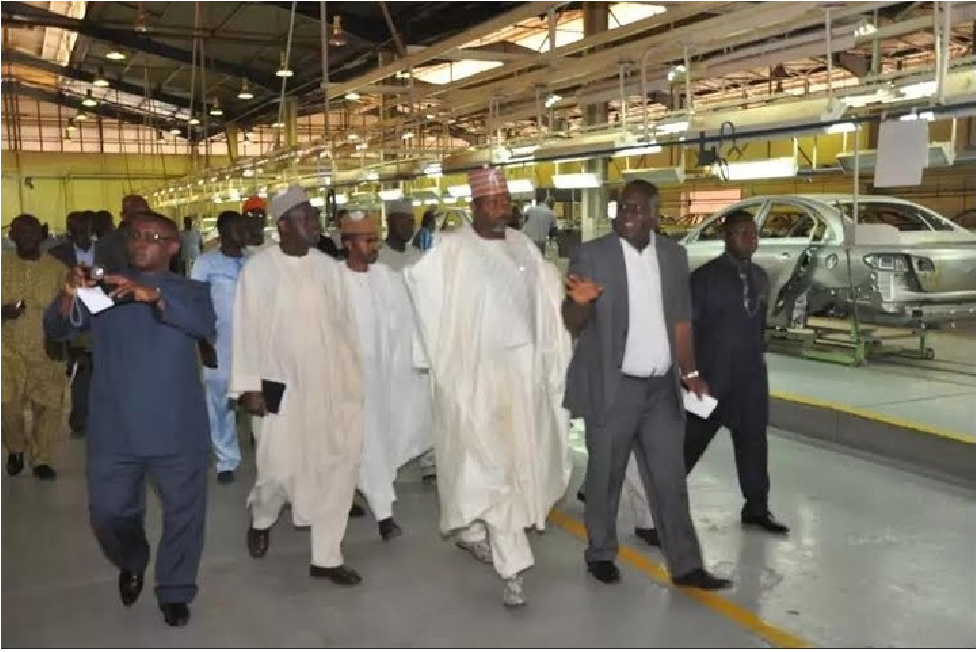
Stallion Motors to Launch Hyundai-Kona, First All-Electric SUV in Nigeria Before Year-End, Amidst Government Opposition

10

Stallion Motors, Nigeria’s auto assembler and a franchisee of 9 global brands which includes Hyundai is planning to delve into Electric Vehicles (EV) manufacturing in Nigeria. This is coming after Jets Motor Company raised $9 million for EV technology in Nigeria, which it plans to unveil soon in partnership with GIG Motors and some other companies.

Hyundai-Kona is regarded as the best electric car products in Europe by European motoring journalists, and the Vice Chairman Haresh Vaswani sees Nigerian market as a potential as the company tries to extend its fight for cleaner energy beyond Europe. Nigeria is notorious for its use of combustible vehicles and appears unconcerned as the rest of the world pushes for cleaner energy.

But that is about to change as the two companies appear ready to change the narrative by introducing electric vehicles into the Nigerian auto space as soon as possible.

“Well-meaning and concerned people globally are urgently making moves to save our dear planet. After operating successfully in Nigeria for over five decades, the least our company could give back to the country and by extension, the world is to be a leading pilot in steering the nation to the direction of clean energy use and reduction of emission.

“Versatile and powerful, the Hyundai Kona Electric will be the first All-Electric SUV in Nigeria. Its power packed performance will provide a thrilling driving experience with high acceleration over long distances. Driving range for Kona Electric is 482 km with an acceleration of (0-100kms) in 9.7 secs.

“The ease of charging is unmatched, one can even plug it in at home or at work and charge it for 9.35 hours for a full battery capacity. Hyundai Kona comes with five years of battery warranty and five years of vehicle warranty. Kona Electric will change the way people think about going electric. It would make history as first EV to be launched in Nigeria with local manufacturing,” Vaswani said.

While many vehicle manufacturing companies are indicating interest in introducing electric vehicles into Nigerian market, the greatest challenge has been the attitude of the Nigerian government toward the development.

On Tuesday, the House of Representatives warned the Federal Government to be wary of the dangers of electric vehicles, which they said it has the capability of disrupting the economy. The Lower Chamber of the National Assembly said the implications of electric vehicles should be critically evaluated since it could reduce the demand for crude oil as the trend has shown in many other countries.

The motion, titled ‘Economic Implications of the Production and Adoption of Electric Vehicles on Nigeria’ was moved by Hon. Ossy prestige and was unanimously adopted by the lawmakers.

“The House notes with dismay, the bleak future for Nigeria’s oil exports as its biggest oil buyers and other major Asian and European customers are poised to do away with petrol and diesel-powered vehicles from year 2025.

“The House is informed that India, China, France, the Netherlands and the United Kingdom that bought a total of 24.4 million barrels of crude oil from Nigeria in May 2019, almost half of the nation’s total exports for the month, are now pushing ahead with plans to stop the use of oil-powered vehicles as part of efforts to reduce pollution and carbon emissions, a development that could spell trouble for Nigeria’s oil exports in the coming decades,” Prestige said.

According to him, the more countries embrace the trend, the more difficult Nigeria will find it to sell its oil.

The stance of the House of Representatives on EVs reveals why the National Automotive Industry Development Plan (NAIDP) bill is yet to be signed into law. The auto policy bill has been dragging feet on the excuse that so many parts of it need to be rectified.

But the Federal Government pledged to support the automotive industry not minding if companies are producing combustible or electric vehicles. It demonstrated commitment to the pledge in 2019 by assigning the University of Nigeria, Nsukka, the University of Lagos, Usman Dan Fodio University and the Metallurgical Institute designs and tasked them to manufacture made-in Nigeria electric cars. The University of Nigeria Nsukka delivered an electric car made with 80% local content in less than a year, demonstrating the possibility of locally made EVs in Nigeria.

However, whilst it appears that the Federal Government is in full support of the automotive industry, the recent downturn in the oil market as a result of low demand and climate concerns seems to have instigated doubts in the minds of the lawmakers who have repeatedly opposed any bill that will promote electric vehicles.

But as it has been noted by ex-Senator, Ben Murray Bruce, who was forthright in pushing the rejected bill for electric vehicles in Nigeria; “the world will not wait on Nigeria to attain the cleaner energy goal, the way it’s going, Nigeria will be left behind, and will find it hard to catch up.”

Tekedia Mini-MBA Session Change: Pandemic Preparation – A Playbook for Business Continuity

0

Due to the Covid-19 pandemic, the Tekedia Mini-MBA is modifying its next week session. Our members have been sending emails with questions on readiness and continuity management during this paralysis. Accordingly, we are working with risk experts and professionals to provide guidance in the following areas:

  1. Developing a balanced remote work plan in case the Nigerian government orders non-essential companies to shut down in coming weeks.
  2. Developing a business continuity plan.
  3. Implementing crisis management best practices.
  4. Planning for the worst case scenario and making the tough decisions fast.

So, our next week’s session has been updated to “Pandemic Preparation: A Playbook for Business Continuity”. Members will use the Digital Board to ask questions (anonymous or otherwise) and our experts will provide guidance. We will also make some documents available to help companies plan and prepare. Tekedia Mini-MBA is a self-paced program; you can still join us by registering here.

The week Lab will focus on developing a Pandemic Preparation for your firm or where you work.

Tech Trends for 2020

0

Technology has progressed at a dizzying rate over the last decade, and that rate seems to likely to increase in the one ahead. In the meantime, what are some of the most exciting tech trends likely to catch our collective attention in 2020? It may come as a surprise that some trends that seem to have buzz around them for ages without ever really taking off, such as virtual reality and autonomous vehicles, will continue to hold a place in 2020. Other tech trends are about what will likely fall by the wayside or at least find an inhospitable landscape, such as many forms of new media and apps from small developers.

Getting New Tech

Although the costs of a desktop or laptop computer have plummeted in the last decade, other devices, including smartphones, can still be pretty expensive. These days, unless you work from home, these mobile devices are probably more useful to you than a clunky desktop. If it’s time to upgrade or you want to pick up some new tech but aren’t sure whether you can afford it, you might want to consider taking out a personal loan. Interest rates can be favorable into one easy monthly payment, and if you pay it back promptly, it can boost your credit rating.

Virtual Reality

It’s not quite the science fiction future we might have hoped for just yet, but virtual reality is set to get a boost in the years ahead along with augmented reality and mixed reality. These fall under a larger umbrella of extended reality. Augmented reality refers to using the screen of your smartphone to place digital objects in real-world situations while mixed reality combines the two. The immersive experience of VR is set to feature in at least one popular video game, and it is also anticipated that businesses will start to use all three types more to engage and interact with customers.

Autonomous Cars

Self-driving cars still have a long way to go, with challenges that meet at an intersection of artificial intelligence, regulations as yet unwritten and ethical philosophy, but they will continue to cause a buzz in 2020 despite some setbacks in 2019. Several technology companies are continuing to test and develop these vehicles, and even before they are on the road in large numbers, the cars you purchase will have more automatic safety features.

Challenges for New Media and App Developers

After a big boom in startup websites and blogs, many new media outlets have closed or been bought out in recent years. It remains to be seen what becomes of the existing ones. Several specialty blogs and sites, particularly those with a narrow focus and small staff, continue to thrive as they deliver unique content to their audiences. Apps face a similar challenge as small developers are up against the largest companies who can buy them out or throw more money at products for improvement. All the same, one of the most exciting elements of the tech world is that it may be precisely at these moments that something innovative comes along to disrupt the status quo once again.

Adedayo Oderinu on Radio as a Tool of Empowerment and Realisation of Food Security

0

Editor’s Note : Adedayo Oderinu is an indigenous language broadcaster who uses one of his programmes on Rave FM 97.1, KaraKata (buy n sell), to empower young graduates and petty traders with information on Employability, Career and Business Development. He has facilitated for not less than 100 petty traders between N5000 and N10,000 micro grants. With his programme in Yoruba, he has touched lives on the streets in lifting people out poverty and training people to secure decent living.  This is an interview with him.

Tell us about yourself.

I am Adedayo Oderinu, a Civil Engineer by formal education and a Broadcaster with specific interests in Human Capital Development, Employability Skills Development, Entrepreneurship and Micro-credit financing. I hail from Agurodo in Ejigbo Local Government of Osun State. I express my interests through broadcasting, writing (I have authored 4 E-Books and 1 print), teaching and advocacies

How did you end up in broadcasting when you studied Engineering in school?

That’s a really long story, but I’ll summarize. It was a mixture of deliberate confusion and providence.You know, I was brought up in a manner that made me greatly value a close-knit family unit. I always never wanted a family where I have to be away for long, then come home once a while and all that. But, I studied Civil Engineering and if I decided to practice it, there was no chance that I will remain within a single city without having to travel here and there. So, that profession did not exactly fit into my family ideals. That was the first issue.The second issue was that I am a content person. I love to write. I love to speak, I love to express myself in what you could decide to call literary ways. Civil Engineering does not follow that direction.The third issue was that I didn’t even want Civil Engineering in the first place. I went into the University to study it because my dad wanted me to go ahead with it. I studied to excel at it because I wanted to get done with it as fast as possible so I could go on with what I wanted to do. So, after the mandatory NYSC, I practiced for less than two years and decided to leave Civil Engineering altogether. Didn’t have a plan, didn’t know what was next, I just knew I had to get out and then decide. So I did.

Now, let us talk about your love for broadcasting. Why did you choose indigenous language broadcasting?

Let’s just say I didn’t choose it, it chose me. I grew up in Ejigbo, under a father who speaks impeccable Yoruba language. When you compare with my older siblings, I think I am the one who inherited his Yoruba speaking ability the most. My mum is also a Yoruba teacher and that rubbed off too. Let me tell you a little about how I met Mr. Bimbola Adewole so you understand how Yoruba broadcasting chose me. My dad met someone at a meeting and this man he met said he knew someone who could help my dad’s son get a job. At the time, my dad had not come to terms with my decision to quit Engineering. So he called me, sent me Bimbola Adewole’s number and asked me to go see him. I met this man and while we conversed, he asked me a defining question; “Dayo, are you really looking for a job? You don’t sound like you are”. I told him I was honestly not looking for a Civil Engineering job but was open to opportunities in the creative industry. He asked me to meet him in Ibadan the following week. We met at Fresh FM where he was to start a show the following week. He asked me, “can you write a Yoruba script?” and I told him I could try. Praise the Lord, I wrote a script he considered good enough and I started interpreting for him.When I left him and started my own radio show, I was running in three languages – English, Yoruba and pidgin – but I favoured English.However, when I wrote a proposal to Rave FM to start a radio programme with them, the Station Manager at the time, Kunle Balogun, told me he wanted my programme to run in Yoruba, not the English I proposed. No problem! I agreed and we started. And here we are now.

Tell us more about what you do on KaraKata. Let us know the impact you have made through the programme.

I’ll try to be as modest as possible. Karakata started in 2016 on Rave 91.7FM Osogbo. We started with giving important Employability and entrepreneurial tips and then added job vacancies and micro grants for petty traders to the mix. By the time we clocked a year, we had processed about 30 jobs in Osogbo. By process, I mean the people who got those jobs learned from the show, applied for vacancies through us, passed through our mock interviews and were eventually presented to employers. In January 2018, we decided to start a physical Employability class. We had to sessions of the class in 2018 before we stopped to focus more on online teaching. Employability 1.0 and 2.0 trained 65 young job seekers, giving them skills that they need to excel in the workplace. A good number of them have gone on to get great jobs. We started petty trader financing in December 2017. So far, we have provided grants ranging from 5,000-10,000 to 135 petty traders across the State. They learned from the programme first and then phoned in live on Karakata, pitched to us and if selected, received the grants. Aside all of that, we have received countless feedback even from roadside vendors on how our tips on the show have helped their little business grow. We have also had people calling to ask us for a compilation of all the tips that we have been sharing. We have made a lot of progress, to the glory of God. Aside these, on an average of 2 times a month, I get invited to speak at youth events, to enlighten young people on our areas of interest – Employability and Entrepreneurship.

How easy do you find it breaking down Employability and entrepreneurship concepts in Yoruba?

Let me quickly mention something. At first, I wasn’t convinced we should do Employability training in Yoruba language, because I believed as I still do, that if you do not understand English, you should not be looking for a white collar job in a country whose Lingua Franca is English. But, I realized that even blue collar jobs require Employability Skills. Then, there are uneducated people who have graduate children. The mother may listen and want to share the tips with the children later. So, Yoruba language proved appropriate.To the question you asked, presenting real life concepts in Yoruba is easy because the information is relatable and can be illustrated with proverbs and short stories. If we were translating theoretical concepts that cannot be illustrated, there could have been difficulties. This is also the reason I also keep learning. I lay hands on several things so I can understand the truth of the tips that I share. So basically, what I do is illustration, not translation and that makes the whole process more digestible for the audience.

Finally where do you see the future of indigenous language programming in Nigeria?

I think indigenous language will survive in the broadcast industry. I only fear that it will not survive in the real form that the great grandfathers handed it to us. Let me share this with you. On more than a hundred occasions, I have had people met me for the first time and insist that there was no way my young face will be the face of the voice they had been hearing on radio. Because of the manner I speak Yoruba, in the local, maybe crude form, people think I can’t be a young person. I honestly don’t blame the people who think in this manner. Most young persons who run programmes in indigenous languages today do so using the bastardized Lagos version of the real languages, especially Yoruba. So, my fear is not whether indigenous language will survive in programming, it will. I just fear that in some years to this time, most programmers would have over-diluted the raw essence of our languages that the ears of the progenitors will twitch in their graves.

How do you feel every time an entrepreneur wins your micro grant and even at the end of every programme?

I feel like a General winning a war. For every micro grants we have given out and every episode that we put out, I feel that we have touched a life that will never remain the same. I believe that before we solve problems of unemployment, we must solve unemployability. I believe that before solve poverty, we will have to make sure we have empowered the petty businesses that form the nucleus of our societies. Each episode, each grant, makes me feel we are doing something right to solve the problems of our society. And if we chose to get urbane, each episode feels like one more step towards the actualization of Goals 1 and 8 of the SDGs.