DD
MM
YYYY

PAGES

DD
MM
YYYY

spot_img

PAGES

Home Blog Page 6460

Thank You Mr. Speaker – Amazing Femi Gbajabiamila

3

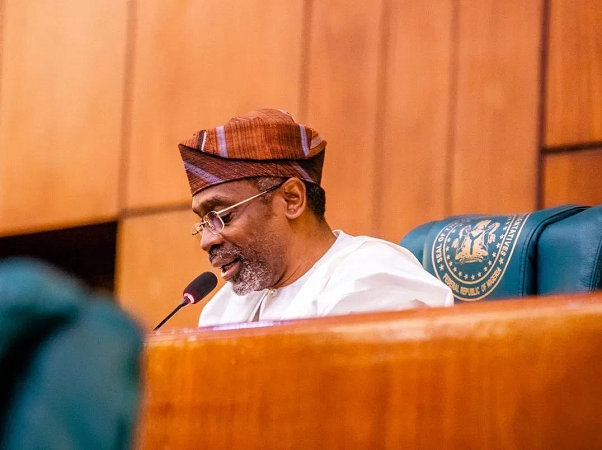
Please help me thank the speaker of the House of Representatives, Femi Gbajabiamila, who took a decision that the Federal Government of Nigeria’s $22.7 billion loan would not be passed in the House without the consideration of the South East. The House Speaker sent the message to the Finance Minister and the DG Budget that he would not work to approve that loan. Recall when I wrote that the government had suspended the loan (possibly after the Speaker pushed back). Interestingly, the real suspension was from Mr. Speaker who made the upright decision to hold the accent in the House.

“I know there has been a lot of agitation about (the) South-east not benefiting from the loan. It is one of the reasons we haven’t considered the loan in the House. I’ve discussed with the Finance Minister and the DG Budget,” the statement read.

“It’s a matter that we’re looking at seriously. I’m hoping that there will be some kind of amicable resolution so that everybody will be carried along. Equity suggests that all zones must be carried along….”

The Senate despite agitations from South East senators went ahead and passed the loan: “Amidst disagreements and arguments which forced the Senate to a closed-door session that lasted for about thirty minutes, the Senate passed the loan about a fortnight ago”. It was painful watching Senator Abaribe (Abia, PDP) begging his colleagues, and they simply ignored him, and went ahead and passed this dubious loan.

Through fake news and misinformation, many people were deceived to think that South East senators did not send projects when other senators were sending, as though any President goes around with Three Stars exercise books asking for project lists from senators. In the South East, a 10-year old boy will tell you that there are no roads there and the only airport has been taken down for repairs; so, no one needs help to find what to fund in the South East. Of course, no one has shown me the lists submitted by senators from other regions because they did not submit any!

Senate President Lawan failed Nigeria but thank God for Speaker Gbajabiamila who is amazing. I call all Nigerians to thank and commend him for leading with fairness and justice to all Nigerians. He has served not just the National Assembly but the Nigerian Constitution and the Federal Character.


https://www.youtube.com/watch?v=hGpB9g71TUU

Personally, this is about fairness. It has nothing to do with me being from the South East. I am from Ovim (Abia state) where we do not really care about the government. We contribute money and develop our community. But that does not mean we do not pay tax.

Nigeria Needs A State of Emergency on Its Finances

1
President Buhari of Nigeria

President Buhari should declare a state of emergency on Nigerian finances to activate ordinances that would help the government move numbers around and unlock some more numbers if he expects the 2020 national budget to work for Nigerians. I do think the National Assembly leadership and Mr President should hold a retreat this weekend to actionize the data Finance Minister, GMD NNPC and others have made public.

Nigeria has not recovered from 2008 market collapse unlike most parts of the world. As a student, I bought the naija big offer from First Bank of Nigeria at about N46 per unit when the exchange rate was N157 per dollar. Since that market crash, FBN shares have not exceeded N12 per unit. If you build in the dollar exchange rate (for those that imported dollars to buy), the best effective price is N5 per unit, excluding inflation. (Today, FBN is worth N142 billion at N4 per unit.)

In most companies in the Nigerian Stock Exchange, anyone that invested pre-2010 is still under waters. So, while Europe and the U.S. had recovered from that great recession, Nigerian investors are still hoping.

Now, if the avalanche of coronavirus blows and we do not move ahead to arrest the situation on time, we could have a double-whammy. That would technically cripple our capital markets, dry up capital and put the nation into depression.

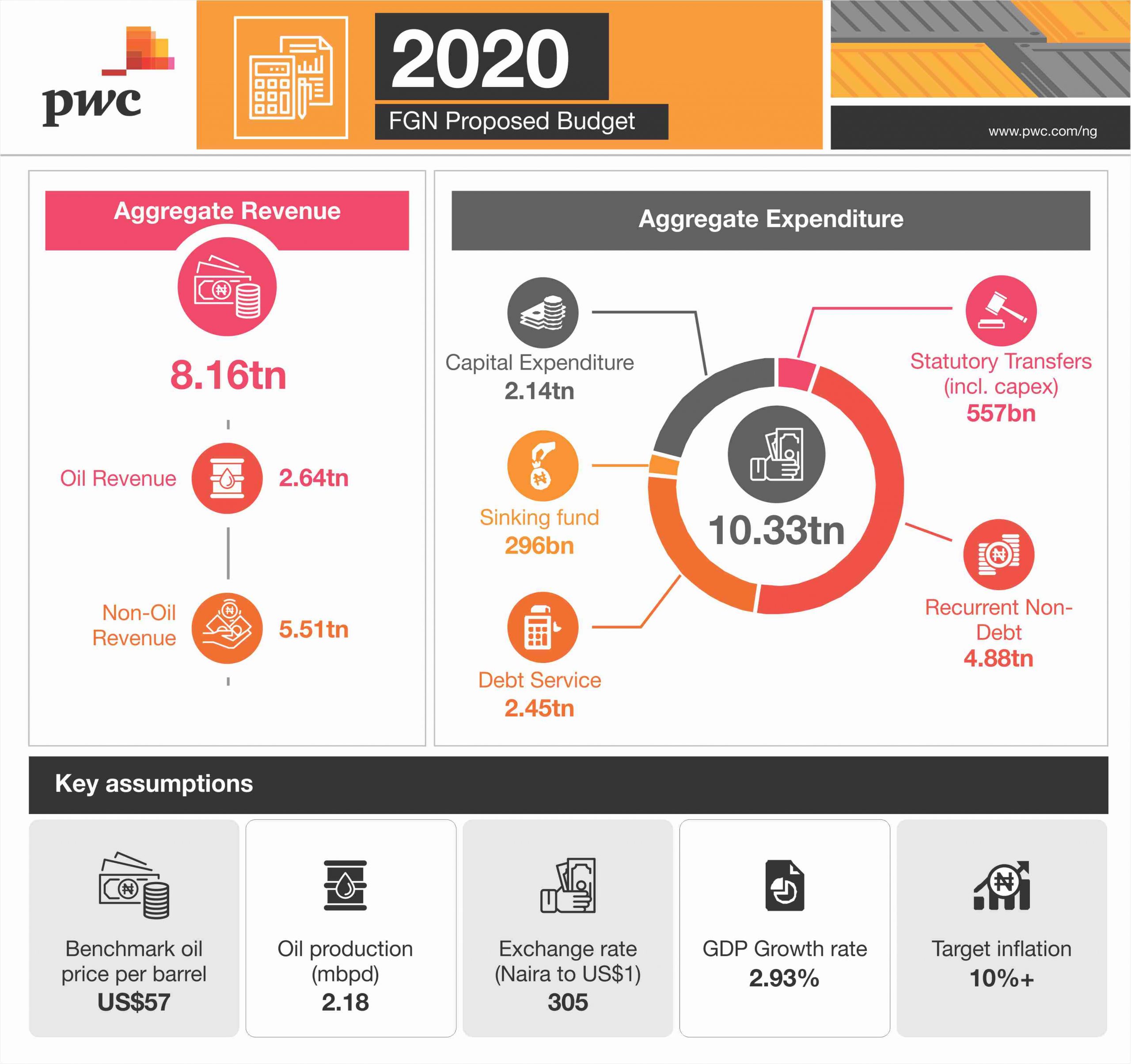
With our budget looking like $14 billion (debts servicing will take about $7 billion of that unless we renegotiate) and any hope of getting foreign loans vanishing, streamlining recurrent expenditure will be critical.  There are great ideas but I cannot write here as some would be tough choices which must be well managed to avoid breakdown of law and order. Mr President has some tools he can play to get Nigeria going. But he needs to lead and make hard choices.

There would be so much financial engineering for even that low number: the Federal Executive Council has approved reductions on capital budget by 20%, and 25% cut in recurrent expenditures. In short, I expect customs revenue to drop as import from Asia has crashed. Government’s plan to sell some assets like power systems will struggle as there would be fewer buyers; so that number has to go low in the budget.

And the big one: the government has frozen recruitment except for health services and security. I do not believe that one though, relying on past records. Tough months ahead across all sectors because this sub-$20 billion cannot be 70% executed. In other words, the real 2020 Nigerian budget is below $14 billion.

We need urgency because the private sector cannot lead this redesign. Arik just suspended flights to Ghana, Liberia and Senegal even as local airlines are battling the demon of coronavirus on passenger volume. The national assembly has frozen visitors and excursions indefinitely. If companies follow that path, Nigeria will crawl to a standstill. Governors in the northern part of the nation plans to shut down mosques to prevent spread in the nation. The impact on the private sector would be huge, and taxes would not save the nation. Yes, we expect the tax revenue to drop.

*there could be minor modifications on this proposed budget. But one signed into law was just about it.

Nigeria Reduces Petrol Pump Price to N125, But It’s No Good News

0

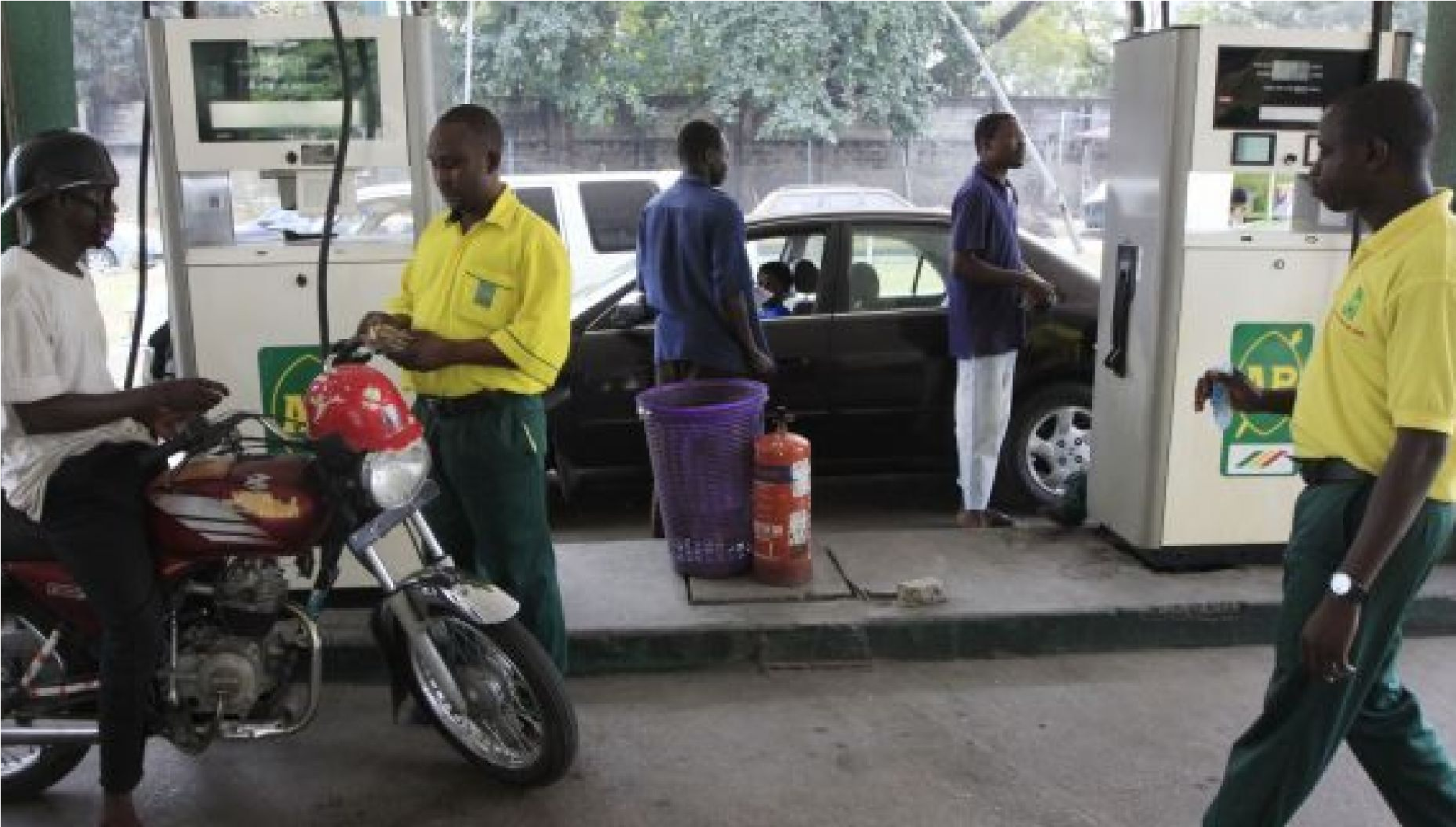
The Federal Government of Nigeria, on Wednesday announced the reduction of petrol pump price from N145 to N125. In a statement signed by the Honorable Minister of State for Petroleum Resources, Timipre Sylva, it said that the drop in global oil price has necessitated the reduction. Therefore, president Muhammadu Buhari has approved the pump price of N125 and directed responsible agencies to implement it with immediate effect.

“The drop in crude oil prices has lowered the expected market price of imported petrol below the official pump price of N145 per liter. Therefore, Mr. President has approved that Nigerians should benefit from the reduction in the price of PMS which is a direct effect of the crash in global crude oil prices.

“In view of this situation, based on the price modulation template approved in 2015, the Federal Government is directing the Nigerian National Petroleum Corporation (NNPC) to reduce the Ex-Coastal and Ex-Depot prices of PMS to reflect current market realities. Also PPPRA shall subsequently issue a monthly guide to NNPC and marketers on the appropriate pricing regime.

“The Agency is further directed to modulate pricing in accordance with prevailing market dynamics and respond appropriately to any further oil market development. It is believed that this measure will have a salutary effect on the economy, provide relief to Nigerians and would provide a framework for sustainable supply of PMS to our country.

“The Ministry of Petroleum Resources will continue to encourage the use of Compressed Natural Gas to complete PMS utilization as transport fuel,” the statement said.

A day before this announcement, former vice president Atiku Abubakar, among others, had urged the Federal Government to review pump prices to reflect the realities of the global oil market.

“As the landing cost of Premium Motor Spirit, also known as petrol, has reduced significantly, it is strongly recommended that the government should not absorb the savings, but should pass it on to the Nigerian people by way of reducing the pump price of PMS to reflect the current prevailing market costs,” he said.

Whilst the development has been seen as a step in the right direction in the face of looming economic turmoil, there is the dark side of it that may cause more harm.

In December 2019, crude oil price stood at $67.86 per barrel while the budget benchmark remains $57. In January 2020, due to drop in oil prices, landing cost dropped 34.2%, (N92.89 per liter). By March, the downturn in the oil market had taken the price further down. The Expected Open Market Price, (EOMP) dropped N112.26 according to the data published by the Petroleum Products Pricing Regulatory Agency (PPPRA).

The crashing oil price instigated a significant drop in the Cost Plus Freight of the commodity to Nigeria by 35.81%. The $575.81 cost per metric tonne, (N131.82, per liter) dropped to $369.62 per metric tonne (N84.60 per liter). That was the beginning of the events that resulted in the reduction of pump price.

While the oil price was dancing around $67.86 per barrel, the Federal government was paying N47.5 per liter in subsidy. As the price eventually plunged below the budget benchmark, creating a huge deficit in the budget implementation, it also relieved the FG of the burden of subsidy.

At the current price of $21 per barrel, over half of the budget benchmark has been wiped off, but on the other hand, the subsidy regime has been curtailed in the meantime.

From November 2018 to November 2019, the subsidy payment witnessed an increase of 2,001% from the previous year, representing N36.59 per liter.

Information published by DataPhyte indicated that Nigeria spent about N1 trillion, about 10% of its budget on subsidy in 2019 alone. In the same year, the country experienced a budget deficit of N1.92 trillion, indicating that 52% of the budget deficit has been as a result of petroleum subsidy. As oil market price increased, the Nigerian government was projecting N750.81 billion for subsidy in 2020, a decision that would likely result in a similar deficit on the N10.59 trillion 2020 appropriation bill.

But the $21 current oil price means that the government is no longer paying fuel subsidy, as landing cost has similarly reduced to the barest minimum. The situation left the government with two choices; continue to sell at N145 in Nigeria and save the excess to make up for the budgetary deficit created by the downturn in the oil market, or reduce the pump price as an austerity measure to curtail the impact of coronavirus on the economic needs of Nigerians.

The government chose the latter, resulting in the N20 reduction in pump price, which can only be obtained in NNPC petrol stations for now. Independent marketers said they cannot comply with the directive, citing old stock of petroleum products that reflects former costs.

However, Nigerians are likely going to pay more through the budget’s deficit as the realities of the global economic meltdown unfolds. Though the Federal Government is proposing to cut the 2020 budget size by N1.5 trillion, which puts it at N9.09 trillion, the deficit gap is still wide, and cannot be bridged by the revenue generated from other sectors.

Experts believe that the situation would have been contained with fewer challenges if the refineries are working.

While many see the pump price review as an austerity measure to alleviate the economic impact that coronavirus will have on Nigerians, others believe it to be a sign of incoming economic woes.

The Virus of Pains – Nigeria’s 2020 Budget Shrinks

1

If oil money powers your budget, and the benchmark is at $57 per barrel, giving you a $31 billion budget, there is sad news. Nigeria feels that way because the nation has cut the benchmark to $30. Largely, Nigerian budget is now sub-$20 billion, for 200 million people.

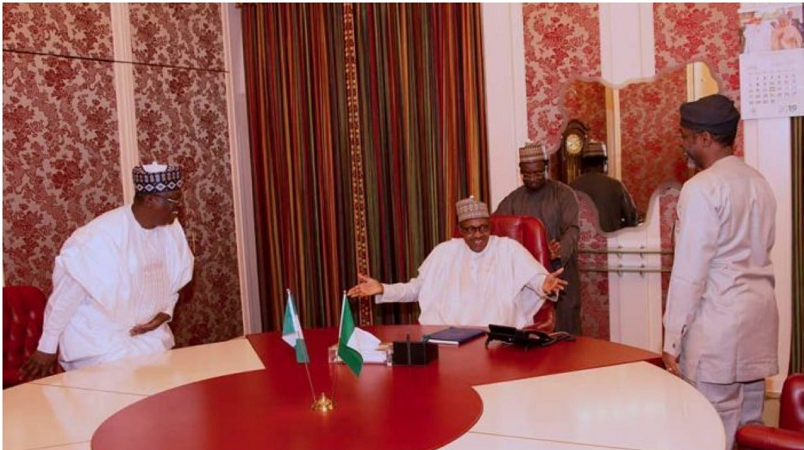
In the evening of Tuesday, December 17, 2019, President Muhammadu Buhari appended his signature to the 2020 Appropriation Bill of N10.59 trillion (about $31 billion at black market rate or $35 billion at official exchange rate)

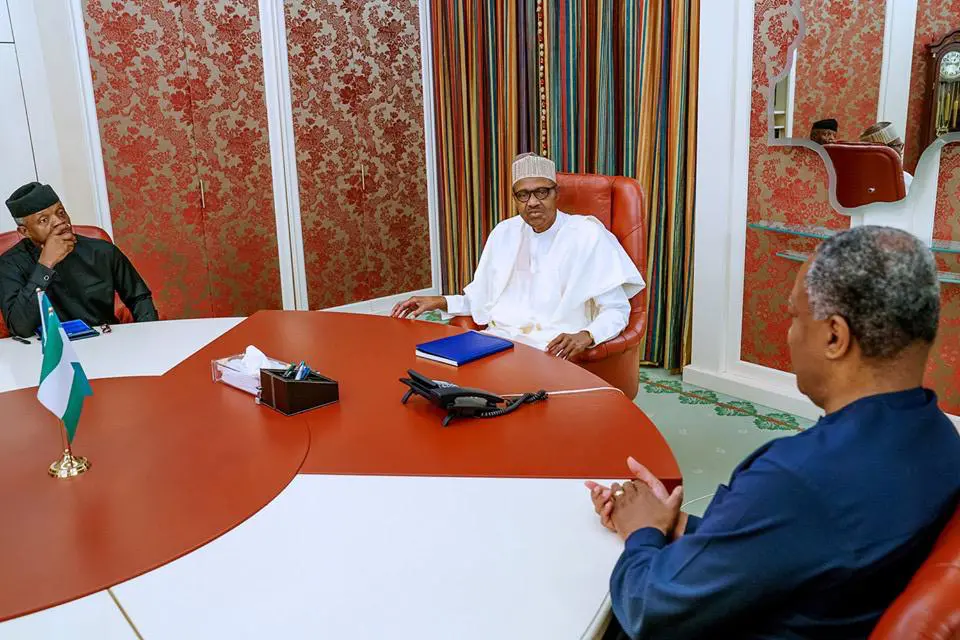
The budget was sent to the President last week by the national assembly for signing. Buhari who used the occasion of his 77th birthday to endorse the Appropriation Bill was surrounded by some members of his party administration.

Vice President Yemi Osibanjo; Senate President, Ahmed Lawan; House of Representatives Speaker, Femi Gbajabiamila; Secretary to the Government of the Federation, Boss Mustapha; Minister of Finance, Budget and National Planning, Zainab Ahmed and the Minister of State for Budget and National Planning, Clement Agba, all graced the occasion.

There would be so much financial engineering for even that low number: the Federal Executive Council has approved reductions on capital budget by 20%, and 25% cut in recurrent expenditures. In short, I expect customs revenue to drop as import from Asia has crashed. Government’s plan to sell some assets like power systems will struggle as there would be fewer buyers; so that number has to go low in the budget.

And the big one: the government has frozen recruitment except for health services and security. I do not believe that one though, relying on past records. Tough months ahead across all sectors because this sub-$20 billion cannot be 70% executed. In other words, the real 2020 Nigerian budget is below $14 billion.

Of course, the Central Bank of Nigeria has promised to inject N1 trillion into the economy. Yet, I do not see how Nigeria can service its debts obligations, pay politicians-at-service, pay public sector workers, and not devalue Naira or flood everywhere with treasury bills to mop cash. But we will see: miracles happen on Fridays and Sundays in that country, always.

“What Is The Best Business I Can Start Now?”

0

Tekedia Mini-MBA Participant: Sir, what is the best business I can start now?

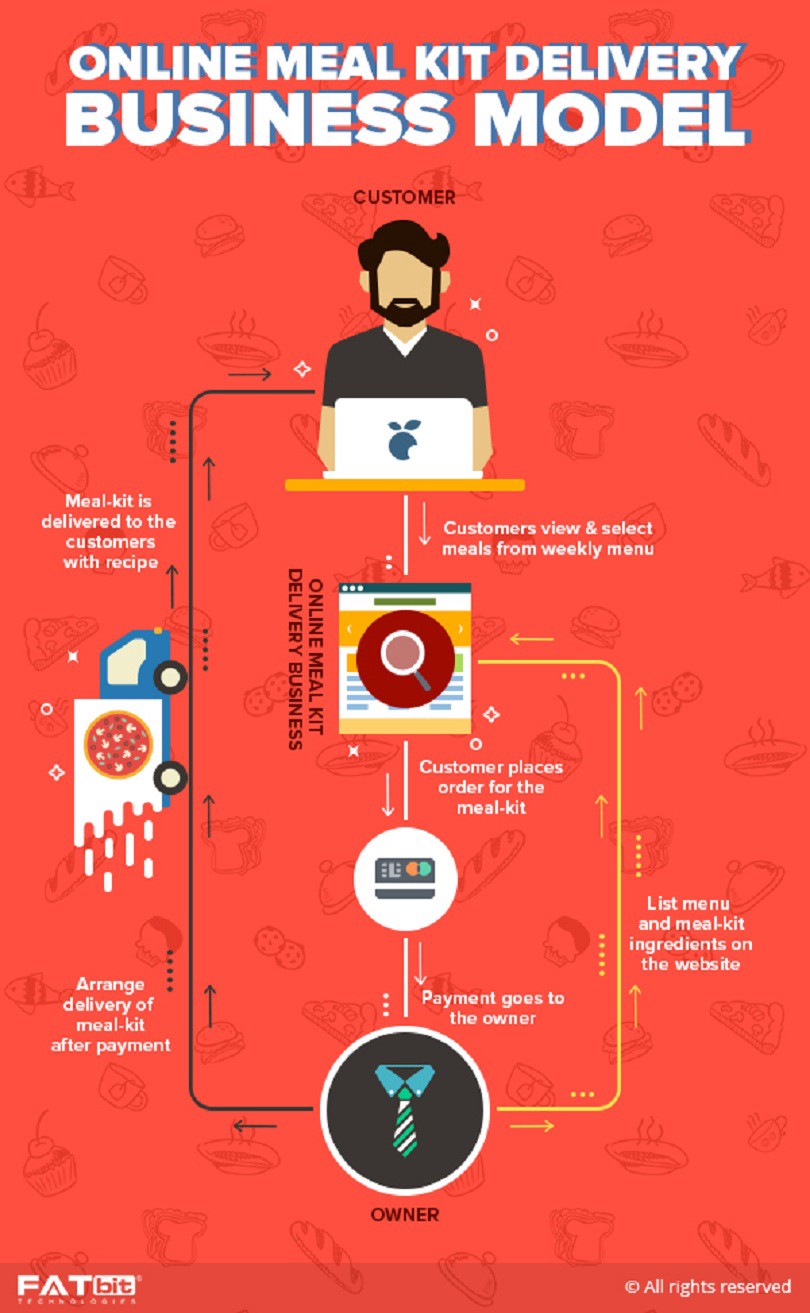
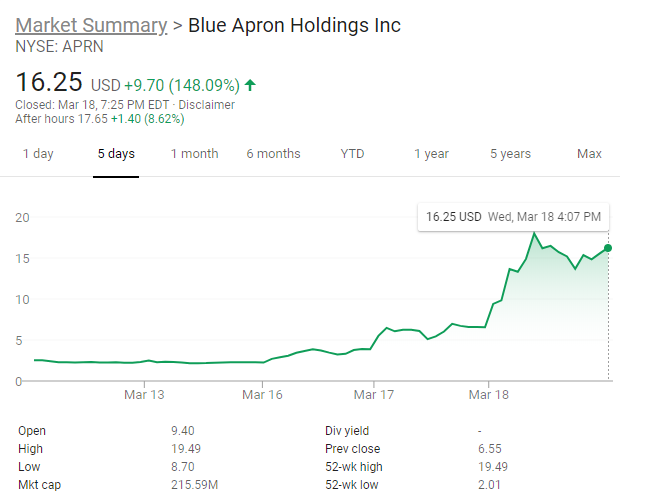
My Response: A business to deliver cooked or semi-cooked or ready-to-cook food to people in urban areas looks promising. As restaurants close, due to coronavirus and government instructions, mailed meal kits will become exceedingly vital. Data supports this: Blue Apron which delivers packaged ready to cook meals has seen its stock jump from $2.25 to $16.25 within two days! Unfortunately, coronavirus makes it nearly impossible to start such a business now as you would need to deal with many supply chain partners before you can put the digital sign, “We’re Open”.

Source: Medium