DD
MM
YYYY

PAGES

DD
MM
YYYY

spot_img

PAGES

Home Blog Page 6472

Pending Questions On The Almajiri System

3

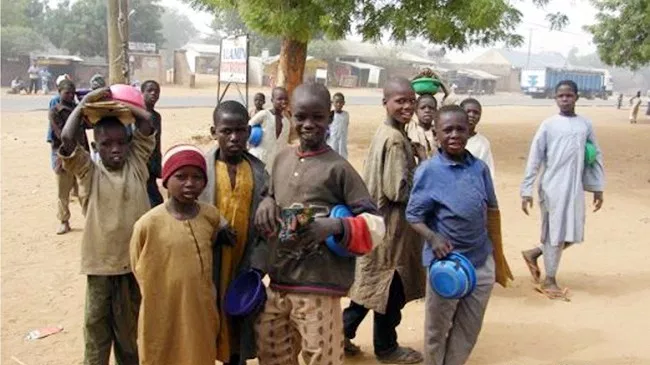
My first encounter with the almajiris was way back in the 80’s. Then, we, my family, were living in Katsina. I never understood what almajiri stood for but I knew enough to stay out of their way. If an almajiri breaks your head, the whole town will blame you because, well, he’s almajiri. If any of them comes to your house to ask for alms, just politely give them whatever you have and set them off as fast as you can without making it obvious you wanted them out of your house. Failure to give them anything at all, or that you handed them what you have insolently, could earn you shattered windows, and no one would scold them. They were more like the bull that belongs to an alusi (a shrine) that goes wherever it wishes, destroys whatever it wills, harms whoever it wants to, and still go scot-free. They were revered and scorned at the same time.

That was when I was still very young. So you can imagine how shocked I was to meet almajiri again in Kaura Namoda, Zamfara State when I went for my service twenty years later. The only difference was that the society now treated them as outcasts and wild animals. Then in Katsina, if an almajiri deliberately destroys something or hurts someone, without any form of provocation, you can complain to the elders, who will trace the ‘master’ of the almajiri to call his ‘students’ to order. But in Zamfara, the elders will advise that you have nothing to do with the almajiris because most of them have no ‘reg number’ (they don’t know who their masters were). In fact, most of them were just wanderers.

So we, the corp members, stayed away from them and they kept away from Corper’s Lodge. Like the natives of Kaura, we treated them as outcasts – never allowing them near us because of the volatile and pilfering attitudes. We were made to believe that they need no one’s pity and that they are immune to everything. So I actually never pitied them until I had a heart-rending experience.

This happened one cold early January-harmattan morning – those that have been to the far North during the harmattan period will understand how bad January and early February weather can be. I stepped out of my lodge to see if any ‘Mai Bredi’ (bread seller) will venture into the hazy cold and windy morning to buy bread from any of the nearby bakeries. I was startled by a heap of dirty white caftan clothes crouching close to the entrance door. I could tell it was a human being because I made out a portion of a head placed in-between the knees. But the head was the only visible part of the body because its owner withdrew his limbs into the thin material he wore in a bid to shelter his thin body from the biting cold and fierce winds. Whoever it was, was deeply asleep. He was in that state for the long short minutes I could withstand the harsh biting weather. I went back into my apartment worried that something will happen to that little boy out there and that corpers may be harassed for it.

Well, I took a little makeshift blanket, went out and covered the boy (even though I knew I wasn’t supposed to touch him since I’m a woman and all). He raised his head then and our eyes met. Trust me, what I saw in those eyes was painful. Anyway, I came out about 30 minutes later to check on my ‘visitor’ only to find an empty space. Both the boy and my blanket have disappeared. I never related this story to anyone because we have been warned of the human weapons embedded in almajiris – they are easily recruited as mercenaries to kill and maim. But my little encounter has shown me something I didn’t know before – those children crave for love and attention; and they are indeed suffering.

But one question I have asked myself several times (though I got a little insight into its answers during my stay in northern Nigeria) is, “why is almajiri systems still persistent in Nigeria?” As a mother, I know I can’t give up my children to pass through what these boys are experiencing. I also know that no father in his right senses will send his children into that. Besides, I found out that nobody living in Kaura Namoda sent any of his children into that life. Even the yam seller, popularly called Mallam Mai Doya, that was an ex-almajiri vowed never to let any of his children become an almajiri so long as he has life in him.

To answer this question, partially though, I found out that these almajiris come from the hinterland. They come from deep interior places in the north, where any form of civilisation does not exist. Some of them were brought by their parents and handed over to Islamic ‘scholars’ because they wanted their children to learn the proper ways of Islam and also to witness civilisation. I also heard that some of these mallams recruit almajiris from those interior parts and then send them into the streets in search of food. Whatever they collect, they bring back for their mallam, his family and for themselves. These are stories I gathered from some stakeholders in Kaura Namoda, anyway; empirical studies need to be conducted to ascertain their authenticity.

But one thing is certain about this system – it is harmful to both the nation and the children. It is anti-social and anti-human. It is barbaric and abusive. In fact, almajiri system, as I see it run in Northern Nigeria, is an exemplary case of child abuse. The way that boy took shelter in front of our lodge is the way others will seek shelter in other places. If they don’t see anywhere to hide their heads, they will settle directly under the elements. If they get sick, they have no one to cater for them. They are exposed to the elements. They are easy prey to dangerous people and animals. They have no future to look up to: they live in the present alone. They have to fend for themselves, thereby engaging in crimes so as to sustain their living. And here we are wondering why the rate of insecurity in the north is high.

But the essence of this article isn’t to describe who these almajiris are, because a lot of people already know them. I only have a few unanswerable questions concerning this Almajiri System that I’ll like the Northern Nigerian stakeholders to meditate on. They are:

  1. Is Almajiri System an Islamic thing or a Northern Nigerian policy?
  2. If Almajiri is from Islam, how come none of the pure Islamic countries practice it?
  3. Why is it that the children of the rich never join the almajiri bandwagon?

And for the Nigerian government, I’ll like to ask, “how come Almajiri system has not been outlawed from the country?”

Almajiri: Is the Ban On Street Begging The Solution?

0

The Kano State Government has announced a ban on the practice of street begging known as Almajiris. The development is part of the efforts of the State Government to implement compulsory basic education for the state and eliminate the menace of out of school children. The announcement was made during the launching of Basic Education Service Delivery for All (BESDA) and Distribution of offer of Appointment to 7,500 volunteer teachers on Tuesday, at Sani Abacha Stadium Kano.

The Kano state Governor, Abdullahi Ganduje said the Almajiri system can longer be condoned and teachers in the state must come in terms with the new development.

“If Almajiri teacher thinks he cannot accept the new policy he has to leave the state,” the governor said.

The new law on compulsory basic education stipulates serious punishment for parents who let their children on the loose to beg in the streets.

“When Almajiri are caught begging, it is not only that beggar is caught, but his parents or guardians. Such parents or guardians would be taken to court to face the wrath of the law.

“This policy of free and compulsory basic and secondary education goes along with its integration of our Almajiri system into the mainstream policy implementation. This suggests that English and Arithmetic must be included in the Almajiri schools’ curriculum,” Ganduje stated.

The former president Goodluck Jonathan invested N15 billion in Almajiri schools to encourage education in the north where there is an alarming number of out-of-school children. Alas, the schools were abandoned to their ruin until now.

Ganduje said the newly introduced system will incorporate English and Math with Islamic studies to enable the children to acquire religious knowledge.

“That will give them an opportunity to continue with their studies to secondary schools and beyond,” he said

He also added that the newly recruited 7,500 teachers will be posted accordingly to implement the new education policy.

“They will be posted to Islamiyyah and Almajiri schools, so that our Almajiri schools would be fully integrated under our new policy of education,” the governor added.

Kano State is notorious for mendicancy, especially by school age children. According to UNICEF, Kano is home to about nine million out-of-school children in northern Nigeria, a situation that does not only breed a bleak economic future for the country but also offers children up for radicalization.

Senate president, Ahmed Lawan said during his time as a senate leader in the 8th National Assembly that the practice of Almajiri has become a way to give terrorists easy targets to recruit.

“The recruits are there; those of 17 years of age who are supposed to be in school but are roaming the streets. Though it’s controversial, a time has come in those states where the Almajiri system was established for over 100 years to see how we can work out a model that will ensure that the system did not continue the way it is today.” Lawan said.

Apart from Kano, other northern states entertain a proportionate share of the Almajiri system, a situation that has also been linked to the prevalence of drug abuse in the region. The Emir of Gwandu and Chairman, Kebbi State Council of Chiefs, Alhaji Muhammad Bashar, adding voice to issue said it’s a shame to the north that such a detrimental system still exists.

“It is a shame on the north that you see Almajiri everywhere begging in the streets. The North West has the highest number of drug addicts in Nigeria,” he said.

While there has been considerable applause for the step taken by the Kano State Government, there are also doubts that it may fail. The fear comes from the belief that allowing the Almajiri into the education system will always result in street begging and eventually, turn of events that will threaten sound youth development and pose a danger to the general public.

It is believed that some other factors need to be addressed for the ban to be effective. Shehu Sani, a senator in the 8th Assembly, voicing his concern about the Kano State’s decision said that more laws are needed to put an end to street begging in the north.

“A law no matter how punitive can’t stop or end begging. Many states tried it in the last twenty years, it never worked. The Economic, Social, Religious and Cultural contributing factors must be addressed. A law enforced can disperse them for a while and the factors will return them,” he said.

While many maintain that there is difference between begging and Almajiri, and the latter is culture to be preserved, the reality is suggesting that the latter will never function without the first. Because Islamic tenets in northern Nigeria have promoted polygamy so that men of little means could marry many wives and make many children, even when they apparently have no means of taking care of them.

The former Central Bank of Nigerian governor, now Emir of Kano, Sanusi Lamido Sanusi said the social crisis is being fostered by parents and governments.

He said the crisis has escalated since 1999/2000 when 12 northern states declared that they have adopted sharia Legal System but ignored integral parts of it that addresses important family issues such as child rearing.

“What you deal with is parents forcing young daughters into loveless marriages, arbitrary divorce, and lack of care within marriage after marriage; everyday wives are complaining about husbands who claim their rights but do not face any of the responsibilities of marriage. Women being divorced with their children and husband not taking care of the children, and those children end up on the streets, drugs, political thuggery and violent extremism.

“We speak of the Almajiri problem as if Almajiri is the problem when in fact the problem is the irresponsible fathers who leave their children on the streets, and it’s important that we understand what are the roles and responsibilities of those who have political authority, especially those at the state level, on decision,” the Emir Sanusi said.

The fundamental factors fueling the street-begging crisis in the north appears to be far from the streets, they stem from homes, religious belief and governmental policies that make room for them all. And until it is tackled from these bases, government efforts to quell it will only yield temporary results.

African Top Economies Taking on Wind Energy for Power Generation

0

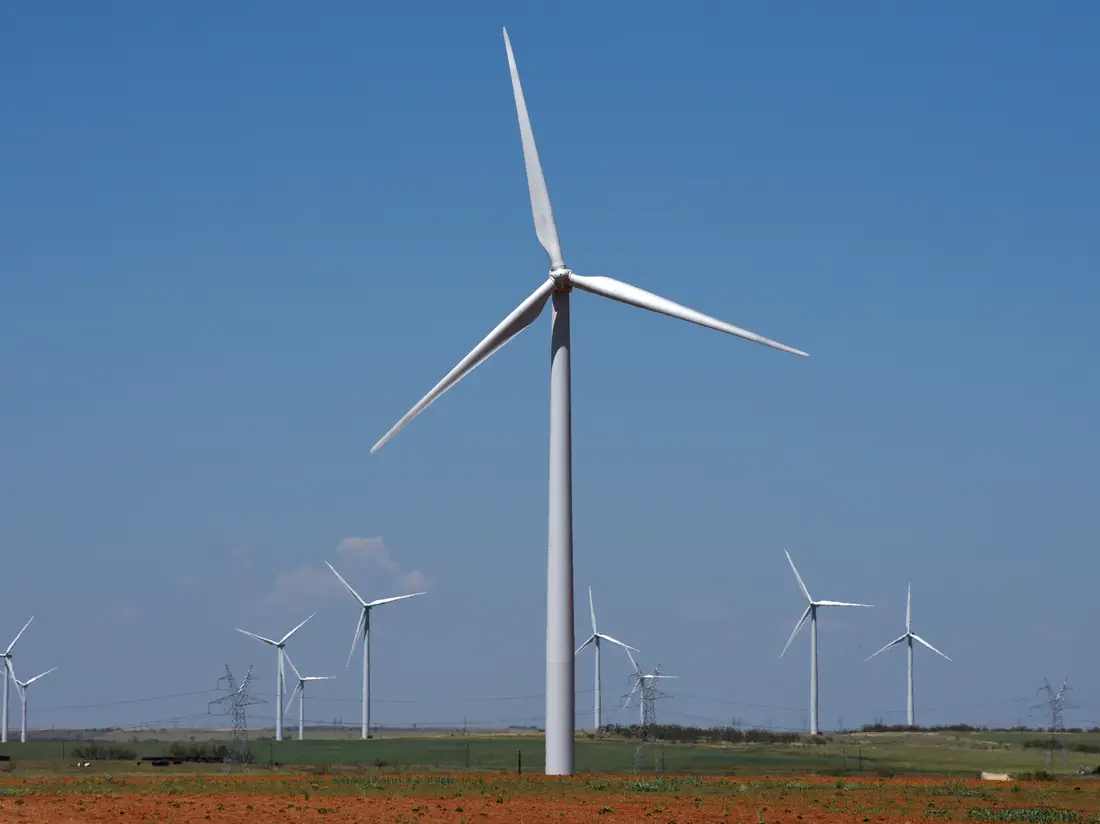
As the quest to electrify Africa continues, African countries are exploring alternatives to gas and solar energy to power electricity. Wind power has become one viable option that leading economies in the continent are tapping into.

Africa is the least electrified continent in the world with a booming population of young people pushing through entrepreneurship; the situation has dampened its economic growth, making more rooms for unemployment.

Industrial activities have also been stymied, and it wanes the interest of potential foreign direct investments. Efforts to curtail the deficiencies have been in slow pace. National grids are underperforming, producing much less than what is required for electricity stability. In Nigeria, power generation still hangs around 4,000mw when the country, with a population of about 200 million people, needs 180,000 megawatts to generate enough power for constant electricity supply.

Solar energy and coal have been used as alternatives to power generation but they have also fallen short of the required capacity, and their efficiency has become questionable due to technical shortfalls especially solar panels. And in an era when the world is pushing for cleaner energy, various options are being entertained outside gas powered electricity.

In search of diversified alternatives, African countries are taking aim at wind energy. Last year, following the lead of Egypt, Morocco, Ethiopia and the Middle East installed about 900 megawatts of wind power. The development is attracting others who eagerly look for a solution to their epileptic power situation.

On Monday, Senegal inaugurated the largest wind power plant in West Africa. The plant is projected to supply up to 15% of energy to the country’s national electricity company, Senelec’s energy production.

The plant which was built by British renewable power company Lekela, is said to have 158 megawatts capacity and took a period of 24 months hours to be built. The Senegalese president Macky Sall said the plant is evident of the country’s resolve to find a new approach to its electricity generation.

“A new step in the energy market towards an emerging Senegal. Emerging Senegal, a Senegal that is fueled by its momentum through an energy mix that combines all of our potentials to ensure continuous quality service at competitive costs,” he said.

The president said two million people will gain access to electricity through the wind power project. Senegal has about 35% deficit in electricity supply, prompting the government to include power efficiency into its plan of making West Africa an emerging economy in 2025.

South Africa is planning to add 3.3 gigawatts to its energy capacity by 2024 using wind power. The country has been struggling to keep its electricity capacity in par with the growing population and economic progress. The lapses in the country’s electricity supply have doubled recently, resulting in blackouts and suggesting a need for diversification of its power sources. In the quest to meet the growing demand, South Africa needs to expand its electricity infrastructure, and the country has adopted wind energy as the alternative.

Kenya has also taken on a giant wind energy project in a desert located 600 kilometers north of the capital Nairobi. Described as Africa’s largest wind power project, the Lake Turkana Wind Power farm is made up of 365 turbines with a power dispensing capacity of 310 megawatts. It is expected at completion to supply cleaner electricity at a more affordable cost compared to the national grid.

Ethiopia is notable for its Ashegoda Wind Farm, the turbine has 120 megawatts power and supplies electricity to about 3 million people. Located 780 km north of the capital Addis Ababa, the wind plant has reduced the cost of electricity allowing the Ethiopian Electric Power Generation Corporation (EEPCo) to produce each kWh at a low cost of about $0.08 per kWh.

In Egypt, the Ras Ghareb Windfarm with 262.5MW capacity project has been developed close to the Gulf of Suez, about 30 km from north-west of Ras Ghareb. The wind farm is expected to supply electricity to about 500,000 households, according to power-technology website. It is also expected to help the Egyptian government’s target of 20% supply of electricity from renewable energy sources by 2020.

One of the major challenges so far has been efficient wind to power the turbines. According to the Renewable Energy Focus, annual average wind speeds greater than 4 meters per second m/s (9mph) are required for small wind turbines. And for larger scale turbines, a minimum average wind speed of 6 m/s (13 mph) is required. So the coastal regions of the continent are the best places to situate the wind farms.

The Global Wind Energy Council (GWEC)’s data shows that wind energy installation is expected to increase over the next five years, and the African regions are expected to install 10.7 gigawatts by 2024.

Improving Tertiary Education in Nigeria

1

Cultism, stealing, alcoholism, smoking, prostitution, examination malpractice, and lobbying are no longer news in our tertiary institutions. The majority of students on campuses have found several vices to keep them occupied rather than their studies. Youthful exuberance and juvenile delinquency are now the order of the day.

With no fewer than one million students seeking admission into tertiary institutions every year and about half of them succeed, I do ask myself, what is the drive behind Nigerian youths wanting to further their education? Is there clarity of purpose or even an atom of ambition that is propelling them to pursue higher education? Were they properly guided?

Now, I know that the majority of parents do counsel their wards before sending them to the various educational institutions scattered all over the country, our colleges, polytechnics, and universities also organize seminars, conferences, and workshops for newly admitted students (freshers) for the aim leading them in the right direction, warning them of the dangers of academic levity, joining bad groups and indulging in anti-social activities.

I feel that the damage has already been done as soon as the gates of our institutions have been opened to them. I believe the major aim of higher education at every level is to prepare the youths to become active and productive members of society and secondly, to meet and match industry demand with a competent and globally competitive workforce. If that’s the case, our tertiary institutions are not looking for numbers of students, there is no competition on which school is most populated, there is a common goal which is to; advance Nigeria’s economic growth and global competitiveness through the provision of accessible, relevant, high-quality education in our Tertiary Education Institutions. To constantly attract, develop and graduate competent, knowledgeable and talented individuals from our Tertiary Education Institutions.

Then granting admission to thousands of students on the basis of their ability to pass Maths and English (which many even cheat to do so) is not good enough!!.

This is one of the reasons we are having problems in our various schools today and it will end up affecting our nation in the long run. These individuals will, later on, be released into society, most of them unqualified to compete in the job market.

Mind you, I’m not writing off the incentive of parental counsel and Freshers’ orientation but most times at that stage, the die had long been cast.

The strategy our educational institutions should employ, first; staff associated with our educational institutions should stop accepting bribes to grant admissions. Integrity would go a long way to curb this plague ravaging our campuses. Secondly, no individual should be given admission until he or she declares their major purpose in becoming a graduate or state their reasons for choosing to further their education.

This could be done in the form of an essay writing and included in the aptitude tests of all institutions in the country. The write-ups of the individuals should be carefully read and assessed. The ones lacking purpose or conviction should be dropped even when the individual does very well in the Maths and English sections.

This would be a worthy improvement, I don’t see anyone cutting corners with this method. If this strategy be properly implemented, it would result in a drastic reduction in the number of hooligans and lawbreakers that the gates of our educational institutions are being opened to every year

I leave you with a quote of Swami Vivekananda, an Indian Monk;

“We want the education by which character is formed, strength of mind is increased, the intellect is expanded, and by which one can stand on one’s own feet”.


Why I Am Against Freemium Model, Without Double Play, in Africa

0

Some emails on the Freemium & Free section in the lecture material for Tekedia mini-MBA Week 3. The fundamental premise why I had suggested that a Freemium-based business in Africa without a Double Play is faulty is as follows:

  • Building a website with enough traffic to boost those two coefficients in my break-even traffic equation is tough, for advertisement to make sense (that is a FREE model). With supply of contents unbounded, it is a hopeless strategy. Google last month cut earnings by 50%; you need 2x traffic or clicks to earn what you could have earned in Dec 2019.
  • Freemium model is based on a faulty acquisition plan, copied without strategic thinking from U.S. In U.S., the key thing is to acquire new users who already have resources to afford your product. Once you acquire them, there is a likelihood for conversion (i.e. they become paying customers) due to inertia (i.e switching cost is high, for e.g. to change a bank account). In Africa, most times, your customers do not even have the means to afford that product. So, if you give them free, they come, but once you turn the paywall, they leave,not because they do not like the product but rather they do not have the money to pay!
  • But if you have a double play, you can offer freemium in one product, and then monetize in the other product. For example, make an ecommerce marketplace free but all payments must go through your fintech subsidiary. From the fintech, you will make your money via transaction fee while the free marketplace accelerates growth faster. That is double play there.

Sure, if you run an NGO, nothing stops you running a freemium model; any day you run out of cash, you fold. But if you do not want that outcome, find a way to ensure customers pay, no matter how small.


You Can Still Register for the Ongoing Tekedia Mini-MBA