The world of sports is gradually coming to a halt due to the spread of coronavirus. The impact is forcing the suspension of sports activities along other events that functions through large gatherings.
The Union of European Football Association (UEFA) has announced that the Champions League and the Europa League may be suspended in an effort to curtail the spread of the virus. UEFA made the announcement on Thursday as concern over the welfare of fans and footballers heightened in Europe.
“In the light of the ongoing development in the spread of COVID-19 across Europe and the changing analysis of the World Health Organization, UEFA has today invited representatives of its 55 member associations, together with the boards of the European Club Association and the European Leagues and a representative of FIFPro, to attend meetings by videoconference on Tuesday 17 March to discuss European football’s response to the outbreak.
“Discussions will include all domestic and European competitions, including UEFA EURO 2020. Further communication will be made following those meetings,” the statement from UEFA said on Thursday.
The WHO has published further findings about the coronavirus that require further precautionary measures, especially from those in the sports business. Scientists now believe that coronavirus can survive in the air for three hours, and it can stay alive on copper for four hours, and 24 hours on cardboard and 72 hours on plastic and steel.
The recent finding puts the entire world of athleticism in an impossible position following the number of athletics who have been confirmed positive since the past two days.
Juventus defender Daniele Rugani tested positive on Wednesday, Sampdoria also announced that Manolo Gabbiadini has been confirmed positive on Thursday. In Madrid, one of the club’s basketball players has also tested positive and the entire squad has been placed in two weeks isolation. The Champions League match between Real Madrid and Manchester City has been suspended for two weeks.
For the first time since World War II, Italy imposed restriction on the movement of its citizens. The country is the second most badly hit by the COVID-19 after China, forcing the government to place public activities on hold. Italians are urged to stay at home and the Serie A and Serie B have been indefinitely called off.
The Spanish first and second division leagues have been postponed for two weeks while the Champions’ League match between Barcelona and Napoli will likely be called off. The earlier decision has been to play the match behind closed doors, but the recent development is presenting an inevitable choice of postponement that UEFA may likely accept.
Meanwhile, both the Dutch Eredivisie and the Portuguese have both been suspended while the Ireland Football Association has announced the all football matches under its jurisdiction have been placed on hold until March 29.
French and German games will be played this weekend without fans. The English Premiership seems to be the only league in Europe that has not been entirely disrupted. But the Football Association announced on Wednesday that the game between Arsenal and Manchester City has been postponed as a precautionary measure.
In the US, the National Basketball Association (NBA) has suspended the league for the rest of the season as the number of cases and deaths keep rising.
Formula 1 Australian Grand Prix has been canceled after a member of the McLaren team tested positive and the boxing match between Shakur Stevenson and Michael Conlan’s has been forced behind closed doors.
With 133,181 cases and 4,950 deaths, the WHO has declared the outbreak a pandemic and discourages gathering of large crowds as a proactive measure to contain the surge.
Therefore, the UEFA meeting will likely result in suspension of the Champions League and Europa League, following the steps of other sports bodies around the world. Most cities in affected countries are banning the gathering of 500 people and above. The New York City Governor Cuomo has announced that the state is adopting that approach, which will make it impossible for sports activities to hold with spectators.
Sports analysts are calling for league bodies in Europe to call sporting events off, especially in the face of defiant attitude by the British government. Sports analyst Piers Morgan hit out at the British government on Thursday for allowing large gatherings to continue and sports events to continue.
“Britain is not closing schools, banning sports events, or stopping any large public gatherings. Little difference between the ‘contain’ & ‘delay’ phase,” he tweeted. “Yet so many other countries are doing all those things, including Ireland as from tonight. Why the contrary advice”?
Greetings. On Tekedia Mini-MBA, please note that contents go live at the digital board 12 noon Lagos time every Monday. I am sharing the last five sessions below:
This remains the best path to the contents – the digital board with new session added weekly https://www.tekedia.com/dboard/
As always, I am here for all your questions. After next week, we will have our first lab. Please note that next week will focus on capital markets, fundraising and investments. How do you prepare and hedge for coronavirus? Check out on Monday.
Regards,
Tekedia Team
tekedia@fasmicro.com
You can still register and join Tekedia Mini-MBA. Follow this instruction here.
Assignment for this weekend: no matter your position at work, I challenge you to use this weekend to think about your job security. Freeze that vacation and the big “toy” purchase. And this applies to government workers: you can be months off salaries in Nigeria. It has happened in Abia state where the government allowed some post-secondary schools to run out of cash – and naturally closed. Abia State College Of Education Arochukwu “natural” closure saw the workers losing their jobs! Add General Hospitals, you get the idea. Coronavirus will scale these paralyses and the next 3 months could be extremely challenging: conserve cash and prepare. Our markets are collapsing as NNPC notes.
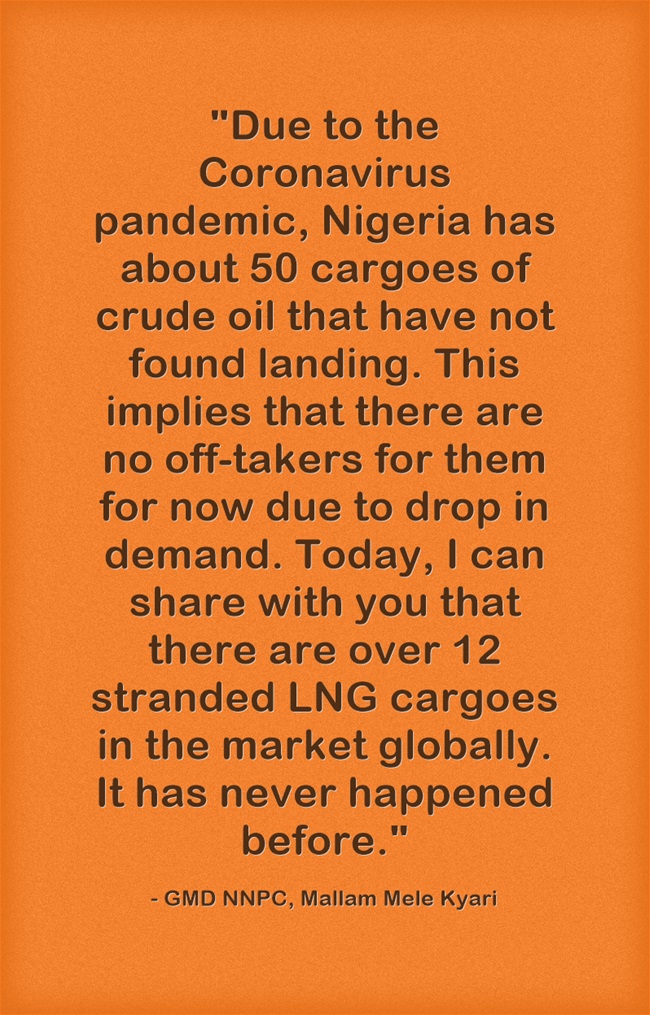
In a statement in Abuja, Group Managing Director of the NNPC, Mallam Mele Kyari, who was speaking at the Central Bank of Nigeria, CBN, Round Table discussion, also warned of serious economic challenges as a result of the falling crude oil price.
He called on government at all levels, captains of Industries and the organized private sectors to brace up for the new low regime of global crude oil prices, while he added that realistic estimates must be made to reflect the current realities of the crude oil market.
Despite the global downturn, Kyari, however, stated that the NNPC was working round the clock to increase the countries daily crude oil output to three million barrels per day and shore up the country’s crude oil reserves to 40 billion barrels.
With Europe feeling the pains of travel bans from godzilla America, you will laugh that even coronavirus can make big boys weep. Imagine someone telling German airlines that we do not want you in the U.S. because you are bringing in restricted cargoes! France, Italy and the rest look small today (they’re not happy). Trump does not care – and you cannot blame him because he took the oath to protect Boston, not Berlin!
“Non-Schengen and UK excepted: this is not about containment, this is about sending a political message. In a time where the EU is challenged to its core, the US is closing its borders and turning its back on allies,” tweeted Benjamin Haddad, director of the Future Europe Initiative at Atlantic Council.
Al Jazeera’s Laurence Lee, reporting from London, said: “The EU is absolutely furious about this, bewildered, and trying to work out what the ramifications are. They weren’t consulted apparently before Trump said this in the middle of the night, European time.
“They are trying to understand what it means. There are enormous concerns about trade between the EU and US.
This time is different: prepare. Whenever the Dow suffers like this – 7% off again today – mainstreets across the world see challenging times.
The Dow Jones Industrial Average fell by 2,000 points Thursday morning after President Donald Trump’s long-awaited response to the coronavirus epidemic triggered a massive sell-off on Wall Street.
The S&P 500 plunged by 7 percent, triggering a circuit breaker, which halts all trading on the New York Stock Exchange for 15 minutes.
All three major averages sank after Trump’s Oval Office address Wednesday night failed to satisfy traders who were hoping for more concrete steps to allay any economic slowdown from the viral outbreak.
This is now the worst week for markets since the 2008 financial crisis, with trading halted twice on Thursday morning. The first time came after all three major averages sank below the 5 percent “limit down” marker in premarket activity
In politics, we have polling legends. They are legends because they have figured out mechanisms to understand the voters.Because elections actually do have hard outcomes (yes, who wins), electoral polling is not an easy job. More than 90% of U.S. pollsters, experts in their domains, failed to predict the Presidency of Donald Trump. In practically anything else but election, they would remain correct because there would not have been a way to know the real mindsets of the voters or customers! So, those reports on consumer preferences, consumer trends, etc are all yo-yo because there is no way to know, absolutely! They could be right. But they could be wrong. And there is no clear way to make that call.
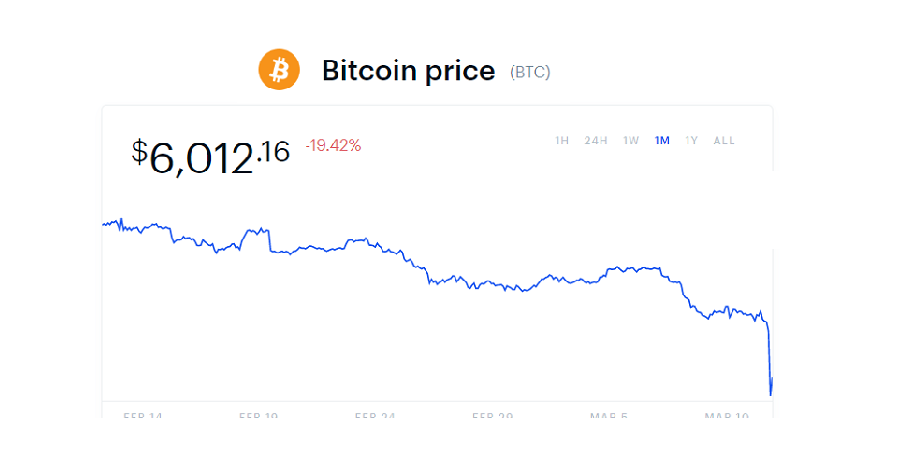
That takes me to cryptocurrency. As coronavirus shakes empires and territories, I have expected Bitcoin to rise up to its “promises”. Unfortunately, Bitcoin at the moment is under serious virus attack. Yes, the value of Bitcoin is falling just as stock markets are crashing.
The promise was this: Bitcoin and cryptocurrencies would be uncorrelated to main asset classes like stocks. So, in the days when stocks are falling, Bitcoin would be expected to hold firm, and that means NOT fail in value. As I write, Bitcoin has been falling just as stocks and with the partial disconnection of the U.S. from Europe (minus UK), announced by Trump last night, I expect Bitcoin to be under higher gravity.
The summary is this: people were unfair to Bitcoin by overselling this technology. As a means of exchange, Bitcoin and other cryptos have real values, but as a means to store value, I doubt. Under coronavirus, markets have validated that Bitcoin cannot store your value because Bitcoin is a source of liquidity and cannot be uncorrelated to main markets during crises. If your margin position in a stock is off, you can sell Bitcoin to cover the position and be at parity. Simply, Bitcoin becomes a liquid asset. Provided Bitcoin has that liquidity, its trajectory cannot be uncorrelated with main markets.
All Together
If we just decide to focus on the mission Bitcoin was originally created, as a means of exchange, not as an investment asset, the technology has a great promise. That is why I am all in for a stablecoin for Nigerian naira under the full control of Nigerians, pegged to the real naira, running a native blockchain with APIs to boost the sector by giving access to companies and startups to do trade and commerce in a transparent ecosystem.
The global spread of Coronavirus has shown that political and business leaders have huge responsibilities in the new decade towards sustainable living for all. Since the first case of the virus was reported in Wuhan on December 21, 2019, the world has been tested with varied challenges and still undergoing a lot in business, social participation and household living.
From the ordinary citizen of the world to the governments, businesses and professionals, especially health workers need to come to their rescue. The virus, which has symptoms such as fever, shortness breath, severe cough and pneumonia has infected hundreds of thousands and killed thousands in China, the epicentre of the outbreak and in Italy, Iran and other countries.
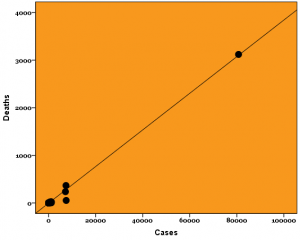
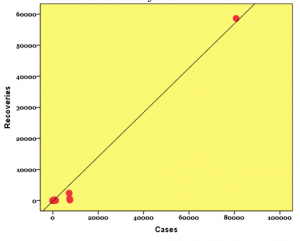
According to March 9, 2020’s data, 111,637 were the confirmed cases, while 62, 518 people were reported as recoveries. On the day, 3,898 deaths were reported as cumulative figures since December 21, 2019. Our analysis shows that the confirmed cases and deaths connected by 99.7%, while it was 99.2% for the cases and recoveries during the period.
Much has been said and reported about the virus. We also believe that concerned stakeholders will continue to consider the virus for public and policymakers’ agenda in the next months. With this, our analyst examined the place of the global academic community from October, 2019 to March, 2020. Specific attention was paid to academic publications and real time data for better understanding of what scholars have done before the first case was reported and within the first case till date.
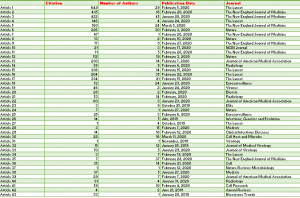
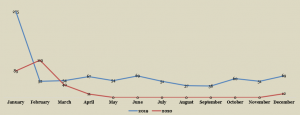
Google Scholar and ProQuest Central Academic Databases were the sources of the data for the analysis and insight development. Coronavirus and Coronavirus 2019 were used as the keywords for the retrieval of academic publications from the databases. On the Google Scholar, we analysed the first articles that were extracted from the first 5 result hit. This led to analysis of 43 relevant journal articles [see Exhibit 3]. Five hundred and four scholars wrote the articles. These articles have been cited 4,194 times by other scholars. On average, our analysis indicates that 11.72 authors per article, while average citation was 97.52 times. Looking at the severity of the citation (142.630 standard deviation), analysis suggests the degree to which collaboration among scholars can help in increasing public knowledge and understanding of a global outbreak of a disease. The inclusion of the keyword (Coronavirus 2019) gave us 875 scholarly publications between 2019 and 2020 [see Exhibit 4].
Exhibit 1: Link between confirmed cases and deaths
Source: World Health Organisation, 2020; Infoprations Analysis, 2020
Exhibit 2: Link between Confirmed Cases and Recoveries
Source: World Health Organisation, 2020; Infoprations Analysis, 2020
Exhibit 3: Select Journal Articles
Source: Google Scholar, 2020; Journals, 2020; Infoprations Analysis, 2020
Beyond the demographics of the publications, our analyst is interested in understanding the justifications for carrying out the studies that led to the publications. The Analyst also finds out the main results from the first 5 publications with the highest number of citations. These publications were considered because the Analyst is curious about the intent of other scholars who cited the publications and the place of the number of authors in fueling the public knowledge seeking about the virus through the Internet, especially searching evidences that establish containment and mitigation strategies.
Clinical features of patients infected with 2019 novel coronavirus in Wuhan, China is the first article on the Google Scholar Database with 649 citations. The article was authored by 29 scholars and published on February 5, 2020. Majority of the scholars are affiliated with universities, centre for diseases control in Asia, Europe and America. Using the cluster of pneumonia cases in Wuhan, China, the scholars report the epidemiological, clinical, laboratory, and radiological characteristics and treatment and clinical outcomes of these patients.
The second article titled A Novel Coronavirus from Patients with Pneumonia in China, 2019 was carried out based on the identification of a novel CoV (2019-nCoV) in hospitalized patients in Wuhan in December 2019 and January 2020. “Evidence for the presence of this virus includes identification in bronchoalveolar-lavage fluid in three patients by whole-genome sequencing, direct PCR, and culture. The illness likely to have been caused by this CoV was named “novel coronavirus-infected pneumonia” (NCIP). Complete genomes were submitted to GISAID. Phylogenetic analysis revealed that 2019-nCoV falls into the genus betacoronavirus, which includes coronaviruses (SARS-CoV, bat SARS-like CoV, and others) discovered in humans, bats, and other wild animals.”
Early Transmission Dynamics in Wuhan, China, of Novel Coronavirus–Infected Pneumonia. This is third most cited article, according to our mined data. The scholars analysed “data on the first 425 confirmed cases in Wuhan to determine the epidemiologic characteristics of NCIP. Among the first 425 patients with confirmed NCIP, the median age was 59 years and 56% were male. The majority of cases (55%) with onset before January 1, 2020, were linked to the Huanan Seafood Wholesale Market, as compared with 8.6% of the subsequent cases. The mean incubation period was 5.2 days (95% confidence interval [CI], 4.1 to 7.0), with the 95th percentile of the distribution at 12.5 days. In its early stages, the epidemic doubled in size every 7.4 days. With a mean serial interval of 7.5 days (95% CI, 5.3 to 19), the basic reproductive number was estimated to be 2.2 (95% CI, 1.4 to 3.9).”
First Case of 2019 Novel Coronavirus in the United States. The authors report “the first case of 2019-nCoV infection confirmed in the United States and describe the identification, diagnosis, clinical course, and management of the case, including the patient’s initial mild symptoms at presentation with progression to pneumonia on day 9 of illness. This case highlights the importance of close coordination between clinicians and public health authorities at the local, state, and federal levels, as well as the need for rapid dissemination of clinical information related to the care of patients with this emerging infection.” A novel coronavirus outbreak of global health concern. This article focuses the demographical details of the first victims.
Scholars as Advocates
From the reasons and discoveries, it has emerged that the scholars who authored the articles had the intent of helping other stakeholders such as ordinary citizens, businesses and governments in knowing evidence-based information that could be leveraged for containment and mitigation purposes. In addition to this, our analyst notes that extensive citation of the scholars who authored the 43 articles show that their conversations on the spread of the virus worth joining, indicating conduct of more researches on the disease. According to Google Scholar data, journals started publishing articles on October 2019 on the virus [see Exhibit 3], while publication started in January, 2019, according to ProQuest Central [see Exhibit 4]. We examined these periods along with the public interest in the virus. In this, we specifically focused on data generated between October, 2019 and March, 2020 (Google Scholar Academic Database).
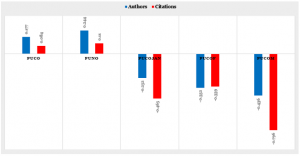
Analysis reveals that the number of authors of the articles connected with the public interest in the virus in October, 2019 by 17.7%, November, 2019 by 24.4% positively. We attained negative connection between the authors and the interest in January 2020 (-25.2%), February, 2020 (-35.2%) and March, 2020 (-43.6%). While it was a negative linkage for the authors and the interest in October and November, 2020, our analysis reveals positive connection of the citations with the public interest in the months (October, 2019=8.4%) and (November, 2019=11%). These results imply that the collaboration (more than one author) started having significant impact in public information search in January, February and March, 2020. It also signifies that the number of authors and citations were not enough to support the public level of information search on the virus using academic sources in October and November, 2019.
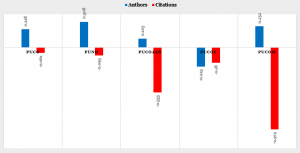
Actually, public interest was higher in November, 2019 (1,922) than in October, 2019 (1,814). Analysis reveals a total of 703, 1,040 and 696 cumulative interest scores for January, February and March, 2020 respectively. Our model (authors-public interest in coronavirus) indicates that the number of authors explained 21.8% (395.452) public interest in the virus in October, 2019 and 30.8% (591.976) in October, 2019, which is the highest variation. Despite that the number of authors improved public interest in the virus in January, February and March, 2020, lowest variations were recorded for the months [see Exhibit 6].
Exhibit 5: Academics Linkage with Public Interest about Coronavirus
Source: Google Scholar, 2020; Journals, 2020; Google Trends, 2020; Infoprations Analysis, 2020
Exhibit 6: Academics Variation in Public Interest about Coronavirus
Source: Google Scholar, 2020; Journals, 2020; Google Trends, 2020; Infoprations Analysis, 2020
Did the Scholars Hold the Public Interest?
To understand the degree to which authors hold the public attention during the period of searching and within the cumulative interest scores reported earlier, we did a pairwise analysis and found that on an average of 12 authors for October and November, 2019, public interest was on an average of 62 normalised public interest score accordingly. When it was an average of 18 authors, our analysis shows that public interest was an average of 77.33 score.
Exhibit 7: Scholars Holding People Who Searched for Academic Publications
Source: Google Scholar, 2020; Journals, 2020; Google Trends, 2020; Infoprations Analysis, 2020
Strategic Options
The insights in this piece have many implications for the concerned stakeholders. The insights have suggested that stakeholders need to explore academic sources more for better understanding of the containment and mitigation messages. This is imperative on the basis that scholars in medicine and health related fields have been saddled with the responsibilities of conducing evidence-based research on various diseases and health conditions for quality living of all. Scholars from Africa and Latin American and Caribbean also need to join the ongoing discourse on the virus, while governments in these continents should provide enabling environment for academic and independent researchers.