DD
MM
YYYY

PAGES

DD
MM
YYYY

spot_img

PAGES

Home Blog Page 6483

Nigerians, Get Your National Identity Number (NIN) from NIMC

4

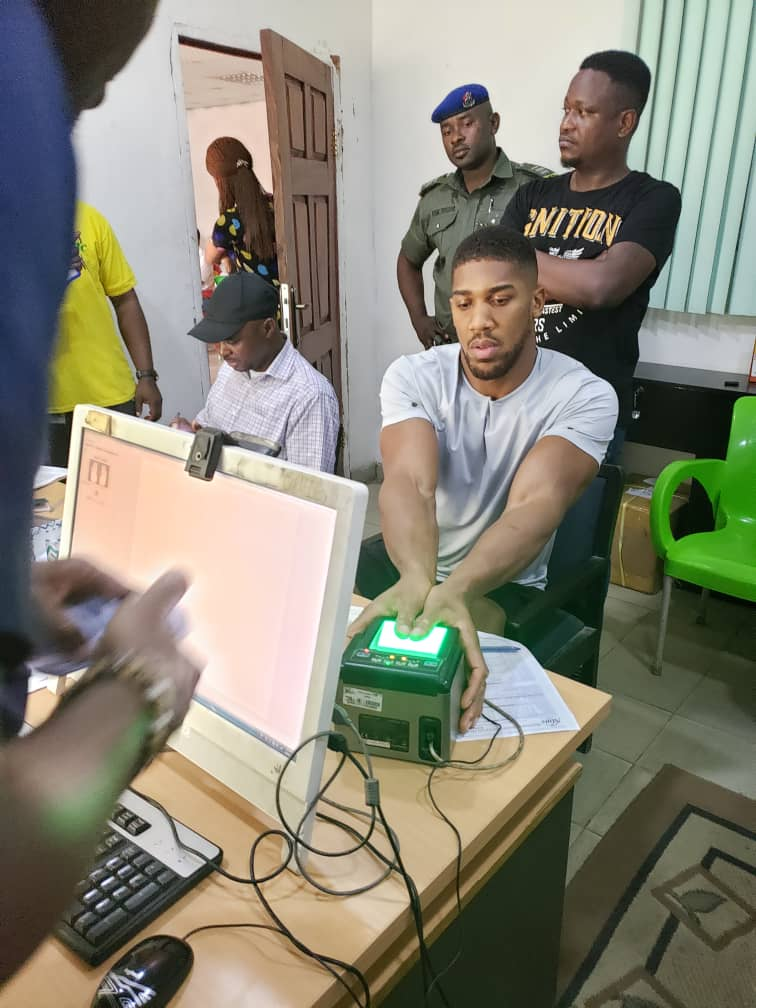
That is the world’s finest fighter – Anthony Oluwafemi Olaseni Joshua – getting his National Identity Number (NIN) from the Federal Government of Nigeria, via NIMC (National Identity Management Commission). I got mine four years ago and did it the old fashioned way, queued and waited for 90 minutes. Though I am yet to get the permanent ID card, the number itself does not expire. I practically have not used it for anything but I did as a sign to help government work. 

Joshua might have received some red carpet treatments for his enrolment, yet, that he did it is the very reason why everyone has to do it. His simplicity, Nigerian-ness and optimism about Nigeria should inspire us to help the government on basic things, as citizens. Joshua is a real king in his game, and there is nothing anyone could imagine why he needs NIN for. But living in the UK, he understands the purpose of having order for societies to function.

NIN is FREE and if you budget 2 hours, in most cities, you will get it. I am not saying that 2 hours is a small time but people need to comply. You do not do things just because they benefit you, but because your actions could improve the society. Our strongest rope is determined by the weakest knot; Nigerians have to help the government especially when things are FREE.

NIN if implemented will advance Nigeria, from education to healthcare. Get yours today!


Autonomous Vehicles Pushing the Next Boundaries of Mobile Robotics

0
Source: Pinterest

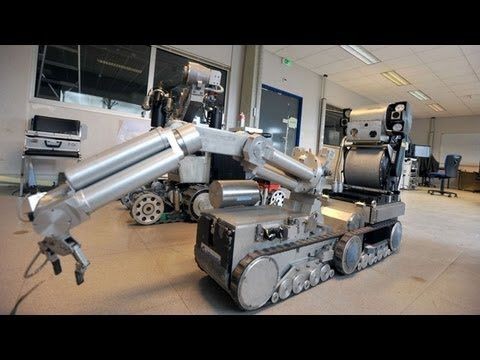
Advancement in Mobile Robotics has gone through a torturous path of seeking applications, which has seen interestingly complex robots maneuver at slow speeds due to their complex intelligence in sensory ability and navigation. DARPA, the United States of America arm of research and development in Robotics has wowed us with very interesting insights in development and application of the intelligent mobile machines, with present focus on walking robots, which can be used in hazardous environments. Yet, the field seemed like it was constantly in a state of only research.

In 2005 when the DARPA autonomous vehicle challenge, with a prize of $2,000,000 was embarked upon, it ushered a new era of research bringing in the ideas of private sector participation, many lessons learnt for the participants, with many going on to become competitors in the field today, such as TORC robotics who just signed an agreement with Daimler for the development of autonomous trucks. Still a lot of work was needed to really break the invisible line separating research and application/deployment which would establish a permanent signature of mobile robotics in our everyday world.

Fast forward a few years and the very notion of our cars, driving themselves, and being termed “driver less vehicles” simply means “Robotic Cars”, the former just being used for the general population who believe anything associated with robots means taking over the world.

Companies like Tesla, Waymo, Torc Robotics, and Zoox are at the forefront of the development, with Tesla primed to be the first to easily deploy with its currently existing infrastructure ensuring it can readily deploy its solution, with just a simple software update to its line of electric cars, in most continents of the world. The beauty inherent in the Robotic cars, is that they have opened up capabilities in mobile robotic navigation which can be deployed at extremely high speeds and still be functional with data collection and navigation. They are pushing the boundaries of the ability of mobile Robotics in other areas and applications which will no doubt lead to massive improvements in many future endeavours.

Source: Electrec

What does the future hold for mobile Robotics? it holds a great things to be imagined, lets hope our “driverless Cars” agree with us on this…….

World Bank Approves $2.2 Billion for Nigeria

0

The World Bank has approved $2.2 billion for the execution of six major projects in Nigeria. The projects are part of the 2020 efforts of the World Bank to help countries with serious infrastructural deficiencies and overwhelming poverty issues.

The World Bank said on Wednesday that the projects would support human capital and economic development in a bid alleviate millions of Nigerians from poverty. Nigeria is the home of the largest number of poor people in the world, and its government is doing little to quell the escalating pandemic. The Bretton Woods Institution has therefore added the country to its campaign against extreme poverty.

The campaign is being executed through many projects ranging from immunization to facilitation of business friendly environment and expansion of the digital economy. It also seeks to improve public and private sector capacity on governance.

“Nigeria is central to the World Bank Group’s mission of tackling extreme poverty. The World Bank is carefully targeting its support on high impact projects as the country works to tackle corruption and lift 100 million of its people out of poverty,” said David Malpass, World Bank Group President.

The campaign also covers some aspects of children welfare. World Bank’s country director for Nigeria, Shubham Chaudhuri said the project will provide social amenities that many in the country need.

“Ensuring that children are immunized and sleep under mosquito nets, building better roads especially in rural areas, and providing Nigeria’s poorest citizens with a unique identification that will make social safety nets and services more effective,” he said.

The funding will be provided by the International Development Association (IDA), the French Development Agency, the European Investment Bank and the Federal Government of Nigeria. The breakdown of the projects is as follows:

$650 million IDA credit is to be used to fund immunization and the fight against malaria in some selected states. The projects will be financed through concessions.

The upgrade of rural roads and access to farms and other agribusinesses across 13 states, currently being handled by the Nigerian Rural Access and Agricultural Marketing Project, will get $280 million funding from an IDA credit, $230 million from the French Development Agency, and $65 million from the Nigerian Government.

IDA credit of $115 million, $100 million from the French Development Agency and $215 million from the European Investment Bank will be used to support the Nigeria Digital Identification for Development Project, and the National Identity Management Commission, in their quest to up the number of enrollees into the national identification system to about 150 million in the next three years.

Other projects to be financed by the $2.2 billion includes the Ogun State Economic Transformation Project that is designed to facilitate private investment in the state by providing infrastructural amenities for businesses and fostering good relationship between farmers, suppliers of farm products and other service providers. Part of its goal is also to provide training and apprenticeships for women and farmers. The project is to be funded through a $250 million IDA credit.

Apart from poverty alleviation, Nigeria’s identity crisis is another integral issue that is importantly going to be addressed through the World Bank fund. In December, the United States Government added Nigeria to the list of countries it has placed on visa ban. The excuse was that Nigeria has failed to live up to expectation in digital security, mainly data gathering, sharing of intelligence and reporting cases of lost passports, etc.

The Trump administration promised to lift the ban as soon as Nigeria stands up to the challenge. The National Identity Management Commission (NIMC) has pointed at lack of funds as a reason for failures in implementing identity management that will place the majority of people in Nigeria in a database.

The $330 million mapped out for digital economy and identity management will help to speed up the process of enrollment and printing of IDs that have been in slow pace for long.

However, many are concerned about the judicious use of the fund. In a country notorious for corruption, words on the streets are that it may end up in private pockets if the projects are not thoroughly monitored.

NTA Secures Premiership Broadcast Right As SEC Prepares to Regulate Crowdfunding

0
SEC Nigeria

The Nigerian Television Authority (NTA) has acquired the right to air part of English Premiership matches. The national TV secured the sub-license to broadcast live matches from Integral Sponsorship and Experiential Marketing Limited, who also acquired the license from Infront, a Sports Group of companies and the current holders of Free-To-Air broadcast rights in Sub-Saharan Africa.

The deal is scheduled on ‘one match per a week’ basis and NTA will also broadcast the weekly EPL Magazine show. In the past, NTA has secured such deals that enabled the broadcast of some EPL matches. But the few matches were not enough to satisfy the clamor of Nigerian fans, because most of the matches involved the small teams in the Premiership.

DSTV has been dominant since 2011 when HiTV lost the broadcast license due to a lack of funds. The South African company has dominantly covered the English League, Champions League and the Corabao cup. The competitor, StarTimes, a Chinese satellite TV could only cover the German Bundesliga and the French Lique 1, where Nigerians have little interest.

While the new deal seems like a continuation of the old ritual, it also points to something new. In January, the Ministry of Information and Culture announced new broadcast rules that stipulated sharing of broadcast rights. The announcement said that exclusivity of rights to sports contents will no longer be tolerated, that means, anyone who secures broadcast license must share with others.

It appears that the NTA-Integral broadcast deal is marking the commencement of the new rule. What is not clear is if the Ministry of Communication has a plan to force other media organizations in Nigeria to do the same yet.

Meanwhile, the Securities and Exchange Commission (SEC) has reiterated its determination to regulate crowdfunding in Nigeria. Late in the year 2019, the Commission has announced its plan to make rules guiding the process of crowdfunding. This is in a bid to protect investors from the risks that usually come with the activities, especially for SMEs and startups.

The Director-General of SEC Mary Uduk said the details of the regulatory plan will be made known in time.

“Investors’ confidence is central to our job as the regulator of the capital market. People must have the confidence to invest. With crowdfunding, private companies can raise long-term funds using regulated platforms. The platform of the crowdfunding will be regulated by SEC.

“Crowdfunding helps deepen the market by providing an alternative investment opportunity. The new regulations are also aimed at stamping out fraudsters and will be released later this year,” she said.

In the past, crowdfunding has taken many methods in Nigeria; a notable one was solicitation of funds from the public through companies’ marketers as a way of making IPO. The method however, was notorious for embezzlement. Founders of the companies swindle investors fund and declare bankruptcy, leaving them at huge loss and with little or no option to recover their money.

The method was sold due to restrictive provisions in the Companies and Allied Matters Act, 1990. In 2016, SEC placed a ban on crowdfunding, citing lack of rules and inhibitions in the provisions of CAMA and ISA.

But that was before the advent of Fintechs and other startups that have attracted foreign interest. Recently, there have been crowdfunding initiatives like Naijafund, Fundanenterprise, Imeela and some others, but they have had difficulties attracting investors due to lack of regulation.

The incessant liquidation cases of crowdfunded companies resulted in apathy toward conventional crowdfunding in the country. And with the banks charging as much as 31% interest rate on loans, it has become a scary idea for startups to approach them for funding. On the other hand, stock market listing or debt issuance are out of the question because they come with too many regulations that are expensive to meet.

The regulatory vacuum has created a distant relationship between businesses and crowdfunding websites in Nigeria, which makes the SEC’s plan to regulate its activities “a glad tidings.” Apart from Farmcrowdy that has defied the norm, providing support for about 25,000 farmers since it came into existence back in 2016, others are struggling to find their feet.

In the proposed regulation, the head of registration and market infrastructure at the SEC, Emomotimi Agama, said operators will need to meet whatever requirement the regulator will issue in order to continue their operation.

Flash Cases for Week 3 – Tekedia Mini-MBA

4

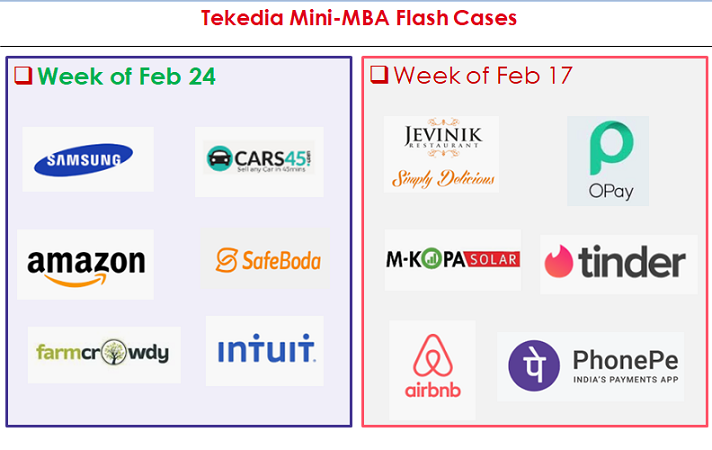
It took the Dow, a U.S. stock index, more than 70 years to hit 1,000 points but it took it just three years to move from 20,000 to 29,000. We’re in the innovation age – the Cambrian moment of exponential value creation – where combining and recombining technology systems are changing the ordinances in markets. Underneath these redesigns are new business models which have been made possible by new technology paradigms. Next week, in the ongoing Tekedia Mini-MBA, we will discuss evolving business models, digital frameworks & strategies, and positioning Strategies under “The Great Modern Business Models”. These six companies will be used in our Flash Cases: Samsung, Farmcrowdy, Amazon, Cars45, Safeboda, and Intuit (TurboxTax).