DD
MM
YYYY

PAGES

DD
MM
YYYY

spot_img

PAGES

Home Blog Page 6484

NITDA: What the New Nigerian Data Protection Regulation Could Mean for Business

0

On October 4th, 2019 the attention of the National Information Technology Agency (NITDA) was drawn to the potential breach of privacy rights of Nigerians by the Truecaller Service. The Agency, in accordance with Section 6(f) of the NITDA Act 2007, which empowers the it to render advisory services in all information technology matters to the public and private sectors, informed the public that it commenced investigation of the potential breach.

Initial findings revealed that the Truecaller Privacy Policy is not in compliance with global laws on data protection and the Nigeria Data Protection Regulation (NDPR) in particular. The findings also revealed that there are over seven million Nigerians who are active users of the Service, hence the need to enlighten the public on some of the areas of non-compliance as well as guide those affected. T wo months after this statement, the National Information Technology Agency (NITDA) has not released any public statement on the outcome or process of the Truecaller Service investigations that proved that Truecaller was invading the Privacy of Nigerians.

The Truecaller Privacy Policy, available on the Truecaller Policy Webpage, is made of two sets—one for those in the European Economic Area (EEA) and the other for those outside the EEA. Nigeria falls under the second category. Furthermore, every Nigerian user is contracting with Truecaller India. There are marked differences between both policies. Critical assessment of the policy revealed non-compliance with the NDPR.

In this light, what does the National Information Technology Agency (NITDA) done to stop such acts from happening? Is the new process invoke and operational? If so, what do you or your organization know about the new data laws that’s equivalent to the GDPR?

The Rise of the Nigerian Data Protection Regulation (NDPR)

The spate at which Nigerian’s data is being breached by service provider has assumed an epidemic rate. On a daily basis, personally identifiable information of Nigerians is being used by unauthorized persons to further their own interest without the consent of the Data Subject.

The NDPR was issued on 25th January, 2019 pursuant to Section 6 (a,c) of the NITDA Act, 2007. The NDPR was made in recognition of the fact that many public and private bodies have migrated their respective businesses and other information systems online. These information systems have thus become critical information infrastructure which must be safeguarded, regulated and protected against atrocious breaches. Government further takes cognizance of emerging data protection regulations within the international community geared towards security of lives and property and fostering the integrity of commerce and industry in the data economy.

What the New NDPR Represents

To be honest the scope of the regulation is strictly critical as this Regulation applies to all transactions intended for the processing of Personal

Data, to the processing of Personal Data notwithstanding the means by which

the data processing is being conducted or intended to be conducted in respect of natural persons in Nigeria. The NITDA’s NDPR regulation applies to natural persons residing in Nigeria or residing outside Nigeria who are citizens of Nigeria.

This Regulation does not operate to deny any Nigerian or any natural person the privacy rights he is entitled to under any law, regulation, policy, contract for the time being in force in Nigeria or in any foreign jurisdiction.

Why There’s a Need to Act — For Organizations

To be frank, the NITDA and the stated NDPR are not meant to be taken lightly. In simpler terms, organizations are not to joke with the new policy. Take for example the terms on page 18 of the regulation act, it states the following:

“All public and private organizations in Nigeria that control data of natural persons shall, within three (3) months after the date of the issuance of this Regulation, make available to the general public their respective data protection Policies; these Policies shall be in conformity with this Regulation.”

How do large and even small scale public and private organization keep up to speed with this? It’s another critical act to consider as not following up will imply fine and some other sanctions.

Within six (6) months after the date of issuance of this Regulations, each

organization shall conduct a detailed audit of its privacy and data protection practices with at least each audit stating:

  • a. personally identifiable information the organization collects on employees of the organization and members of the public;
  • b. any purpose for which the personally identifiable information is collected;
  • c. any notice given to individuals regarding the collection and use of personal information relating to that individual;
  • d. any access given to individuals to review, amend, correct, supplement, or delete personal information relating to that individual;
  • e. whether or not consent is obtained from an individual before personally identifiable information is collected, used, transferred, or disclosed and any method used to obtain consent;
  • f. the policies and practices of the organization for the security of personally identifiable information; and more.

Nigerians needed an equivalent of the GDPR and yes they’ve gotten it but it’s high time to pay the ultimate price on the part of the corporate and even small scale business bodies. How prepared are they to follow up on this? That’s another article for another time.
Reactions to Nigeria’s Policy on Restricting Number of SIM Cards per Person

0

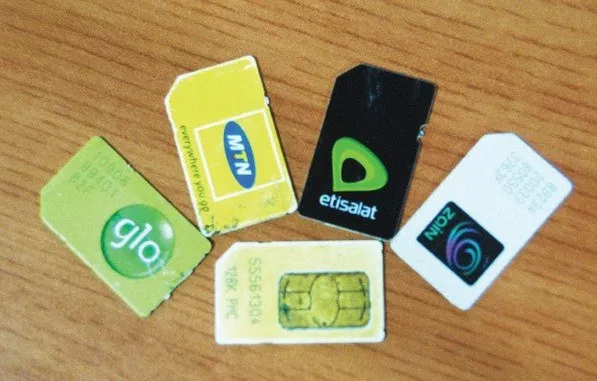
The Minister of Communication and Digital Economy, Dr. Isa Ali-Pantami, on Wednesday, 5th February, 2020, issued directives to the National Communication Commission (NCC) to work out modalities for ensuring that Nigerians have restrictions on the number of SIM cards they acquire. To this, the minister suggested that the number of SIM cards a person possesses should not be more than three.

Ali-Pantami further directed NCC to ensure that the National Identity Number (NIN) becomes a prerequisite for registration of new SIM cards by Nigerians, and then passports and visas should be used for Non-Nigerians. For those that already registered their SIM cards, the directive fixed December 1, 2020 as the deadline for updating their records with their NIN.

The Minister of Communication and Digital Economy has very good intentions for sending out this new instruction. He bore the interest of Nigerians at heart. It is hoped that the adoption and the implementation of this policy will checkmate crime, especially kidnapping and cybercrime. But his intention is met with different reactions from Nigerians. Some believed it will help to reduce crime while others saw it as a waste of time because fraudsters and criminals always find ways to outsmart these policies. As someone rightfully suggested, if kidnappers and fraudsters could not be traced despite the compulsory registration of SIM cards before activation, regulating the number of SIM cards a person possesses will not stop them. Some even expressed their fears that the policy may only end up increasing the rate of phone theft and impersonation because criminals may implicate innocent people whose phones they stole.

However, there are a few concerned Nigerians, who viewed this new policy as detrimental to the wellbeing of Nigerians. This group believed that if these instructions were to be implemented, it will increase the difficulties Nigerians face. Some of the complaints they laid are noted below.

  1. Bad Network Services

These people noted that one of the reasons behind possession of many SIM cards is the poor network coverage in some parts of the country. Consequently, people, especially those that travel a lot, purchase SIM cards from different service providers so they don’t get stranded when they find themselves in any part of the country.

Apart from the case of some networks being unavailable in some parts of the country, Nigerian service providers are also known for their epileptic services. Sometimes, for no known reasons, service reception becomes bad for hours or days leaving its users cut off from the digital world. In a situation where the person has several SIM cards to replace the one without service, he won’t feel stranded in any way.

  1. Business Needs

The people here made several cases on why business owners should not be restricted to owning just three SIM cards. One of the points noted here is that establishments can have phone numbers from all the service providers in the country so their customers can choose to contact them through the number they find most convenient and available.

Another point raised here is that a business owner may provide official phone lines for his key officers. These phone numbers are usually registered with the owner’s bio-data because the staff members are expected to return the phone and the SIM to the company as they leave. But no business can enjoy this should NCC peg the maximum number of SIM cards per person at three.

Still on how this policy can affect businesses, someone said he has several business outlets and that he has different phone numbers for each outlet. Another person said that the policy will affect his security camera sale and installation business because his clients will need to have several SIM cards for their different wireless security cameras. This really calls for a review of that policy.

  1. Difficulty with SIM Card Retrieval

Retrieving lost SIM cards is not easy at all; and it’s expensive. Some people find it easier and cheaper to buy new SIM cards than to retrieve their old ones. The demand for police reports and affidavit for those that have lost their SIM pack is unnecessary and stressful (after all the service providers are supposed to have SIM owners’ bio-data with them). Apart from that, the person will be expected to pay a certain amount of money, which is always higher than the price of a new SIM.

  1. Separating Personal Phones from Official Ones

It is not always advisable to hand out personal phone numbers to business prospects. For a lot of reasons, it is better to separate business lines from personal ones. But it will be difficult to do this when restriction on the number of SIM cards a person will own is implemented.

Suggestions

As NCC considers how to set this new directive into motion, they should also consider the following:

  • Improving Nationwide Mobile Service Network

NCC should task the service providers in the country to improve on the services they render to the people. I don’t think a lot of Nigerians will like the burden of owning many SIM cards if the providers they subscribed to are good.

  • Using NIN as the Check

It is quite inconsequential to limit the number of SIM cards a person has when NIN will become a prerequisite for SIM card registration. If NIN becomes to telecommunication what BVN is to banking, people can have as many SIM cards as they wish and they will still be registered under one database.

  • Stringent Measures on SIM and ID Cards Registrations

It is embarrassing to hear that despite several registrations and re-registrations of SIMs, claims about use of unregistered SIMs and inappropriately registered SIMs are still in existence and are used by criminals. It is time then for the agencies concerned to ensure that all activated SIM cards are duly registered. This will be easier when the NIN prerequisite policy becomes implemented. However, there is also need to ensure that NIN acquisition is as thorough as BVN is so as to avoid making mockery of the whole effort. In fact, NCC needs to learn a lot from CBN.

  • Modifying the Maximum Number of SIM Cards

Should NCC insist on a maximum number of SIM cards to be owned and registered against a person’s NIN, it will then be necessary that they adjust the number they will restrict on people. For instance, it will be improper to treat businesses the same way private individuals are treated. In other words, the number of SIM cards owned by business owners should be more than that of others. Secondly, private individuals should be given the right to subscribe to all of the major service providers within the country.

Twitter Crosses The $1 Billion Mark In Its Q4 2019 Report

0

In the 2019 Q4 results announced by social media giants Twitter, there is remarkable increase in revenue, making the year a profitable one for the Californian based company.

The report published on SEC website indicates total revenue of $1.01 billion Year-Over-Year growth in Monetizable Daily Active Usage (mDAU) of 21% in the Q4.

According to the report, 2019 revenue was $3.46 billion, an increase of 14% year-over-year. On a constant currency basis, revenue grew 15% year-over-year. The 2019 costs and expenses totaled $3.09 billion, an increase of 19% year-over-year. This yielded operating income of $366 million and 11% operating margin.

The year’s net income was $1.47 billion, which represents a net margin of 42% and diluted EPS of $1.87, billion, representing a net margin of 40% and diluted EPS of $1.56. Twitter generated adjusted net income of $259 million, adjusted net margin of 7%, and adjusted diluted EPS of $0.33. That’s apart from the income tax benefit from the establishment of deferred tax assets related to intra-entity transfers of intangible assets of $1.21 billion.

In 2018, excluding the income tax benefit from the release of deferred tax assets valuation allowance of $845 million, adjusted net income was $360 million, with adjusted net margin of 12% and adjusted diluted EPS of $0.47.

The report highlighted the operational and financial standing of the fourth quarter also: The Q4 revenue totaled $1.01 billion, an increase of 11% year-over-year. Advertising revenue totaled $885 million, which is an increase of 12% year-over-year. The total ad engagements increased 29% year-over-year while Cost per Engagement (CPE) decreased 13%.

The combination of revenue sources, from data licensing to other revenues brought in $123 million in total, a 5% increase year-over-year.

In the US, the total revenue generation amounted to $591 million, marking a 17% increase year-over-year. The global revenue increased at 3% which amounted to $416 million year-over-year. The Q4 running costs and expenditures took $854 million, an increase of 22% year-over-year. This yielded operating income of $153 million and 15% operating margin.

The net income of Q4 was $119 million, which represents a 12% net margin and diluted EPS of $0.15. This compares to net income of $255 million, a net margin of 28% and diluted EPS of $0.33 in the same period of the previous year. Excluding the income tax benefit from the release of deferred tax assets valuation allowance in the same period last year, adjusted net income was $135 million, with adjusted net margin of 15% and adjusted diluted EPS of $0.17.

There is also a surge in the number of users in the Q4 of 2019. Average monetizable daily active users (mDAU) were 152 million compared to 126 million in the same period of the previous year and compared to 27 million in the same period of the previous year and compared to 30 million in the previous quarter. On average, the international mDAU was 121 million in the Q4 compared to 30 million in the previous year and compared to 115 million in the previous quarter.

These highlights as acknowledged by Jack Dorsey indicate Twitter’s significant performance in the NYSE in the last Q4, and overall profitable 2019.

“2019 was a great year for Twitter. Our work to increase relevance and ease of use delivered 21% mDAU growth in Q4, with more than half of the 26 million mDAU added in 2019 directly driven by product improvements,” said Jack Dorsey, Twitter CEO.

The increase is as a result of improved techniques and features such as the increment of characters from 140 to 280. Other new exciting experiences have also contributed to the increase in the number of users.

“We reached a new milestone in Q4 with quarterly revenue in excess of $1 billion, reflecting steady progress on revenue product and solid performance across most major geographies, with particular strength in US advertising,” Twitter CFO, Ned Segal said. “We continue to see tremendous opportunity to get the whole world to use Twitter and provide a more personalized experience across both organic and promoted content, delivering increasing value for both consumers and advertisers.”

The 2020 financial year is expected to improve by 20% or more as Twitter is working to expand its reach. One of the goals is to build a data city that will accommodate larger audiences and revenue growth. The stock-based compensation expenses is expected to be between $425 million and $475 million, and the capital expenditures to be between $775 million and $825 million.

“Entering 2020, we are building on our momentum – learning faster, prioritizing better, shipping more and hiring remarkable talent. All of which put us in a stronger position as we address the challenges and opportunities ahead,” Jack Dorsey said.

The 2020 goals have been streamlined into four basic objectives: 1. Increasing development velocity and trust 2. Increasing healthy public conversation 3. Increasing revenue durability 4. Enabling anyone, anywhere to work at Twitter.

The Unfortunate CNN EDIT on Nigerian Immigrants in US

7

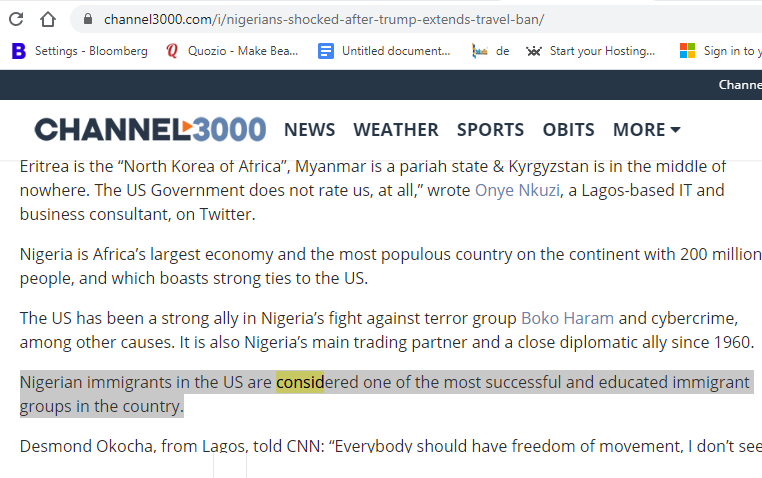
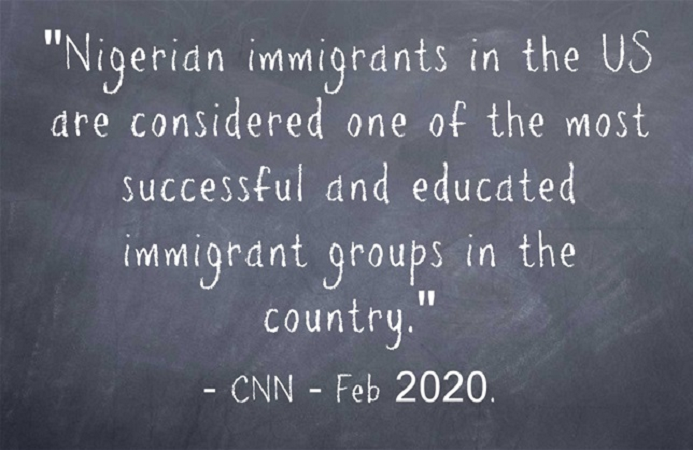
Remember this quote from a CNN article which I shared when President  Trump banned Nigeria on a certain immigration class:  “Nigerian immigrants in the US are considered one of the most successful and educated immigrant groups in the country.” You know what? CNN had edited that line out in its piece without any note or explanation. A Tekedia reader left a note that he/she could not see the quote in my reference. I checked, and it was true that it was gone. The author and the editor had “buyers’ remorse” for helping naija’s image!

You can read some online websites which captured the original article by searching the exact quote, “Nigerian immigrants in the US are considered one of the most successful and educated immigrant groups in the country.”. One is here. Sure, it is gone on CNN, but it is not erased.

If you care, webcache captured it here (image below).

The section from webcache


The Message in Trump’s Ban to Nigeria

What Is Your Market Penetration Strategy? A Flash Case on Global Athletic Footwear in Nigeria

3

This is a very revealing comment from the Discussion Board of our ongoing Tekedia Mini-MBA, a new way to co-learn. This is a comment from a former executive of one of the world’s largest athletic footwear companies on a session on MVP (minimum viable product) and product MVQ (minimum viable quality).

Permit me to add a bit of an insight. When I managed the [a global footwear] franchise in Nigeria, what I learnt about fake products was very revealing.

1. [The brand] is an aspirational brand. While the company made effort to curb fake products, they understood that the fake products allow those who otherwise could not afford the original to own the product. But this is where it gets interesting. The fake products helped to keep the visible in the market segment where it served and what happens after is that once the consumers of the fake product ascends the social ladder, they upgrade to the original brand.

2. What this implies is that even for the guy that buys the Aba shoe for 1,500 naira, once he can afford the 10,000 naira shoe most likely will go for it. So both set of shoes solve a market friction for the same customer at different times in their life. Both quality are valid as it were.*

It is amazing, and that is typical. Initially, Microsoft did not want  to stop Windows pirates in China. Yes, the software piracy in China which Microsoft largely ignored provided that kept Linux out was one of the reasons China is a Microsoft nation today. As most people used the pirated Windows, everyone adopted Windows. Then over time, Linux was largely forgotten. With time, Microsoft started preaching to those users that for small fees, they could get better security and protection from malware. Already used to Windows, most customers went for that, and magically Microsoft started making money in China.

https://www.tekedia.com/mini-mba/

*edited out the brand in this public domain