DD
MM
YYYY

PAGES

DD
MM
YYYY

spot_img

PAGES

Home Blog Page 6491

World Bank Approves $2.2 Billion for Nigeria

0

The World Bank has approved $2.2 billion for the execution of six major projects in Nigeria. The projects are part of the 2020 efforts of the World Bank to help countries with serious infrastructural deficiencies and overwhelming poverty issues.

The World Bank said on Wednesday that the projects would support human capital and economic development in a bid alleviate millions of Nigerians from poverty. Nigeria is the home of the largest number of poor people in the world, and its government is doing little to quell the escalating pandemic. The Bretton Woods Institution has therefore added the country to its campaign against extreme poverty.

The campaign is being executed through many projects ranging from immunization to facilitation of business friendly environment and expansion of the digital economy. It also seeks to improve public and private sector capacity on governance.

“Nigeria is central to the World Bank Group’s mission of tackling extreme poverty. The World Bank is carefully targeting its support on high impact projects as the country works to tackle corruption and lift 100 million of its people out of poverty,” said David Malpass, World Bank Group President.

The campaign also covers some aspects of children welfare. World Bank’s country director for Nigeria, Shubham Chaudhuri said the project will provide social amenities that many in the country need.

“Ensuring that children are immunized and sleep under mosquito nets, building better roads especially in rural areas, and providing Nigeria’s poorest citizens with a unique identification that will make social safety nets and services more effective,” he said.

The funding will be provided by the International Development Association (IDA), the French Development Agency, the European Investment Bank and the Federal Government of Nigeria. The breakdown of the projects is as follows:

$650 million IDA credit is to be used to fund immunization and the fight against malaria in some selected states. The projects will be financed through concessions.

The upgrade of rural roads and access to farms and other agribusinesses across 13 states, currently being handled by the Nigerian Rural Access and Agricultural Marketing Project, will get $280 million funding from an IDA credit, $230 million from the French Development Agency, and $65 million from the Nigerian Government.

IDA credit of $115 million, $100 million from the French Development Agency and $215 million from the European Investment Bank will be used to support the Nigeria Digital Identification for Development Project, and the National Identity Management Commission, in their quest to up the number of enrollees into the national identification system to about 150 million in the next three years.

Other projects to be financed by the $2.2 billion includes the Ogun State Economic Transformation Project that is designed to facilitate private investment in the state by providing infrastructural amenities for businesses and fostering good relationship between farmers, suppliers of farm products and other service providers. Part of its goal is also to provide training and apprenticeships for women and farmers. The project is to be funded through a $250 million IDA credit.

Apart from poverty alleviation, Nigeria’s identity crisis is another integral issue that is importantly going to be addressed through the World Bank fund. In December, the United States Government added Nigeria to the list of countries it has placed on visa ban. The excuse was that Nigeria has failed to live up to expectation in digital security, mainly data gathering, sharing of intelligence and reporting cases of lost passports, etc.

The Trump administration promised to lift the ban as soon as Nigeria stands up to the challenge. The National Identity Management Commission (NIMC) has pointed at lack of funds as a reason for failures in implementing identity management that will place the majority of people in Nigeria in a database.

The $330 million mapped out for digital economy and identity management will help to speed up the process of enrollment and printing of IDs that have been in slow pace for long.

However, many are concerned about the judicious use of the fund. In a country notorious for corruption, words on the streets are that it may end up in private pockets if the projects are not thoroughly monitored.

NTA Secures Premiership Broadcast Right As SEC Prepares to Regulate Crowdfunding

0
SEC Nigeria

The Nigerian Television Authority (NTA) has acquired the right to air part of English Premiership matches. The national TV secured the sub-license to broadcast live matches from Integral Sponsorship and Experiential Marketing Limited, who also acquired the license from Infront, a Sports Group of companies and the current holders of Free-To-Air broadcast rights in Sub-Saharan Africa.

The deal is scheduled on ‘one match per a week’ basis and NTA will also broadcast the weekly EPL Magazine show. In the past, NTA has secured such deals that enabled the broadcast of some EPL matches. But the few matches were not enough to satisfy the clamor of Nigerian fans, because most of the matches involved the small teams in the Premiership.

DSTV has been dominant since 2011 when HiTV lost the broadcast license due to a lack of funds. The South African company has dominantly covered the English League, Champions League and the Corabao cup. The competitor, StarTimes, a Chinese satellite TV could only cover the German Bundesliga and the French Lique 1, where Nigerians have little interest.

While the new deal seems like a continuation of the old ritual, it also points to something new. In January, the Ministry of Information and Culture announced new broadcast rules that stipulated sharing of broadcast rights. The announcement said that exclusivity of rights to sports contents will no longer be tolerated, that means, anyone who secures broadcast license must share with others.

It appears that the NTA-Integral broadcast deal is marking the commencement of the new rule. What is not clear is if the Ministry of Communication has a plan to force other media organizations in Nigeria to do the same yet.

Meanwhile, the Securities and Exchange Commission (SEC) has reiterated its determination to regulate crowdfunding in Nigeria. Late in the year 2019, the Commission has announced its plan to make rules guiding the process of crowdfunding. This is in a bid to protect investors from the risks that usually come with the activities, especially for SMEs and startups.

The Director-General of SEC Mary Uduk said the details of the regulatory plan will be made known in time.

“Investors’ confidence is central to our job as the regulator of the capital market. People must have the confidence to invest. With crowdfunding, private companies can raise long-term funds using regulated platforms. The platform of the crowdfunding will be regulated by SEC.

“Crowdfunding helps deepen the market by providing an alternative investment opportunity. The new regulations are also aimed at stamping out fraudsters and will be released later this year,” she said.

In the past, crowdfunding has taken many methods in Nigeria; a notable one was solicitation of funds from the public through companies’ marketers as a way of making IPO. The method however, was notorious for embezzlement. Founders of the companies swindle investors fund and declare bankruptcy, leaving them at huge loss and with little or no option to recover their money.

The method was sold due to restrictive provisions in the Companies and Allied Matters Act, 1990. In 2016, SEC placed a ban on crowdfunding, citing lack of rules and inhibitions in the provisions of CAMA and ISA.

But that was before the advent of Fintechs and other startups that have attracted foreign interest. Recently, there have been crowdfunding initiatives like Naijafund, Fundanenterprise, Imeela and some others, but they have had difficulties attracting investors due to lack of regulation.

The incessant liquidation cases of crowdfunded companies resulted in apathy toward conventional crowdfunding in the country. And with the banks charging as much as 31% interest rate on loans, it has become a scary idea for startups to approach them for funding. On the other hand, stock market listing or debt issuance are out of the question because they come with too many regulations that are expensive to meet.

The regulatory vacuum has created a distant relationship between businesses and crowdfunding websites in Nigeria, which makes the SEC’s plan to regulate its activities “a glad tidings.” Apart from Farmcrowdy that has defied the norm, providing support for about 25,000 farmers since it came into existence back in 2016, others are struggling to find their feet.

In the proposed regulation, the head of registration and market infrastructure at the SEC, Emomotimi Agama, said operators will need to meet whatever requirement the regulator will issue in order to continue their operation.

Flash Cases for Week 3 – Tekedia Mini-MBA

4

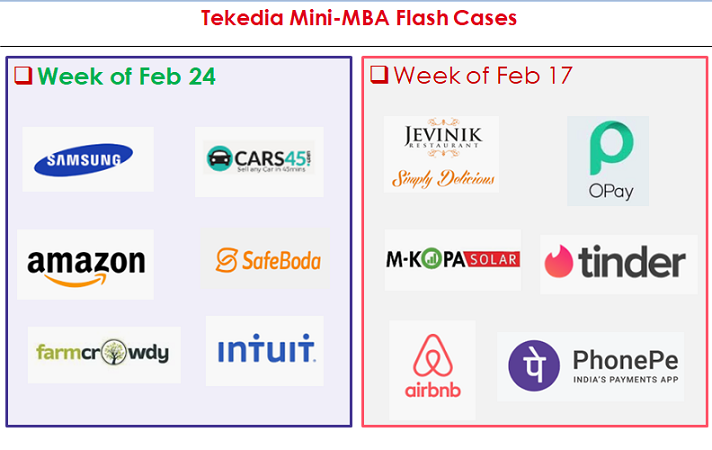
It took the Dow, a U.S. stock index, more than 70 years to hit 1,000 points but it took it just three years to move from 20,000 to 29,000. We’re in the innovation age – the Cambrian moment of exponential value creation – where combining and recombining technology systems are changing the ordinances in markets. Underneath these redesigns are new business models which have been made possible by new technology paradigms. Next week, in the ongoing Tekedia Mini-MBA, we will discuss evolving business models, digital frameworks & strategies, and positioning Strategies under “The Great Modern Business Models”. These six companies will be used in our Flash Cases: Samsung, Farmcrowdy, Amazon, Cars45, Safeboda, and Intuit (TurboxTax).

Counter and Alternative Narratives Creation on Amotekun: A Hindsight from Newsmakers and Public

0

Prologue

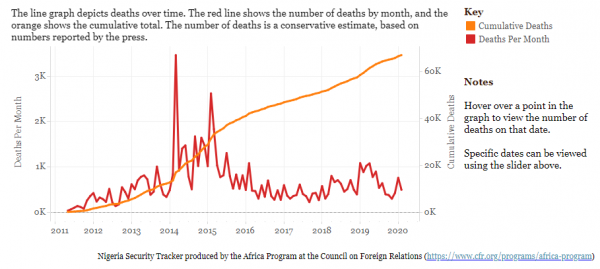
From May 2011 to February 2020, series of reports have indicated the number of people killed due to high level of insecurity across the country. In 2015, prior to the general elections, agitation was high on the need to have adequate measures for the security of lives and property by the concerned stakeholders. A few weeks to the 2019 general elections, issues were equally raised concerning the activities of some armed groups, including Boko Haram’s endless attacks on people and businesses in the northern region.

According to the new statistics, the outcome of the attacks has been the killing of 36,932. To contain the soft attacks being launched by some armed groups in the south-west region, states in the region through Development Agenda for Western Nigeria (DAWN), held security summit. The summit resulted in a communique and finalization of a regional security network. The launching of the initiative attracted mixed reactions from government official, experts and ordinary citizens.

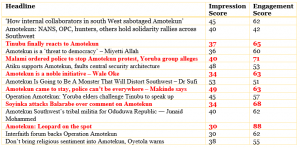
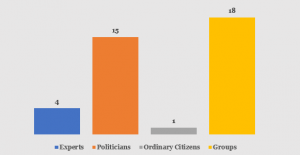
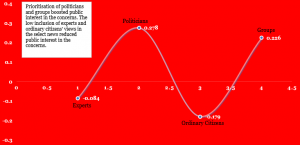
This piece presents the category of people who expressed their views on the issues that trailed the launching of the initiative in the region. Having examined the select reports published by the Nigerian newspapers between January 19 and January 22, 2020, it is obvious that regionalization was stressed within the attitudinal disposition towards the security network [see Exhibits for the details].

Exhibit 1: Select Newspapers’ Headlines

Source: Nigerian Newspapers, 2020; Infoprations Analysis, 2020

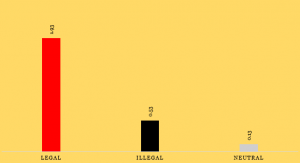
Exhibit 2: Category of Newsmakers

Source: Nigerian Newspapers, 2020; Infoprations Analysis, 2020

Exhibit 3: Newsmakers and Public Interest

Source: Nigerian Newspapers, 2020; Google Trends, 2020; Infoprations Analysis, 2020

Exhibit 4: Attitudinal Disposition

Source: Nigerian Newspapers, 2020; Infoprations Analysis, 2020
Note: Figures are in Mean Values

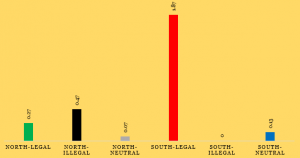
Exhibit 5: Region of Attitudinal Disposition

Source: Nigerian Newspapers, 2020; Infoprations Analysis, 2020
Note: Figures are in Mean Values


Causes of Fire Outbreaks in Nigerian Markets

1
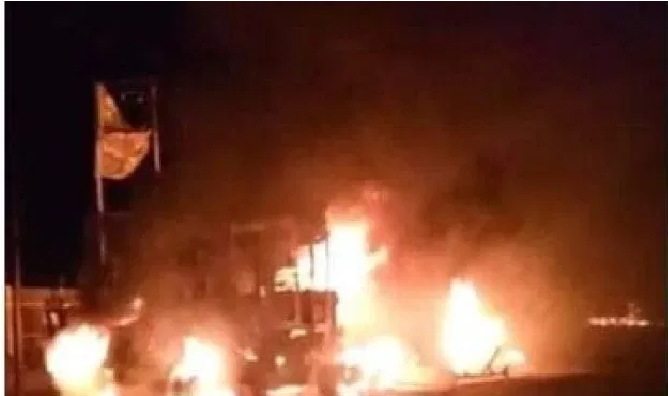
Fuel tanker explosion in Onitsha (Source: Vanguard)

The rate at which fire is destroying markets in Nigeria is becoming alarming. Since the beginning of the 2019/2020 harmattan season, hardly does a week pass without news of fire incidence in different markets scattered around the country. This is painful because, in all these recent cases, affected shop owners barely escaped with their lives and were, therefore, unable to spare their wares. The worst thing is that help rarely comes from the state fire service until fire has done irreparable damages.

It is quite unfortunate that the incidents of fire outbreak in markets have not taught other market unions and local government authorities in other parts of the country some lessons. These market unionists and local government agents are more interested in revenue collections than in putting in place, measures that will ensure that fire accidents are prevented or handled swiftly when they happen. Because of this neglect, markets, among other things,s are continually attacked by fire.

Causes of Market Fire Outbreaks

From the reports of fire incidents in markets, one couldn’t help but wonder what causes them. While growing up, there were speculations that fire outbreaks in markets were causes by miscreants, especially those that hide in corners to smoke marijuana. Later, it was said that they were deliberate acts by opposing unionists, who wanted controversial market squares to be moved from their current locations (that was the claim when the popular Orange Market in Mararaba, Nasarawa State was completely razed down in 2016). These claims could be true, but it will be important to point out some other preventable reasons why the fire starts and spreads faster in Nigerian open markets.

1. Types of Buildings
Most of the shops that are razed to the ground are shanty houses made with woods and metal sheets. This is not to say that concrete shops aren’t affected in cases of heavy fire, but casualties in concrete block shops are lesser than that of shanties. Some market authorities have already started handling this situation by building concrete shops all over their markets. And truth be told, this has reduced the cases of fire outbreaks in many markets these days.

2. Poor Electrical Wiring
There are some markets you will go into and couldn’t help wondering if the electricians that did the electrical connections were at tug of war. They criss-cross wires all over the place and leave some dangling dangerously. Even inside the shops, some electrical connections are nothing to write home about. The only way out of this situation is if the market authorities ban traders from tampering with electrical connections in their shops and the electric poles.

3. Use of Generators inside the Market
Using generators inside the market doesn’t only cause noise and air pollutions, but can also cause fire outbreak or fuel its spread. How this can cause fire outbreak will be understood if someone considers the fact that generators use fuel (petrol), which can easily ignite when it comes in contact with heat. Some market authorities have been able to discourage individuals from using private generators by providing power plants that serve the whole market or a section of it and insisting that those that wish for constant power supply connect to the general power plants. The general power generators are usually mounted outside the market so that they rarely cause harms to traders and shoppers.

4. Cooking inside the Market
In markets such as Onitsha Main Market, restaurants are situated at the outskirts of the market. Those that wish to eat either leave their shops to visit these restaurants or order for foods, which are sent over to them. Alternatively, they can buy from the numerous food vendors that are found in their numbers within the market. The major thing here is that people are not allowed to cook inside the market. But some markets don’t observe this simple strategy. They allow restaurant owners to situate their shops right in the middle of the market. You can also see women that kept small kerosene stoves and camping gas cookers in their shops, which they use to cook or heat up food for their children.

5. Filling Stations and Gas Plants near Markets
Of course because of the large number of generators inside the market, business owners have decided to bring filling stations closer to markets. This cannot even be compared to those that sell fuel in kegs right inside the market (they target those that can’t leave their shops and walk over to the filling stations). Most of the times, Nigerians cause their problems by themselves.

Fire can be a natural disaster or man-made catastrophe. The fire incidents that happen in our markets are man-made and preventable. But because people are so much interested in making money, they put their lives at risk. For this, I call on traders to help themselves to reduce the loss of their properties and goods. It’s true that some markets already have measures on ground to prevent and battle this, but they still need to do more. They can start by keeping fire extinguishers in their shops (which are not there as far as I can tell) and avoiding actions that can ignite fire.

As for the local government authorities and the market union executives that are only interested in collecting money from traders, I want to enjoin them to make their markets safe. It is a shame that markets in Nigeria cannot afford to install mini fire stations that will be immediately used to quell fire outbreaks. If a market cannot afford one, they can partner with a close-by market to do so.

The market authorities should also consider using the revenues generated from their markets to build concrete lock-up shops for traders. Shanty shops should be discouraged. Rather, open stalls could be built for them, or spaces allotted for containers installations.