DD
MM
YYYY

PAGES

DD
MM
YYYY

spot_img

PAGES

Home Blog Page 6491

Jumo Raises $55M and Lifestores Secures $1M Seed Fund

0

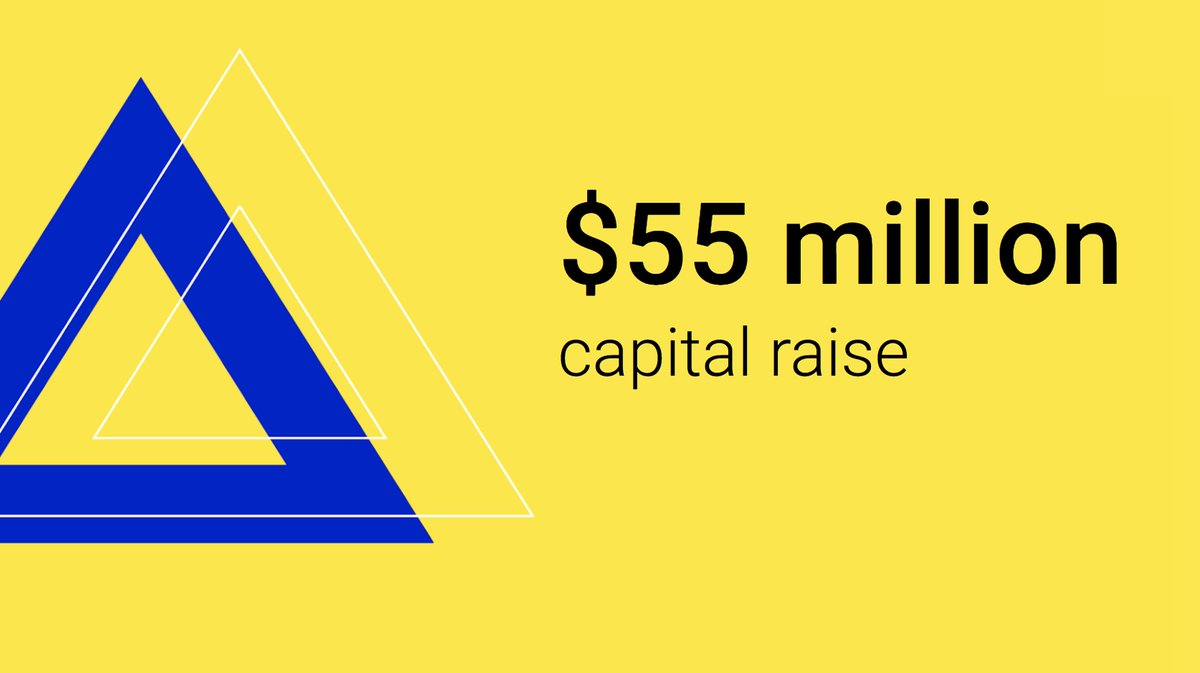
JUMO, a fintech providing loan services, has secured another round of funding in its push to extend its operation to the reach of many markets across Africa. The digital financial service company announced on Tuesday that it has raised $55 million for the expansion of its services.

“We are pleased to announce the closure of another successful funding round! We’ve secured US$55 million from a diverse group of investors to secure our expansion into new markets and the launch of new financial products,” JUMO tweeted on Tuesday.

The company had in 2018, raised $52 million, staying tops among Nigerian startups that got funding in the digital space. But this round of funding has toppled the previous record and put the Fintech’s total raised fund to $146.7 million if the $91.7m previously raised is added.

The latest round of funding has come from already existing investors, both old and new, mainly Goldman Sachs, Odey Asset Management and LeapFrog Investments. It has made JUMO the most funded startup in the African continent.

JUMO was founded in 2014 by Andrew Watkins-Ball as a digital finance platform offering mobile financial services. The platform provides loans and offers savings services to SMEs and the general public.

The platform uses algorithms to determine the credibility of its users and their credit worthiness. The higher a customer is scored the more money he will be qualified to access. The services are mainly mobile-based and are available across many mobile networks powered by USSD. It also has web and app options that offer accessibility choices to everyone.

The company partners with mobile telephone networks such as MTN, Telenor, Airtel and Tigo to power its mobile network functions while banks like Letshego Bank, Barclays Africa Group and Telenor Microfinance Bank provide the savings and loans services.

The startup said its loan services have attained the $1 billion mark across 10 countries in Africa and Asia. The CEO Andrew Watkins-Ball said the fresh funding will help JUMO to attain new heights in services by reaching more financial disadvantaged people in Africa and Asia. He said the plan is to introduce new products that will catch the attention of emerging markets.

“I’m excited for our next phase. This backing will help us build a better business and break new ground. The strong vote of confidence, along with the world-class tech talent we now have in business, means we can achieve exceptional outcomes for our partners and customers,” he said.

JUMO has about 10 million customers in Asia where it is aiming to reach more countries.

Meanwhile, another Lagos-based startup, Lifestores has raised $1 million (N365 million) in seed fund. Lifestores is a healthcare initiative led by Consonance Kuramo and other partners like Altadore Lionbear Capital, Greentree Syndicate, Startup and Health transformers Fund and Unseen Ventures.

Flying Doctors Nigeria Group, K50 ventures, Chinook Capital, Kepple Africa Ventures and some other companies were part of the fundraising. All the partners have healthcare background in common and appear to have come together to pursue a common goal, which is to facilitate easy distribution of drugs nationwide.

Founded in 2017 by Ken Ahaotu, Bryan Mezue and Andrew Garza, Lifestores is designed to disrupt the rigorous traditional system of drug distribution that enables peddling of fake drugs.

The Nigerian drug distribution system operates through a chain of tedious protocols that breeds unbalanced supply to pharmacies and many times, it keeps drugs out of the reach of those who need it.

Lifestores saw through the challenges and proffered solutions that will involve some changes in many areas of drug business in the country. It involves the acquisition of many pharmaceutical outlets in the country and establishing direct access to drug manufacturers which they have done in a space of three years.

The startup has anchored the entire supply chain of the pharmaceutical sector, and with the direct access it created to drug manufacturers, the menace of fake drugs is being minimized since it offers pharmacies the chance to buy quality drug stock at cheaper rate.

The N365 million fund became necessary because the startup developed a software that will enable it to execute its tasks. With the new software, the inclusion of new ideas into its system and managing the company’s operations will be easy as it plans to expand its reach by acquiring more pharmacy stores and going into further partnerships.

The software which was developed with the help of Andela was designed to keep track of Lifestore’s sales activities, inventory and keep patients’ record.


Non-Oil Sector Scores High As Nigeria’s GDP Hits 2.7% Growth for the Q4 2019

0

The Q4 report of 2019 indicates that the economy grew by 2.27% marking the highest increase since the recession of 2016. According to the data published by the Nigerian Bureau of Statistics (NBS), Nigeria’s Gross Domestic Product (GDP) grew by 2.5% (year-on-year) in real terms beating the International Monetary Fund (IMF)’s projection of 2.1%.

“Nigeria’s Gross Domestic Product (GDP) grew by 2.55% (year-on-year) in real terms in the fourth quarter of 2019. Compared to the fourth quarter of 2018, which recorded a growth rate of 2.38%, this represents an increase of 0.17% points and an increase of 0.27% points when compared with the third quarter of 2019.

“In Q4 2019, aggregate GDP stood at N39,577,340.04 million in nominal terms. This was higher than the fourth quarter of 2018 which recorded an aggregate of N35,230,607.63 million, representing year on year nominal growth rate of 12.34%,” NBS report said.

The report showed that the non-oil sector put up outstanding performance, growing 2.26% in real terms.

“The non-oil sector grew by 2.26% in real terms during the reference quarter (Q4 2019). This was lower by -0.44% points compared to the rate recorded in the same quarter of 2018 but 0.42% point higher than the third quarter of 2019. This sector was driven, during the fourth quarter of 2019, mainly by Information and Communication (Telecommunication), Agriculture (crop production), Financial and Insurance Services (Financial Institutions), and Manufacturing. In real terms, the non-oil sector contributed 92.68% to the nation’s GDP in the fourth quarter of 2019, lower from shares recorded in the fourth quarter of 2018 (92.94%) but higher than the third quarter of 2019 (90.23%). The annual contribution of the non-oil sector stood at 91.22% in 2019,” the report added.

In the non-oil sector, businesses picked up from their underperformance in the corresponding year of 2018. This is how the 10 best performing industries fared according to BusinessDay.

Air Transport

Air transport grew 13.17 percent year-on-year in 2019 to emerge the fastest expanding sector.

The growth, though below the 20.70 percent recorded last year, followed a steady increase through Q1-Q3 (9.09%, 12.31% and 15.23%) before a decline in the last quarter to 14.98 percent.

Coal Mining

A brilliant first quarter and third quarter for coal mining was enough to offset the impact of a contraction in the last quarter of the year and push sector’s growth 13.15 percent higher year-on-year. In 2019, coal mining was the second-fastest expanding sector in Nigeria.

Interestingly, the sector had contracted by almost 6 percent in 2018.

Telecommunications & Information Services

It might have been an anti-climactic year for the ICT services sector but it emerged the third best performing sector in the year, marginally surpassing its 2018 growth rate. (11.41% vs 11.33%).

Road Transport

Road Transport was the fourth fastest-growing sector in Nigeria last year after a brilliant 21.48 percent in the first quarter of the year.

Road Transport grew 11.24 percent year-on-year in 2019 although it shrunk 2.58 percent in the final quarter of the year.

Water supply, sewerage, waste management and remediation

This sector was the fifth fastest-growing last year with after growth printed at 4.59 percent year-on-year compared to a measly 0.97 percent in 2018.

Although the sector started the year with a contraction, growth picked up in Q2, eased in the third quarter and was more-or-less maintained in the last quarter of the year.

Arts, Entertainment and Recreation

Growth rose impressively from 2.53 percent in 2018 to 4.12percent last year.

Arts, Entertainment and Recreation started the year on steroids but quickly lost momentum in Q2 afterwards recovering in the latter quarters of the year.

Insurance

The insurance industry rose 3.59 percent to end 2019 the 7th best performing sector in terms of growth. The sector however grew below its 2018 rate of 6.12 percent.

Fishing

Fishing grew 3.33 percent year-on-year in 2019 following a brilliant Q1 that supported growth in the year. Compared to 2018’s 1.64 percent growth, 2019 is nothing short of a leap.

Cement

At 3.11 percent the cement industry is at least growing faster than the broader economy. Q3 was the best quarter for the sector last year while growth slowed compared to 2018 (4.5%).

Accommodation and Food Services

The Accommodation and Food services sector picked up from 2018, growing at 2.85 percent last year to be the 10th fastest growing sector in the economy. Growth peaked in Q1 and averaged 2.41 percent for the remaining quarters.

2019 was not a good year for the oil sector, factors ranging from climate concerns to surplus oil production kept oil prices dwindling below benchmark. But the Q4 2019 saw a little improvement compared to the Q3 2019, which added to the unprecedented growth recorded in the end.

“During the fourth quarter of 2019, average daily oil production of 2.00 million barrels (mbpd) was recorded, indicating a rise of 0.09mbpd over the daily average production of 1.91 mbpd recorded in the same quarter of 2018.

“However, it was -0.0mbpd lower than the production volume of 2.04mbpd recorded in the third quarter of 2019. Nevertheless, it is notable that oil production remained consistently at or above 2.0mbpd all through 2019.

“Real growth of the oil sector was 6.36% (year-on-year) in Q4 2019 indicating an increase of 7.98% points relative to the rate recorded in the corresponding quarter of 2018,” the NBS Q4 2019 report said.

Amazon Africa Ignores Ecommerce, Goes Big On Cloud With Safaricom Partnership

3
Amazon has been investing in India

It is coming as predicted: Amazon will not invest in African ecommerce but will push more into African cloud by possibly partnering/investing in major telcos in key African markets. My thesis that investing in Africa ecommerce would be hard is purely based on the heterogeneous and disparate natures of our economies, unlike India which is one market of a “continent” or China which Amazon failed but not for lack of trying. The logistical challenge to get scale in Africa in order to reduce marginal cost might have scared Amazon on any ecommerce plan.

In Africa, you have to work really harder on pockets of economies which are so small that a small American city can give you more sales than a country! But as the journey to the cloud and broad digitization continues, Amazon Web Services (AWS) understands that Africa is a huge growth opportunity because with our infrastructural paralyses, cloud is even optimized for businesses: when you are not sure the electricity will be there, it is better to put that data in the cloud than a local data center which will require a 24/7 generator. 

So, the news that Amazon is partnering with Safaricom to sell cloud services in East Africa should not come as a shock: “In addition, Safaricom will be able to offer AWS services to East-African customers, allowing businesses of all sizes to quickly get started on AWS cloud and accelerate innovation.”

Safaricom has announced a strategic agreement with Amazon Web Services (AWS), which will see the Telco become a reseller of AWS services.

The agreement is designed to accelerate Safaricom’s internal IT transformation, lower costs and provide it with a blueprint and skilled resources to assist customers with their journey to the cloud.

Safaricom Plc CEO Michael Joseph said the agreement will allow the company to accelerate its efforts to enable digital transformation in Kenya.

“We chose to partner with AWS because it offers customers the broadest and deepest cloud platform, overall commitment to security excellence, and a strong culture of customer obsession,” Joseph said.

In addition, Safaricom will be able to offer AWS services to East-African customers, allowing businesses of all sizes to quickly get started on AWS cloud and accelerate innovation.

In Nigeria, I expect either 9Mobile or Airtel to get that opportunity; MTN has a big cloud business and may not be open to such. Sure, MTN Cloud is mainly enterprise cloud, not for the startups, SMEs, etc which Amazon has built a tribe. Glo is also invested in enterprise cloud. 

Yet, while Amazon deploys the solutions, indigenous players like Layer3.cloud which are hosted in Abuja with full sovereignty blessing provide opportunities for highly sensitive businesses. You must not miss that mark.

Coronavirus and Scampering for Information as First Case Confirmed in Nigeria

0
Source: Infoprations Analysis, 2020

Before the confirmation of the first coronavirus case in Nigeria, citizens and experts had wanted strategic preparation for the containment of virus that has killed thousands of people and leaving many struggling with its various symptoms. On February 27, 2020, Nigeria, New Zealand and Lithuania joined other countries that have recorded cases of the virus. With the confirmed of the new cases, the World Health Organisation says epidemic could get ‘out of control’. The global health management’s position has been reinforced with the latest report that the virus is reappearing in discharged patients.

In Nigeria, “the patient is an Italian citizen who works in Nigeria who returned from Milan to Lagos on the 25th at February 2020. He was confirmed by the Virology Laboratory of the Lagos University Teaching Hospital, which is part of the Laboratory Network at the Nigeria Center for Disease Control.”

As citizens and other stakeholders await the positive response of the Federal government, state governments, the Ministries of Health and National Centre for Disease Control, our analyst believes there is a need to explore the Flash Playbook earlier developed for the restrain of global virus.

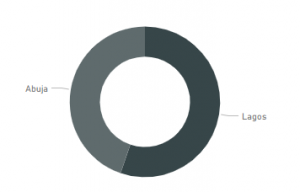
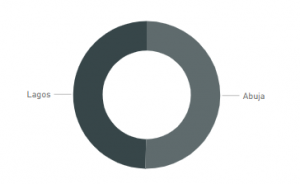
This is imperative as public concerns and interest in the virus grow. According to our analysis, cumulative interest in understanding coronavirus in Nigeria was more than those found for coronavirus in Lagos. We also found a high level of interest in knowing what the National Centre for Disease Control and the Federal Ministry of Health are doing regarding the restraint of the virus spread. Within the last 24 hours that formed analysis period, how does coronavirus spread and symptoms of the virus have been sought mainly by people in Lagos.

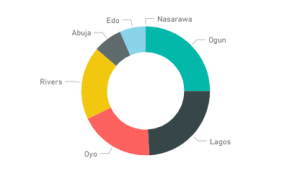
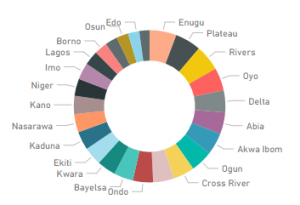
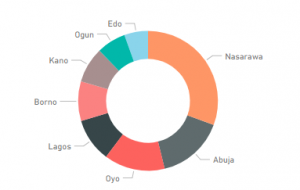
Apart from the searches, we equally discovered that the interest in the virus within Nigeria was on the high threshold among the people in Enugu, Plateau. Rivers, Oyo and Delta states. While this continues to grow, we found that Nigerians and other nationals in Abuja, Lagos, Nasarawa and Oyo have sought information about the place of the Federal Ministry of Health and National Centre for Disease Control in containing the virus spread across the country.

Exhibit 1: First Case of Coronavirus in Nigeria

Source: Google Trends, 2020; Infoprations Analysis, 2020

Exhibit 2: Public Interest in Coronavirus in Lagos

Source: Google Trends, 2020; Infoprations Analysis, 2020

Exhibit 3: Coronavirus in Nigeria

Source: Google Trends, 2020; Infoprations Analysis, 2020

Exhibit 4: Public Interest in Federal Ministry of Health

Source: Google Trends, 2020; Infoprations Analysis, 2020

Exhibit 5: Public Interest in National Centre for Disease Control

Source: Google Trends, 2020; Infoprations Analysis, 2020


Medcera Providing Technologies to Public Health Institutions on Coronavirus Containment

0

As coronavirus (Corvid-19) ruffles economic ordinances, market systems and puts more humans at risk, the Board of Medcera, this morning, approved to share our Medcera technology to any public health institution that needs a modern health care tool to manage the virus containment. Medcera is the world’s first location-agnostic electronic health record system, making it possible that patients’ medical records are stored in one location, irrespective of city, hospital or domain. In other words, your medical record is always up to date, no matter where you are, provided the clinics are using Medcera. Medcera has integration with labs, imaging centers, pharmacy and insurance.

To collate and aggregate data, health institutions can use Medcera for their  agents and field workers. And in real time, via Medcera Insights, experts can see a heat map of potential risks as data is collected. While our technology cannot reveal the patient identity due to HIPAA compliance, we can tell you locations with risk vectors. That way you can activate the traditional protocols based on the healthcare regulations in your locality. 

If you reach out, our team will set up accounts for all your field workers and provide you access to Medcera Insights which has an advanced data analytics system to give you insights on data collected in real time. We are waiving all associated costs to any institution, private or public, in Africa and beyond. One requirement is that you must work with us via a licensed medical doctor fully licensed to practice medicine in your constituency as only doctors meet certain HIPAA requirements on patient data even if that data is anonymized.

All fees have been waived including training your team.

Our contact is info@medcera.com