


This video explains our weekly sessions and what our faculty will do during the Tekedia mini-MBA which begins Feb 10. Our faculty comes from U.S., Canada, Nigeria, UK, France and beyond. Click and register for the 4-month online program today; the program outline is also there.
The Lagos’s BIG Ban – $400 Million On The Line

OPay has raised at least $200 million. This includes the $50 million it raised in June 2019. Max has raised about $8.1 million and Gokada about $5.6 million. For these three companies, investors may see their plays gone from tomorrow when the ban on motorcycle kicks in. Add the keke or okada micro-investors, you may see at least $400 million blown. It is important to note that without the riders, OPay business model fails since the riders are the mobile financial centers! Yet, as you debate this policy, the statistics from government hospitals which show 10,000 accidents with 600 deaths due to motorcycle related accidents must be part of the equation.

Tell me – what happens to Gokada, Opay, and Max in Lagos state?
Alpha Mead to Co-Create Ideas for Talents Upgrade in Nigerian FM Industry

The Management of Alpha Mead Group, a Total Real Estate Solutions company, has reiterated its commitment towards skills and knowledge development in the Nigerian Facilities Management industry. Information from the company shows that the first Facilities Management Talents Market Outlook session is being organised in this regard to generate needed insights for planning and development of appropriate solutions for the reskilling and upskilling professionals in the industry.
The session, which will be held on February 13, 2020 “seeks to help FM Team Leads, HR professionals and decision makers situate the role of facilities management in their corporate existence and share perspectives on how to attract, motivate and retain talents,” the post on the official professional networking page of the company reads.

In an exclusive interview with Olusesan Ogunyooye, Head of Marketing and Communications, it is obvious that the session, which is expected to have a number of captains in various industries where FM roles have become imperative for the operational effectiveness and efficiency in the last two decades, will be used to appraise the current human capacity as well as the capabilities required to drive the relevance of the industry in the face of its place in business performance.
“It seeks to improve skill and Development in the market because it seeks to bring together FM leads and HR professionals (who manage FM professionals in organizations) to identify the knowledge gap and co-create ideas to bridge the knowledge gap,” he said.
Infoprations had earlier analysed problems associated with talents retainership in the industry with the suggestions that players need to revisit their talent retention strategy. One of the strategic options proffered by the analysis is that the business goals must be aligned with TRS to ensure maximum return on investment and benefits to the employees.
The Need for Government to Address Matters on Evacuation Plans for Nigerians in Wuhan
Has anyone else noticed that in Nigeria people hardly talk about Nigerians trapped in China? It is as if we are avoiding the subject, or pretending that Nigerians aren’t in China. Or maybe discussing the topic will bring more tension to an already tensed Nigeria. I don’t really know, but this matter isn’t something we should ignore.
I became more alarmed about the avoidance of this crucial matter on Wednesday, 29 January, 2020, when I stumbled on a Twitter post made by someone, who was apparently stuck in Wuhan, China. He wrote, tagging Abike Dabiri, Chairman/Chief Executive Officer of the Nigerian Diaspora Commission, asking the plans of Nigerian government towards evacuating Nigerians trapped in Wuhan.
The thousands of replies and retweets this post earned was something else. It seemed everybody that came across it wanted to talk. Everybody felt connected and concerned. For the first time in a very long while, Nigerians shared one voice; and a very loud voice it was. But do you know what this voice was screaming? That voice said, and it’s still saying, that all Nigerians in China, and even Chinese that travelled to China for Chinese New Year, should stay put in China (not just in Wuhan). Honestly, Nigerians unanimously turned their backs on their brothers and sisters.
Countries began evacuating their citizens from Wuhan… The US airlifted 240 American diplomats and citizens out of the central Chinese city at the epicenter of the coronavirus outbreak this morning, and another plane evacuated 206 Japanese nationals to Tokyo. The EU and South Korea are also repatriating their citizens. Meanwhile, Australia will evacuate hundreds of citizens from the city and quarantine them for two weeks on Christmas Island. (Quartz)
Up till now I still couldn’t believe that Nigerians could keep aside their differences and diversities and sound like one. I couldn’t believe that anything could unite this nation. But the sound of death did. Coronavirus was the trumpet that announced the second coming that made every Nigerian think straight. They knew that this disease knows no age, tribe, religion, gender, class, and so on. This disease has no geographical boundary.
I felt bad when I saw all those comments and retweets, but I was secretly relieved that we won’t add Coronavirus to our list of troubles. I understand how this will be received by Nigerians over there, but it is actually not the fault of the commentators; they were thinking of their safety.
A lot of points raised in those comments really showed why the Nigerian government airlifting citizens out of China isn’t a good idea. Some of these points include:
- Poor Health Facilities: This is true. Like most people pointed out, Nigeria does not have the facilities to manage this health crisis, or even any one at that. It was pointed out that it is actually better that these people stay back in China, where intensive researches are already on going on how to curb the ailment. Coming back to Nigeria could just mean imminent death of the infected persons. Besides, if a cure is finally found, it will take a long time before it is brought to Nigeria. So, staying back in China isn’t a bad idea for Nigerians that have been exposed to the virus.
- Long Incubation Period: From what has been revealed, the incubation period of Coronavirus is 10 to 14 days or so. And the infection becomes contagious during this incubation period. This means that those already infected may be airlifted with those uninfected, and when they come back, they may be allowed into the country with the assumption that they are free. You can imagine the type of massive spread of this infection if this is allowed.
- Lack of Quarantine Facilities: China has already quarantined Wuhan, a commercial city, in a bid to contain this infection. I don’t see any way Nigeria can achieve such a feat. Herdsmen, bandits, and Boko Haram insurgents have been operating freely in many parts of the country for years now, and the government couldn’t “quarantine” them, how then can the government quarantine a disease that moves around in the air, invisible?
- Spread to other Parts of the World: Some people noted that the disease is gradually moving to other parts of the world, including Africa, because people were allowed out of China. As they said, the more the contact with China is reduced, the easier it will be to contain and cure this deadly disease.
However, it is still unfair that the Ministry of Foreign Affairs hasn’t addressed this issue even as Nigerians over have started crying out for help. In as much as there is need not to bring this danger into Nigeria that is already battling with Lassa Fever, we shouldn’t forget that these people in China are still part of us and have been contributing, directly and indirectly, towards the development of this nation. We shouldn’t just abandon them.
For me, I think the federal government needs to look into this matter. Some countries have gone for their citizens, should Nigeria also go for hers? If “no”, reasons for that should be given; keeping mute is not going to help the situation. Our government officials should talk to us.
‘Agriculture is the most important business in the world’ – Akinwumi Adesina
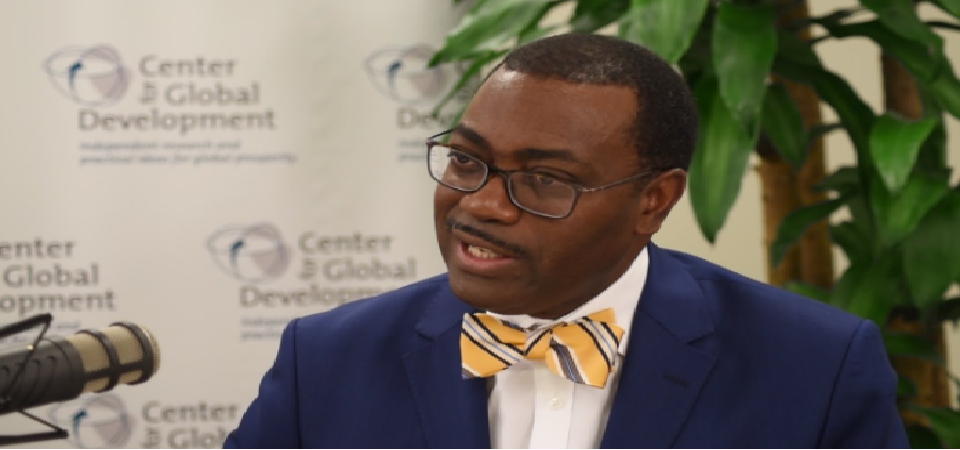
African Development Bank President Akinwumi Adesina reminded students of the important role they have to play in the continent’s economic development, as he was conferred with an honorary doctorate in his homeland.
The Doctorate of Science was awarded by the Federal University of Agriculture in Abeokuta, Nigeria, on Tuesday, in honor of Adesina’s work in agriculture and food security across the continent.
Lauding the choice of Adesina as the institution’s 2020 awardee, the Chancellor, Edidem Ekpo Okon Abasi-Otu, described him as a global household name whose exploits in promoting value chain addition in agricultural produce have remained unparalleled.
In his acceptance speech, Adesina commended the Nigerian government’s efforts to promote agriculture and agribusiness in Nigeria.
“Agriculture is the most important profession and business in the world,” Adesina said.
The Bank head pledged to continue the work of transforming Nigeria’s agriculture sector.
“The size of food and agriculture in Africa will rise to $1 trillion by 2030. The population of Africa, now at 1.2 billion, will double to 2.5 billion by 2050. They all must eat. And only through food and agribusiness can this be achieved,” he added.
Adesina said the African Development Bank was spearheading efforts to feed Africa and was investing $25 billion over a ten-year period to transform the continent’s agriculture sector. What Africa does with food will determine the future of food, given that 65% of the arable land left to feed the world is here, Adesina said.
“I am delighted to see so many of our young people engaged in agriculture arising from the Youth Employment in Agriculture initiative launched when I was minister to get the youth into agriculture as a business. From their innovations in the use of drones, food processing, packaging, transport and logistics and marketing, they are already unlocking the opportunities in agriculture,” he said.
He urged agricultural universities to optimize their role in linking research, innovations and technologies to farmers and the food and agriculture industry.
“Africa’s youth must become leaders to help feed our world,” he advised.