DD
MM
YYYY

PAGES

DD
MM
YYYY

spot_img

PAGES

Home Blog Page 6494

How Federal Character Policy Under-Develops Nigeria

0

The Emir of Kano and ex-Governor of the Central Bank of Nigeria, Muhammadu Sanusi, opines that Nigerian policies on “quota system” and “Federal Character Principles” are detrimental to Northern Nigeria. To him, instead of these policies helping the North to catch up with the advanced development in other parts of the country, it made it worse off.

This may come as a surprise to many Nigerians, who believe that the Federal Character principle has greatly benefitted the northerners. But remembering that 87% of the poor in Nigeria are found in the north is enough proof to reassert that the claim of the Emir of Kano is factual.

Understanding the Federal Character Principle

The principle of Federal Character has been enshrined in Nigeria’s 1979 Constitution. This policy is there to ensure that appointments into public offices reflect the federal character of Nigeria. This means that appointments into any political offices, civil service, military, para-military, and so on, at the federal level, ensures that Nigeria linguistic, ethnic, religious and geographical diversities are represented. In other words, all the states in the country are duly represented in all federal government’s appointments.

This policy is set up to prevent predominance of people from a particular state, tribe, geopolitical zone, religion and language in Nigeria public offices and affairs. It is there to prevent discriminations, nepotism and tribalism. Truly, Federal Character principle is there to protect the interest of every Nigerian citizen.

Emir of Kano’s View on Negative Impacts of Federal Character Policy

Citing the exact words of Muhammadu Sanusi on why Federal Character policy has affected northern Nigeria will throw lights on how this policy has been under-developing Nigeria. Below are excerpts from his birthday wish to Nasir El-Rufai, Governor of Kaduna State, on 17th February, 2020:

“You don’t need to rise on being from Kaduna State or being from the North or being a Muslim to get a job. You come with your credentials; you go with your competence; you can compete with any Nigerian from anywhere.

“We need to get our Northern youths to a point where they don’t need to come from a part of the country to get a job. And believe me, if we don’t listen, there would be a day when there would be a constitutional amendment that addresses the issues of quota system and federal character.

“The rest of the country cannot be investing, educating its children, producing graduates and then they watch us; they can’t get jobs because they come from the wrong state; when we have not invested in the future of our children.”

I think this excerpt says it all – northern youths do not bother developing themselves because the Federal Character policy uses quota system to ‘share’ employments to Nigerians – qualified or not.

How Federal Character Policy Under-Develops Nigeria

The terms of Emir Muhammadu Sanusi have given deep insight into why Federal Character principle is affecting the country negatively instead of positively. The system, to start with, has killed healthy competition among the youths. It has made it obvious that appointments into federal services are not based on merit, but on where you come from. Put differently, people do not get appointments into federal services because they are experts but because there is vacancy in the quota for the indigenes of their states. So an office can be manned by an inept because he is from the “right” state.

Federal character policy was put in place to reduce discriminations and inequalities in the treatment of every tribe in Nigeria. But ironically, this policy has gravely encouraged inequality in the recruitment, placement and admission processes into federal offices and schools of learning. Take the example of the cut-off marks for 2018 common entrance examination into unity schools, where indigenes of Anambra State were cut off at 139 (69.5%), for both male and female, while those from Zamfara State had their cut-off marks pegged at 4 (2%), for male candidates, and 2 (1%), for the female. This is a way of telling those studying hard in Anambra State that they are wasting their time since their counterparts playing hide and seek in Zamfara State will get admissions. Besides, it hurts to know that something you didn’t get is given to someone less qualified.

Looking at the discrepancies in the cut-off marks of the unity school common entrance examination, as given above, one could easily see why the education standard of the country is low. To ensure that the students that scored high and low are carried along, the education system of the country will be watered down. Besides, it is obvious that someone who scored two out of two hundred (that is 1%) is not intellectually ready to battle with the academic works of secondary school. But here they are, pushed into a system that will only confuse them the most.

Another way federal character policy affects the country negatively is through unprofessionalism of federal workers. As Sanusi noted, while some people are investing in and developing themselves, others are unbothered because they know they will definitely get federal government paying jobs with the little knowledge and skills they managed to acquire. As someone once said, government paid workers from the so-called disadvantaged states do not bother developing themselves because they know they can never lose their jobs as a result of unprofessionalism.

Conclusion

Federal Character policy is good. In fact it is wonderful. To me, it shouldn’t be scraped off the Constitution; but it needs to be reviewed. Whatever that will be added or removed from it should ensure that the policy does not create room for laxity and discrimination. All states and, if possible, local government areas should be duly reflected in federal government appointments. But there should be equality, not equity, in these appointments.

You Can Still Register for the Ongoing Tekedia Mini-MBA

0

Good People, this is to inform you that you can still register for the ongoing Tekedia Mini-MBA. Our contents are archived and fully recorded. Everything is self-paced and you can go at your own pace. Once you register, our team will send you a link to access old contents, including the videos, lecture materials, discussion boards, webinars, etc. Join us today!

How To Register: 

  1. PayPal: follow this link and pay $140 US dollars. It supports most global currencies.
  2. Bank transfer (Nigerian naira): Pay N50,000 into any of GTBank 0114016493, UBA 1019195493. Account owner: First Atlantic Semiconductors & Microelectronics.
  3. Flutterwave: follow this link (naira) or this one (USD) to use your Verve, Visa, Mastercard, Amex, etc cards across Africa and beyond (you can use same links for other currencies, please ask for exchange rate before payment if not on Naira or USD).
  4. Automatic Access: Pay via this Tekedia link for self-automatic enrollment with username.

https://www.tekedia.com/mini-mba/


Improving the Supreme Court of Nigeria

2

It does not look really great. If you have a non-political case that needs the attention of the Supreme Court of Nigeria, it is possible you may not get a date before Jan 1 2023. The apex court is overbooked and over-congested. If that is the case, it means the Supreme Court of Nigeria is simply now the Supreme Court of Political Matters Nigeria since only political cases get accelerated access to the justices.

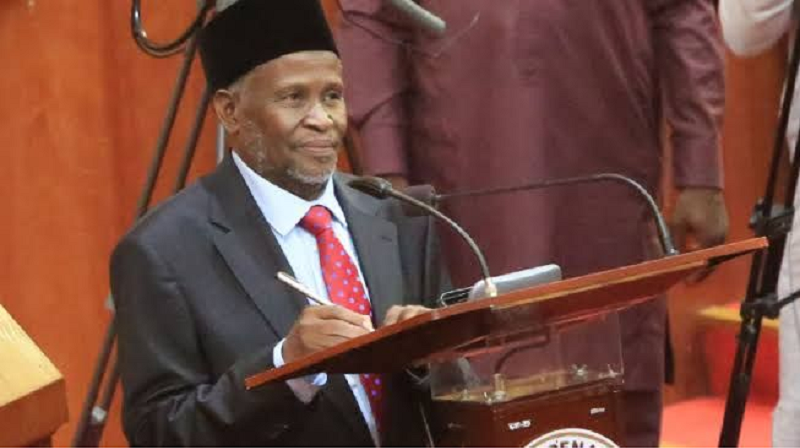
I am a layman, and certainly know nothing about law other than to stay out of trouble. That way, I do not need to know the law! But if I see the Chief Justice of Nigeria, Justice Ibrahim Tanko Muhammad, I will tell him this:

  • Create 6 regional Supreme Courts in the 6 geopolitical zones to try non-political cases at the level of Supreme courts in their jurisdiction. Each of these courts will have only 3 justices.
  • The ultimate apex Supreme Court in Abuja will focus on political matters and generation-shaping cases. All cases would first arrive from the Appeal Court to the ultimate Supreme Court in Abuja which can decide to punt to the regional ones. Once that decision is made, the finality of the decision will be decided at the regional level.

People, with extra 18 justices, our legal system at the supreme level will improve to serve the frictions in the marketplace. The Nigerian parliament can amend the Constitution to allow this ordinance to become part of our system.

Gaskiya ne. Nke ahu bu eziokwu. Otito niyen.

The Problem is EXECUTION, Not Your Competitors!

2

Most times, competition is not your main enemy as you build that start-up or the product. Your main enemies are the internal elements in your company which could affect flawless execution. Do not fret morning and night about competition because ideally for an African start-up, you do not have many competitors!

Yes, most of our industries are still at infancy with the incumbents largely operating at sub-optimal levels. So, when you focus on competition, you lose sight to think how to innovate and make great products. (You should be aware of competition, but do not think they are there, to snuff life out of your business. That is not the case.)

Failing as an African start-up or a product is not necessarily because any competitor took you down. The likely major reason is that you could not execute to fix that friction you have established that company or product to solve. For the solar companies that went under, they did not die because of electricity DISCOs (distribution companies), since the DISCOs are still not distributing enough electricity. Those logistics start-ups that went under did not collapse because of competition as our logistics systems in Africa are still at infancy. The farms did not collapse because we suddenly have excess produce capacities from big farms. Largely, failing as a start-up, in Africa, has nothing to do with excessive competition: it is a product of inability to execute. (I am hoping you do not plan to start another Facebook to make a case that competition does kill!)

So, as a founder or product champion, give yourself a break and focus on the real business: building great products and a fantastic company. Do not allow another new fund-raise by a perceived competitor to stress you. Do not allow another new city expansion by the same competitor to stress you. Do not allow another hiring of a Vice President to stress you.

But worry if you are not serving your customers and improving your products. Get back to work and stop being fixated on competition. Sure, you do need to be aware of competition but it does not need to stay in your face as you pursue your mission. You may see big buildings and expensive cars driven by (incumbent) executives, but if you check well, the market has not been scratched.

Pulse: Consider the insurance sector in Nigeria where we still have only single-digit market penetration (Vanguard has 0.4%.) There could be “competition” but if you are really innovative, you can create a new basis of competition and disrupt the market. Not doing well in the insurance sector cannot be due to competition, rather your inability to at least move the penetration to say 30% from the current single-digit. So, any failure in the Nigerian insurance sector is really an execution failure, not competition related.

[culled from Tekedia Mini-MBA Week 2 Lecture materials]

U.S. Considers Cutting Huawei off from Global Chip Supply

0

As the trade dispute between the US and China rages on, Huawei has continued to take the center stage of the US offensive attacks from many angles. Reuters reported that the US Government is considering reviewing its regulatory rules to enable it shut supply of chips to Huawei from other companies such as Taiwan’s TSMC.

Huawei has been trying to stay in business on little options since it was ousted from the US in May 2019, owing to the risks that its tech activities pose to the US national security. The Chinese company has been accused of being a spy agent for the Chinese Government using its telecommunication technology to obtain secret information about other countries.

The US has been wary of Huawei’s activities even outside its shores. Last month, the Trump administration warned the UK Government that it would stop intelligence sharing partnership if London allows the Chinese tech giants to get involved in its 5G roll out.

The British government in a defiant move announced that Huawei will be allowed to account for 35% of the kit in a network’s periphery that includes radio masts. But the deal excludes any chance of Huawei supplying sensitive network materials (core). And the company will not be allowed to operate near military bases and nuclear sites.

UK’s partnership with Huawei has opened the door for other European countries to accept the Chinese company’s partnership in their 5G roll out.

The US appears to have a plan B in keeping the tech giants out of global influence. The new attempt to stop the Chip supply partnership between Taiwan’s TSMC, the world’s largest contract chipmaker, and Huawei, the world’s no. 2 smartphone maker, is the latest attempt by the Trump’s administration to keep Huawei out of business.

Sources familiar with the matter said the new regulation will stop chips shipment to Huawei, which would be a big blow to both the Chinese company and TSMC, a big player in the chip making industry. TSMC has been a major supplier of chips to Huawei’s HiSilicon unit and mobile phone rivals Apple Inc and Qualcomm Inc.

The new commerce sanction involving Huawei is said to be among several options on the consideration table at the high-level meetings to be held this week and the next in Washington. Sources said the chip proposal has been drafted though its approval is far from certain.

“What they’re trying to do is make sure that no chips go to Huawei that they can possible control,” a source familiar with the matter told Reuters.

However, the process of blocking sales of chips to Huawei comes with a price: The already existing Foreign Direct Product Rule that places some foreign-made goods using US tech ideas under US regulation must be altered. The new draft proposal means the US Government would force companies using US chip making equipment, ideas or license to obtain license before they could supply to Huawei.

China has deeply relied on US chip making companies for years, like KLA, (KLAC.O) Lam Research (LRCX.O) and Applied Materials (AMAT.O) according to a report from China’s Everbright Securities.

“There is no production line in China that uses only equipment made in China, so it is very difficult to make any chipsets without US equipment,” said the report.

The latest trade deal signed by the US and China does not allow China to steal ideas from the US. So to keep the trade agreement, Chinese companies will be forced to play along the rules of the new draft if approved. But US allies around the world are likely going to be spiked by it.

Huawei has been struggling by expanding its reach. China is also trying to assert technological independence by investing billions of dollars into research for its software and chip development.

The future appears uncertain for both the US and China, in case China finds a solution to its software problem, the US tech industry will lose a huge economic interest from around the world. If China fails, the US will continue to enjoy its dominance in the global tech industry and to detect for others according to its own interests.

The US fall out with Huawei has forced some US and foreign companies to seek special licenses from the Commerce Department to do business. China has become the biggest loser, giving in to the US in many fronts due to many of its tech short falls.