DD
MM
YYYY

PAGES

DD
MM
YYYY

spot_img

PAGES

Home Blog Page 6500

How to Outsmart Idea Thieves

0

A lot of people have wonderful ideas to pitch to investors, but they are afraid to do so. I don’t blame them for that because most of them have passed through a lot of ordeals in the hands of investors and clients. Some have been out rightly rejected, thereby making them feel inadequate; while others were mocked and embarrassed for being bold enough to dream big.

But the one that touches me most is that of those whose ideas were stolen by the investors/clients they pitched to.

This is not a new thing. Many inventors and freelancers can attest to this. It can happen to anybody, even to those in the corporate world. Yes, junior officers can have their ideas stolen by their superiors, who present these ideas to board members without giving credits to their subordinates that thought them up. This situation gets worse when the board assigns this superior officer the responsibility of supervising the implementation of the ideas and then promoting him after the junior officers must have seen it to fruition. We see this everyday in our places of work and it can be very devastating. But the end result is that the junior officers have learnt to keep mute, play ignorant and keep their disruptive ideas to themselves, even if it means the organisation crumbling. It is indeed a case of a vicious cycle.

But this article isn’t about those in the corporate world. Its interest is on freelancers and start-ups whose ideas are hijacked by their clients and investors. It hurts when you think up something, plan it, visualise it and then have it stolen right under your nose. And worse is, the thief gives you no form of credit and makes you look like a copycat should you go ahead to set your idea into motion.

There are reasons why these idea thieves succeed. Sometimes it’s because of some skills they have developed (especially publicity and marketing skills), other times it’s because of the loopholes the proposed investee overlooked. Below are some of the reasons why it is easy to steal ideas from innovators.

a. Revealing too much: There are some investors and clients that will want you to tell them everything concerning your idea. For instance, you are an interior decorator, or should I say, cabinet maker. You met with a client whose kitchen cabinets you are pitching to install. This client may demand that you give him a clear picture of what you have in mind, and being a “good person”, you downloaded the pictures in your head to him in such a way that he is seeing what you are seeing, with exact measurements and dimensions. This person can easily pick up your idea and hand it over to his carpenter to do the job, using your specifications.

This can also be seen among start-ups whose investors ask for every detail concerning the business. Yes, I know these investors want to be sure they are not going to waste their money but some of them still hijack these ideas from these investees and either build them up by themselves or pitch them to others.

b. Being too Conventional: Sometimes it is easy to pick someone’s brain because he’s too predictable. This is not saying that idea thieves prefer going after conventional ideas, but they wouldn’t mind settling for one when they have nothing else to hold onto.

c. Pitching to only one Source: I know a lot of investors and clients don’t like people pitching ideas simultaneously to several investors and clients, but hey, this is about you looking out for yourself. Pitching to one client/investor and spending weeks or months waiting for his reply could be disastrous to freelancers and start-ups. And this will be most disappointing when the response turned out negative, or worse, silent.

d. Little or No Investigative Work: Some start-ups are so carried away by promises of brighter future that they fail to investigate their knights in shining armour. Those “investors” knew how desperate these people are and will therefore lure them with flashy empty promises. Without suspecting much, these start-ups and freelancers offload everything they have without knowing they were about to be robbed.

e. Poor Networking: It is easier to steal from a loner than from someone that moves with the herd. I’m saying you should have the herder’s mentality, but when people don’t really know you and what you are capable of, trust me, someone is going to tie you to a stake and milk you dry.

Without being too verbose, I’ll list out ways idea thieves can be outsmarted.

1. Make Investigations: You can ask around to find out the reputation of the client/investor. If you see or hear any negative review, be on the alert for scam.

2. Give only Rudimentary Ideas: Don’t give out everything. State enough to capture the interest of the person and to convince him that you know what you are doing.

3. Engage in Simultaneous Submissions: Don’t pitch your idea to only one outlet. Spread it out. If all of them are going to steal it, then let them battle that. However, the essence of spreading ideas simultaneously is that there will be more chances of your submissions getting interests shortly after submission. That way, you can start early to work on your project. And you know, the earlier you worked on your ideas, the lesser the possibility of it being hijacked.

4. Be Disruptive: This is the era that calls for disruptive innovations, so you need to be one for you will be sorted after. Let’s assume you pitched the framework of your exotic idea to several people, and you told them it’s simultaneous submission, believe me they will want to hear further from you. Then, you can make your choice.

5. Stay Visible: Visibility is one major ingredient in the sauce called success. It is harder to steal from someone that is known. So stay visible, both online and offline. Find good platforms that will project your image positively and build up there.

6. Don’t be Desperate: This is easier said than done, but it’s good to know anyway. Being desperate has cost people so much. Some will settle for less, while others will settle for none. Though this is not easy, try to remove desperation from your demeanour as you go after clients and investors.

7. Be Confident: This is the last one I want to drop here. It is easier to steal from someone that sounded unsure of himself than a confident person. So be bold, be assertive and exude confidence.

I know a lot of people are expecting to see something on copyrights and patents. Well, all I can say here is that this article is about ideas that have not been invented or published yet. It is about ideas that are yet to be put to work. They are still in their frameworks with no flesh to say how it will turn out. It could be something you communicated to someone orally or in writing, which has not yet been put to test. Therefore, it may not be wise to look for laws that will protect ideas that are still in their incubation period.

But in a case where the idea has already been published or invented, but you seek expansion, you can then consider any of those laws that appy to your case.


Why job Seekers Aren’t Getting Called for Interviews

0

“I cannot imagine paying someone to help me re-write my CV. People who patronize resume writers are just simply unintelligent” – this was a comment I received on one of my posts on LinkedIn concerning a heated argument on why you need a professional resume writer to boost your chances.

I clearly understood the sentiments of the commenter – but what he got wrong was that it doesn’t portray unintelligence on your part should you decide to patronize the services of a professional resume writer.

Back in 2011 when I resigned from where I worked, truthfully, I gained major experiences in the non-profit sector. I participated in projects funded by Chevron, USAID, US Embassy, Exxon Mobil, UNDP, and the European Union (EU). I have worked on multimillion naira projects and clearly understood everything from strategic planning, monitoring and evaluation, advocacy, proposal writing, and every single area in the field.

But after the first one month after my resignation despite sending my CV to multiple organizations and not getting called for interviews, I constantly told myself that it won’t take more than three months, I’ll be resuming with a decent multinational. Eight months down, still nothing! After 18 months I gave up. Here I was a qualified candidate but not one organization called me for an interview.

I didn’t use man-know-man connections, I simply filled forms online. After 4 years of doing this, I met a long lost friend of mine who just got a project and he wanted me to help sort out applications he got from prospective candidates he needed to employ for the project. While sorting these applications, I realized that I could not pick one application. They all looked generic and similar. Then, I understood while no one called me for an interview.

Why this story?

Just like technology, finance, engineering, communications, etc have all moved, job application and candidate selection have also moved on to a new trend. This new trend and movement were spiked by a few drastic circumstances which were bound to happen. According to Vanguard;

The number of unemployed Nigerians rose by 3.3 million to 20.9 million in the third quarter of 2018 (Q3’18), a report from the National Bureau of Statistics (NBS) has shown. Buhari The NBS in its Labour Force Statistics –volume 1: Unemployment and underemployment report for Q3’18, indicated that year-on-year (YoY) the rate of unemployment rose by 3.3 million or 19 percent to  20.9 million in Q3’18 from 17.6 million in Q3’17, while on quarterly basis, it rose by three percent from 20.3 million in Q2’18.

From a recent study, between 1980 till date, the Nigerian population rose from 73 million to 200 million – approximately 180% increase in just 40 years. This increase comes with an increase in students applying to tertiary institutions as most state governments now make primary and secondary education free. This, in turn, creates an influx of graduates which is more than what our current private and public employment sector can handle. The resultant effect? More applications for jobs.

Secondly, there is also a ‘development’ factor. With technology advancements, apps, software, robots, and co, multinational organizations have over the years, embraced these developments as an effective means to cut down operational costs and save more money. Another downside to this is layoffs. And this increases the unemployment pool.

Another salient problem arose for recruiters over the years which have hampered employment processes and most importantly, candidate selection. With each passing year, the number of applications received for any advertised vacancy keeps tripping at geometric progress. It got to a point that recruiters cannot go through every single job application. So, the Applicant Tracking System (ATS) was born.

In 2016, Tude Fowler of the Federal Inland Revenue Service (FIRS) announced that the organization received over 700,000 applications for just 500 advertised positions. Also, in 2014, 125,000 applications were received for 4,500 positions advertised by the Nigerian Immigration Service. There was also the case of almost one million applications recorded for just 10,000 positions advertised by the Nigerian Police in 2016.

Getting called for an interview has gone beyond flaunting your apex expertise or a multitude of degrees and qualifications in your CV. No matter how qualified you are, if your CV does not scale through an ATS which is now the preferred automated candidate selection program used by multinationals, you will not be called for an interview.

Applicant Tracking Systems are built to parse your CV using a variety of ranking algorithms namely skills/keywords, job title, education match, section headings, date formatting, measurable results, word count, job level match, negative words (buzzwords), education boost, web brand presence (LinkedIn profile), and so on.

For you to actually get called for an interview, you must learn to write and format your CV according to the latest algorithms of an ATS. Most multinationals use in-house ATS programs, but they generally share almost the same ranking criteria. In case you are wondering what an ATS actually is, just remember that form you filled online that asked you to attach your CV at the end when you were applying for that job with Microsoft? That is an ATS.

Professional CV writers are constantly trained on how to write CVs that can scale through an ATS. There are several international certifications that make them consultants. The job of a professional CV writing company is to help you re-tell your career story and properly format your CV to scale through an ATS. Patronizing one does not make you unintelligent as I said earlier, it only helps you increase your chances. Luckily, there are a few companies in Nigeria that specialize in professional CV writing.

When I founded Procivi in 2015, I got mocked and some people told me I had no direction in life. Today, Procivi has become the largest growing and actually the first-ever company to help people understand what they need professionals to help them retell their career stories and rewrite their CVs.

UK’s 5G Permit Offers Huawei Lifeline in Europe

0
Most parts of the world have been pushing to cage Huwaei

In stern opposition to Trump, the UK government decided to allow Huawei to be used in its 5G services though with some restrictions.

The US Government has banned Huawei totally and restricted it from all access to American 5G operations for security reasons, and had warned the UK of the implications of letting the Chinese company partake in its 5G roll out.

About a week ago, the British government in a defiant move announced that Huawei will be allowed to account for 35% of the kit in a network’s periphery that includes radio masts. But the deal excludes any chance of Huawei supplying sensitive network materials (core). And the company will not be allowed to operate near military bases and nuclear sites.

UK network operators separated their network parts to core and non-core as a way of segmenting security. The non-core part of the network covers antennas and base stations which are easily secured.

Huawei’s cheaper services in the 5G roll out has been seen as the reason many countries are embracing the Chinese company despite the risk of potential security breach that may come from its services.

The US Secretary of States Mike Pompeo has said in an interview with Fox Business that the United States would stop sharing information with any European country which allowed China into its space of technology. That means, the British government is at risk of losing some of its intelligence-sharing ties with America.

But the British Foreign Secretary Dominic Raab told the House of Commons that the decision will not jeopardize their intelligence sharing with the US.

“Nothing in this review affects this country’s ability to share highly-sensitive intelligence data over highly-secure networks both within the UK and our partners, including the Five Eyes,” he said.

The US and UK are members of the Five Eyes intelligence-sharing agreement that includes Canada, Australia and New Zealand.

Telcos in the UK have been resisting US pressure to shun Huawei mainly because the companies are already using Huawei’s equipment. Vodafone said it will cost millions of dollars to start afresh even though the UK’s Huawei’s Cyber Security Evaluation Center has criticized Huawei’s cyber security measures last year. In a surprised move, the British intelligence has countered the Cyber Security report, saying that Huawei’s equipment is a manageable risk.

Under Chinese law, Chinese companies are operating under its communist laws even when they are abroad. They may be called to perform national duties by spying for Beijing, and there is no guarantee that the companies would say no. Although Huawei said it would rather go out of business than yield to such demand, it is easier said than done. The risk is the major reason the UK’s Cyber Security wouldn’t approve Huawei’s activities.

“We’ve always treated them as high risk vendors and have worked to limit their use in the UK and put extra mitigations around their equipment and services,” said Ian Levy, technical director of the National Cyber Security Center.

UK appears to have narrowed choices of giving in to US demand at high cost of 5G rollout or letting Huawei in at the risk of national security. They chose the latter.

“Huawei is reassured by the UK government’s confirmation that we can continue working with our customers to keep the 5G roll out on track. It gives the UK access to world-leading technology and ensures a competitive market,” Victor Zhang Huawei’s UK Chief said in a statement.

It is believed that Post-Brexit paranoia must have contributed to the decision allowing Huawei’s services in the UK. It appears that the British Government is seeking to cover whatever trade deficit that may have resulted from the Brexit deals, and keep inflation in check by minimizing the cost of innovations like 5G roll out. It is a post-Brexit strategy.

However, the decision to allow Huawei to carry out its 5G services in the UK despite Trump’s warning may come with a price. The US has zero trust in Huawei’s ability to operate outside the influence of China’s censorship, and may likely renege on intelligence sharing with the UK.

Republican senator Tom Cotton, a member of the US Intelligence Committee tweeted his disappointment.

“I fear London has freed itself from Brussels only to cede sovereignty to Beijing.

“The short-term savings aren’t worth the long-term costs. In light of this decision, the U.S. Director of National Intelligence should conduct a thorough review of U.S.-UK intelligence-sharing.”

Despite the US threat, London appears keen on keeping its trade deals with China as part of its preparation to assert its independence from Europe.

The Gokada Experiment

1
With ban, the riders are home at Gokada!

I gave the evening oratory during their 1st year anniversary.  Gokada was “1” and was doing just fine. It was a great evening as emerging leaders in our startup scene came over to party. There was a drawing on the wall in the Ilupeju office: The Future is Green. Gokada had envisaged a future beyond bikes to boats, airlines, and more. I took photos and rode a bike: gentlemen and ladies, start your engines, and fix this transport friction.

But today, with most Gokada staff sacked and investors possibly to see about $6 million vapored (sure, Gokada has started a pivot), how would global investors look at that your pitch deck from Nigeria? Lagos state governor on The Platform last October promised never to do what he just did (see video below)!

With ban, the riders are home and their bikes parked!

Sure, new data can change policies. And that is the burden: Nigeria makes guessworks disguised as policies! If you use a certain size of bike for passenger commercial transport in Lagos, you should be (legally) fine. The regulation that makes it so has not been (publicly) updated (of course, a press conference did).

Unfortunately, that regulation was a product of a guesswork, with no data driving the decision making. It happens daily in our nation, feeding the pendulic somersault on policy revisions and reversals. If you cannot create your future, do not expect to predict it. And when policies become guessworks, investors, entrepreneurs, citizens, and workers pay the prices.

https://twitter.com/9jahotvibes/status/1225060564780691463

There is a big rumour (it is confirmed now) around Lagos that Gokada has sacked most of its staff . That is expected since with the commercial motorbike passenger ban, business will possibly stall. What is amazing is that Gokada is pivoting to logistics: they have an opportunity there. The only negative now is that the shippers (factories, ecommerce firms, etc) would own the market, as supply of logistics services will be huge; I expect OPay and Max to pivot to the same. With that excessive capacity, logistics will not save these three bike-hailing leaders as they have to cut costs to win businesses since the shippers are not growing that much.

“While much of your report is accurate,” the tweet reads, “we still have money in the bank and are pivoting towards deliveries while this transport ban gets sorted. We were due to make a profit in January before the ban was announced.” Fahim Saleh, Gokada CEO via Twitter

But you can also watch Lagos state governor promising not to do what he just did!

Lagos: Proscription of Commercial Motorcycles, Tricycles and What Data Is Telling the Stakeholders

0
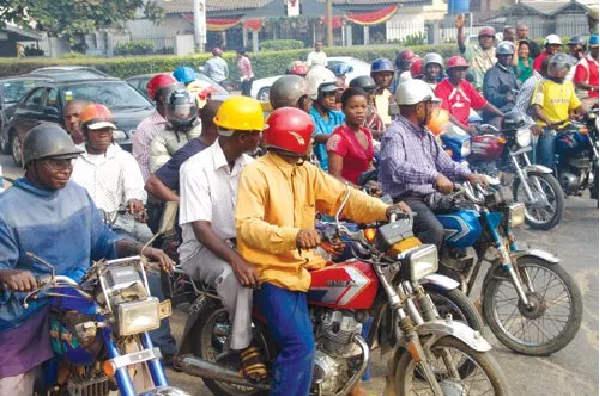
Okada driver

The movement of people and goods is one of the fundamentals that ensure economic growth and development. People need to be at different places at different times and applying various goods within transaction activities that enable them to create and capture value. This movement has been captured under different economic and social terms. In the business world, for instance, it has been dubbed recently as mobility as a service (MaaS), which allows the use of car, bike, boat among others by transportation service providers for the movement of people and goods.

The bike segment of the MaaS is being used mostly in the emerging economies, recent analyses reveal. Existing statistics indicates that the global ride hailing services market was $34.45 billion in 2018. This growth did not dip in 2019, it rather improved significantly as governments in many emerging economies struggled to provide enabling public transport systems. The growing urban population has also been fingered as a key factor contributing to the growth of the segment.

Like other developing markets, Nigeria is not an exemption of the challenges being faced by people and businesses in commuting and transporting their materials for production and consumption purposes, most importantly in Lagos, the commercial centre of the country and a key market for countries in West Africa region. From the administration of Senator Bola Ahmed Tinubu to Barrister Babatunde Raji Fashola, the idea has been to make Lagos at par with other emerging megacities in the world. This was the single reason for initiating and executing policies and programmes across the sectors during their administrations.

Some of the policies and programmes impacted players in the informal segment of the transportation sector negatively, especially Okada and Danfo service providers, before the emergence of Max.ng, Gokada, Opay among others that came with the formality strategy. Existing information shows that the administration of Akinwunmi Ambode seemed did not bother about banning the providers, which was considered necessary by his predecessor (Babatunde Raji Fashola).

Joining the Babatunde Raji Fashola, Mr Babajide Sanwo-Olu announced the proscription of Okada and tricycle riders’ operations in six local governments, nine local council development areas, 10 major highways and 40 bridges and flyovers across the state. According to the government, operators need to be restricted and banned because of the increase in road accidents and traffic linked to their activities in the last few years. With the proscription, there is no doubt the Lagos market of the Nigerian bike-hailing sector is experiencing significant down considering the number of people relying on the segment for livelihood.

As at the time of writing this analysis, counternarratives and alternative narratives rage on the faith of the riders and owners of the businesses. Despite the narratives, it appears that government is not ready to change its decision. The government recently hinted that nobody has been licensed to run Okada services in the State. In the midst of the narratives, our analyst questioned existing data and those mined and analysed by us.

What Statistics Says?

Before the ban, individuals and experts, including academics have indicated that commercial motorcycles and tricycles contributed to the number of road accidents recorded in the State in the last few years.  Our checks show that their position and government’s keen observation of the operators led to the full implementation of the Lagos State Road Traffic Law of 2012, which significantly contributed to the reduction of accidents being caused by Okada operators. The implementation, according to a Surgeon, reduced motorcycle accidents in 2012.

A study also found that a significant decline in motorcyclist fatalities following the implementation. “Motorcyclist fatalities fell by an average of 76% over the study period. Over 55% of the fatalities were recorded in five health facilities, located in an area of high road network density.” Our analysis, using real time data, equally suggests positive and negative connection between the Law and public interest in accident, traffic and Okada. We discovered that one percent of interest in the Lagos Traffic Law 2012 increased interest in accident by 15.5%, suggesting people’s knowledge seeking about the extent to which the Law could be effective in reducing accidents across the State. It was a 1.5% increase for the interest in traffic, while negative connection (-8.5%) of the Law with Okada shows that one percent of public interest in the Law reduced interest in Okada by 8.5%.

In 2015, the Lagos State Government, through a Commissioner, reported increase in the number of accidents involving commercial motorcyclists by 34% in four months.  “We have started witnessing an increase since January 2015, both in reported death cases and injuries. Specifically, injuries in Okada related accidents have increased by 34 percent when compared with the 4th quarter of 2014. According to the Commissioner, the State was able to reduce deaths from 192 per year to maximum of six per year.

In 2019, a 4-year retrospective autopsy study of motorcycle accident deaths shows that 128 motorcycle death autopsies were recorded during the period with 96 cases (75%) before the law and 32 cases (25%) after the law. The frequency of head injury was 39.8% before the law and 43.6% after the law. The proportion of road traffic accident deaths due to motorcycle crashes was from 23.4% before the law to 11.2% after the law.

The Significant Implications of the Ban and Strategic Options

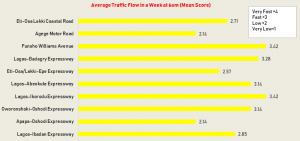
Exhibit 1: Typical Traffic Movement at 6am on select Highways by Lagos Government

Source: Google Map, 2020; Infoprations Analysis, 2020

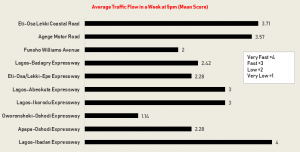
Increase in traffic, unemployment rate and crimes have been cited as significant implications of the ban. According to Fahim Salem, Chief Executive Officer of Gokada, the company is not a job for many, but a means of funding their dreams. To him, the ban has killed the dreams and renders the riders jobless. On the part of the commuters, getting to different places as soon as possible now remains dream due to insufficient public buses and others for easy movement. The insights in this analysis have suggested that players failed to analyse government regulatory framework and social dynamics effectively before investing in the State, especially the indices associated with the past proscription.

The capitalisation on laissez-faire supervision of the previous administration is a strategic mistake that entrepreneurs should not commit in a State with the intent of making select cities mega ones, following others in the world. Nevertheless, there is a room for the players and government to work out modalities for prudential regulation to avert the possible consequences identified by the experts and individuals.

Exhibit 2: Typical Traffic Movement at 5pm on select Highways by Lagos Government

Source: Google Map, 2020; Infoprations Analysis, 2020