DD
MM
YYYY

PAGES

DD
MM
YYYY

spot_img

PAGES

Home Blog Page 6503

The Nigeria’s CCTV Bill

0

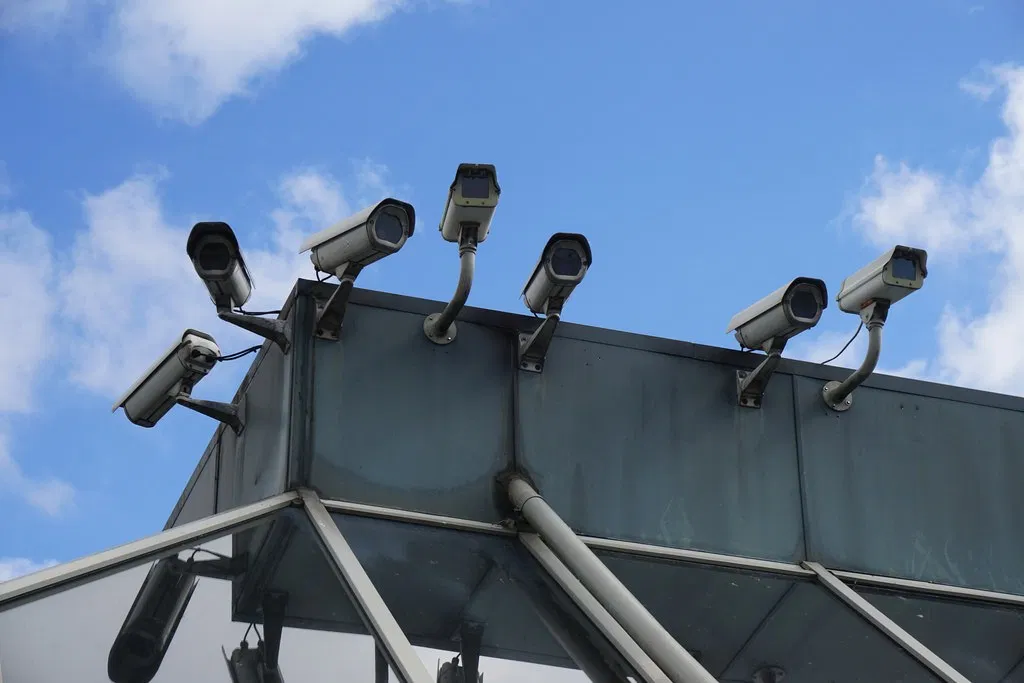
The Bill seeking to compel compulsory installation of Closed Circuit Television (CCTV) on private buildings and offices has passed second reading in the House of Representatives. The Bill was sponsored by Awaji-Inombek Abiante, with the title: “A Bill for an Act to Make Provision for the Integration of Private Closed Circuit Television Infrastructure into the National security Network in Nigeria.”

The objective is to keep the environment in check and help security agencies to solve cases of crime through a network of CCTV security infrastructure.

The Bill stipulates punishment of imprisonment and fine for any corporate organization or individual who fails to install cameras in his building or environs.

“Any company or organization in Nigeria that refuses, out of neglect, to install CCTV camera within and outside its premises is liable to a fine of at least N500,000 or an imprisonment of six months or both. Continual refusal to install CCTV camera shall attract a fine of at least N1 million or a year in imprisonment or both,” the Bill reads.

The Bill which was introduced late last year was part of the House of Representatives efforts to compel both federal and state governments to use cameras as means of fighting insecurity in the country. But it isn’t the first time Nigeria is taking a shot at security cameras.

In 2010, the Nigerian government awarded a $470 million contract for the installation of 2,000 cameras in Lagos and Abuja. About $400 million was provided by the Chinese EXIMBank for the Chinese firm, ZTE to execute the project. The Ministry of Finance and Police Affairs, and the Nigerian Communications Satellite Limited (NIGCOMSAT) came together to sign a tripartite agreement for the management of the CCTV cameras. The agreement holds the Federal Ministry of Finance as the borrower of the fund, the Ministry of Police Affairs was designated as the beneficiary while the Nigerian Communication Satellite Limited, was listed as the operator. The project was expected to be delivered by July 2011.

In October 2019, the House of Representatives was holding a plenary on the CCTV project. Nine years had gone since it was initiated and there were little sights of cameras in the Federal Capital Territory, Abuja, and the functionality of the few there are, is a bold part of the question. In Lagos, there were some cameras stationed here and there in some streets, serving the purpose of fancy poles only.

The House Committee on Finance has two questions: why are the cameras not working? And what happened to the $460 million borrowed for that purpose?

“Before this administration, we have collected some loans and the one that strikes me the most is the $460 million CCTV installation in Abuja,” Said James Faleke, the House Committee Chairman. “I want to know the position of this loan. I am sure we are paying back the loan but the CCTV is not working.”

He added: “Anytime we take a loan from China, the Chinese will come and do the job; they will bring all their equipment, the personnel and the goods, yet we do not have value for the money especially that of the CCTV.”

Nigerian government’s first attempt at security cameras appears to have ended in disappointment but not discouragement to have another shot at it.

In July last year, the federal government of Nigeria announced a plan to install cameras on major highways in the country. The cameras are to be augmented by drones to tackle incessant security issues around the country. While that is yet to materialize and the mystery of the $460 million CCTV project is yet to be unraveled, the House of Reps seems to have a better idea that will change things.

It is believed that the CCTV project failed because it is a government project. Government’s projects in Nigeria are known to have a high rate of failures owing to its explanation of many factors – mainly corruption.

In the recent turn of events, it seems that the national assembly is bullying private companies to step in where the government has failed, as the threat of fine and possible jail term suggest. Government CCTV chronicles show that there is a little chance that the federal government and states would implement the “Bill for an Act to Make Provision for the Integration of Private Closed Circuit Television Infrastructure into the National security Network in Nigeria” if passed.


Different Ways to Discover Great Product or Start-Up Ideas

0

This table is from Week 2 material of our Tekedia Mini-MBA program. It helps you understand ways great products (for project champions in existing firms) or startup ideas (founders in new ones) can emerge.Credit to Harvard Business Review, Udemy, Forbes and Tekedia. Join us and register today.

How To Register: 

  1. PayPal: follow this link and pay $140 US dollars. Its supports most global currencies.
  2. Bank transfer (Nigerian naira): Pay N50,000 into any of GTBank 0114016493, UBA 1019195493. Account owner: First Atlantic Semiconductors & Microelectronics.
  3. Flutterwave: follow this link (naira) or this one (USD) to use your Verve, Visa, Mastercard, Amex, etc cards across Africa and beyond (you can use same links for other currencies, please ask for exchange rate before payment if not on Naira or USD).
  4. Automatic Access: Pay via this Tekedia link for self-automatic enrollment with username.

After payment, email tekedia@fasmicro.com with participant’s name and email to complete the registration.

Table 3.1: Different Ways to Discover Great Product or Start-Up Ideas

Way Example What Happened
Develop Capabilities Hotmail The founders sought a way to communicate while at work, for a side hustle, avoiding detection from company systems and in the process developed a native web-based email, un-tethered to an ISP (internet service provider). They had the technical skills, and working to overcome a barrier (a friction) ended up starting a company.
Daily Life Observation Airbnb Airbnb founders saw scarcity of hotel rooms in their city during a major event, giving people opportunity to book a space in their apartment via the web. While many people have possibly done that (renting home space), the founders saw it as a huge business opportunity, and went on to scale it.
Awareness of Future Trends Tesla The future has to be lived and building for that future is an opportunity. Elon Musk saw that the future would come and embarked on creating Tesla for the eventual shift to non-fossil fuel vehicle future. Opportunities exist for AI, AR/VR, drones, etc in the near and far future. (We will be discussing the business of these technologies in Week 4.)
Discover Inefficiencies Uber, Interswitch There are inefficiencies everywhere, from traffic congestion, to outdated business practices. One can go to fix them. Uber simplified intra-city trip experiences for commuters. Interswitch founder noticed payment inefficiencies and pioneered electronic payment in Nigeria.
Enable Disintermediation Kayak, Wakanow Kayak and Wakanow help you to cut out brokers or middlemen when booking flights or hotels. Whenever you see the presence of many middlemen, there is an opportunity to improve customer experience and save people money.
Copy Elegantly Apple Apple has rarely pioneered any category it has dominated. Before iPhone, there was Blackberry. Before iPod, there was Walkman. And Pebble made way for Apple Watch. But Apple has ruled whenever it comes into a category; copy elegantly and legally as I noted in this Harvard Business Review article[1].
Monetize Your Passion Pinterest The founders of Pinterest have deep heritage and interests on collecting things (i.e. collectors). Building the business was an extension of that passion – yes, digitizing collection. As they say, blessed is the man or woman whose passion is his job. You can make yours that!


[1] HBR- https://hbr.org/2012/05/when-you-cant-innovate-copy

https://www.tekedia.com/mini-mba/

What builds a Nation?

1

Many people or individuals think that money is the only thing or the only source of Building a nation.

Yes! It is true that money builds a Nation, but money is a particle created by man for a particular purpose. Sequel to this, before money came into existence, the research, law, idea and the experiment had been done by men before it was useful.

But before money builds a Nation there are some theories, laws and principles that can be carried out for the effective use of the money.

Now, thinking that money builds a Nation without knowing that there’s a mystery that behinds the growth,establishment and development of a Nation is an illusion.

What is the mystery? The mystery is the Mind.

What builds a Nation first before thinking or talking about money is the” Mind”.

A Nation can not be built without exercising the mind and the mental state positively.

If the mind is exercised positively in building a Nation, it will uplift the Nation, but If it is exercised negatively in building a Nation, it will lead to the downfall of the Nation and also the destruction of the Nation.

So, these show that before you achieve a particular thing in life you must exercise your mind, depending on the area you ‘re heading to.

Now, you can see that a positive mind comes with positive structures, plans, ideals and initiatives.

So, it shows that the budget of a Nation can be surplus which is the money, but if it is not managed properly by not applying the principles, theories and laws that behind the uses of money properly, the surplus budget can’t build the Nation. That explains why the mind which must be exercised properly.


Week 2 – The Grand Playbook of Business – Ready For Monday

0

My team has scheduled materials for Week 2 of the ongoing Tekedia Mini-MBA: 12 noon Lagos time on Monday.  Week 2 focuses on what it takes to start a new business (Founder) or lead a new product/service in an existing company (Project Champion). It is written as a manual, from the idea stage to the growth execution stage. It comes with 6 flash cases covering Jevinik Restaurants, Airbnb, mKopa Solar, Opay, Tinder and PhonePe India. To access, visit the Digital Board; week 2 will become active and clickable at the time noted. For new registrations, click here.

When you execute, you enable growth. Growth fixes or masks nearly all problems in a company division or a start-up. Growth makes you a good presenter before the Board or CEO. Growth makes your grammar to become flawless. Growth brings respect as you stand before the investors or promotion committee. Growth creates business legends and rock stars. When you grow, you are moving. It means you have momentum. The bigger the business size, and the rate of growth, the more is the momentum of the business (in Physics, momentum = mass x velocity; velocity is speed with direction). Maximal momentum is realized when you are increasing the size of the business (“the mass”) and doing that at the fastest growth rate (‘the velocity”).

From the Lecture materials


https://www.tekedia.com/mini-mba/

Arguments for and Against Paying Interns

1

Arguments and counter arguments have arisen on why companies should pay their interns or not. Interns are very important in establishments. If not for anything, they provide the much needed extra hands at very cheap rates, though their mistakes can cost companies a lot. Interns are also easier to train, which means that if the company finally absorbs them into its labour force, they will become wonderful employees.

Today, college students and fresh graduates seek internship programmes. Most graduates are eager to go into this because it will avail them with the experiences that recruiters look out for during recruitment processes. Apart from that, they see internship period as the right time to prepare themselves for their desired career by acquiring and developing skills needed for their professions. As a result, most interns are not mindful of partaking in internship programmes that do not pay. Notwithstanding this, there is a need to critically review reasons behind the arguments for and against paying interns.

Arguments for Paying Interns

In Nigeria, there is no law that insists that employers should pay their interns. This means that those that pay do so because they wanted to. However, there are noted reasons why interns should be rewarded for the jobs they do.

  • Motivation

Interns are actually there to learn through experience, but they need to be motivated to increase their performances. Besides, paid interns are happier and less grumpy than unpaid ones. And when your workers are happy, your customers will be happy too.

  • Access to the Best Talents

Employers can find employees with exceptional talents and skills through internship programmes. This will happen more if they pay their interns because that will attract others. In other words, employers will have a greater pool of talents to choose from.

  • Encouraging Professionalism

The logic behind this is that interns that are paid are expected to work harder than those that are not paid. Employers that pay their interns assign them duties that are almost equivalent to that of full time staff, thereby giving them more exposure to the job. But employers that don’t pay their interns may likely not have a strong hold on them – the interns may come to work when they choose and may decide not to carry out any duty even while in office. By the end of the day, paid interns will be more professional than unpaid ones.

  • Reducing Poverty and Dependency

Though the amount paid to interns is small, they still go a long way in reducing their financial dependence. For instance, paid interns can pay for their transport fares and take care of their personnel through their allowances. Some can go as far as taking care of their dependents and/or setting up businesses for themselves. It can then be said that employers that pay their interns are engaging in community developments.

  • Maintaining Good Employer’s Reputation

Employer’s that do not pay their interns do not always have a good reputation; they are branded negatively. As words go out, other interns will avoid such an employer.

Arguments against Paying Interns

It will be good to look into why some employers insist on not paying their internship workers.

  • Internship is Part of School Curriculum

Most interns, especially college students, are reminded that they are there to learn and not to earn salaries. Some employers even demand that their interns pay them for the period of training instead of the other way around. Since these interns need to go back to school and continue with their classroom studies, as well as present evidence of completed internship, they opt for unpaid internship.

  • Service Period too Short

This is experienced by most Nigerian students that go for their 3-month Students Industrial Work Experience Scheme (SIWES). Most of the companies they apply to turn down their applications unless they (the students) are willing for unpaid internship. As the students said, these employers assert that the duration of the internship is too short for the students to learn and contribute towards the growth of the company. In other words, the students leave before they can practice what they learnt from the company.

  • Company not in Need of Interns

Some employers, especially in Nigeria, do not have provisions for more hands. These people already have enough workers so that interns are added burdens to them (and most of them do not want the burdens of training new hands every now and then). However, they take in interns because they want to provide them with avenues to learn more skills or to meet up with academic requirements. Some offices like this create redundant portfolios that might not generate extra income and that might be closed when the intern goes. For this, employers under this category don’t bother adding interns to their budgets though they (the interns) may enjoy other benefits that do not include fixed monthly allowances. The ones that perform well may be absorbed into the company’s labour force.

Conclusion

Whether interns should be paid or not is between the intern and his employer. Insisting that interns must be paid may mean that most of them will roam the streets in search of a place of internship without success. Let the companies that have provisions for internship programmes recruit, train and pay their interns (if they can afford to do so). Those that don’t have such provisions are encouraged to create them because internship has come to stay.