DD
MM
YYYY

PAGES

DD
MM
YYYY

spot_img

PAGES

Home Blog Page 6510

Luanda Leaks: The Corruption Behind the African Richest Woman’s Fortune

0

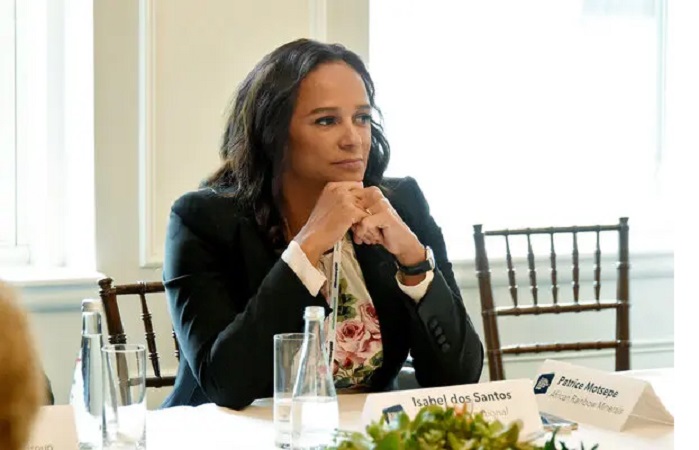
Her name is Isabel Dos Santos, the daughter of former Angolan president, she is the African richest woman, basking on $2.2bn fortune made through a conglomerate of businesses. This introduction is for a few who may have not heard of her.

Her journey to the status of “African richest woman” started toward the end of the Angolan civil war, when she returned from London where she had bagged a degree in electrical engineering and worked for two years at Coopers & Lybrand (PWC). She made her first business venture by acquiring a stake in Miami Beach Club, a struggling beach bar (Ilha de Luanda) in Angola, which eventually turned out to be a good investment and set Isabel on the path of other business that would crown her efforts with fortune. She was only in her mid-twenties.

Basking on the influence of her father, Jose Eduardo dos Santos, the former president of Angola, Isabel set out on a business adventure that would spread across many fields of investment – from eateries to oil.

When it appeared that the civil war was over, she started a transport business. And mobile phone technology caught her interest because of her dealing with communication for trucks. The consortium she was part of won the license in 1990 for a mobile phone telecommunication, which gave birth to Unitel, Angola’s biggest mobile phone provider. She would later acquire a 25% stake in Unitel from a high ranking government official.

Angola is the second largest oil producer in Africa with a lot of diamond to back up its natural resources. Isabel dos Santos ventured into oil, thanks to presidential decrees and her father’s influence that put her in charge of Sonagol in 2016. The country has enjoyed the booming oil prices from 2002 to 2008 that shot up its revenue from $3bn to $70bn in just six years. But then, it provided an opportunity for Isabel to secure her place in the secretive world of Angolan business elite.

She has subsequently amassed more wealth through so many other businesses. Isabel Dos Santos owns a large part of Angola’s cement, diamond and banking industry, and other stakes in a supermarket network, a satellite TV, brewery etc. her wealth was augmented when she married Sindika Dokolo, a Congolese businessman and an art collector, whose foundation is reputed to hold the largest collection of African art in the world.

Dokolo’s collections include sports cars, superyacht, a huge penthouse in Lisbon. The couple also own three homes in a single gated development in Kensington, there is also a 50 million euro luxury flat in the Petite Afrique building in Monte Carlo, and a magnificent villa in the Algarve.

The wealth under the control of Isabel and her husband cuts across two continents. Portugal holds a large amount of the couple’s assets. There is also an 800 million euro stake in Galp oil and gas Group, a large shareholding in Eurobic, a Portuguese commercial bank, stakes in some banks in Angola and Cape Verde and a stake in the Pay TV and broadband group Galp.

Dokolo and Isabel Dos Santos were basking in this glory believed to have stemmed from hard work when the majority of Angolans are living below $3 per day. Their problem started in 2016 when a senior MPLA official who replaced her father as president in 2017, after his 38 years rule, Joao Lourenco removed Isabel as the head of the state owned Sonangol, and launched anti-corruption investigation.

Other members of the Dos Santos family have been fingered in a series of corruption allegations made as a result of the findings of the anti-graft campaign. Welwitschia dos Santos, Isabel’s half-sister fled to the UK, saying she has been a target of the secret service. Her half-brother, Jose Filomeno dos Santos is on trial for corruption.

While the family is being investigated by the authorities in Angola, investigative journalism conducted by International Consortium of Investigative Journalists (ICIJ), has uncovered documents revealing how Africa’s richest woman amassed her wealth. The documents show that she and her husband enjoyed special privileges that allowed them to secure deals in illicit ways.

The ICIJ investigation that was conducted in collaboration with other 37 media organizations shed light on the shady deals carried out by Isabel and her husband that contributed to the impoverishment of the Angolan people. Andrew Feinstein, the head, Corruption Watch, says the leaked documents reveal how dos Santos exploited her country to her selfish gain.

“Every time she appears on the cover of some glossy magazine somewhere in the world, every time that she hosts one of her glamorous parties in the south of France, she is doing so by trampling on the aspirations of the citizens of Angola,” he said.

In Sonangol Oil, where she served briefly as chair, the leaked documents show that she approved a suspicious payment to a consultancy company in Dubai called Matter Business Solutions, at the tune of $50 million. Though she denied having any financial interest in the company, traces reveal that the company is run by her business manager and owned by a friend.

The document also showed that she had to pay only 15% of the price of her stake in Galp upfront, and the remaining $70 million was turned into a low-interest loan from Sonangol which she used to make the purchase. The terms of the deal means that it will take 11 years before the loan could be repaid.

The diamond deal wasn’t free from indictment too. Sindika Dokolo, signed a one-sided agreement in 2012 with the country’s state diamond company Sodiam. They were supposed to be 50-50 partners in a deal to buy a stake in the Swiss luxury jeweler De Grisogono, but that didn’t happen.

The deal was single handedly financed by Sodiam. According to the documents, 18 months after deal was brokered, the Angolan state diamond company had put $79 million into the partnership, while Dokolo invested only $4 million. And he was awarded 5 million euro for brokering the deal, that means the diamond deal was wholly funded by Sodiam and Dokolo was only a beneficiary partner. When BBC contacted Isabel, she declined to comment on the deal saying that she is not a shareholder of De Grisogono. But the leaked documents show that she is described as a shareholder by her financial advisers.

Not only that, the former president awarded raw diamond procurement right to Dokolo. Sources who know about the deal say the Angolan people lost about $1bn in deal because diamonds were sold at unbefitting costs. Not only that, the loan taken by Sodiam to finance the deal was borrowed from a bank where Isabel is the biggest shareholder. The state diamond company had to pay 9% interest and the loan was guaranteed by a presidential decree by the former president, Eduardo dos Santos, so it must be repaid so that Isabel’s bank doesn’t lose out. Bravo da Rosa, the new chief executive of Sodiam, told Panorama that deal was designed to enrich dos Santos, not the Angolan people. “In the end, when we have finished paying back this loan, Sodiam will have lost more than $200 million,” he said.

Isabel’s land deal with the government was also not free from corruption. The documents show that she had acquired a square kilometer of the prime beachfront land in the capital Luanda with the help of presidential decree signed by her father. The land was worth $96 million, but she had paid only 5% of the cost. The occupants of the land had to be resettled some 50 kilometers from the capital Luanda, and their businesses killed.

There is more to the story that suggests corruption in every of the venture that has contributed to Isabel dos Santos’ wealth. Though she denied it, saying “it’s a witch hunt” that she has worked her way up to the top using her business acumen, but the documents labeled The Luanda Leaks refute her claims.
Office Table Buying Guide

0

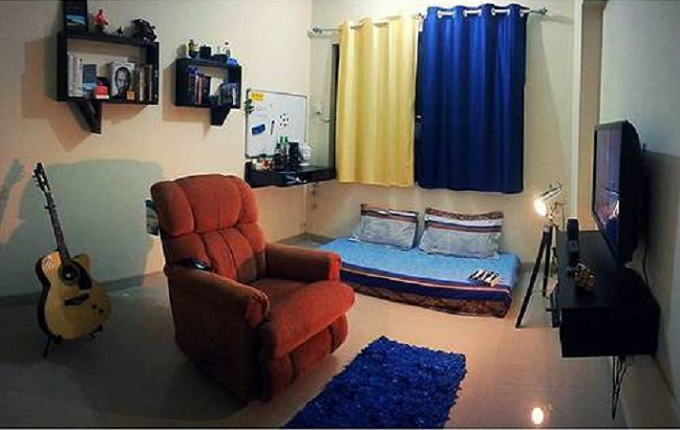
It is exciting to start the journey of entrepreneurship. Choose the right desk for office that boosts the productivity and morale of employees. The right office furniture lets employees work for long hours without feeling body pain or discomfort. Check out office tables in India available online at discounted prices. Choose an office desk based on the size of the office, budget, design, and storage. Provide a comfortable office seating that is built with an ergonomic design.

Types of office desks

Office desks that are made in wood are widely used. They are available in various dimensions. You can choose a basic writing desk for office if that is what suits your budget. They are available in a variety of designs. Choose a design that is suitable for laptop as well as desktop computers. Computer desks come in a variety of designs and sizes. 

Rectangle desk

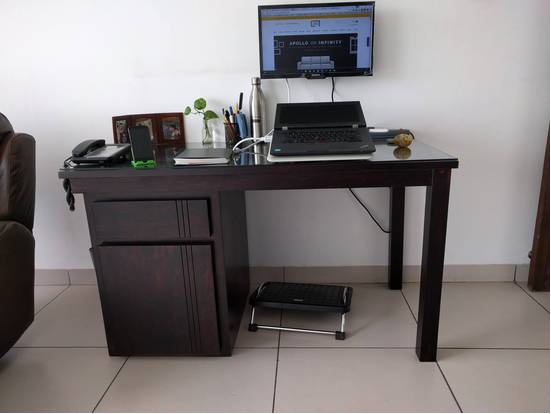
This is the most common variety of desk you can find. They are built in a standard height and are suitable for people of all heights. These are traditional desks that you will find in the office and come in a variety of designs. A few models come with a storage space. You can choose an office desk that has a standard rectangular shape.

Urban designs

They are available in humongous varieties. You can choose from stylish designs and colors. You can create a smart and urban look for your office. If you are a boss, get a stylish desk for your cabin to show your personal style and taste. This is also a place where discussions take place and must be wide and comfortable enough for you to sit and make decisions. Umpteen contemporary designs are available for you to choose from. 

Oval shaped tables

These types of desks are commonly found in creative companies. They inspire creative discussions and thinking. They are available in various sizes and designs. They are suitable for medium to large sized rooms. These types of office tables are not suitable small offices as they occupy large space. Enjoy creating imagination, designing, sketching, and brainstorming sitting at this table. 

Features to look for in an office table

People spend a lot of time in the office. The office table must be comfortable and flexible to stretch your legs. It helps in increasing the productivity and concentration. The tables must be spacious and have a lot of legroom. Choose the right dimensions for the table. 

You can find many budget options when you shop online for office tables. You can get top quality tables at an affordable price when you look for offers and discounts online. You must look for durability when it comes to buying an office table online. Get an office table that has less maintenance needed. 

You can choose from the trendiest of designs that come with storage space. Work in stylish furniture that adds personality to your cabin and office space. It boosts the productivity and gives you comfort when you want to work for long hours. 

Wooden office desk

This is the most preferred type of office desk. Umpteen variety of designs and patterns are available in wooden material. They are the most durable. You can choose from the L-shaped desk depending on the space of the room. These types of desks are the most attractive. You can shop for L-shaped desks online and get them home delivered. 

U-shaped office tables are suitable for small offices. They come with drawers and look stylish. They last for many years. These are the most common types of desks used in the office. Executive desks are heavier and stylish. You can find offbeat and creative designs for these desks. A few office tables come with adjustable heights and have many compartments. 

Source: urbanladder.com

Compact desks

You can choose these desks if you have a small office and are looking to spend less on furniture. They are built in a simple design and are easy to move. They last for many years and need minimal maintenance. Startups and home offices can choose this compact office desk. Writing desks are also economical options for office desks if you are looking for simple designs. 

Open desks

Informal spaces that are cool and funky can have open desks. They range in a variety of sizes and designs. You can place a variety of items on them with variable weights. Choose wooden office tables compared to plastic and metal office tables. These are suitable for youngsters who love to have funky furniture in the office. 

Conclusion

These are the best tips you can have when shopping for office tables. You can find umpteen designs and dimensions of office tables. They come at discounted prices and are easy to shop for as they get home delivered. Beautify your office with a stylish office table from the umpteen choices available online www.urbanladder.com/office-furniture  

Alhaji’s Wife Kitchen redefines the Waakye Experience

0

It’s not business as usual when an Executive MBA (i.e. EMBA) graduate decides to venture into the erroneously perceived restaurant business. My encounter with Rashida Saani Nasamu has become my new normal, a chance encounter. Fortunately, she had just launched her outfit on the Abbatoir bypass, Spintex Community 18 area of Accra. 

So what is the story behind this post? I am currently on secondment in Ghana on a global project that involves 12 universities and 4 industry partners across three continents: Africa, Europe and the Middle East. So I make an appearance in Ghana, hosted by one of the University partners, the University of Ghana Business School (UGBS), one of the leading business schools in Africa, on 7 January 2020. As luck would have it, that date coincided with the inaugural celebration of the country’s Constitution Day. 

As fate would have it, two other events happened to be celebrated within that same week. The first was the GUSA2020 University Games and the second was the New Year School both hosted by this prestigious university..

While GUSA2020 kicked off prior to my arrival, the NYS commenced while I was on the ground and only a few metres away from the UGBS in the Cedi Conference Centre associated with the Department of Economics. 

Part of the showcase was a very articulate assortment of stalls celebrating the entrepreneurial spirit and resilience of Ghana’s private sector with stalls ranging from radio stations, higher education exhibitions to independent organic products as well as arts and crafts. 

But that surely isn’t the main focus of this post. Prior to 2020 I had been pondering over the quest of African business in a global context taken from the purview of eating out (something that Africans are not usually known for) and especially on the exploits of Nigerian restaurants worldwide from Nigeria itself, to other geographies such as London and Dubai. 

While I was disappointed with the under par ambience of these businesses, especially in Dubai, that narrative seems to have awaken some rather incidental new knowledge for me as I arrived in Accra. 

The last time I was in Ghana, I was amazed by how an informal woman retailer of the traditional cuisine of the country, Waakye, could be so popular even without a brand name, registered address, ambience and perhaps even a clearly articulated business plan, could have been so successful.

Being the academic that I am, I decided to interrogate this success further and followed the tradition research pipeline to celebrate this informal business from a conference paper, through a book chapter to a media report published in the equally celebrated national newspaper, the Daily Graphic. Yes, that business was Auntie Muni Waakye. 

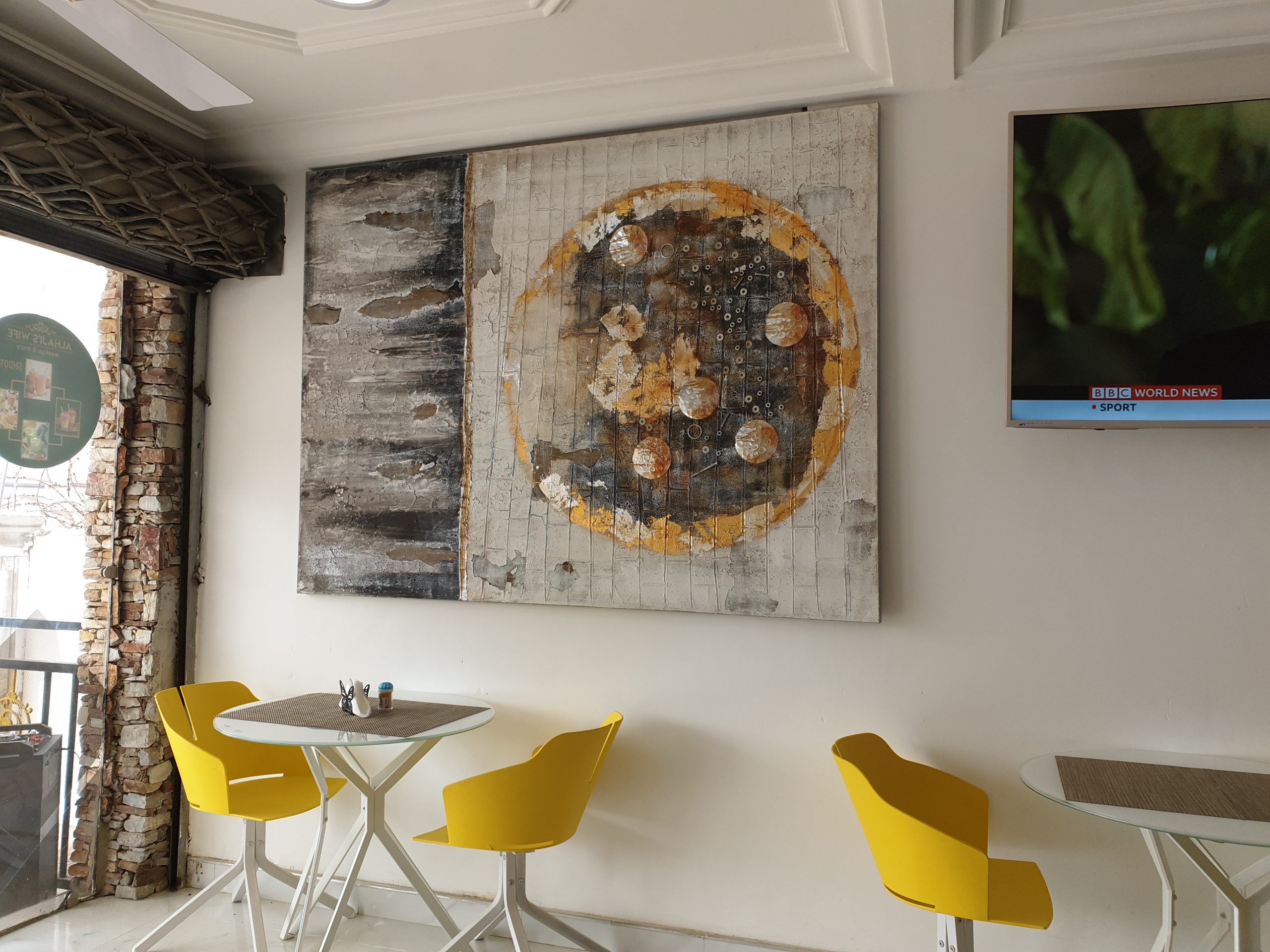
Fast forward to 2020, the national dish Waakye is still on the cards, but this time, the story is different. Alhaji’s Wife has a somewhat different appeal. While the owner/ manager is equally a woman, the business format is much different. There is a trade name, there was a business plan, launch event and the ambience? Out of this world! 

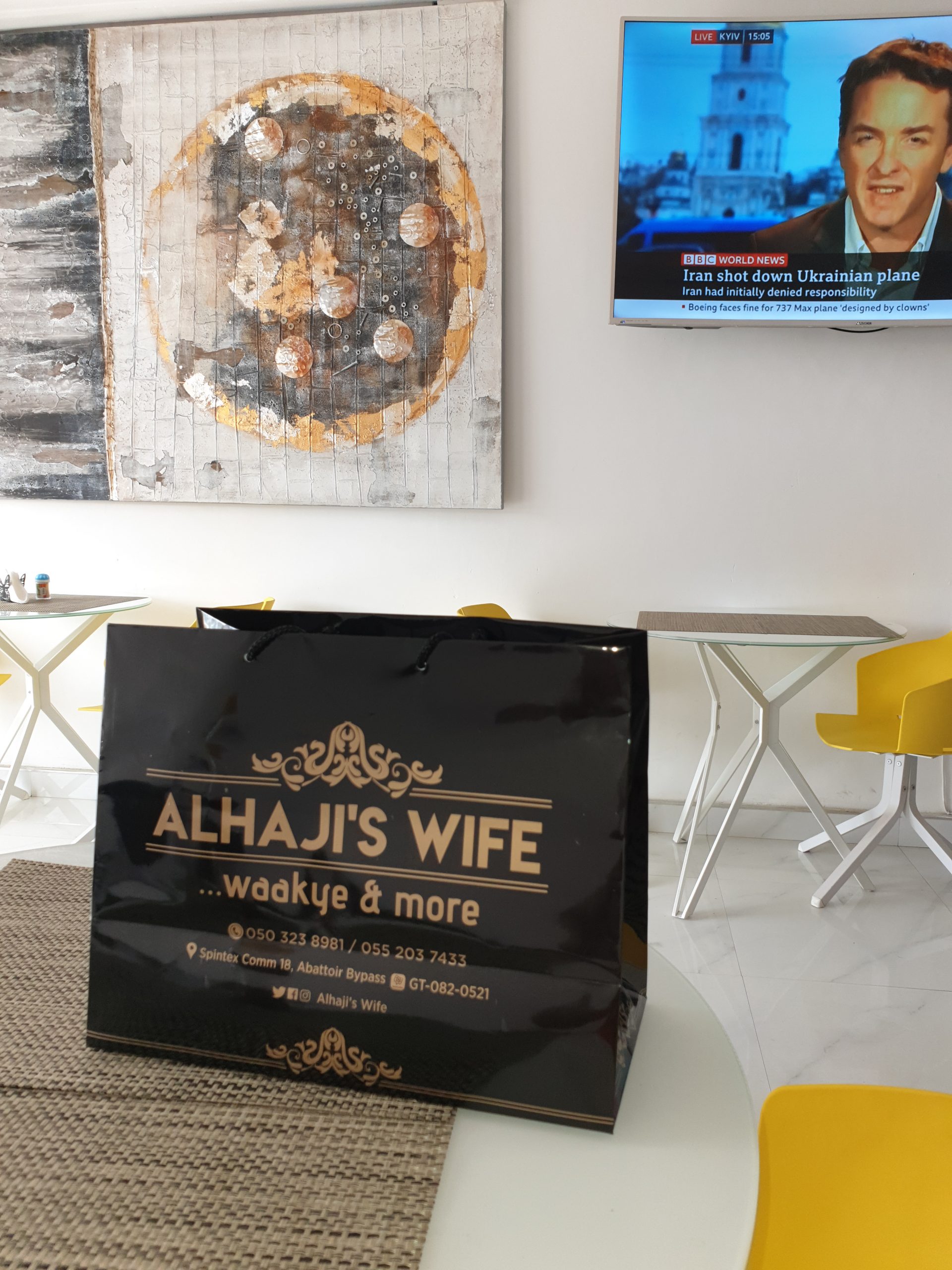
Alhaji’s Wife even has its own brand of drink, Puha, to wash down the Waakye. As luck would have it, the proprietress had time to attend to our needs and share some of her stories, which included a discussion of her options prior to settling for this line of business. Obviously, she had embarked upon some scenario analysis drawing upon her EMBA at the UGBS. 

I couldn’t agree more with her slogan “Waakye & More” as she does more than just Waakye. The ambience is sublime. 

Nothing gives me more joy than seeing students make effective use of the soft skills we teach in class and align this with those skills we cannot really teach in class – passion, energy and drive. It is a win-win collaborative and co-creational experience. I am still learning and loving this adventure.

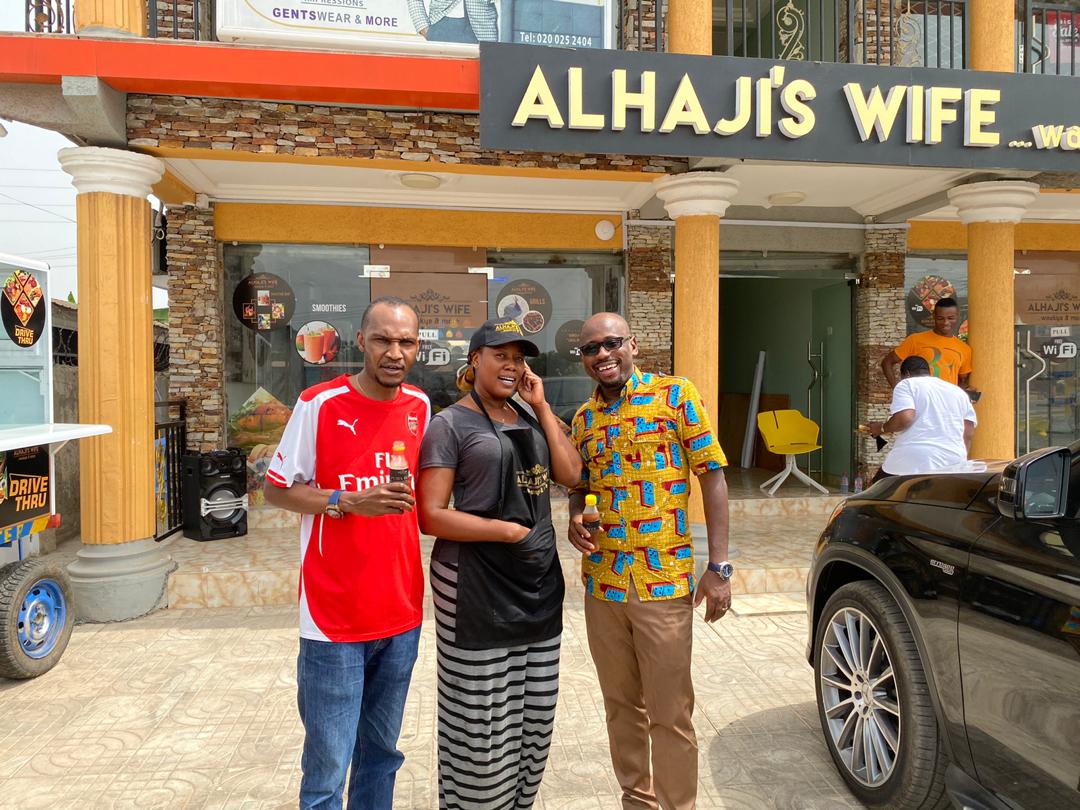
Exterior – Left to Right: Nnamdi O. Madichie; Rashida Saani Nasamu, CEO Alhaji’s Wife; Professor Robert Ebo Hinson, HOD Department of Marketing & Entrepreneurship at UGBS

The Invisible Hand vs The Visible Hand

0

The principle of the Invisible Hand is a term in Economics popularised by Adam Smith, of the Classical School of Thought. It is used to describe a scenario where every individual is allowed to pursue his economic survival with zero organized interference. That in the long run, ceteris paribus (meaning all things being equal), it would lead to equilibrium in the distribution of incomes. A laissez faire economy.

But in the long run, mutatis mutandis (meaning all things not equal), it failed. It led to the severest global recession dubbed the Great Depression of 1932. No solution was in sight until the emergence of the Keynesians. They advocated for organized regulations of economic activities that will achieve collective goals instead of individual goals. This was the beginning of government regulations of the economy with its numerous benefits.

Adam Smith wrote his theory by observation of human economic behavior. Today such behavior subsist in our communities. Worse, even the government has failed us. Our individual and institutional failure has made our country less desirable to pursue our destinies. If everyone leaves who will fix things. Is it rational to want to stay in a neighbours house because you  failed to maintain your house? The human race started together. The countries we run to did not drop from heaven; the citizens fixed it. Besides, they do not want us there. An African adage says, “No matter how long a log of wood lies on water it will never become a crocodile.”

It’s time we change our mentality and attitude. Nation building is not the exclusive preserve of those in government. Citizens have greater responsibility. I love Nigeria. I believe in our potential. I beseech us to be more patriotic with civic duties. Let us start fixing our communities. There is so much paralysis and dysfunction. Our communities are full of challenges that would make anyone a celebrity when solved. We are always quick to accuse the government for our mess. We need the proliferation of local NGOs and other groups to solve real problems. If we do not act no one will.

On a final note, at this auspicious time, I can hear the groaning of many looking for true leadership. They await the sound of the horn. The sound of the Corps Volunteers for Change. We cannot afford to fail their expectations. Like the Keynesians that pulled the global economy from the abyss of the trade cycle, let us get to work by making our hands visible by pulling our communities from the dungeon of unsustainable development.

Let’s make Nigeria great!


The Need to Unbundle English Department in Nigerian Universities

0

Those days in Nnamdi Azikiwe University, aka UNIZIK, English Department was split into two major sections – Language Stress and Literature Stress. What it was like then is that every student studies both stresses in 100 and 200 levels, and then goes into one of them from 300 level.

This method helped us a lot because we were able to find out what we truly wanted before making a choice. But even at that, the model didn’t make experts out of us.

Even as I complained that UNIZIK’s model didn’t do the job very well, some schools don’t even divide their English department. They leave their students to struggle through literature and language related courses from 100 to 400 level. Maybe they thought they were doing these students a favour but they didn’t know they only ended up releasing half-baked English graduates into the society.

I know this because most of the people that passed through this later method have little or no knowledge of either language or literature related subjects. This is because for their schools to be able to stick within the approved course loads, they dropped off a lot of courses from their curricula. The end result is that the students graduated without having deep knowledge of their field of study.

I don’t know how it is for other courses but I believe English, as a course of study, should be unbundled. I was so happy when I learnt that Mass Communication Department has been professionalised and I couldn’t help wondering when English Department will receive its own “blessing”.

Both the students and lecturers of English will bear me witness when I say that we graduated from that department only to find out that we don’t have in-depth knowledge of our field. We all came into the wider world and started learning what we should have learnt from school. It is not because the lecturers didn’t do their best, but because the curriculum didn’t go deep into the course. We floated through different areas of language study because there was no way we could have achieved more within the duration of the study.

There are so many areas in English Language and Literary Studies Department that needed to be studied deeply for students to become experts. The only way this could be achieved within the four years of study for this course is to unbundle the department into several sections and units.

I don’t know the body under whose jurisdiction it is to do this, but I will suggest that English Scholars Association of Nigeria (ESAN), which is the umbrella association for other English scholars groups, should kickoff this campaign. Based on my experience as an English scholar, the English department should be broken, from 300 level, into the following divisions, sections or stresses:

  1. Grammar: Grammar is one area of language study that needs in-depth analysis and understanding. It was after graduation that I found out that grammar is more than just understanding where to put “is” and “was”. Grammar itself is the basis of the language. It has so many units and sections that it shouldn’t be studied alongside other areas of the language.
  2. Phonetics and Phonology: Even though we are second language users, there is still a need for experts in this area. Earmarking only one or two hours a week within a semester is not enough to learn this area. If I’m asked, I’ll suggest that students that have interest in phonetics and phonology of English should be allowed to go fully into it from their 300 level so they can graduate as experts. It is quite a pity that we graduated from English department and were not able to produce, properly, the sounds that exist in English. A lot of us don’t even know the proper intonations and rhythm, or the stress patterns of the language. This is because enough time and attention wasn’t given to learning this level of language.
  3. Stylistics and Discourse Analysis: These are the people that should analyse, review and criticise language use in people’s works. These days, there is much need for critics and reviewers but few are seen because a lot were not well grounded. Many Nigerian reviewers these days are self-taught, which is not supposed to be because it should have been learnt while in school.
  4. Applied Linguistics and Sociolinguistics: These people should study language use in society and the problems associated with language learning and teaching. They should be experts if they can help with the research of the use of the English language in Nigeria.
  5. English as a Second Language (ESL): This section is a separate department in all universities in English speaking countries. It should also be given much priority in Nigeria.
  6. Creative Writing (Fiction): It is unfortunate that people graduate from English department, even from literature stress, and still pay heavily to learn how to write fiction. This section should even be further broken into different units – drama, poetry and prose.
  7. Creative Writing (Non-Fiction): This section should also be divided as its fictional counterpart.

There is no way anyone can say that when a student focuses on one particular thing, he will not become an expert in it. Packing up so many courses at the same time has never helped Nigerian students. Let them focus on one area so they can become well grounded in it. There is no need to make Nigerian students the proverbial jack of all trades that mastered none.