
DD
MM
YYYY

PAGES

DD
MM
YYYY

spot_img

PAGES

Home Blog Page 6518

Lessons as Oyo State Ties Teachers Promotion to Students’ Exam Success

0

The Oyo State Government has announced that public schools teachers will henceforth be promoted based on the external examination performance of students. This was contained in a statement issued by the State Commissioner of Information, Wasiu Olatunbosun, on Wednesday.

The new arrangement has been communicated by the Chairman, Oyo State Post-Primary Schools Teaching Service Commission, during a session of interaction between school stakeholders in Saki Zone Oke Ogun.

“The promotion of teachers will no more be business as usual as the Governor Seyi Makinde administration has concluded plans to award excellency, based on measures of efficient and productive input by teachers to make their students excel in external examinations.

“You can see that our government is a listening one, we are here today to have some feedback, tell us which area we need to improve as government and I can assure you that era of unpaid salary has gone forever as this administration will continue to make prompt payment of salary its priority.

“In the last promotion that we did where over 800 teachers got promoted, there was no report on the beneficiaries, everybody was just moved together at the same time, though we believe our teachers are noble, good and hard-working but we may have some bad eggs who are lazy and might have sailed through without been qualified and the hard-working ones will be feeling cheated.

“This is why we are contemplating that at the end of every year, there must be reports on our teachers’ conduct and activities; teachers that are sanctified to be good and efficient need not to wait for a general promotion, they will be promoted and honored as at when due,” he said.

This development has disrupted the promotion norm in public schools in Oyo State, and set a precedent that may stir such rules in public schools in other states, or even in higher institutions.

Examination failure by students in all schools in Nigeria has been attributed to students’ unseriousness with their studies. The teachers have always had little or no blame to bear whenever there is mass examination failure, which in real sense is an evidence of the measure of education given and the impact it has on the students.

In 2018, out of 11,307 candidates that sat for West African Senior School Examination (WASSCE) between January 29 and February 12, only 1,937 of them (17.13%) obtained a minimum of five credits and above including mathematics and English. The story did change in 2019 but by 8.5% only. The head of WAEC’s Nigerian National Office, Isaac Adenipekun said that only 3,102 candidates out of 11,892 obtained a minimum of five credits and above on subjects involving mathematics and English. That’s 26.08 % of success and over 70% failure in the minimum credits required from compulsory subjects.

A further look at the result showed that 8,782 candidates, representing 75.15% obtained credit and above in two subjects, 7,332 or 62.74 percent obtained credit and above in three subjects, while 5,850 or 50.06 percent got credit and above in four subjects.

The 17.13% success rate of 2018 and 26.8% of 2019 are more of an indication of a system failure than students’. The previous years were not better, and the teachers have always been exempted from blame.

In the higher institutions, the trend is the same. The number of students who excel in their studies are remarkably getting intimidated by number of those who fail. That has seen malpractice and sex-for-grade businesses rise significantly in the campuses. Lecturers would even threaten to fail students over little differences or refusal to oblige to sexual advances.

But in real sense, the mass failure should be a shame of the teachers instead of the students. In developed countries, teachers resign when their students massively fail their courses because it seen as indication of ineffectual teaching.

The approach adopted by Oyo State Government appears like a solution to the lingering lackluster attitude of many teachers in Nigeria toward their teaching profession. But it may also breed further corruption in public schools. In a bid to get promoted, the teachers may likely rely on exam malpractice to ensure that their students pass. And if not checked, there will be successes in results while the failure will lie in the capabilities that quality education should impact.

Infoprive Is Looking for Partners To Setup Cybersecurity Center of Excellence

0

I joined the Board of an amazing cybersecurity firm this month. Infoprive engaged my Practice about two years ago to lead some strategic redesigns. That relationship deepened that they invited me to join the Board, plus more. We are working on some really amazing things and we are confident that Africa’s digital assets would be properly protected through innovations and technologies under the domain of Infoprive.

To startups, small and large businesses, Infoprive would like to help you get the necessary protection (and industry certification) you need as you grow.  We made history in Nigeria when a few years ago, we worked with Venture Garden Group (VGG)  for it to become the first private equity and venture capital firm in Nigeria to receive  ISO/ IEC 27001 certification.

In our design centers in Victoria Island and Yaba, we are building digital security solutions of the 21st century, and where necessary striking strategic partnerships with companies in U.S., Canada and Australia. I am looking for partners, universities, governments, military &  law enforcement, companies, etc who want to engage Infoprive to deploy a Cybersecurity Center of Excellence. Yes, if you have contacts, let us work together. We operate on three capability cores: Capacity Building, Asset Protection and Incident Response. The result is predictable: totally sustainable homegrown system.

Contact my team; we want to serve you.

Ndubuisi Ekekwe Joins The Boards of Infoprive and eSentry

Nigeria’s Dry Season Farming and the Need for Tech Inclusion

0

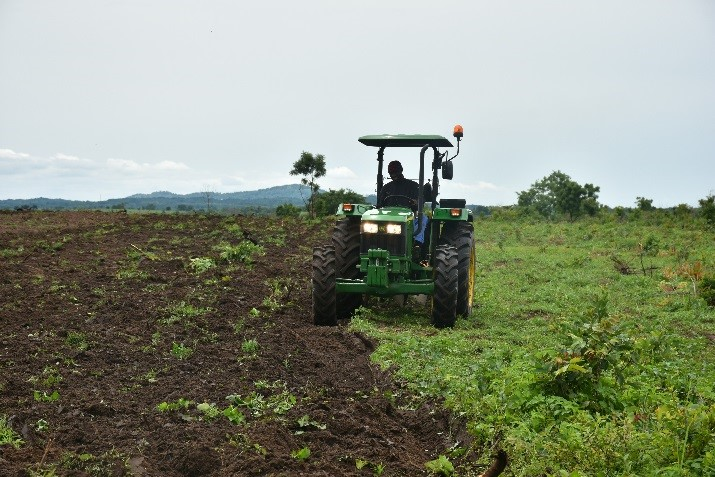
Rice farmers in Nigeria are bracing up for the dry season farming as the Central Bank of Nigeria (CBN) is set to mobilize one million rice producing farmers for the 2019/2020 dry season farming, under its Anchor Borrowers’ Programme (ABP), according to AgroNigeria.

National President of the Rice Farmers Association of Nigeria (RIFAN), Alhaji Aminu Goronyo who revealed this to newsmen, said that arrangements have been concluded to see to the mobilization of the farmers nationwide.

In his remarks, “The major preparation that we started is that the CBN invited RIFAN last week; met with us and gave us the nod to quickly identify the participating farmers and also gave us the go-ahead to do everything possible to achieve more production in the dry season that is already in place.”

According to Goronyo, the CBN Governor, Godwin Emefiele had given the go-ahead to consider at least one million farmers for the dry season farmer, which by extension could produce five million metric tons of rice.

The RIFAN President also debunked the claims that the farmers could encounter problems as regards to the availability of quality seeds and fertilizers, stating that there were more than enough fertilizers and seeds in all the production areas.

Goronyo further revealed that the association has signed an MoU with the Cross River state government on the provision of seedlings. In his words, “In Cross River, we have signed an MoU to work with Governor Ayade who has a seedling factory that has enough to cater to all the farmers that are going to transplant during the cultivation period. So we don’t have a problem with fertilizer and seed.”

He also stated that the CBN has provided the necessary suppor, especially in those two areas, adding that there are major companies that supply agrochemicals for the control of weeds and herbicides.

In line with the directive, Goronyo disclosed that he has begun a tour of the rice-producing states across the country, to motivate and mobilize farmers to meet the five million tons target.

“I’m on a tour to all the producing states. I started touring Sokoto, Kebbi, and will be going to Zamfara, Taraba, Cross River, Ogun, Ekiti, Ebonyi and Anambra, virtually all the producing states.”

He further advised farmers to give rapt attention to their agribusinesses, adding that the border closure is a big opportunity for farmers to capitalize on and harness for effective production of rice, and to ensure there are enough paddies for millers across the country.

However, the need to embrace technology in Nigeria’s agricultural infrastructure cannot be overemphasized. The high success rate of farmers in many countries has been as a result of deployment of innovative tools that has significantly curtailed environmental shortfalls. Stakeholders have advocated technical partnership to as a means of attaining food security in Nigeria.

Nigeria is currently the highest producer of rice in Africa with 4.9m metric tonnes, according to USDA. But the deficit is still high and the demand gap wide as the consumption need is scaling over 7m metric tonnes.

Dr. Alfred Dixon, the Director of the Development and Delivery Office of the International Institute of Tropical Agriculture (IITA), said for effective dissemination of agriculture research outcomes, there is a need for the intertwining of multiple linkages and collaborations across all agricultural value chains.

Popularly dubbed the “Father of Cassava”, Dixon emphasized the need for strategic partnerships to support the influx of innovation in order to bolster agriculture productivity. This, he pointed, will enable farmers to meet the target of feeding the population.

The IITA Director who made the charge while presenting his contract review seminar titled, “Scaling up and scaling out of agricultural innovations at IITA – Duo for systemic change”, stressed that while “scaling out” entails linking with the private sector, the farmers and the markets, “scaling up” involves working with governments and policymakers.”

Citing the need for the government to create the right policy environment for the adoption of the new technologies by farmers and other stakeholders, Dixon said: “Just having agriculture productivity or increase in agricultural production will not necessarily lead to an increase in income for farmers unless it is linked to the markets. When you have all that, you still need the policy environment. You need the private sector that is, the processors, the agro-dealers, the farmers. And you also need the government to give you the right policies and the powerful backing.”

Dixon, who also doubles as the Project Leader of the Cassava Weed Management Project (CWMP), which now operates under the African Cassava Agronomy Initiative (ACAI), said that the IITA cassava projects have been able to reach millions of farmers because of the linkages made with several stakeholders, including government agencies.

He also stated that ACAI is disseminating its research outcomes using strategic partnerships in addition to technologies like the Akilimo application, the Six Steps to Cassava Management Videos, radio programs, Viamo’s 321-service, Cassava Matters website and many more.

On scaling up innovations, Dixon called for an increase working relationship between Research for Development (R4D) and Partnerships for Development (P4D), adding that “both contribute to sustaining agricultural transformation for scaling up and scaling out of agricultural innovations.”

His words: “We need R4D to do the science, P4D to do the scaling. We have multidisciplinary teams. All of them have to work together to link to the policymakers, that is the government, for the scaling up. We have to link to the NARS also for scaling up. We need to link to the private sector for the scaling out and also to the development investors for scaling up because we need the resources to work.”

Dixon, however, advised that future projects must consider sustainability and exit strategies before project design and implementation activities.

How Ghana is Turning its Slave Story into Economic Advantage

0

Last year, Ghana started a campaign for the return of people of African descent living outside the continent called “year of return.” The event drew a mammoth crowd from around the world and kicked off a memorial that has come to stay.

It has been 400 years since the first Africans were taken from their fatherland as slaves to different parts of the world, but especially the United States. The event dated as far back as 1619 has remarkably defined human coexistence, leaving traces of black race in lands far away from Africa.

Ghana (formerly Gold Coast) was a point of interest in the days of slavery. It’s estimated that 75% of slaves were held captive in dungeons on the west coast of Ghana, and millions of slaves were transported to their destination of slavery through Ghanaian ports.

The response to this development was overwhelming: from around the world, people came in their numbers, celebrities and people of color, to witness perhaps for the first time, the routes and dungeons where slavery was executed from in West Africa.

But there was more to it than the gathering of celebrities and popular figures. An attendee, Abiola Oke, shared his experience at the event, he said: “There were no Jamaicans here, no Trinidadians were here, we were one people. Our ancestors were the people that refused death. You are the products of the people that refused to die.” Talking about the dungeon, he added: “On this day, the beginning of Black History month, I reflect on our time at the Cape Coast Slave Castle in Accra Ghana built in 1652 – why this abomination of a place is called a castle is beyond me. 100 of us spent approximately 10 minutes in a slave dungeon meant for 200 captives, those uncomfortable minutes felt like an eternity and yet we knew that our time in that room was limited. Imagine what it must have been like for a captive who had no sense of when he or she would be let out. Many died in these dungeons.”

Co-organizer of the event, Boris Kodjoe told CNN: “Every person of color needs to get on this pilgrimage. They need to experience this journey and get in touch with their emotional heritage, walk through the dungeons and see the ‘door of no return.’”

“The year of return” was announced in September 2018, by Ghana president, Akufo-Addo at the Washington’s National Press Club. But there is more to it, at the end of the festival there was a hint to a broader plan by the Ghanaian government that dated years back to the year 2000, when the government enacted the Right of Abode Law that gave people of African in diaspora the right to stay in Ghana indefinitely.

In 2007, the Ghanaian government encouraged Africans in the diaspora to return and settle in the country. It paid off, by 2014, about 3,000 people from diaspora had settled in Ghana.

“‘The Year of Return’ is characterized by a music festival, an investment conference targeting diaspora Ghanaians, and the Right to Return initiative, encouraging African-Americans to seek citizenship in Ghana.”

But more than that, Ghana is seeking to use it to foster its tourism industry, and create a scape of attraction that will keep the rest of the world coming to the country. A few years ago, the government unveiled a 15-year National Tourism Development Plan (2013-2027), designed to promote local economic development and play a leading role in job creation, revenue generation, environmental conservation, national cohesion and overall economic growth.

To achieve this aim, Ghana has positioned tourism in its national development agenda with the aim of increasing the number of tourists to the country from one million to eight million per day by 2027. And that’s with benefit of $8.3 billion per year in revenue, among other things. The plan seems to be paying off as World Bank noted a tremendous increase in the country’s GDP growth in the year 2019. There is estimated 6.7% growth compared with 5.4% growth of 2018.

The Afrochela held on December 28 2019 is part of the yearly plan designed to sustain the 15-year long term. The idea is to keep tourists coming year-on-year with different kinds of festivals.

Ghana’s tourism head, Agyemang says the plan is now bringing people to the country like the holy lands. “This is a very important time for this country. People are now starting to make the pilgrimage here just like Jerusalem or Mecca, and we are here to welcome them if they decide to return,” he said.