DD
MM
YYYY

PAGES

DD
MM
YYYY

spot_img

PAGES

Home Blog Page 6520

Nigeria’s Dry Season Farming and the Need for Tech Inclusion

0

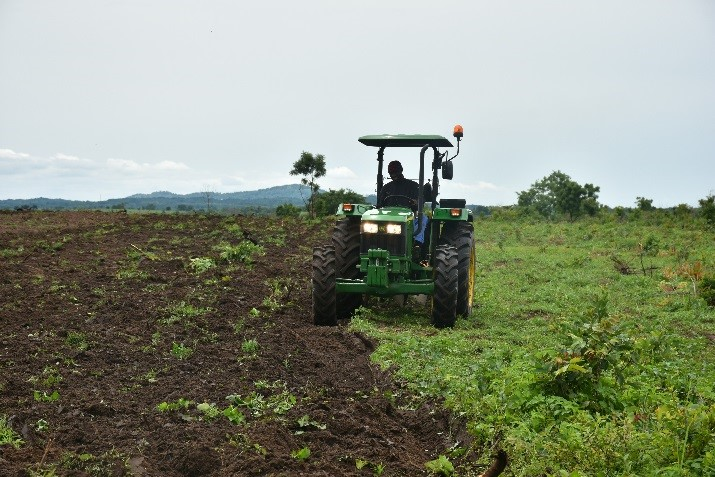
Rice farmers in Nigeria are bracing up for the dry season farming as the Central Bank of Nigeria (CBN) is set to mobilize one million rice producing farmers for the 2019/2020 dry season farming, under its Anchor Borrowers’ Programme (ABP), according to AgroNigeria.

National President of the Rice Farmers Association of Nigeria (RIFAN), Alhaji Aminu Goronyo who revealed this to newsmen, said that arrangements have been concluded to see to the mobilization of the farmers nationwide.

In his remarks, “The major preparation that we started is that the CBN invited RIFAN last week; met with us and gave us the nod to quickly identify the participating farmers and also gave us the go-ahead to do everything possible to achieve more production in the dry season that is already in place.”

According to Goronyo, the CBN Governor, Godwin Emefiele had given the go-ahead to consider at least one million farmers for the dry season farmer, which by extension could produce five million metric tons of rice.

The RIFAN President also debunked the claims that the farmers could encounter problems as regards to the availability of quality seeds and fertilizers, stating that there were more than enough fertilizers and seeds in all the production areas.

Goronyo further revealed that the association has signed an MoU with the Cross River state government on the provision of seedlings. In his words, “In Cross River, we have signed an MoU to work with Governor Ayade who has a seedling factory that has enough to cater to all the farmers that are going to transplant during the cultivation period. So we don’t have a problem with fertilizer and seed.”

He also stated that the CBN has provided the necessary suppor, especially in those two areas, adding that there are major companies that supply agrochemicals for the control of weeds and herbicides.

In line with the directive, Goronyo disclosed that he has begun a tour of the rice-producing states across the country, to motivate and mobilize farmers to meet the five million tons target.

“I’m on a tour to all the producing states. I started touring Sokoto, Kebbi, and will be going to Zamfara, Taraba, Cross River, Ogun, Ekiti, Ebonyi and Anambra, virtually all the producing states.”

He further advised farmers to give rapt attention to their agribusinesses, adding that the border closure is a big opportunity for farmers to capitalize on and harness for effective production of rice, and to ensure there are enough paddies for millers across the country.

However, the need to embrace technology in Nigeria’s agricultural infrastructure cannot be overemphasized. The high success rate of farmers in many countries has been as a result of deployment of innovative tools that has significantly curtailed environmental shortfalls. Stakeholders have advocated technical partnership to as a means of attaining food security in Nigeria.

Nigeria is currently the highest producer of rice in Africa with 4.9m metric tonnes, according to USDA. But the deficit is still high and the demand gap wide as the consumption need is scaling over 7m metric tonnes.

Dr. Alfred Dixon, the Director of the Development and Delivery Office of the International Institute of Tropical Agriculture (IITA), said for effective dissemination of agriculture research outcomes, there is a need for the intertwining of multiple linkages and collaborations across all agricultural value chains.

Popularly dubbed the “Father of Cassava”, Dixon emphasized the need for strategic partnerships to support the influx of innovation in order to bolster agriculture productivity. This, he pointed, will enable farmers to meet the target of feeding the population.

The IITA Director who made the charge while presenting his contract review seminar titled, “Scaling up and scaling out of agricultural innovations at IITA – Duo for systemic change”, stressed that while “scaling out” entails linking with the private sector, the farmers and the markets, “scaling up” involves working with governments and policymakers.”

Citing the need for the government to create the right policy environment for the adoption of the new technologies by farmers and other stakeholders, Dixon said: “Just having agriculture productivity or increase in agricultural production will not necessarily lead to an increase in income for farmers unless it is linked to the markets. When you have all that, you still need the policy environment. You need the private sector that is, the processors, the agro-dealers, the farmers. And you also need the government to give you the right policies and the powerful backing.”

Dixon, who also doubles as the Project Leader of the Cassava Weed Management Project (CWMP), which now operates under the African Cassava Agronomy Initiative (ACAI), said that the IITA cassava projects have been able to reach millions of farmers because of the linkages made with several stakeholders, including government agencies.

He also stated that ACAI is disseminating its research outcomes using strategic partnerships in addition to technologies like the Akilimo application, the Six Steps to Cassava Management Videos, radio programs, Viamo’s 321-service, Cassava Matters website and many more.

On scaling up innovations, Dixon called for an increase working relationship between Research for Development (R4D) and Partnerships for Development (P4D), adding that “both contribute to sustaining agricultural transformation for scaling up and scaling out of agricultural innovations.”

His words: “We need R4D to do the science, P4D to do the scaling. We have multidisciplinary teams. All of them have to work together to link to the policymakers, that is the government, for the scaling up. We have to link to the NARS also for scaling up. We need to link to the private sector for the scaling out and also to the development investors for scaling up because we need the resources to work.”

Dixon, however, advised that future projects must consider sustainability and exit strategies before project design and implementation activities.


How Ghana is Turning its Slave Story into Economic Advantage

0

Last year, Ghana started a campaign for the return of people of African descent living outside the continent called “year of return.” The event drew a mammoth crowd from around the world and kicked off a memorial that has come to stay.

It has been 400 years since the first Africans were taken from their fatherland as slaves to different parts of the world, but especially the United States. The event dated as far back as 1619 has remarkably defined human coexistence, leaving traces of black race in lands far away from Africa.

Ghana (formerly Gold Coast) was a point of interest in the days of slavery. It’s estimated that 75% of slaves were held captive in dungeons on the west coast of Ghana, and millions of slaves were transported to their destination of slavery through Ghanaian ports.

The response to this development was overwhelming: from around the world, people came in their numbers, celebrities and people of color, to witness perhaps for the first time, the routes and dungeons where slavery was executed from in West Africa.

But there was more to it than the gathering of celebrities and popular figures. An attendee, Abiola Oke, shared his experience at the event, he said: “There were no Jamaicans here, no Trinidadians were here, we were one people. Our ancestors were the people that refused death. You are the products of the people that refused to die.” Talking about the dungeon, he added: “On this day, the beginning of Black History month, I reflect on our time at the Cape Coast Slave Castle in Accra Ghana built in 1652 – why this abomination of a place is called a castle is beyond me. 100 of us spent approximately 10 minutes in a slave dungeon meant for 200 captives, those uncomfortable minutes felt like an eternity and yet we knew that our time in that room was limited. Imagine what it must have been like for a captive who had no sense of when he or she would be let out. Many died in these dungeons.”

Co-organizer of the event, Boris Kodjoe told CNN: “Every person of color needs to get on this pilgrimage. They need to experience this journey and get in touch with their emotional heritage, walk through the dungeons and see the ‘door of no return.’”

“The year of return” was announced in September 2018, by Ghana president, Akufo-Addo at the Washington’s National Press Club. But there is more to it, at the end of the festival there was a hint to a broader plan by the Ghanaian government that dated years back to the year 2000, when the government enacted the Right of Abode Law that gave people of African in diaspora the right to stay in Ghana indefinitely.

In 2007, the Ghanaian government encouraged Africans in the diaspora to return and settle in the country. It paid off, by 2014, about 3,000 people from diaspora had settled in Ghana.

“‘The Year of Return’ is characterized by a music festival, an investment conference targeting diaspora Ghanaians, and the Right to Return initiative, encouraging African-Americans to seek citizenship in Ghana.”

But more than that, Ghana is seeking to use it to foster its tourism industry, and create a scape of attraction that will keep the rest of the world coming to the country. A few years ago, the government unveiled a 15-year National Tourism Development Plan (2013-2027), designed to promote local economic development and play a leading role in job creation, revenue generation, environmental conservation, national cohesion and overall economic growth.

To achieve this aim, Ghana has positioned tourism in its national development agenda with the aim of increasing the number of tourists to the country from one million to eight million per day by 2027. And that’s with benefit of $8.3 billion per year in revenue, among other things. The plan seems to be paying off as World Bank noted a tremendous increase in the country’s GDP growth in the year 2019. There is estimated 6.7% growth compared with 5.4% growth of 2018.

The Afrochela held on December 28 2019 is part of the yearly plan designed to sustain the 15-year long term. The idea is to keep tourists coming year-on-year with different kinds of festivals.

Ghana’s tourism head, Agyemang says the plan is now bringing people to the country like the holy lands. “This is a very important time for this country. People are now starting to make the pilgrimage here just like Jerusalem or Mecca, and we are here to welcome them if they decide to return,” he said.

Emeka Ihedioha Speaks After Supreme Court Ruling on Imo State (Full Text)

0

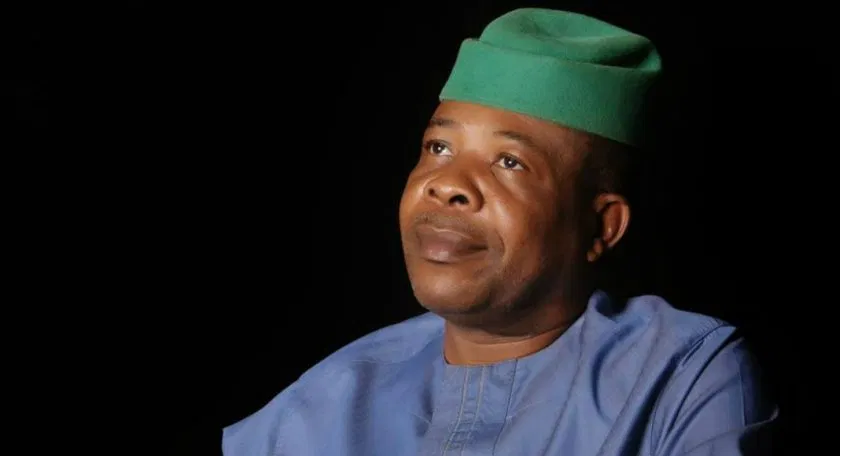
The Supreme Court’s ruling that sacked Emeka Ihedioha as the governor of Imo State came as a shock to many. The former Governor has however issued a statement in reaction to the Apex Court judgement, clearing the air on his perceived silence. The statement reads below:

STATEMENT FROM HIS EXCELLENCY, RT. HON. EMEKA IHEDIOHA, CON, ON THE SUPREME COURT RULING ON IMO STATE GOVERNORSHIP ELECTION OF THE MARCH 9, 2019.

JANUARY 15, 2020

My dear good people of Imo State,
I address you today, following recent developments affecting our dear state, and in particular the Supreme Court judgement of 14thJanuary 2020.In my relationship with you as Governor of Imo , I had employed regular consultations and dialogue as a tool of political discourse. This informs this course of action.

2. I am reporting back to you our great Imo people on the fate of the mandate you freely gave to me as Governor and Engr. Gerald Irona as Deputy Governor. This mandate has now been truncated and cut short by the Supreme Court, in contravention of the will of the people.

3. We shall always cherish the tremendous goodwill and support you gave us as we grappled with setting up a new administration to rebuild a state that was devastated by bad governance.

4. In the last seven months we sought to elevate merit, unity of purpose, honesty, transparency and an inclusive approach to governance, as the hallmarks of our administration. We sought to restore once again, the pride and dignity of Imo people. We worked very hard to re-engineer the Imo renaissance. But God knows why he has allowed this current state of affairs.

5. No doubt, yesterday’s Supreme Court verdict, came to us as a rude shock and surprise considering the facts on ground, legal precedence and clear verdict of Imo People on March 9 2019, that returned me as Governor with the highest valid votes of 273,404.

6. I do not agree with the judgement of the Supreme Court. I think it is unfair, unjust and does not reflect the voting that took place during the elections. It also didn’t take care of the sensibilities of the people of Imo State. But as true democrats, Engr Gerald Irona and I have no option but to respect the outcome of that judgement.

7. Consequently, we have put machinery in motion to hand-over the reins of office to the APC Candidate as the the next governor of Imo State. This will be coordinated by the Secretary to the State Government. I therefore direct all members of Imo State Expanded Executive Council, and all political appointees to write their handing-over notes and to return all government properties in their custody, forthwith. I shall not be party to pilfering of Government property or funds.

8. May we use this opportunity to express our gratitude to God for the opportunity to serve, within the short period he granted us. We sincerely appreciate you for all your solidarity and goodwill. We would forever cherish and treasure your love, your trust and your partnership. We made our mark. Rebuilding our dear state is neither easy nor personal, but a task undertaken for our today and tomorrow.

9. I thank you all for your support which saw us achieve so much and reversed the negative trajectory of Imo State within a space of seven months. It is significant to note that Imo State was looking good again. We were declared the least corrupt State in the Country, the fastest state growing economy in Nigeria and the most improved, in terms of the deployment of Information Technology in service delivery. Our infrastructure was significantly coming to life, civil servants and pensioners were now being paid as and when due and optimism returned to Imo State. It is on record that we were acclaimed as the most sports and diaspora friendly state. Most importantly we returned life and activities to our local governments. Yes we had good plans to make Imo the centre piece of commerce, industry, technology, tourism by providing good leadership and first class infrastructure. Under our watch, Imo became safe with our systematic approach to securing lives and property.

10. All these were made possible by your prayers, support and sacrifices. I therefore appeal to all Imolites, especially our teeming supporters to remain calm and to shun any action that is capable of resulting in a breach of the peace. We can always have different parties, but we would have only one Imo State. In the same vein, I urge you to extend to my successor, the same support you gave to me. It is my wish that he will continue on the path we had set for the rebuilding of our state as well as consolidate on the progress and milestones we achieved.

11. It is incontrovertible that we ran a good race, fought tough battles, (including, principalities and powers)and governed the state well, with the fear of God, accountability, transparency and entrenched due process. We, however, take solace in the book of Ecclesiastics 3:1, “To everything there is a season, and a time to every purpose under the heaven”.

12. We step aside with implicit faith in the Sovereign Lord who reigns over the affairs of men.

13. Thank you.
Imo bu nke anyi.

Rt. Hon. Emeka Ihedioha, CON.

Seeking Guest Lecturers for The Mini-MBA Program

2

We are looking for Guest Lecturers. These lecturers will coordinate and lead a week delivery. If you are interested to be considered, send your LinkedIn page to my team (on click).

The theme of this program is “Innovation, Growth & Digital Execution – Techniques for Building Category-King Companies” and our focus is to take participants into practical excursions on the mechanics of market systems and how digital systems can unlock growth opportunities across market segments and sectors. This is what a typical week interaction would look like (besides other components like webinars I will host):. 

  • Discovery Material:
    • Must include two Flash Cases (one foreign and one African): discuss with two firms.
    • Video (max 15 mins) with slides (we will give you access to an online video tool to use).
  • Discovery Challenge: These challenges are not graded. The purpose is to develop a “challenge assignment” which will push the participants to innovate on their functional roles within their firms, and improve their firms. Our desire is that at the end of the program, some of the ideas could help participants and their institutions advance in markets.
    • Sample Challenge: You have read the Framework for Building Modern Digital Companies (attached). A critical component of the framework is that growth serves as the high priest on the altar of business success. Growth solves most problems and the only solution to lack of growth is to make growth happen. Focusing on the fundamental premise that sustainable growth happens when companies build products and services  customers love (not just spending on big media push), develop a product or service roadmap for your company, encapsulating all core pillars in the framework. Think how you can stimulate new demand nexus through customer perception, to pioneer, and dominate the product category.