DD
MM
YYYY

PAGES

DD
MM
YYYY

spot_img

PAGES

Home Blog Page 6520

Salute To The Category-King: Flutterwave on $35M Raise

0

One of the most exciting moments in business is when your clients are growing. As a Board member, we at Infoprive immensely congratulate Flutterwave, a category-king fintech company, for raising $35 million series B funds. We would be here and will continue to serve with absolute quality and professionalism. 

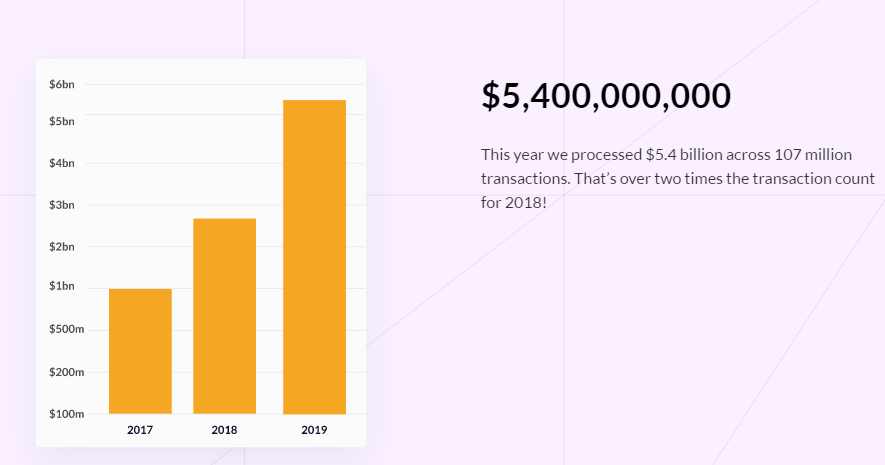
We salute the audacity in vision that has taken Flutterwave to have  “processed $5.4 billion dollars for businesses and individuals” across 107 million transactions in 2019 alone, as noted in the CEO letter to all clients.

Let’s go, 2020!  Infoprive – a cybersecurity leader.

Source: Flutterwave


Osun Youth Agenda: How not to lose the gained ground in youth development issues

0

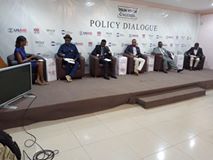
The venue was the Conference Hall of the Aurora Hotel in Osogbo the capital of  Osun State in Nigeria. The event was the Reflection Meeting over the Osun Youth Agenda, an advocacy programme sponsored by the NDI, UKAID and USAID, but implemented by Kimpact Development Initiative. For those gathered within the venue, it was time to reflect over a campaign birthed by a research driven advocacy campaign aimed at closely engaging the political leadership of the state to capture the needs of the youths earlier harvested and smartened by a team of experts. For the coordinating secretariat, local government coordinators and members of the technical committee of experts, it was time to cast a look back at a campaign that seems to have achieved so much within the less than one year it has been in existence. The campaign commenced sometime in May, 2019 and by January, 2020, it appeared as if the campaign has been on for a longer time. This impression was created by the successes the engagement has recorded within the shortest possible time.

Five days of training for the drivers of the engagement; forty two advocacy visits to stakeholders; two policy dialogues and one legislative town hall meeting amidst other communication materials, a look back at the push to put youth issues to the front burner in Osun state would reveal that the programme was one that could be conveniently described as a complete success. There are indicators of this. The 2020 budget of the state has a space for some of those needs that were advocated for. A closer look at the achievements of the campaign would reveal that a lot of strides have been made in the short journey of the agenda.

One of the core demands of the OYA campaign was the creation of a dedicated ministry for youths in the state. This, if done, would depart greatly from what was the practice in the state in the recent past when the youth component would be merged with other ministries. The OYA campaign changed the narrative. For the first time in recent time, a ministry solely dedicated to the youths emerged at the unveiling of the new cabinet members of the Gov. Gboyega Oyetola’s administration – Ministry of Youth, Sports and Special Needs. This was also capped with the appointment of  Yemi Lawal,a 37-year-old man, to head the ministry. This was one of the low hanging fruits for the campaign.


One of the parameters to gauge the readiness of a government to implement a recommended proposal is its inclusion in the fiscal instrument of the state – the budget. So, it was another moment of joy when participants were informed of the inclusion of some of the recommendations of the OYA in the 2020 budget documents of the state. The OYA team were elated to learn that recommendations cutting across education, employment opportunities, health, wealth creation and agriculture were all included for implementation in the 2020 budget. They were cross ministry capturing of these items in the budget. For example, the clamour for the conversion of Ayegbaju Market into a computer village in Osogbo was one of the proposals of the Osun Youth Agenda. There is a line in the budget to create an ICT  Hub in the said place in conjunction with Obafemi Awolowo University, Ile Ife. It was indeed a goal. In another instance of the success of the campaign, the state government has agreed to establish a well-equipped youth innovation hub and skills training centres in the state. Agriculture is not left out of the list. The nine old farm settlements across the state would soon wear new looks. The government has accepted to upgrade facilities there to make them attractive to youngsters who care to farm.  The modern day millennial or Gen Z farmer is way different from the farmer of the olden days. He or she needs more comfort than its predecessors.

Beyond a ministry dedicated to the issues of the youths, there is a need for a more permanent institution that would be there to consider  their issues at all times. The creation and or merger of a ministry is such that is subject to the discretion of the governor in charge. A governor has come now who is keen on issues of the young demographics, another might come in the next years that wouldnot be interested in creating a special vehicle purpose for the youths. This warranted the call for the establishment of the Osun State Youth Development Commission (OYDC) which is backed by relevant laws of the state. As at the time of reflecting on the journey so far for OYA, the bill seeking the creation of the OYDC is on the floor of the State House of Assembly. The Speaker in the legislative town hall meeting assured youths of prompt attention to the bill.

The OYA campaign seems a done deal. But, there are still more grounds to cover.  What is next? How do we move forward after so much seems to have been achieved in so little time? The most critical step is to strive not to lose the ground gained so far. The opportunities enjoyed today might not be there even in the distant future. So, vigilance, monitoring and ensuring complete implementation of the identified budgetary allocations and promises is the way forward. The role of technology should not as well be overlooked too. A tracker should be put in place to benchmark progress made so far.

Eliminate Revenue Leakage, Become Cashless with our TAP technology

0

We have added a major feature in TAP (Touch&Pay), a portfolio payment company, which digitizes cash collection, making it possible to have zero revenue leakage. Unlike open payment networks like Verve, Visa and Mastercard, TAP does not require networks because the value (yes, the money) is in the card. As a result of this, we record less than 0.5% transaction failure unlike NIBSS POS anchored payment which needs networks, failing 15% of the time. You can use TAP in places with no GSM or any network. Today, we power some leading banks’ SME businesses. We also manage one of the largest transportation systems in Africa along with clinics, schools, etc.

We are a team of world-class entrepreneurs, financial services technologist, Near Field Communication (NFC), mobile payments & services experts.

Touch and Pay Technologies Limited has set out to build a unique mobile payment and services platform capturing Offline and Online transactions in a seamless way.

With a unique and robust dashboard and reporting backend system, the platform allows a full visibility into transactions performed.

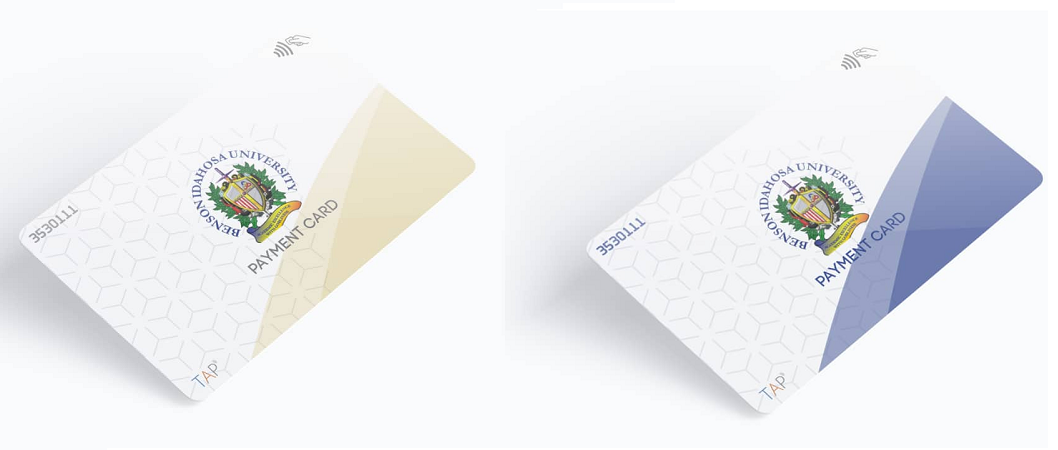
We take organizations completely cashless – Ogbomosho General Hospital, Benson Idahosa University, and many firms are 100% cashless. More so, TAP helps you to run a customer loyalty program more effectively. When the customers come to pay, they simply tap the branded card near our technology. For merchants, this can be a way to reduce robbery or pilfering on cash.

Now, you do not need agents to top your card. Yes, you can load money from your bank account into a card via USSD/ATM.etc. If you have cash and want to load, we have TAP agents that would help you.

Talk to TAP for a card in your brand, and go cashless with full visibility of revenue in 2020. That is how to become revenue-assured with no leakage. And in real time, you can see all the monies collected across your stores.

Tap into TAP and grow. Contact our team here.

Achieve the Extraordinary and Think Possibilities in 2020 and Beyond

0
Usain Bolt

The word “extraordinary” comprises of two simple, but important words- “extra” and “ordinary”. I would want to describe it as putting in the extra effort to turn your desired result from ordinary to extraordinary. To achieve extraordinary feats implies doing things differently to achieve unique results. If others are putting in eight hours a day, for example, to achieve success, you can put in ten hours a day to achieve extraordinary success. Never underestimate your capacity to achieve the extraordinary. All things are possible to those that believe! If others have done it before, then you can do likewise and even surpass boundaries and break new frontiers this year and beyond. 

We must be careful not to create self-made barriers on our way to achieving our goals in life. You must be careful what you believe about yourself, especially if it is negative and self- limiting. The only thing that can hinder you from achieving the extraordinary is yourself. A Research carried out in 2016 by the International Coach Academy Australia showed that any thought, belief, notion, or idea that is believed for long becomes programmed in the mind and ultimately becomes self-destructive. So many individuals believe that because of their poor family background, sex, age and geographical location they cannot succeed. Truth is, our limitations are not external; our limitations are internal.

Stop creating mental roadblock on your path to achieving the extraordinary. No one gave the Wright brothers (Orville and Wilbur) any chance of creating an object that could defy the force of gravity and fly. But they proved everyone wrong by inventing the world’s first airplane. Their record-breaking feat was achieved on December 17, 1903. They never allow people’s opinions to sway their self-belief. They never doubted their potentials and entered the Guinness World records with their record breaking invention.

To achieve the extraordinary, one must think the absurd; to look where everyone else has looked, but to see what no one else has seen. Barack Obama, the 44th president of the most powerful nation on earth, was never given any chance to enter the White House because many felt he was black. He brushed those sentiments aside and achieved the most extraordinary feat in U.S electoral history. He became the very first black American man, to win a presidential election in the United States of America.

Achieving the extraordinary does not usually come on a platter of gold. People will definitely want to discourage you. Internal and external circumstances may conspire to stop you from attempting to do the extraordinary. It takes raw courage and a tenacious spirit to brave all odds and go where others are too scared to go. Breaking new frontiers in any field is never a tea party. It is hard work and patience mixed with an unwavering spirit. 

If others don’t believe in you, you got to believe in yourself and your abilities, and you will achieve the extraordinary! Remember, until the first man got to the moon, nobody believed that such a lofty mission was a possibility. Neil Armstrong, however, achieved the extraordinary feat on July 20th, 1969, by landing on the moon. It was a historical moment that nullified the general concept of such expenditures. 

So many individuals have had their dreams and aspirations cut short because they were told it wasn’t possible to achieve such extraordinary feats. What they were not told is that life only rewards the brave. Life does not reward the fearful. 

The only impossible journey is the one you were too scared to undertake. You can never know how far you can go in life except you try. Just because others failed to achieve certain goals in a particular field, doesn’t mean you cannot succeed in the same field. 

Examining The Translation of Science Textbooks into Hausa

0

I needed some information on our education sector, so I went in search of Nigerian education news in the internet. To be honest, I was so surprised and impressed by what I saw. I told myself that a lot of funds and supports are pumped into our education sector, yet our public schools refused to improve.

The height of this surprise came when I saw an article on the translation of English science textbooks into Hausa. This feat was done by a team of translators from Bayero University Kano (BUK). Sincerely, I read something about this textbook translation last week but it was on someone’s personal Twitter page, so I didn’t take it seriously. But seeing Punch newspaper’s coverage of an interview with the secretary of this team changed my perception immediately.

Some people may wonder what’s so spectacular about the translation of science books into a Nigerian indigenous language. This group of people will say that other languages of the world teach science without the English language, and they are right. But we haven’t had it done in any of the country’s 500 languages, so the fact that some people have started it is something to commend.

However, there are some genuine concerns raised by Nigerians and I think they need to be addressed as soon as possible, though I will explain the concerns related to my profession.

Correctness of the Content: The first time I saw this textbook translation of a thing on Twitter, one of the comments made on the post was related to how someone can ascertain that these translations were correct. In fact, the most hilarious comment on this said, “You sure say na science textbook they translate?”

Of course, I don’t blame people for being suspicious of this new development, but I want to assuage their fears by letting them know that copies of the translated books have been sent to Nigerian Educational Research and Development Council (NERDC), an agency in charge of curriculum and book developments in the country. This means that the matter will be well taken care of.

Translation of Non-Existent Words: Someone said something about Hausa language not containing most scientific terms. For example, a question was asked by someone on what the Hausa term for “Pythagoras Theory” is. This sounds hilarious but it’s true that scientific terms are foreign to Hausa language, though I don’t speak it fluently. The truth is that no language has names for all the concepts in the world. In a case like this, what has to be done is to borrow from the source language (English) into the target language (Hausa), and then modify the terms so that they abide by the rules governing the target language. This is why linguists and grammarians should be part of this translation project. However, I was glad when I read the interview of the team’s secretary and found out that they employed this method of word formation process in their translation project.

Usage in Nigerian Schools: This is actually where I have my reservations. In as much as I encourage the learning and the use of Nigerian indigenous languages, I still acknowledge that Nigeria needs English because that’s the only language that can unify the 250 Nigerian tribes and the 500 indigenous languages.

Some people worried about these books being made compulsory in schools in the North as against their English counterparts. This part really touched me because if this is done, most non-Hausa speaking students and teachers (including corpers) will be cut off. Not everybody in the North speaks Hausa, even though a majority of their inhabitants do.

This isn’t supposed to be an issue but some comments made by Abubakar Yusuf, the Secretary of the BUK team of translators, shows that they have this in their game plan. According to him, they have started the process of making Hausa the language of science in the Northern part of Nigeria up to the tertiary level. To support this goal, he cited China and Germany as countries that teach sciences in their indigenous languages.

If I start giving reasons on why I found Mr. Yusuf’s statement disappointing we won’t leave here. As I mentioned earlier, English is the only language that unifies Nigeria and that is one major reason Nigerians can live and work in any part of the country without hitches. Making Hausa language of science in the Northern part of the country is indirectly telling non-Hausa speaking Nigerians that there is no teaching jobs for them.

As for lecturing with Hausa at the higher institution level, it means that only Hausans can study science related courses in the North. This is a way of dividing this country intentionally. We all know that children go to primary schools within their vicinity but start moving away from home from their senior secondary school. Telling them there’s no place for them in the North, well, is just the same as saying that Northern Nigeria isn’t Nigeria after all.

Then coming to the use of China and Germany as examples of countries that teach with their native languages, I want to make it clear here that these countries are not English-speaking countries, though they spend heavily to learn English as a third language. In other words, they have their books written in their own national languages. That China made Mandarin its language of education and science is because that’s its national language and, according to statistics, is spoken by 955 million out of the 1.21 billion Chinese citizens living in China. As for Germany, German is spoken by 95% of its citizens, and that is its national language. In Nigeria today, how many Nigerians speak Hausa?

It is good that BUK Centre for Research in Nigerian Languages, Translations and Folklore made out time to find ways to make teaching and learning easier and interesting for students. But they shouldn’t create more problems in their bid to solve an existing one. Left for me, I will suggest that these translated books be used as supplementary books for teachers and students. Let it be like a reference book where teachers and students can consult to get more clarifications on subject matters. Making them primary textbooks for use in teaching and learning will not solve the high level of illiteracy in the country.

I will also enjoin other universities in different parts of the country to pull off stunts like this to help in teaching and learning in their domiciled states. We need more indigenous science books, especially in Mathematics and Chemistry.